Will Tonsils Grow Back?

Key Takeaways
- Tonsils usually do not fully grow back after a complete tonsillectomy.
- Small remnants of tonsil tissue can enlarge or become inflamed and seem like regrowth.
- Children are more likely than adults to have residual tissue after certain procedures.
- New throat symptoms after tonsil surgery should be checked by an ENT doctor, especially if they are persistent or severe.
Will tonsils grow back after removal? In most cases, tonsils do not truly regrow, but small pieces of tissue can remain or reappear, especially after partial removal. This article explains what that means, why it happens, and when an ENT specialist should take a look.
Overview
For most people, the direct answer to will tonsils grow back is no: once tonsils are removed completely, they do not usually regenerate into their original form. What can happen, however, is that a small amount of tonsil tissue is left behind or some lymphoid tissue in the throat becomes more noticeable later on.
This distinction matters because patients often use the phrase “grew back” when they notice familiar symptoms such as sore throats, snoring, or visible tissue at the side of the throat after a tonsillectomy. In medical terms, that is more often residual tissue, partial regrowth of lymphoid tissue, or another throat condition that needs evaluation.
Understanding the difference can reduce worry and help people decide whether they simply need routine follow-up or a proper ENT examination. For international patients, it is also helpful to know that evaluation can be planned before or after travel, especially if symptoms are recurring and previous treatment records are available.
Symptoms That May Look Like Tonsils Returned
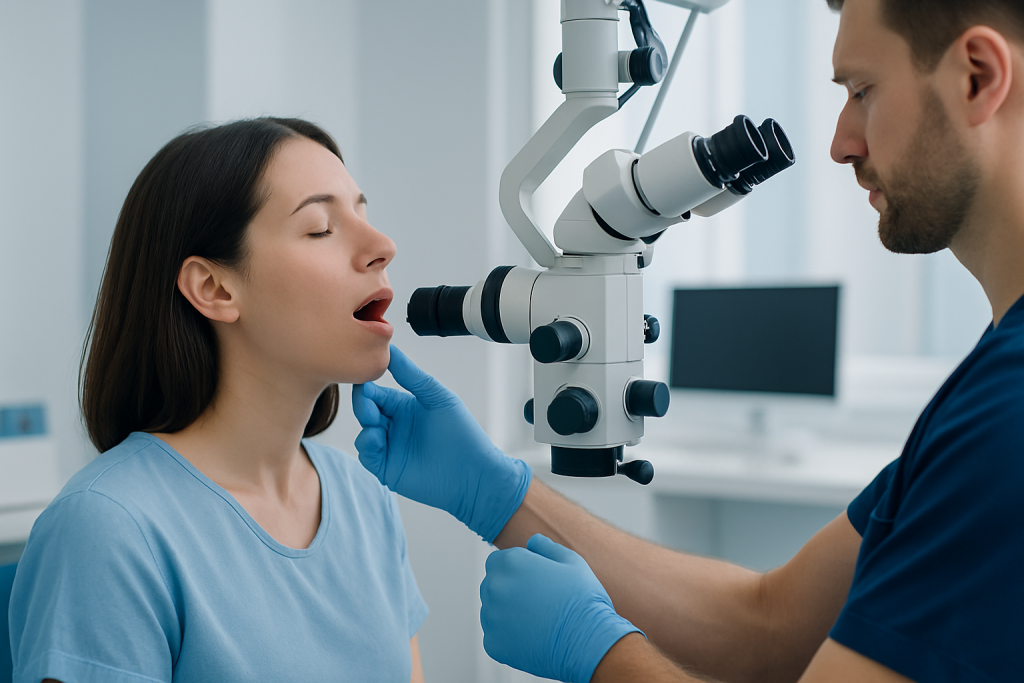
People sometimes suspect their tonsils have grown back because the throat feels familiar again. The signs are usually not specific on their own, which is why an exam matters. A sore throat, bad breath, snoring, mouth breathing, or the appearance of tissue near the tonsillar area can all have more than one cause.
If the original surgery was done to treat repeated infections, a return of throat pain does not automatically mean the tonsils regrew. Viral infections, allergies, acid reflux, enlarged adenoids, postnasal drip, or irritation from dryness can create similar discomfort.
- Visible tissue at the tonsillar site
- Recurring sore throats
- Snoring or disturbed sleep
- Swallowing discomfort
- Bad breath or throat irritation
In children, swollen lymphoid tissue may be easier to notice after infections or during periods of immune activity. In adults, new symptoms deserve attention because they may point to another throat issue rather than true tonsil regrowth.
Why Tonsil Tissue Can Seem to Come Back

There are a few reasons why people think tonsils have grown back. The most common is that a small remnant of tissue remained after surgery. This is more likely after a partial tonsillectomy, sometimes called tonsillotomy, where part of the tonsil is intentionally left behind to reduce pain or speed recovery.
Even after complete removal, the tissue in the back of the throat can heal in a way that makes the area look fuller. Lymphoid tissue elsewhere in the throat may also enlarge, especially after repeated infections or ongoing irritation. That can create the impression of regrowth even when the original tonsils are gone.
Children are more likely than adults to have noticeable residual tissue because their lymphoid tissue is naturally more active. In some cases, the remaining tissue may remain quiet for years and only become noticeable when it swells during an infection or allergy flare.
How Doctors Confirm What Is Happening
An ENT specialist usually starts with a careful history and a throat examination. The doctor will ask when the symptoms started, whether there were prior infections, what kind of surgery was done, and whether the person has records from the original procedure. This is especially useful when care is being coordinated across countries.
In many cases, a simple visual exam is enough to tell whether the area contains residual tonsil tissue or another cause of swelling. If needed, the doctor may use a flexible camera to look deeper into the throat and nose, especially if snoring, nasal blockage, or swallowing symptoms are part of the picture.
Testing is not always needed, but it may be used if the symptoms suggest infection, reflux, allergy, or a different structural issue. The key step is matching the symptoms to the anatomy rather than assuming every sore throat after surgery means the tonsils have returned.
Treatment Options
Treatment depends on what is actually causing the symptoms. If there is only a small amount of leftover tissue and it is not causing problems, the doctor may recommend observation. If the tissue becomes repeatedly infected or causes obstruction, treatment may be considered.
For some patients, medical treatment is enough. This may include managing infections, allergies, postnasal drip, or reflux if those are contributing to throat irritation. When tissue is large enough to cause persistent symptoms, an ENT doctor may discuss another procedure to remove the remaining tissue.
The treatment plan is individualized, especially for patients traveling from abroad who may want the most efficient evaluation and follow-up schedule. In such cases, the doctor often focuses on confirming the diagnosis clearly, choosing the least invasive effective approach, and planning recovery in a way that fits the patient’s travel timeline.
- Watchful waiting for mild, stable symptoms
- Medicines for infection or inflammation when appropriate
- Management of allergies or reflux if present
- Revision surgery in selected cases of symptomatic residual tissue
Prevention & Self-care
There is no guaranteed way to prevent tonsil tissue from ever being noticeable again, particularly if some tissue was intentionally left behind. Still, good throat care can lower irritation and help people recognize what is normal for them after surgery.
Staying well hydrated, avoiding smoke exposure, and treating allergies or reflux when present can make the throat less reactive. If a person is recovering from surgery, following the surgeon’s instructions closely helps the area heal smoothly and reduces unnecessary inflammation that can be mistaken for regrowth.
Self-care is also about knowing what deserves a medical review. Keeping notes about symptom timing, infection frequency, and sleep changes can be very helpful, especially for people who may only have a short window for follow-up during an international visit.
- Drink enough fluids to keep the throat comfortable
- Manage allergies and nasal congestion as advised
- Avoid tobacco smoke and other irritants
- Follow post-operative instructions carefully
- Record recurring symptoms before an ENT appointment
When to See a Doctor
Anyone who notices tissue in the throat after a tonsillectomy does not need to panic, but persistent or worsening symptoms should be assessed. An ENT doctor can usually tell whether the issue is residual tonsil tissue, another throat condition, or normal healing changes.
Medical review is especially important if there are frequent infections, trouble swallowing, breathing concerns during sleep, bleeding, fever, or a one-sided throat change that does not go away. These findings do not automatically point to a serious problem, but they do justify a proper examination.
For patients arranging care from another country, it is reasonable to collect prior operative notes, medication lists, and any past throat imaging before traveling. Acibadem Health Point’s multidisciplinary specialists and JCI-accredited hospitals diagnose and treat ENT conditions for international patients with coordinated, patient-centered care.
The main message is reassuring: true tonsil regrowth is uncommon, and most post-tonsillectomy concerns have a clear explanation once a specialist looks. A calm, structured assessment is usually the fastest way to understand what is happening and what, if anything, should be done next.
Frequently asked questions
01Will tonsils grow back after a complete tonsillectomy?
Usually, no. A complete tonsillectomy removes the tonsils, and they do not normally regenerate into their original size or structure. What people often notice instead is leftover tissue, healing changes, or another throat problem that feels similar.
02Why does it look like my tonsils came back?
The most common reason is residual tonsil tissue or lymphoid tissue in the throat becoming enlarged. Swelling from infection, allergies, or irritation can make the area look more prominent than before. An ENT exam can usually clarify the cause.
03Can children have tonsil tissue grow back more often than adults?
Children are somewhat more likely to have noticeable residual tissue or partial regrowth after certain procedures. Their lymphoid tissue is more active, so swelling can be more obvious during infections. This does not always mean the surgery failed.
04What symptoms suggest I should see an ENT doctor?
Persistent sore throat, repeated infections, snoring, swallowing problems, or visible tissue that is changing should be checked. It is also wise to seek care if symptoms are one-sided, worsening, or interfering with sleep or eating. An ENT doctor can determine whether anything needs treatment.
05Is revision surgery ever needed?
Sometimes, but only in selected cases. If leftover tissue keeps causing infections, blockage, or other ongoing symptoms, an ENT specialist may discuss removing it. Many people, however, do not need another procedure.
06Can reflux or allergies make it seem like tonsils are back?
Yes. Reflux, postnasal drip, and allergies can irritate the throat and make tissue look or feel swollen. Treating those issues can sometimes improve the symptoms without any surgery.
This article is for general information only and is not a substitute for professional medical advice. Please consult a qualified doctor about your individual situation.
Persistent digestive symptoms? Get evaluated in Turkey
JCI-accredited · board-certified surgeons · reply within 24h
Add us as a Preferred Source to see more of our trusted health content across Google Search, AI Overviews and Discover.