Why Is the Skin Between My Toes Peeling?

Peeling skin between the toes is often caused by trapped moisture, friction, dry skin, or a common fungal infection called athlete’s foot. It is usually manageable, but persistent symptoms, pain, spreading redness, or skin breakdown should be assessed by a healthcare professional.
Why the Skin Between the Toes May Peel
When someone asks, “why is the skin between my toes peeling?”, the answer is often relatively simple: the skin has been exposed to moisture, rubbing, or an irritant. The spaces between the toes are warm and less well ventilated than other parts of the foot. Sweat, wet socks, tight footwear, and incomplete drying after bathing can soften the outer skin layer, which may then look white, wrinkled, flaky, or peeled.
A common additional cause is athlete’s foot, also called tinea pedis. This superficial fungal infection thrives in damp environments and can affect one or both feet. It commonly begins between the smaller toes and may cause scaling, itchiness, burning, mild redness, or small cracks.
Peeling is not always due to infection. Friction from footwear, sensitivity to soaps or shoe materials, eczema, psoriasis, and, less commonly, bacterial infection can produce similar symptoms. The appearance of the skin, accompanying symptoms, and how long the problem has lasted help distinguish among these possibilities.
Clues That Can Help Identify the Cause
The pattern of symptoms can provide useful clues, although it cannot confirm a diagnosis on its own. Moisture-related maceration often makes skin appear pale, soft, and soggy, particularly after wearing shoes or exercising. It may improve when the feet are aired and dried carefully.
Athlete’s foot is more likely when peeling is accompanied by itch, burning, scaling, redness, or fissures between the toes. The condition can extend to the soles or sides of the feet, where it may cause a dry, powdery scale. It can also spread to the nails, causing thickening, discoloration, or crumbling. Learn more about athlete’s foot and its symptoms.
Contact dermatitis may be suspected if symptoms started after changing footwear, socks, detergent, foot spray, or topical products. It can cause itch, redness, dryness, and sometimes tiny blisters. Eczema and psoriasis may affect other body areas as well, while bacterial infection is more likely to cause increasing warmth, tenderness, swelling, discharge, or a strong odor.
- Itchy, scaly, cracked skin: often consistent with a fungal infection.
- White, soft, soggy skin: commonly related to prolonged moisture.
- Red, sore, swollen skin or drainage: needs medical assessment for possible infection.
- Repeated peeling without itch: may relate to friction, sweat, dryness, or irritation.
Causes and Factors That Increase the Risk
Fungi grow more easily in warm, damp places. Wearing non-breathable shoes for long periods, having sweaty feet, using communal showers or changing rooms barefoot, and sharing footwear or towels can increase the chance of athlete’s foot. The infection can pass through direct contact or through contaminated surfaces, although not every exposure causes infection.
Frequent washing with harsh soaps, hot water, or fragranced products can disrupt the skin barrier and contribute to irritation and peeling. Shoes that pinch or rub the toes may also cause local skin damage. Some people are more prone to dermatitis because of sensitive skin or allergies to rubber, dyes, adhesives, leather treatments, or other materials in footwear.
Diabetes, circulation problems, nerve damage in the feet, and immune suppression can make foot skin problems more important to evaluate early. These conditions do not necessarily cause peeling, but they may increase the risk of infection or slow healing if cracks or sores develop. A person with these risk factors should avoid self-treating a persistent foot problem without clinical guidance.
How a Doctor Diagnoses Peeling Between the Toes
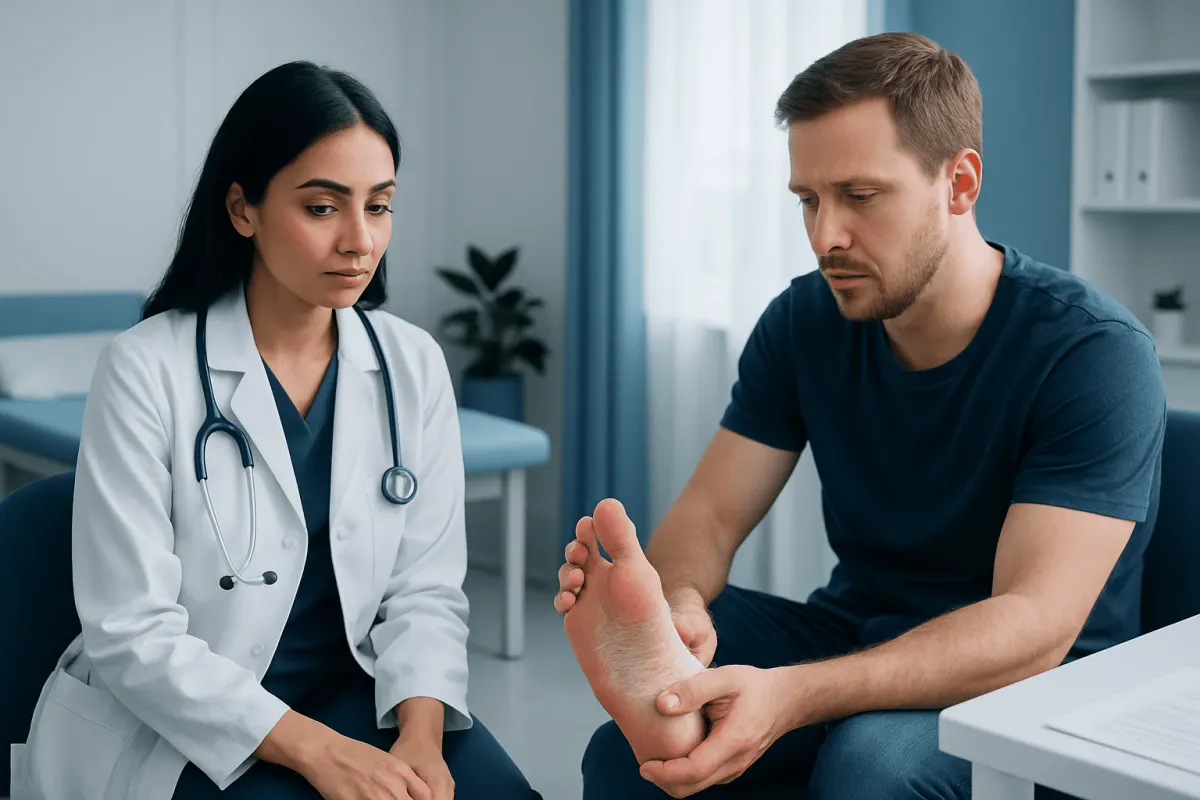
A clinician will usually begin by asking when the peeling started, whether it itches or hurts, whether it affects one or both feet, and whether there have been changes in footwear, products, exercise, or exposure to communal wet areas. They may also ask about medical conditions, medications, prior fungal infections, and symptoms elsewhere on the skin or nails.
In many cases, examination of the feet is enough to identify the most likely cause. The clinician may look between the toes, at the soles, around the nails, and sometimes at other areas of the skin. They will check for scale, cracks, redness, blisters, signs of excess moisture, and possible bacterial infection.
If the diagnosis is uncertain or symptoms have not improved with initial care, a small skin scraping may be examined under a microscope or sent for fungal testing. This can help distinguish a fungal infection from eczema, psoriasis, or another skin condition. Testing is especially useful before prescribing longer-term oral antifungal medicine or when treatment has repeatedly failed.
Treatment Options Based on the Cause
Care depends on the underlying cause. For moisture-related peeling, the main measures are gentle cleansing, careful drying between the toes, changing damp socks promptly, and choosing shoes that allow airflow. It is generally best not to apply heavy moisturizers between the toes, as they can trap additional moisture. Moisturizer may still be useful on dry soles and heels if it is kept away from the toe spaces.
When athlete’s foot is likely, a pharmacist or doctor may recommend a topical antifungal product. These treatments are used as directed for the full recommended course, even if symptoms begin to settle sooner. Keeping feet dry and avoiding shared towels, socks, or shoes helps reduce reinfection and transmission to others. A clinician may consider prescription treatment when infection is extensive, recurrent, affects the nails, or does not improve with appropriate topical care.
Dermatitis or eczema may improve by identifying and avoiding the trigger, such as a fragranced product or particular shoe material. A doctor can advise whether a medicated cream is appropriate, because some anti-inflammatory creams can worsen an untreated fungal infection when used alone. Bacterial infection requires medical evaluation and may need antibiotic treatment.
For people whose symptoms are persistent or complicated, dermatology assessment can clarify the diagnosis and guide care. Acıbadem Health Point’s multidisciplinary specialists and JCI-accredited hospitals can evaluate skin and foot concerns for international patients.
Prevention and Everyday Foot Care
Simple foot-care habits can reduce the likelihood of peeling caused by moisture and fungal infection. Wash the feet regularly with mild cleanser, then dry them fully, paying close attention to the spaces between each toe. After swimming, showering, or exercise, changing out of wet footwear and socks promptly is particularly helpful.
Choose clean, moisture-wicking socks and change them when they become damp. Rotate shoes so they have time to dry thoroughly between uses, and select footwear with enough room for the toes and reasonable ventilation. In public showers, pool changing areas, and gym locker rooms, protective footwear such as shower shoes may reduce direct contact with potentially contaminated surfaces.
It is also sensible to avoid sharing shoes, socks, nail tools, or towels. If athlete’s foot has been diagnosed, washing socks and towels regularly and cleaning footwear according to product instructions may help lower the risk of recurrence. People should avoid picking at peeling skin, as this can create small breaks that are more vulnerable to irritation or infection.
When to Seek Medical Care
Medical advice is appropriate if peeling does not improve after a reasonable period of careful foot hygiene and suitable over-the-counter treatment, if it returns often, or if the diagnosis is unclear. A clinician should also assess symptoms that spread across the foot, involve the nails, or interfere with walking, sleeping, or daily activities.
Prompt assessment is important for increasing redness, warmth, swelling, significant pain, pus or other drainage, fever, red streaks, or an open sore. These signs may indicate a bacterial skin infection or another condition requiring treatment. A sudden widespread rash, facial swelling, or trouble breathing after using a product requires urgent medical care.
Anyone with diabetes, reduced circulation, loss of sensation in the feet, a weakened immune system, or a history of foot ulcers should contact a healthcare professional early for new cracks, peeling, blisters, or skin color changes. Early review can help protect skin integrity and prevent complications.
Frequently asked questions
01Is peeling between the toes always athlete’s foot?
No. Athlete’s foot is a common cause, but damp skin, friction, irritant or allergic contact dermatitis, eczema, and psoriasis can also lead to peeling. Itching, scaling, burning, and cracks make a fungal infection more likely, but only a clinical assessment or fungal test can confirm it when the picture is unclear.
02Can sweaty feet cause skin to peel between the toes?
Yes. Sweat and poor ventilation can keep the toe spaces damp, softening the outer layer of skin and causing it to peel. Persistent dampness also creates favorable conditions for fungal growth, so drying the feet carefully and changing damp socks can be helpful.
03Should moisturizer be used between peeling toes?
Heavy or occlusive moisturizers are generally not ideal between the toes because they may trap moisture. Moisturizer can be applied to dry areas such as the heels and soles, while keeping the toe spaces clean and dry. A doctor can advise on the best product if eczema or another inflammatory skin condition is suspected.
04How long does athlete’s foot take to improve?
With appropriate antifungal treatment and dry-foot measures, symptoms often begin to improve within a short period, but treatment should be continued for the recommended duration. Improvement can vary depending on the severity of infection, ongoing moisture exposure, and whether nails are involved. A person should seek advice if symptoms persist, worsen, or frequently return.
05Can peeling skin between toes spread to other parts of the body?
If the cause is a fungal infection, it can spread to other areas, including the soles, groin, hands, or nails, through contact or shared towels. Washing hands after touching the affected area and not sharing personal items can reduce this risk. Not all causes of peeling are contagious.
06When is peeling skin between the toes more concerning?
It should be assessed promptly when there is pain, increasing redness, warmth, swelling, drainage, an open wound, or fever. It also deserves early review in people with diabetes, poor circulation, reduced foot sensation, or weakened immunity. These situations may carry a higher risk of complications if infection develops.
This article is for general information only and is not a substitute for professional medical advice. Please consult a qualified doctor about your individual situation.
Explore treatments in Turkey — costs, top hospitals & a free quote
JCI-accredited · board-certified surgeons · reply within 24h
Add us as a Preferred Source to see more of our trusted health content across Google Search, AI Overviews and Discover.