

Why is My Foot Peeling Skin?
- 10 min read
- Published November 26, 2026
Key Takeaways
- Foot peeling can come from simple dryness, but fungal infections and inflammatory skin conditions are also common causes.
- Clues such as itching, odor, blisters, redness, cracks, or one-sided involvement can help narrow down the reason.
- A doctor may use a skin exam and sometimes a skin scraping or test to confirm the diagnosis.
- Treatment depends on the cause and may include moisturizers, antifungal medicine, or prescription creams.
- Good foot hygiene, breathable shoes, and gentle skin care can reduce recurrence.
- Medical advice is important if peeling lasts, worsens, or appears with pain, swelling, drainage, or diabetes-related foot concerns.
Peeling skin on the feet is often linked to dryness, irritation, fungal infection, or eczema, but the right explanation depends on where the peeling appears and what other symptoms are present. Most cases are manageable with proper skin care, while persistent, painful, or spreading peeling should be assessed by a doctor.
Overview
When someone asks, “why is my foot peeling skin,” the answer is not always the same. Peeling can happen after the skin becomes too dry, but it can also be a sign of athlete’s foot, eczema, contact irritation, sunburn, or another skin condition that needs targeted treatment.
The feet are especially prone to peeling because they spend long hours inside shoes, sweat easily, and are exposed to friction from walking. If peeling is mild and temporary, it often improves with simple care. If it keeps returning, spreads, or comes with itching, pain, blisters, or cracking, a clinician should help identify the cause.
For people traveling for care, foot symptoms can be frustrating because they may interfere with walking, workouts, work, or sightseeing. A careful diagnosis matters, since treatments differ depending on whether the skin problem is due to dryness, fungus, inflammation, or something more specific.
Symptoms That Can Point to the Cause

Peeling skin on the feet may look like flakes, thin sheets of lifted skin, or small patches that come and go. The pattern often offers useful clues. Dry skin usually feels rough and tight, while a fungal infection may cause itching, scaling, and a white, soggy look between the toes.
Other symptoms can help narrow the reason further. Burning, redness, and small blisters may suggest irritation or eczema. Cracks in the heels can make walking painful, and thickened skin may appear when the feet are repeatedly exposed to pressure or rubbing. An unpleasant odor, nail changes, or involvement of both feet can also be important details for a doctor.
- Dryness: rough, flaky, tight-feeling skin, often on the heels or soles
- Athlete’s foot: itching, scaling, peeling between toes or on the soles
- Eczema or dermatitis: redness, itching, sensitivity, or recurrent patches
- Friction or blisters: peeling after long walking, exercise, or tight shoes
Because more than one problem can occur at the same time, a person may notice both dryness and a fungal infection, or irritation on top of already fragile skin. That is one reason self-diagnosis can be difficult when the peeling does not settle quickly.
Causes and Risk Factors
Simple dryness is a common reason for peeling feet. Hot showers, harsh soaps, low humidity, and not moisturizing after washing can strip the skin barrier and lead to flaking. The heels are especially vulnerable because the skin there is thicker and more likely to crack when it loses moisture.
Athlete’s foot is another frequent cause. This fungal infection tends to thrive in warm, damp environments such as sweaty shoes, locker rooms, and shared showers. It may affect one foot or both and often spreads more easily when feet stay enclosed for long periods.
Inflammatory skin conditions can also trigger peeling. Eczema, contact dermatitis, psoriasis, and dyshidrotic eczema may all cause scaling or peeling, often with itch or redness. People with allergies, sensitive skin, frequent foot sweating, or a history of skin conditions may be more likely to experience it.
Several everyday factors can raise the chance of foot peeling:
- Wearing shoes that do not breathe well
- Prolonged moisture from sweat or wet socks
- Frequent friction from walking, sports, or new footwear
- Using irritating soaps, scrubs, or topical products
- Having diabetes, circulation problems, or reduced skin healing
Less commonly, peeling may follow sunburn, a recent skin reaction, or another medical condition. If the pattern is unusual, widespread, or recurring, a clinician should look beyond simple dryness.
How Doctors Diagnose Foot Peeling
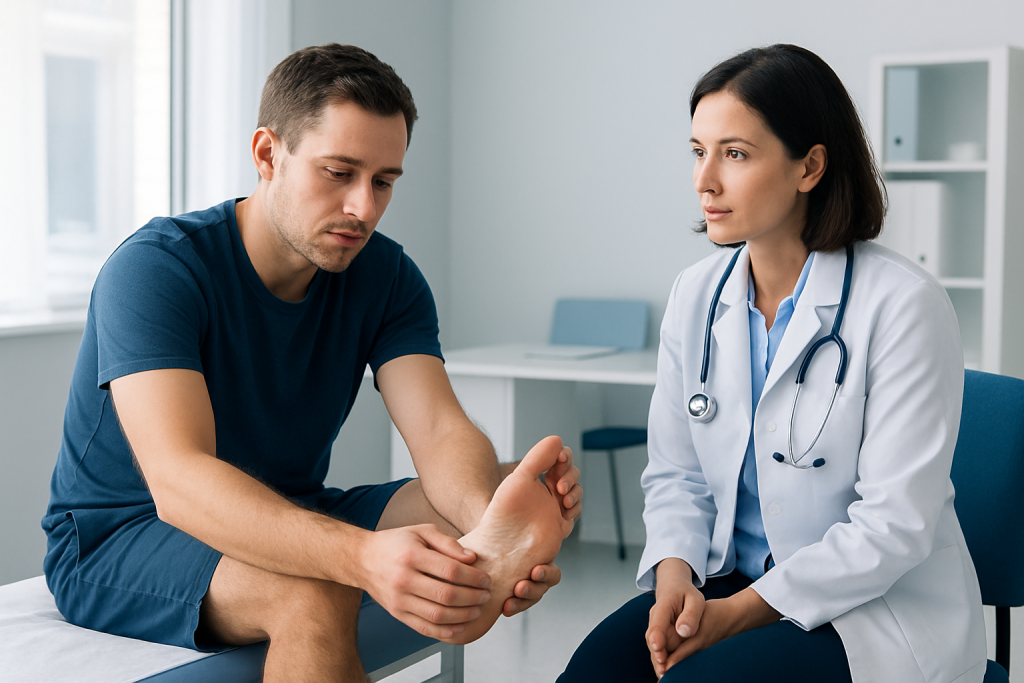
Diagnosis usually starts with a skin examination and a conversation about symptoms, footwear, activity level, hygiene habits, and any recent changes in products or environment. The doctor may ask whether the peeling is itchy, painful, one-sided, linked to sweating, or associated with a rash elsewhere on the body.
In many cases, the appearance alone suggests the most likely cause. If a fungal infection is suspected, a skin scraping may be taken and examined or sent for testing. This helps confirm whether antifungal treatment is appropriate and avoids using the wrong cream for the wrong condition.
When the picture is less clear, a clinician may consider eczema, psoriasis, allergic contact dermatitis, or another skin disorder. People with diabetes, poor circulation, or repeated skin breakdown may need a more careful foot evaluation because small skin problems can take longer to heal.
For patients who are arranging care from abroad, bringing photos of the peeling at its worst can be surprisingly helpful. Skin findings can change over time, and pictures taken in good light may help the doctor see how the problem behaves between appointments.
Treatment Options
Treatment depends on the underlying cause, which is why a correct diagnosis matters. Dry skin is usually managed with gentle cleansing, regular moisturization, and reducing friction or over-washing. Emollients or thick creams are often most effective when applied after bathing, while the skin is still slightly damp.
If athlete’s foot is the cause, an antifungal treatment may be recommended. The exact choice depends on the extent of the infection and the person’s overall health. Keeping the feet clean and dry, changing socks regularly, and allowing shoes to air out also support recovery and help prevent reinfection.
For eczema or dermatitis, doctors may recommend a prescription cream to calm inflammation and itch, along with avoidance of the trigger if one is identified. When thickened or cracked skin is present, the plan may include softening the skin first and then carefully reducing rough areas so they are less likely to split open.
General treatment principles often include:
- Moisturize consistently with a fragrance-free product
- Avoid picking or forcefully peeling skin
- Use breathable footwear and clean socks
- Follow the clinician’s instructions if medication is prescribed
If the peeling is part of a broader skin condition, treatment may take a little time to show progress. The goal is not only to stop the visible flakes, but also to restore the skin barrier so the problem does not keep returning.
Prevention and Self-care
Preventing peeling skin on the feet often comes down to protecting the skin barrier. Gentle washing, thorough drying—especially between the toes—and daily moisturizing can make a noticeable difference for dry or irritated feet. It is usually best to choose mild, fragrance-free products rather than strong scrubs or heavily scented lotions.
Footwear habits matter as well. Shoes that allow airflow, moisture-wicking socks, and changing socks after heavy sweating can reduce dampness that encourages fungus and irritation. In public showers, gyms, or pools, wearing shower shoes can help lower the risk of fungal exposure.
It also helps to avoid habits that worsen peeling:
- Do not peel or cut loose skin at home
- Avoid very hot water and harsh soaps
- Replace shoes that rub or trap moisture
- Dry the feet fully before putting on socks
People who travel frequently may need an especially practical routine: pack an extra pair of socks, keep feet dry during long flights, and carry a basic moisturizer that is easy to use consistently. Small habits often help more than complicated routines.
When to See a Doctor
Medical advice is a good idea if the peeling lasts more than a couple of weeks, keeps returning, or does not improve with simple home care. A doctor should also evaluate the feet if there is significant itching, spreading redness, swelling, warmth, cracks that bleed, pus, or pain with walking.
People with diabetes, poor circulation, nerve problems, or a weakened immune system should seek earlier assessment, even for what seems like minor peeling. In these situations, a small skin problem can become harder to manage if it is ignored.
It is also wise to get checked if the peeling affects the nails, appears only on one foot in a persistent way, or follows a new product, medication, or exposure. Clear diagnosis matters because a cream that helps one condition may delay improvement in another.
Acibadem Health Point’s multidisciplinary specialists and JCI-accredited hospitals diagnose and treat foot skin conditions for international patients, with care plans tailored to the cause and the person’s wider health needs.
Living With Recurrent Foot Peeling
When foot peeling keeps coming back, the most useful approach is usually pattern recognition. Noting when it starts, whether it follows exercise or travel, and whether it improves in dry weather can help the doctor identify a trigger. Even small observations, such as new shoes or a change in soap, can be meaningful.
Recurrence is common in fungal infections and in skin conditions that flare with stress, sweating, or irritants. That does not mean the problem is severe; it often means the skin barrier needs a more consistent routine, or that the original cause has not been fully addressed.
With the right evaluation and a practical plan, most causes of peeling skin on the feet can be managed effectively. The key is to treat the specific cause rather than repeatedly guessing at it.
FAQ-friendly Closing Note
Foot peeling is common, but it should not be dismissed when it is persistent, painful, or linked to other changes. A careful assessment can distinguish a simple dryness issue from a fungal infection or an inflammatory skin disorder, which helps guide the right treatment from the start.
Anyone who is uncertain about the cause, especially if traveling to seek care, can benefit from seeing a qualified doctor with dermatology experience. Clear answers usually come from a combination of symptom history, skin examination, and targeted testing when needed.
Frequently asked questions
01Why is my foot peeling skin if it does not itch?
If there is no itching, dryness, friction, or healing from an old blister may be more likely, though fungus is still possible in some cases. A doctor can look at the pattern and decide whether testing is needed. Persistent peeling without itch should still be assessed if it does not improve.
02Can athlete’s foot cause peeling on the soles?
Yes. Athlete’s foot can affect the soles as well as the spaces between the toes, and it often causes scaling or peeling. It may also come with itching, burning, or a white, soft look in damp areas.
03Should peeling skin on the feet be picked off?
It is better not to pull, pick, or cut peeling skin at home. Doing so can create small wounds and raise the risk of irritation or infection. Gentle moisturizing and proper treatment of the cause are safer options.
04What kind of moisturizer is best for dry peeling feet?
A fragrance-free, thick cream or ointment is often helpful because it supports the skin barrier better than a light lotion. Applying it after bathing can improve results. If the skin is cracked or painful, a doctor should advise on the best approach.
05When is peeling skin on the foot more concerning?
It becomes more concerning if it is painful, swollen, warm, draining, spreading, or associated with fever. It also deserves prompt attention in people with diabetes, circulation problems, or immune system issues. Ongoing peeling that does not improve should be evaluated even if it seems mild.
06Can poor shoes make foot skin peel?
Yes. Tight, non-breathable, or rubbing shoes can trap moisture and create friction, both of which can lead to peeling. Changing to better-fitting shoes and moisture-wicking socks often helps reduce the problem.
This article is for general information only and is not a substitute for professional medical advice. Please consult a qualified doctor about your individual situation.
Explore treatments in Turkey — costs, top hospitals & a free quote
JCI-accredited · board-certified surgeons · reply within 24h
Add us as a Preferred Source to see more of our trusted health content across Google Search, AI Overviews and Discover.



How can we help you today?
Meet an Acibadem specialist by secure video, before you travel.
Book a video visit