Why Does My Knee Hurt When I Bend it?

Key Takeaways
- Pain with bending the knee is commonly related to overuse, kneecap tracking problems, tendon irritation, meniscus injury, or arthritis.
- Swelling, locking, catching, instability, or pain after a twist or fall can point to a specific structural problem.
- Doctors usually diagnose knee pain with a history, physical examination, and, when needed, imaging such as X-rays or MRI.
- Treatment may include rest, activity changes, physical therapy, bracing, medication guidance, injections, or surgery in selected cases.
- Prompt medical review is wise if the knee is hot, very swollen, deformed, unstable, or unable to bear weight.
Knee pain that appears or worsens when bending the knee often comes from irritation in the kneecap joint, tendons, cartilage, or soft tissues around the joint. The right next step depends on whether the pain is linked to an injury, swelling, stiffness, locking, or a gradual overuse pattern.
Overview
If someone wonders, “why does my knee hurt when I bend it?” the answer is usually that one part of the knee is being stressed, irritated, or pinched during motion. Bending increases pressure inside the joint, so problems involving the kneecap, cartilage, meniscus, tendons, ligaments, or nearby bursae often become more noticeable at that moment.
The knee is designed to carry weight, absorb impact, and move smoothly through a wide range of motion. Because it does so much, even a small imbalance—such as tight muscles, weak hip support, a minor twist, or repetitive kneeling—can create pain that shows up only when the knee flexes.
Some causes are short-lived and improve with rest and guided self-care. Others need a careful orthopedic assessment, especially when pain is persistent, there is swelling or stiffness, or the knee feels unstable during daily activities such as stairs, squatting, sitting down, or getting up from a chair.
Symptoms
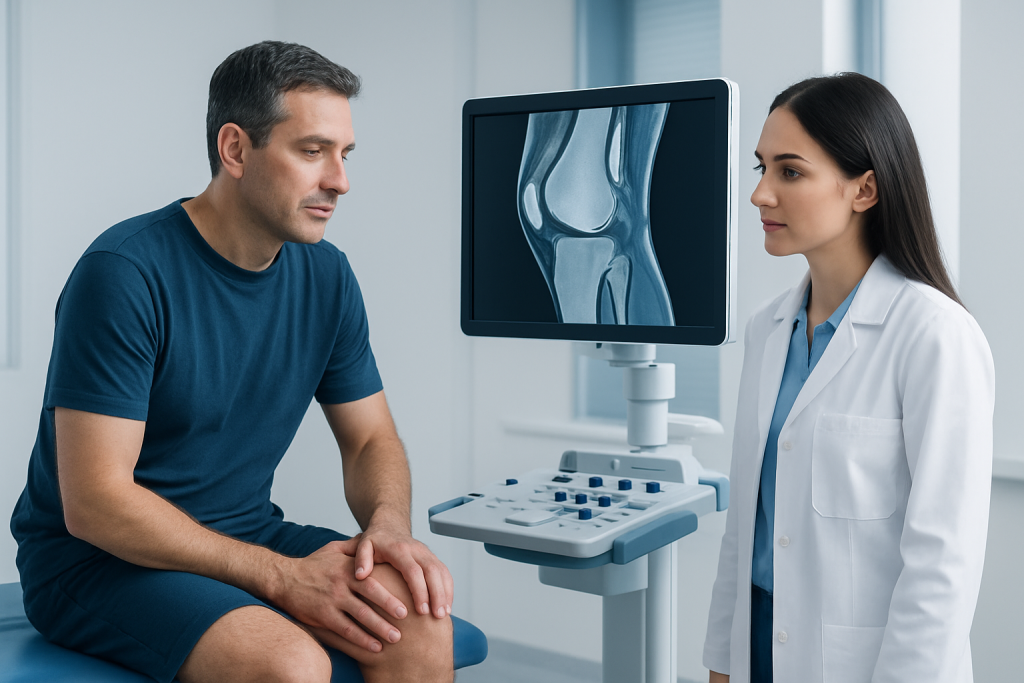
The pattern of pain often gives useful clues. Pain felt in the front of the knee during bending or stairs commonly points toward kneecap-related irritation, while pain along the inside or outside joint line can suggest a meniscus issue or localized soft tissue strain. Pain that becomes sharp during a deep squat may differ from a dull ache that appears after walking, running, or prolonged sitting.
People may also notice clicking, catching, stiffness after rest, swelling, tenderness to touch, or a sense that the knee is “giving way.” These symptoms do not always mean a serious injury, but they help a clinician narrow down the most likely source of the problem.
- Front-of-knee pain: often worse with stairs, squats, or rising from a chair
- Joint-line pain: may be felt with twisting, pivoting, or deep bending
- Swelling and stiffness: can appear after overuse, injury, or inflammation
- Locking or catching: may suggest a mechanical problem inside the joint
When the pain is linked to a clear injury, the onset may be sudden. When it develops gradually, overuse, training changes, body mechanics, or degenerative change are more likely to be involved.
Causes & Risk Factors

Several conditions can cause knee pain when bending. One of the most common is patellofemoral pain syndrome, in which the kneecap area becomes irritated due to how the joint is loading or tracking. This often affects active people, but it can also occur in anyone who sits for long periods, climbs stairs often, or has muscle imbalance around the hips and thighs.
Meniscus injury is another frequent cause, especially after a twist, pivot, or sudden change in direction. The meniscus acts like a shock absorber, and when it is torn or irritated, bending may trigger pain, swelling, or catching. Tendon problems, such as patellar tendinopathy, may also cause pain below the kneecap during squatting, jumping, or climbing.
Other possible contributors include early osteoarthritis, bursitis, ligament sprains, cartilage injury, referred pain from the hip, and inflammatory arthritis. Risk rises with a history of knee injury, repetitive impact sports, kneeling work, excess body weight, age-related wear, poor footwear, or sudden increases in training or physical activity.
In international-patient care, doctors also consider practical details that shape recovery: how much walking is needed after travel, whether follow-up can happen remotely, and whether the patient has support for physical therapy once home. These factors can influence the safest and most realistic treatment plan.
Diagnosis
Diagnosis begins with a detailed history. A clinician will ask when the pain started, where it is felt, whether there was a twist or fall, what movements aggravate it, and whether swelling, locking, or instability has occurred. Even small details—such as pain after prolonged sitting versus pain during deep squats—can point toward different causes.
The physical examination usually includes checking range of motion, swelling, tenderness, alignment, walking pattern, ligament stability, and the response to specific movements that load the kneecap or meniscus. The examiner may compare both knees and also assess the hip and ankle, since movement elsewhere in the leg can affect the knee.
Imaging is sometimes needed. X-rays can show alignment changes, arthritis, or signs of prior injury. MRI is often useful when soft tissue injury, cartilage damage, or meniscus tears are suspected. Ultrasound may help in selected cases, particularly when tendon or fluid-related issues are being assessed.
If the knee is red, very swollen, or associated with fever or severe systemic symptoms, the doctor may look for inflammatory or infectious causes. The main goal is not simply to label the pain, but to identify which structure is irritated and what movement pattern is driving it.
Treatment Options
Treatment depends on the cause, severity, and how much the pain is limiting daily life. For many overuse-related problems, the first step is often a temporary reduction in painful activities, followed by a structured rehabilitation plan. This does not always mean complete rest; rather, it means adjusting the load so the knee can calm down while still moving safely.
Physical therapy is central for many knee conditions. A therapist may focus on quadriceps and hip strength, flexibility, balance, movement control, and gradual return to climbing, squatting, running, or sport. Improving mechanics often makes bending less painful over time.
Doctors may also recommend ice, heat, bracing, taping, or medication guidance depending on the situation. Anti-inflammatory medicines can help some people, but they should be used only as advised by a qualified clinician, especially if there are stomach, kidney, heart, or bleeding concerns.
When a meniscus tear, severe cartilage damage, significant ligament injury, or advanced arthritis is present, procedures such as injections or surgery may be discussed. The choice depends on how the knee functions, how long symptoms have lasted, and whether non-surgical care has already been tried appropriately.
For patients traveling for care, treatment planning should include recovery logistics: mobility after the procedure, physical therapy access, and safe timing for return travel. A coordinated team can make the process more manageable and reduce avoidable disruptions during recovery.
Prevention & Self-care
Many knee pain problems improve when the joint is given the right mix of protection and movement. At home, short-term measures such as activity modification, gentle range-of-motion work, and avoiding repeated deep bending can reduce irritation while the knee settles. If swelling is present, elevating the leg and using cold packs may bring relief for some people.
Longer term, prevention focuses on better load management. That usually means warming up before exercise, increasing training gradually, choosing supportive footwear, and keeping the muscles around the hips, thighs, and calves strong and flexible. People who kneel often may benefit from kneepads or changes in work technique.
- Build activity gradually rather than making sudden intensity changes
- Strengthen the hips, quadriceps, hamstrings, and calf muscles
- Use good form during squats, lunges, stairs, and lifting
- Take breaks from prolonged kneeling or deep squatting
- Maintain a healthy body weight when appropriate, to reduce joint load
If pain keeps returning, self-care alone is usually not enough. Recurrent symptoms often mean the knee mechanics, activity pattern, or underlying structure needs a more specific plan from an orthopedic professional.
When to See a Doctor
A medical evaluation is a good idea if knee pain lasts more than a short period, keeps returning, or interferes with walking, work, exercise, or sleep. It is especially important when the pain began after a twist, fall, or direct blow, because an internal injury may not be obvious at first.
Prompt care is advisable if the knee becomes very swollen, hot, visibly deformed, unstable, or unable to bear weight. Locking, repeated giving way, or a sudden loss of motion also deserves attention, because these symptoms can signal a mechanical problem that may need targeted treatment.
People with fever, redness spreading around the joint, severe pain, or a history of inflammatory arthritis should seek timely assessment. Even when symptoms are mild, early evaluation can prevent a temporary problem from becoming a longer-term one by identifying the correct source of pain before activity patterns change too much.
For patients considering care abroad, a well-organized orthopedic team can help with diagnosis, treatment planning, and follow-up coordination. At Acibadem Health Point, multidisciplinary specialists in JCI-accredited hospitals diagnose and treat knee conditions for international patients in a coordinated way.
Living Well With Knee Pain
Not every painful knee needs urgent treatment, but every persistent pattern deserves a clear explanation. Once the cause is known, most people do better with a plan that matches the problem rather than simply avoiding movement altogether. The aim is usually to reduce pain while preserving function and confidence.
Recovery is often more successful when patients track which activities trigger symptoms, how swelling changes during the day, and what helps the knee feel better. That information can make follow-up visits far more productive, whether the care happens locally or after travel from another country.
With a careful assessment, many knee problems can be managed in a practical and stepwise way. The right diagnosis helps patients choose between rest, rehabilitation, bracing, medication guidance, or a procedure—without guessing at what the knee might need.
Frequently asked questions
01Why does my knee hurt when I bend it but not when I walk normally?
Bending places different pressure on the kneecap, cartilage, meniscus, and tendons than straight walking does. That is why some conditions only hurt during squats, stairs, sitting, or getting up from a chair. A clinician can often tell the likely source by matching the pain pattern to the movement that triggers it.
02Could knee pain when bending be a meniscus tear?
Yes, it can be, especially if the pain started after a twist or pivot and is accompanied by swelling, catching, or locking. However, similar symptoms can come from other causes such as kneecap irritation or tendon strain. An examination and, when needed, imaging help confirm the diagnosis.
03Is it okay to keep exercising with this type of knee pain?
Light activity may be acceptable if it does not worsen symptoms, but painful deep bending or high-impact exercise may need to be reduced for a while. The safest approach is to modify the movement rather than push through sharp pain. A physical therapist or orthopedic doctor can suggest a graded return plan.
04When is knee pain when bending an emergency?
It should be assessed urgently if the knee is badly swollen, deformed, hot, unstable, or impossible to bear weight on. Fever with a painful swollen knee also needs prompt evaluation. These signs can point to an injury or inflammatory problem that should not be delayed.
05Will an X-ray show why my knee hurts when I bend it?
An X-ray can show arthritis, alignment issues, fractures, or some signs of prior damage, but it does not show every cause of pain. If soft tissue injury is suspected, MRI or another test may be more useful. The best test depends on the story from the exam, not only the symptom itself.
06Can knee pain when bending go away on its own?
Mild strain or overuse pain can improve with activity changes and time. If the pain keeps returning, is associated with swelling, or affects daily life, it is less likely to resolve without a clearer diagnosis and treatment plan. Early assessment can help prevent prolonged symptoms.
This article is for general information only and is not a substitute for professional medical advice. Please consult a qualified doctor about your individual situation.
Joint and spine care in Turkey — expert assessment & treatment
JCI-accredited · board-certified surgeons · reply within 24h
Add us as a Preferred Source to see more of our trusted health content across Google Search, AI Overviews and Discover.