White Spots Under Eyes: What You Need to Know

Key Takeaways
- White spots under the eyes are often caused by milia, tiny keratin-filled cysts.
- Not every white spot is the same; some need a skin exam to rule out other causes.
- Home squeezing or picking can irritate the delicate eye area and may leave marks.
- Treatment depends on the cause and may range from observation to a simple office procedure.
- A doctor should evaluate spots that grow, change, cause symptoms, or do not improve.
White spots under eyes are often harmless, but they can also point to a skin or eye-area condition that benefits from proper evaluation. Common causes include milia, cholesterol deposits, and other benign changes around the eyelids.
Overview
White spots under the eyes usually describe small pale bumps or spots that appear on the lower eyelids or the skin just beneath them. In many people, the most common explanation is milia, which are tiny, firm cysts formed when keratin becomes trapped under the skin. They are usually harmless, but because the area around the eyes is so delicate, it is understandable to want a clear answer before trying any treatment.
Other possibilities include xanthelasma, which are soft yellow-white plaques linked to cholesterol deposits, post-inflammatory pigment changes, or less commonly other skin conditions that affect the eyelids. The look of the spot, how long it has been present, whether it is raised or flat, and whether it changes over time all help guide the next step. For people arranging care while traveling, a focused consultation with a skin or eye specialist can often clarify the cause quickly and safely.
The important point is that “white spots under eyes” is a description, not a diagnosis. A careful exam matters because the same appearance can come from very different conditions, and treatment should match the actual cause rather than the appearance alone.
Symptoms
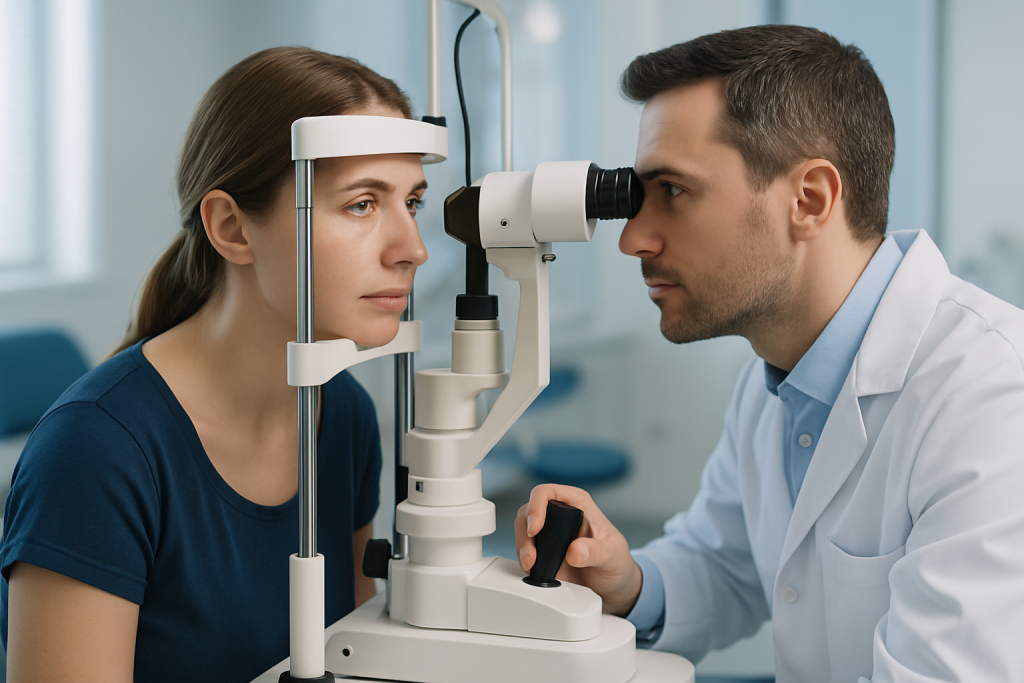
White spots under the eyes may be easy to see in the mirror but cause no discomfort at all. Milia often appear as tiny, pearl-like bumps that are smooth, firm, and clustered on the lower eyelids or nearby facial skin. They usually do not itch or hurt, although some people notice them because makeup sits unevenly over the area.
Other causes can look slightly different. Xanthelasma often appears as soft, flat or slightly raised yellow-white patches near the inner corners of the eyelids. If a white spot is associated with redness, swelling, tenderness, flaking, crusting, or discharge, the issue may be more than a simple cosmetic concern and deserves medical review.
Symptoms that point to a need for evaluation include rapid growth, changes in shape or color, bleeding, vision changes, or pain. Even when there are no symptoms, a person may still choose to seek care if the spots are new, bothersome, or causing concern about appearance.
Causes & Risk Factors

Milia are the most familiar cause of white spots under the eyes. They form when dead skin cells and keratin become trapped just below the surface of the skin. This can happen spontaneously, but it is also more likely after skin irritation, heavy creams, certain cosmetic products, burns, or healing after procedures.
Xanthelasma is another well-known cause. These lesions are made of cholesterol-rich material deposited in the skin around the eyelids. They are not dangerous on their own, but they can sometimes occur in people who have abnormal lipid levels, diabetes, or a family history of lipid disorders. A doctor may recommend checking cholesterol or related metabolic factors, especially if the lesions are new or increasing.
Several factors can make under-eye spots more likely or more noticeable:
- Thicker or occlusive eye creams that trap skin cells
- Previous skin trauma, rubbing, or picking
- Sebaceous or sweat gland changes around the eyelids
- Sun exposure and general skin aging
- Underlying lipid or metabolic issues in some cases
Because the eyelid skin is thin and sensitive, even small changes can stand out. A condition that is harmless in one person may still deserve treatment if it keeps returning or is affecting comfort or confidence.
Diagnosis
Diagnosis usually starts with a visual examination of the skin around the eyes. A clinician will ask when the spots first appeared, whether they have changed, and whether any products, treatments, or eye irritation may have contributed. The shape, color, texture, and exact location help distinguish milia from xanthelasma and other eyelid conditions.
In many cases, no special test is needed to identify milia. If the appearance suggests xanthelasma or another condition with broader health implications, the clinician may advise blood tests to review cholesterol and other metabolic markers. If a lesion is unusual, persistent, or not clearly benign, a skin biopsy may occasionally be considered, though this is not common for typical under-eye white spots.
For international patients, this is often a practical point in the care journey: a short in-person assessment can prevent weeks of guesswork, online comparisons, and unsuccessful home treatment. The key is to confirm what the spot is before trying to remove it.
Treatment Options
Treatment depends entirely on the cause. Small milia often do not require treatment and may disappear on their own, although some remain for a long time. When removal is desired, a dermatologist or appropriately trained clinician can use a sterile procedure to open and extract the material safely. This should not be attempted at home because the under-eye area is easily irritated and can scar.
For xanthelasma, treatment may involve removal procedures such as careful excision, laser therapy, chemical methods, or other specialist approaches depending on the lesion and the clinician’s assessment. If a lipid disorder is present, addressing the underlying medical issue is important even if the skin lesions are also treated, because new deposits may otherwise continue to appear.
Other under-eye white spots may need entirely different care. Irritated skin, dermatitis, or post-inflammatory changes are managed by treating the underlying inflammation and avoiding triggers. A clinician may also recommend stopping certain heavy or comedogenic products if they seem to be contributing to clogged pores or milia formation.
Because the eyelids are so close to the eyes, treatment should be planned carefully. The safest option is usually the one that combines a correct diagnosis with the least aggressive approach needed to achieve relief or cosmetic improvement.
Prevention & Self-care
Not all white spots under the eyes can be prevented, but a few habits may reduce the chance of new milia or irritation. Gentle cleansing, avoiding harsh scrubbing, and using non-irritating eye-area products can help protect the thin skin in this region. It is also wise to avoid squeezing, picking, or trying to lance the spots with unsterile tools.
People who are prone to milia may benefit from simplifying their skincare routine around the eyes. Heavy ointments or thick creams can sometimes contribute to blocked pores in susceptible individuals, especially if layered repeatedly. A clinician or dermatologist can suggest product choices that are better suited to sensitive eyelid skin.
If xanthelasma is suspected or already diagnosed, follow-up care may include attention to overall cardiovascular and metabolic health. That does not mean the eyelid lesions are an emergency, but it does mean they can be a useful signal to review lipids, blood sugar, and family history with a doctor. For travelers who plan treatment abroad, it helps to bring a list of products used on the face, prior medical records, and any recent lab results to make the consultation more efficient.
When to See a Doctor
A doctor should evaluate white spots under the eyes if they are new and unexplained, increasing in number, changing in appearance, or causing pain, redness, swelling, or discharge. Medical advice is also important if the spot is not clearly a typical milia, especially when it looks flat, yellowish, or plaque-like rather than like a tiny bump.
It is also sensible to seek care if the spots interfere with vision, extend onto the eye itself, or appear after a rash, injury, or cosmetic procedure. People with diabetes, high cholesterol, or a family history of lipid disorders may want a more complete evaluation if xanthelasma is suspected. Even when the cause is benign, a proper diagnosis can prevent unnecessary self-treatment and give a clearer path forward.
If a person is considering care while visiting another country, a multidisciplinary evaluation can be especially helpful. Acibadem Health Point’s specialists and JCI-accredited hospitals diagnose and treat conditions such as white spots under the eyes for international patients in a coordinated, patient-centered way.
Living With Under-Eye Spots: What to Expect
Many under-eye white spots are long-lasting but harmless, and some never require treatment. For milia, a practical approach is often observation unless the spots are bothersome or cosmetically distressing. For xanthelasma or other lesions, the long-term outlook depends on the underlying cause and whether new spots continue to form.
It is helpful to think of these changes as skin findings that deserve the right level of attention, not immediate alarm. Most can be managed safely once the cause is identified. A calm, structured evaluation is usually more effective than repeated home attempts to remove them.
When treatment is needed, recovery is often straightforward, but the under-eye skin may be temporarily red or sensitive. Following aftercare instructions carefully and avoiding new irritation gives the area the best chance to heal well.
Frequently asked questions
01What are the white spots under my eyes most likely to be?
The most common cause is milia, which are tiny keratin-filled cysts. Other possibilities include xanthelasma, clogged pores, or skin changes after irritation, so the exact appearance matters.
02Can I remove white spots under my eyes at home?
It is not a good idea to squeeze or pick them, especially near the eyes. Home removal can cause irritation, infection, scarring, or injury to the delicate eyelid skin.
03Are white spots under the eyes related to cholesterol?
Sometimes they can be. Xanthelasma is linked to cholesterol deposits, although it can also occur in people with normal cholesterol levels, so a medical assessment is still useful.
04Do milia go away on their own?
Some milia resolve without treatment, while others remain for months or longer. If they are persistent or bothersome, a clinician can remove them safely in an office setting.
05Should I see a dermatologist or an eye doctor?
Either may be appropriate depending on the look of the lesion and local access to care. A dermatologist often evaluates skin-based causes, while an eye doctor is important if the eyelid margin or eye itself seems involved.
06When should I worry about white spots under my eyes?
Prompt evaluation is sensible if the spots grow, become painful, change color, bleed, or affect vision. It is also wise to get checked if they are new and you are unsure what they are.
This article is for general information only and is not a substitute for professional medical advice. Please consult a qualified doctor about your individual situation.
Explore treatments in Turkey — costs, top hospitals & a free quote
JCI-accredited · board-certified surgeons · reply within 24h
Add us as a Preferred Source to see more of our trusted health content across Google Search, AI Overviews and Discover.