When Can Doppler Detect Your Baby’s Heartbeat?
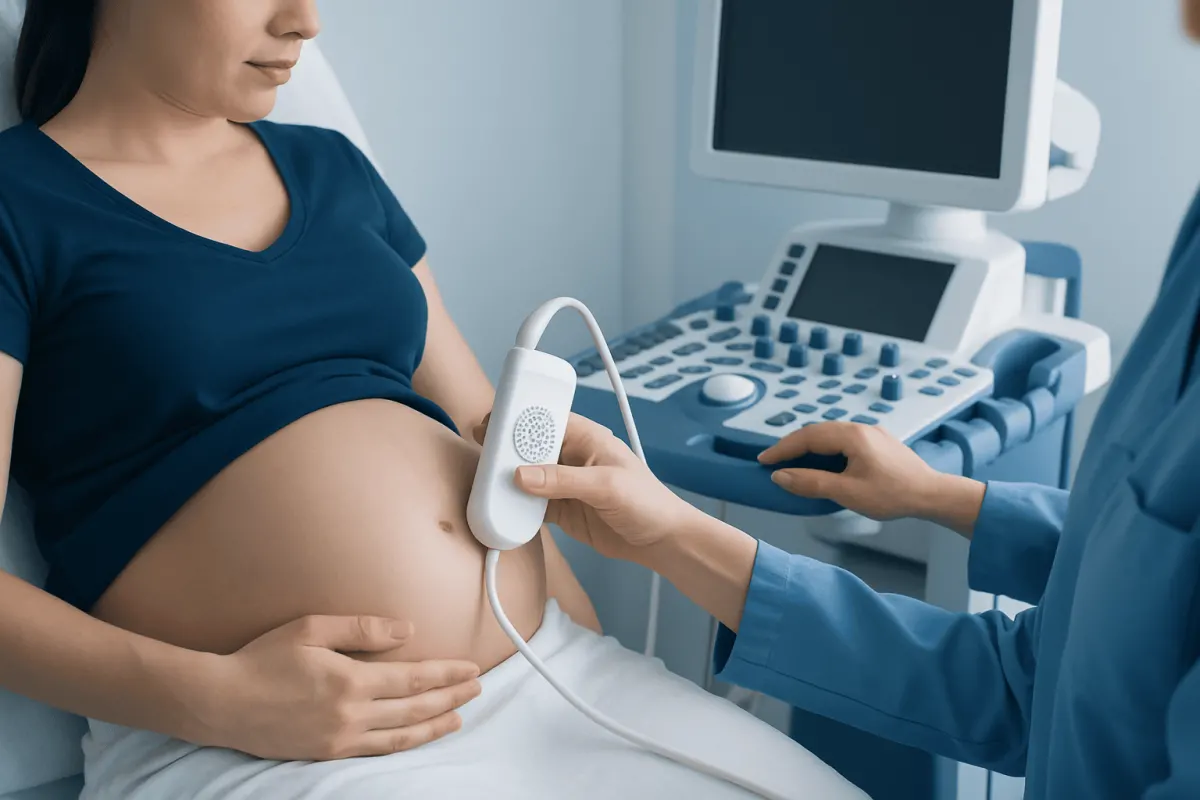
A fetal heartbeat can often be detected with a handheld Doppler during a prenatal appointment from about 10 to 12 weeks of pregnancy. Not hearing it at one visit, particularly earlier in pregnancy, is common and usually reflects pregnancy dating, fetal position, or technical factors rather than a problem.
When can the baby's heartbeat be heard by Doppler?
In many pregnancies, a healthcare professional can detect the baby’s heartbeat with a handheld fetal Doppler at about 10 to 12 weeks of pregnancy. However, it may not be heard until 12 to 14 weeks, and occasionally later, even when the pregnancy is developing normally. This is especially common when dates are uncertain or the examination takes place early in the first trimester.
Not finding a heartbeat with Doppler at a single appointment is therefore often harmless. The clinician will consider the estimated gestational age, symptoms, examination findings, and previous Echocardiogram Show? Heart Ultrasound Results Explained" class="ahp-ilk">ultrasound results before deciding whether any further assessment is needed. If there is uncertainty, ultrasound is usually a more reliable way to check for cardiac activity in early pregnancy.
A Doppler does not literally “listen” to the heart in the same way as a stethoscope. It uses sound waves to detect movement of blood through the fetal heart and converts that movement into an audible signal. The sound may be fast and rhythmic, but only a trained clinician can reliably distinguish it from the pregnant person’s own pulse or blood flow in nearby vessels.
Why timing differs from one pregnancy to another
Pregnancy weeks are generally counted from the first day of the last menstrual period, rather than from conception. Ovulation and implantation do not happen on exactly the same day in every cycle, so a pregnancy may be earlier than expected based on menstrual dates. Even a difference of several days can affect whether a small fetal heartbeat can be located with Doppler.
Several normal physical factors can also make detection more difficult. These include the position of the uterus, such as a uterus that tilts backward; the baby’s position; the location of the placenta; and the amount of tissue between the Doppler probe and the uterus. In early pregnancy, the uterus remains low in the pelvis, so the probe may need to be placed very low on the abdomen.
Equipment and technique matter as well. A trained midwife, obstetrician, or sonographer knows where to begin looking, how to adjust the probe, and how to tell maternal blood flow from fetal cardiac activity. For these reasons, an unsuccessful attempt with a home device or at an early appointment does not by itself indicate that there is a concern.
Doppler, ultrasound, and the fetal heartbeat
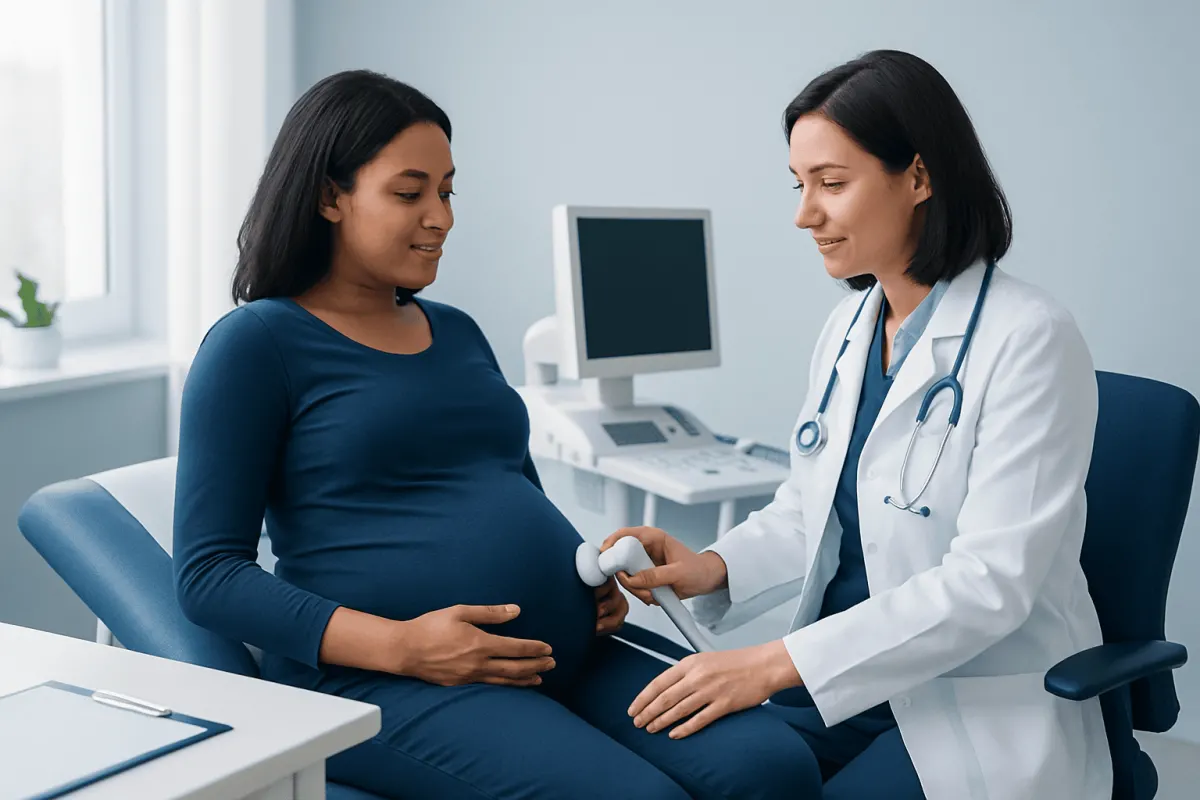
Ultrasound can identify cardiac activity earlier than a handheld Doppler. In many viable pregnancies, a transvaginal ultrasound may show cardiac activity at around 5½ to 6 weeks of pregnancy, while an abdominal ultrasound may do so somewhat later. Exact timing varies, and an ultrasound performed very early may need to be repeated after an appropriate interval if the findings are not yet definitive.
During an ultrasound, the healthcare team can assess more than the heartbeat. They can confirm the pregnancy’s location, estimate gestational age, check whether there is one fetus or more, and review early development. This is important because a Doppler finding alone cannot provide the same information.
When a heartbeat is not detected at an expected time, clinicians do not make conclusions from Doppler alone. They may review menstrual dates, perform an ultrasound, or arrange repeat imaging. In selected very early pregnancies, blood tests that measure pregnancy hormone levels may also help guide follow-up, though ultrasound findings and clinical symptoms remain central to assessment.
What happens if a clinician cannot find the heartbeat?
The next step depends mainly on how far along the pregnancy is thought to be and whether there are symptoms. If the pregnancy is likely earlier than 12 weeks and the person feels well, the clinician may try again after repositioning the patient or may schedule a follow-up examination. A repeat Doppler check or ultrasound at a later date is often all that is needed.
If the gestational age is uncertain, an ultrasound can clarify whether the pregnancy is earlier than expected. If an ultrasound is performed before development is far enough along to provide a clear answer, repeating it after a medically appropriate interval is safer and more informative than assuming a diagnosis from a single early scan.
Bleeding or pain may prompt an earlier ultrasound and clinical review. Healthcare professionals will assess for causes such as early pregnancy bleeding, pregnancy loss, or an ectopic pregnancy, which is a pregnancy developing outside the uterus. An ectopic pregnancy requires prompt evaluation because it can become serious, although it is not the usual explanation for an early Doppler that does not pick up a heartbeat.
After the first trimester, the approach is different. If there is concern about fetal wellbeing later in pregnancy, a maternity team may assess the fetal heart rate with Doppler or electronic monitoring and may use ultrasound to examine growth, fluid levels, movement, and blood flow when appropriate.
Using a home fetal Doppler safely
Home fetal Dopplers are available in some countries, but they have important limitations. Finding a sound at home cannot confirm that the fetus is well, and not finding one can cause unnecessary worry, particularly before 14 weeks. It can also be difficult to know whether the device is detecting the fetal heartbeat, the pregnant person’s own pulse, or blood flow in the placenta.
For these reasons, home Dopplers should not be used to delay contacting a maternity provider about symptoms such as bleeding, pain, fluid loss, or reduced fetal movement later in pregnancy. A reassuring sound does not rule out conditions that need medical assessment. Routine antenatal appointments, screening, and any recommended ultrasound scans remain the appropriate way to monitor pregnancy health.
Anyone who chooses to use a home Doppler should discuss it with their obstetrician or midwife and follow the device instructions. It should be used briefly and as a supplement to, never a replacement for, professional care. Repeated searching for a heartbeat can increase anxiety without providing reliable clinical information.
When to seek medical care
Contact a doctor, midwife, or maternity unit promptly if there is vaginal bleeding, persistent or worsening abdominal or pelvic pain, dizziness, fainting, shoulder-tip pain, fever, or a general feeling of being unwell in early pregnancy. These symptoms do not always mean there is a serious problem, but they need timely assessment. Emergency care is appropriate for heavy bleeding, severe pain, collapse, or signs of shock.
Later in pregnancy, it is important to seek maternity advice the same day if the baby is moving less than usual, movements have stopped, or there has been a clear change in the baby’s normal movement pattern. A home Doppler should not be used to decide whether to seek help in this situation. The maternity team can assess fetal wellbeing using the right methods for that stage of pregnancy.
People with a previous ectopic pregnancy, recurrent pregnancy loss, fertility treatment, or other individual risk factors may be offered earlier review. Acıbadem Health Point’s multidisciplinary specialists in JCI-accredited hospitals can assess pregnancy concerns and coordinate appropriate imaging and obstetric care for international patients.
Supporting healthy prenatal care
Regular prenatal care offers the best opportunity to confirm pregnancy dating, discuss symptoms, and receive recommended screening. Keeping a record of the first day of the last menstrual period, cycle length, previous scan dates, and any symptoms can help the maternity team interpret early findings accurately.
Healthy pregnancy care includes taking prenatal vitamins containing folic acid as advised, avoiding alcohol and smoking, reviewing all medicines and supplements with a clinician, and attending scheduled appointments. People should not stop prescribed medication without medical advice, as some treatments are important for their own health and pregnancy care.
It can be emotionally difficult to wait for a repeat scan or Doppler check. Asking the care team what they expect to learn from the next test, when results will be available, and which symptoms should prompt earlier contact may provide reassurance. Individual guidance from a qualified obstetrician or midwife is always more useful than comparing heartbeat timing with another person’s pregnancy.
Frequently asked questions
01Can a baby's heartbeat be heard by Doppler at 8 weeks?
It is uncommon to reliably detect a fetal heartbeat with a handheld abdominal Doppler at 8 weeks. Cardiac activity may be visible on a transvaginal ultrasound around this stage, but Doppler detection usually becomes more feasible from about 10 to 12 weeks.
02Is it normal not to hear the heartbeat at 12 weeks?
Yes, it can still be normal not to hear the heartbeat by Doppler at 12 weeks. Differences in dating, fetal position, placenta location, uterine position, and body tissue can all affect detection; an ultrasound may be recommended if clarification is needed.
03What does the fetal heartbeat sound like on a Doppler?
The fetal heart rate is usually much faster than the pregnant person's pulse and may sound like a quick, regular rhythm. However, blood flow from the placenta or maternal vessels can also create sounds, so only a trained professional can interpret the finding reliably.
04Can a home Doppler detect a miscarriage?
No. A home Doppler cannot diagnose or rule out miscarriage, and hearing a sound does not confirm that the pregnancy is progressing normally. Bleeding, pain, or other concerns should be discussed with a maternity professional even if a home device seems reassuring.
05When should reduced fetal movement be checked?
Any noticeable reduction or change in a baby's usual movements later in pregnancy should be assessed by a maternity unit the same day. A person should contact their provider promptly rather than using a home Doppler to check for a heartbeat.
06Will an anterior placenta prevent hearing the heartbeat?
An anterior placenta, located at the front of the uterus, can sometimes make Doppler detection more difficult at certain stages of pregnancy. It does not usually prevent a clinician from assessing the fetal heartbeat when appropriate, but more time or an ultrasound may be needed.
This article is for general information only and is not a substitute for professional medical advice. Please consult a qualified doctor about your individual situation.
Heart care in Turkey — expert evaluation and treatment
JCI-accredited · board-certified surgeons · reply within 24h
Add us as a Preferred Source to see more of our trusted health content across Google Search, AI Overviews and Discover.