What Size of Kidney Cyst is Dangerous?

Key Takeaways
- Many kidney cysts are harmless and are found by chance on imaging.
- The question is not only size; appearance, growth, and symptoms are more important.
- Large or complex cysts may need closer follow-up with ultrasound, CT, or MRI.
- Pain, fever, blood in the urine, or urinary blockage should be medically assessed.
- Treatment ranges from observation to drainage or surgery, depending on the cause and features of the cyst.
In most cases, a kidney cyst is not dangerous just because of its size; what matters more is whether it is simple or complex, whether it causes symptoms, and whether it affects kidney function. A doctor may recommend monitoring or treatment if the cyst is large, changing, or linked to pain, blood in the urine, infection, or blockage.
Overview
In practice, the “danger” of a kidney cyst depends on several details working together: the cyst’s appearance, whether it is changing, whether it causes symptoms, and whether there are signs of kidney damage or infection. That is why a scan report is interpreted alongside the person’s history, examination, and, when needed, follow-up imaging.
For people traveling for care, it is common to bring previous scans and reports from home so a specialist can compare them with new images. That comparison can be especially helpful when deciding whether the cyst is stable, growing slowly, or showing features that justify treatment.
Symptoms

Some warning signs are more urgent than others. Severe pain, visible blood in the urine, fever with flank pain, vomiting, or inability to pass urine should not be ignored, because they may point to infection, obstruction, or bleeding that needs prompt care.
Even when symptoms are mild, a new change matters. A cyst that becomes painful after being silent for years may simply need follow-up imaging, but the change itself is worth discussing with a doctor rather than assuming it is harmless.
Causes & Risk Factors
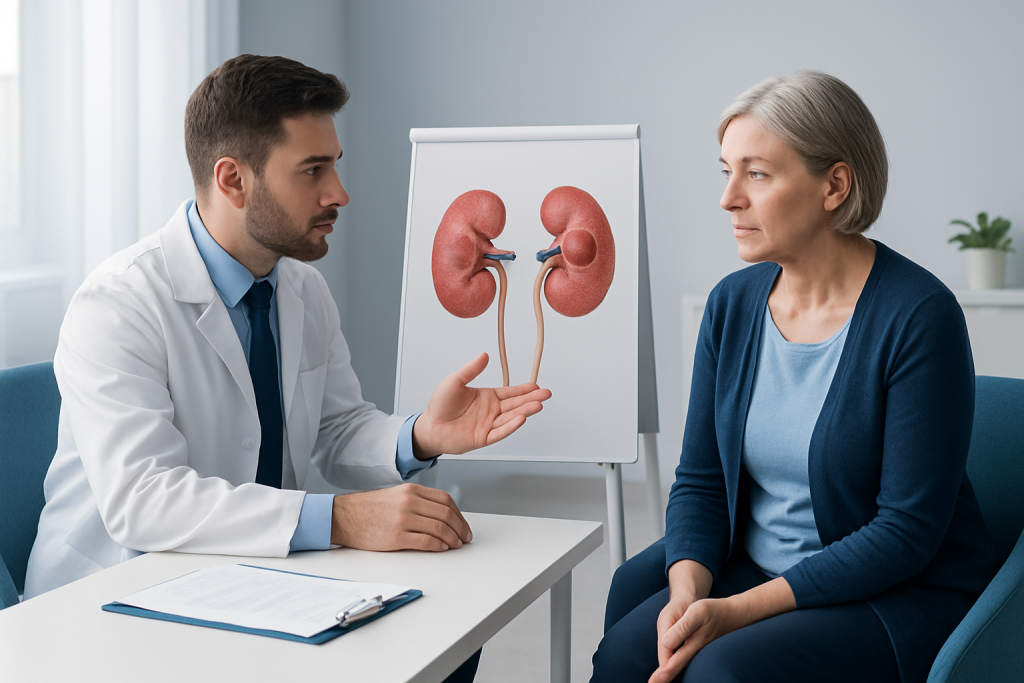
People with polycystic kidney disease are a special group because they can develop many cysts in both kidneys, and the overall kidney size and function become more relevant than any single cyst measurement. In that setting, care focuses on long-term monitoring and protecting kidney function.
For many others, a kidney cyst is an incidental finding with no clear cause and no long-term impact. The most important task is to identify which cysts fit that reassuring pattern and which ones need a more careful look.
Diagnosis
Specialists sometimes use structured imaging classifications to estimate how suspicious a cyst appears. That may sound technical, but the practical goal is straightforward: to separate low-risk cysts from those that deserve repeat imaging, a second opinion, or referral to a urologist or kidney specialist.
For patients arranging care across borders, having the original image files as well as the written report is valuable. Different centers can compare studies more accurately when they can review the actual scans rather than relying only on translated summaries.
Treatment Options
People often ask whether a large cyst must be removed. The answer is no: a large simple cyst may still be observed if it is stable and not causing symptoms. By contrast, a smaller cyst with irregular features may need closer follow-up because the imaging appearance is more important than the number on the report.
For international patients, treatment planning also includes practical questions such as how many follow-up visits are needed, whether a procedure can be done safely during one trip, and what monitoring should continue after returning home. A good plan accounts for both the medical findings and the realities of travel.
Prevention & Self-care
If a doctor has advised surveillance, it is important to keep the schedule even if the cyst has not caused problems. Kidney cyst follow-up is often less about immediate treatment and more about spotting changes early enough to act calmly and appropriately.
Good self-care also includes knowing what not to do: do not assume a cyst report is “nothing,” but do not panic at the word “cyst” either. The safest approach is to review the scan with a qualified clinician who can explain what the specific findings mean in context.
When to See a Doctor
When traveling for care, it is reasonable to seek a specialist opinion if scan wording is unclear, if previous reports are inconsistent, or if a local doctor has recommended further evaluation but the next step is uncertain. Bringing copies of past images and laboratory results usually makes that visit more useful.
Acibadem Health Point’s multidisciplinary specialists and JCI-accredited hospitals diagnose and treat kidney cysts for international patients, with care plans built around both the imaging findings and the person’s follow-up needs.
Frequently asked questions
01What size of kidney cyst is dangerous?
There is no single size that makes a kidney cyst dangerous. Doctors are more concerned about whether it is simple or complex, whether it is growing, and whether it causes symptoms or affects kidney function.
02Can a large kidney cyst be harmless?
Yes. A large simple cyst can still be harmless if it has thin walls, clear fluid, and no troubling features on imaging. It may only need observation unless it causes pain or other problems.
03What makes a kidney cyst more concerning than its size?
Irregular walls, internal solid areas, calcium deposits, growth over time, or symptoms such as blood in the urine or fever make a cyst more concerning. These features usually matter more than the measurement alone.
04Do kidney cysts always need treatment?
No. Many kidney cysts need no treatment at all and are simply watched over time. Treatment is usually reserved for cysts that cause symptoms, infection, blockage, or suspicious imaging findings.
05How is a kidney cyst checked over time?
Doctors may use ultrasound, CT, or MRI to compare the cyst with earlier scans. They may also check urine and blood tests to see whether the cyst is affecting the kidneys or causing a complication.
06When should someone get urgent medical help?
Urgent care is appropriate for severe pain, fever with flank pain, visible blood in the urine, or trouble passing urine. These can be signs of infection, bleeding, or blockage that should be assessed promptly.
This article is for general information only and is not a substitute for professional medical advice. Please consult a qualified doctor about your individual situation.
Explore treatments in Turkey — costs, top hospitals & a free quote
JCI-accredited · board-certified surgeons · reply within 24h
Add us as a Preferred Source to see more of our trusted health content across Google Search, AI Overviews and Discover.