Choosing a Sleep Side Depends on Comfort and Symptoms

You roll over, punch the pillow, and wonder: am I even sleeping on the right side? For most healthy adults, there is no single perfect side to sleep on. The best choice is usually the one that feels comfortable and lets you sleep through the night.
That said, evidence suggests certain positions may help with specific concerns — acid reflux, snoring, pregnancy, or back pain. So the ideal sleep side really depends on you and the symptoms you have.
Overview: what side should you sleep on?
For most people, sleep position is not a sign of illness, and there is no single sleep side that is best for everyone. In general, the best position is one that allows comfortable, uninterrupted sleep and does not trigger symptoms such as heartburn, pain, snoring, or numbness. That is why the answer to what side should you sleep on is usually: the side that feels comfortable, unless a specific health issue makes another position more helpful.
Research suggests that body position can affect breathing, digestion, circulation, pressure on joints, and spinal posture during sleep. Left-side sleeping may be helpful for acid reflux and pregnancy. Back sleeping may support the head, neck, and spine in a more neutral position for some people. Side sleeping in general can also reduce snoring in some individuals, especially compared with sleeping flat on the back.
Most variation in sleep position is harmless. But if you keep shifting because you wake gasping, have severe reflux, persistent shoulder or hip pain, frequent numbness in an arm, or extreme Sleep Apnea" class="ahp-ilk">daytime sleepiness, your sleep position may be pointing to something worth checking. In those cases, a doctor may ask about symptoms, sleep habits, medical history, medications, and sometimes recommend tests such as a sleep study or evaluation for digestive, orthopedic, or breathing conditions.
How different sleep positions affect the body
Sleep position influences how gravity acts on the airway, stomach, spine, and pressure points. When a person lies on their back, the tongue and soft tissues of the throat may fall backward more easily, which can narrow the airway and worsen snoring in some people. That said, back sleeping spreads your weight evenly and may take pressure off the shoulders and hips.
Side sleeping is very common and can be comfortable for many adults. It may help keep the airway more open than back sleeping and can reduce snoring for some people. The trade-off: it puts pressure on one shoulder, one hip, or the jaw, and you may wake up stiff if your mattress or pillow is not supporting you well.
Stomach sleeping is usually the least recommended position for comfort because it often twists the neck and can flatten the natural curve of the spine. Some people feel they breathe more easily on their stomach, but it is more likely to cause neck strain or back discomfort over time. If stomach sleeping is the only comfortable option, small pillow adjustments may reduce strain, though it is still not ideal for many people.
- Back sleeping: may support alignment, but can worsen snoring or sleep apnea.
- Side sleeping: often comfortable and may reduce snoring, but can stress the shoulder or hip.
- Stomach sleeping: may strain the neck and lower back.
When one side may be better than another
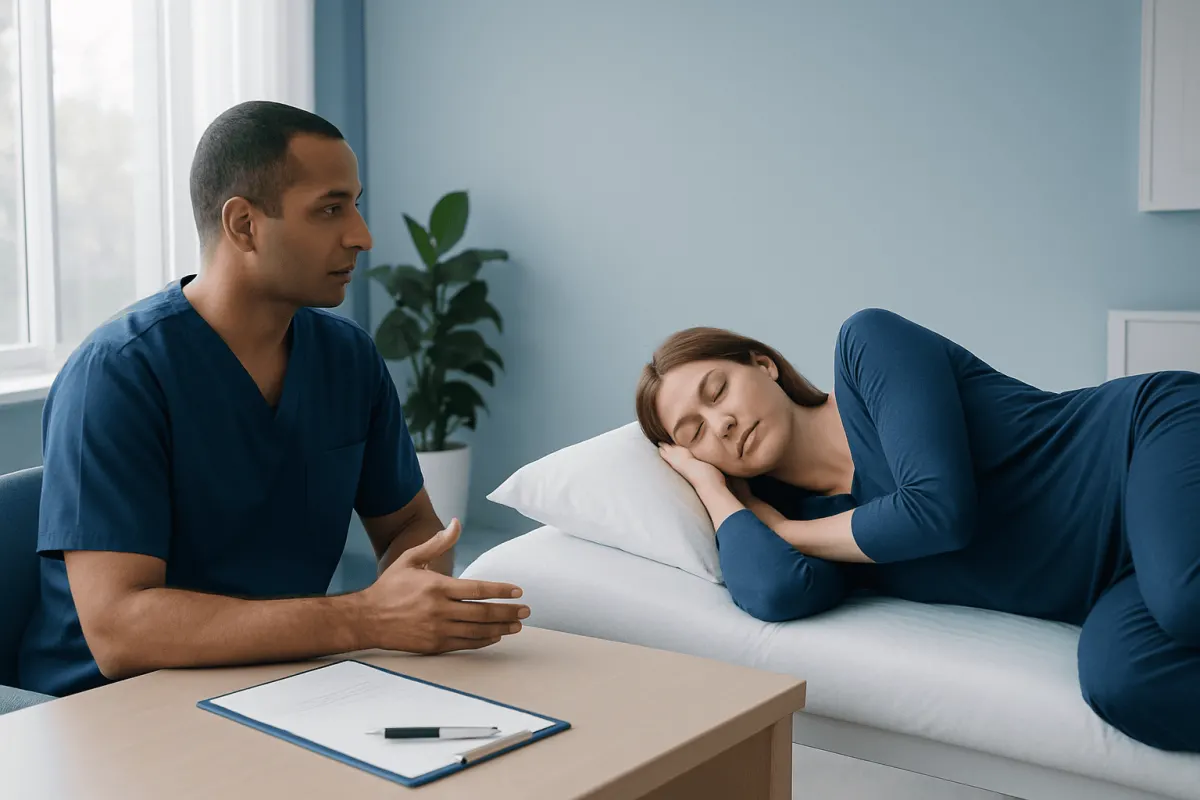
Left-side sleeping is often suggested for people with nighttime acid reflux because it may help keep stomach contents from flowing back into the esophagus. A person with frequent heartburn, regurgitation, sour taste, or coughing at night may notice symptom relief when sleeping on the left side, along with other measures such as avoiding large late meals. Persistent reflux symptoms may need assessment for gastroesophageal reflux disease.
Right-side sleeping is not automatically unhealthy. Many healthy people sleep comfortably on the right side without problems. However, in some individuals with reflux, right-side sleeping may allow symptoms to become more noticeable. If one side consistently worsens heartburn, it is reasonable to choose the opposite side when possible.
During pregnancy, especially later pregnancy, side sleeping is commonly advised rather than lying flat on the back for long periods. Left-side sleeping is often preferred because it may support comfortable circulation and reduce pressure from the uterus, although either side is often acceptable if it remains comfortable. A pregnancy pillow or pillow between the knees can make side sleeping easier.
People who snore or have suspected obstructive sleep apnea may sleep more quietly on their side than on their back. Positional snoring is common, but loud habitual snoring, witnessed pauses in breathing, or waking up choking should not be dismissed as just a sleep-position issue. In some cases, a doctor may evaluate for sleep apnea or consider sleep apnea treatment as part of care.
Sleep position and pain: neck, shoulder, back, and hips
For people with musculoskeletal pain, the best sleep side often depends on where the pain is located. Back sleeping may help some people with low back discomfort because it can keep the spine in a more neutral position, especially with support under the knees. Side sleeping may also work well if the head and neck are aligned with a suitable pillow and a pillow is placed between the knees.
Someone with shoulder pain may find it difficult to lie directly on the painful side. In that case, sleeping on the opposite side or on the back may reduce pressure. People with hip discomfort may prefer a softer pressure distribution and often benefit from placing a pillow between the knees to reduce strain on the pelvis and lower back.
Neck pain is often more related to pillow height and alignment than to choosing the left or right side specifically. The head should not tilt sharply upward or downward. If a person wakes with repeated neck stiffness, shoulder tingling, hand numbness, or persistent pain, a clinician may look for posture issues, joint problems, or nerve compression. In some cases, imaging or specialist evaluation can help, and treatment may include physical therapy or physical therapy and rehabilitation.
What doctors consider if sleep position seems to matter
When someone asks about sleep sides because symptoms are bothering them, a doctor pays less attention to the side itself and more to what the body is signalling. A clinical review may include questions about snoring, witnessed breathing pauses, heartburn, cough, chest discomfort, morning headaches, jaw pain, numbness, frequent awakenings, and daytime fatigue. The doctor may also ask about weight changes, alcohol use, nasal congestion, medicines, mattress support, and usual bedtime habits.
Depending on the symptoms, further evaluation may be recommended. A sleep study can help assess repeated breathing interruptions during the night. Ongoing reflux symptoms may lead to digestive evaluation, while persistent back, neck, or shoulder pain may need examination of joints, muscles, or nerves. If sleep quality is affected by chronic pain or significant spinal symptoms, the doctor may also consider orthopedic rehabilitation or other supportive care.
Most people do not need testing simply because they prefer one side over the other. Evaluation is more useful when there are red flags, persistent symptoms, or sleep disruption that affects daily life. The goal is not to force a single “correct” position, but to identify whether a treatable problem is making one position difficult or worsening sleep quality.
Practical tips to find the best sleeping position for you
Comfort and support matter just as much as which side you pick. A supportive pillow should keep the neck aligned with the rest of the spine. Side sleepers often need a pillow with enough height to fill the space between the head and shoulder, while back sleepers usually do best with a pillow that does not push the head too far forward.
Body positioning can also be adjusted with simple supports. A pillow between the knees can help side sleepers keep the hips and lower back more neutral. A small pillow under the knees may make back sleeping more comfortable. People with reflux may benefit from sleeping on the left side and slightly elevating the head of the bed rather than stacking many pillows, which can bend the neck awkwardly.
If changing sleep position feels difficult, gradual changes are often more realistic than trying to stay in one posture all night. Some people use a body pillow to stay on their side more comfortably. Good sleep hygiene also helps: keeping a regular sleep schedule, limiting alcohol close to bedtime, and seeking treatment for nasal blockage, pain, or reflux when those problems interfere with rest.
When to seek medical care
Sleep position is often a matter of comfort, but medical advice is important if a person regularly wakes up gasping, choking, or short of breath. Loud persistent snoring, witnessed pauses in breathing, severe daytime sleepiness, or morning headaches can point to a sleep-related breathing disorder that deserves professional evaluation.
A doctor should also be consulted if sleeping on one side triggers strong chest discomfort, repeated heartburn, vomiting, black stools, significant back or neck pain, arm or leg weakness, or ongoing numbness. These symptoms are not usually explained by normal position changes alone and may need targeted assessment.
People who are pregnant and cannot get comfortable, older adults with new pain when lying down, and anyone with recent injury should also discuss symptoms with a clinician. If you need input from more than one specialty, Acıbadem Health Point’s multidisciplinary specialists and JCI-accredited hospitals diagnose and treat sleep, digestive, and musculoskeletal conditions for international patients.
Frequently asked questions
01Is there a medically best side to sleep on?
There is no single best side for every person. For most healthy adults, the best position is the one that is comfortable, supports good sleep, and does not worsen symptoms such as reflux, pain, or snoring.
02Is left-side sleeping better than right-side sleeping?
Left-side sleeping may be more helpful for some people with nighttime acid reflux and is often preferred during pregnancy. Right-side sleeping can still be completely normal and comfortable if it does not trigger symptoms.
03Can sleeping on your back be unhealthy?
Back sleeping is not automatically unhealthy and may help some people maintain neutral spinal alignment. However, it can worsen snoring or obstructive sleep apnea in certain individuals, especially if they already have airway narrowing during sleep.
04What sleep position is best for acid reflux?
Many people with reflux feel better sleeping on the left side, especially when the head of the bed is slightly elevated. If heartburn, sour taste, or coughing at night continues despite these changes, a doctor should assess the symptoms.
05What side should pregnant women sleep on?
Side sleeping is generally recommended in pregnancy, particularly later in pregnancy, instead of lying flat on the back for long periods. The left side is often suggested, but either side is usually acceptable if it is comfortable and advised by the maternity team.
06Can sleep position cause shoulder or neck pain?
Yes, poor support or prolonged pressure on one side can contribute to shoulder or neck discomfort. The issue is often related to pillow height, mattress support, and alignment rather than the left or right side alone.
07When should someone talk to a doctor about sleep position?
Medical advice is a good idea if sleep position is linked with choking, severe snoring, frequent heartburn, chest discomfort, numbness, weakness, or major daytime tiredness. These symptoms may point to a treatable condition rather than a simple preference in how a person sleeps.
This article is for general information only and is not a substitute for professional medical advice. Please consult a qualified doctor about your individual situation.
Persistent digestive symptoms? Get evaluated in Turkey
JCI-accredited · board-certified surgeons · reply within 24h
Add us as a Preferred Source to see more of our trusted health content across Google Search, AI Overviews and Discover.