

What Is Stomach Vacuum? A Complete Medical Guide
- 8 min read
- Published November 26, 2026
Key Takeaways
- A stomach vacuum is a controlled exercise that activates the deep core muscles, especially the transverse abdominis.
- It is not a weight-loss method on its own and does not reduce belly fat locally.
- People with certain health conditions, including pregnancy or some heart and abdominal issues, may need to avoid it or modify it.
- Good technique matters more than how long the hold lasts.
- Anyone with pain, dizziness, or a history of surgery should ask a clinician before starting.
A stomach vacuum is a breathing-and-core engagement exercise that draws the abdomen inward and is often used in fitness and rehabilitation programs. It may help improve core awareness and abdominal control, but it is not suitable for everyone and should be done with proper technique.
Overview
A stomach vacuum is a core exercise in which a person gently pulls the abdomen inward, usually while exhaling or holding the breath in a controlled way, to engage the deeper abdominal muscles. It is sometimes called an abdominal vacuum, and it is used in fitness settings, postural training, and some rehabilitation programs.
Despite its name, the stomach is not being “vacuumed” in the medical sense. The exercise does not shrink the stomach organ and does not directly burn belly fat. Instead, it trains the body to recruit the transverse abdominis, a deep stabilizing muscle that supports the trunk and helps with posture and spinal control.
For some people, learning this movement can improve body awareness and abdominal control. For others, especially those with breathing problems, abdominal pressure issues, or recent surgery, it may be uncomfortable or unwise. A qualified clinician or physiotherapist can help decide whether the exercise fits an individual situation.
How the stomach vacuum works
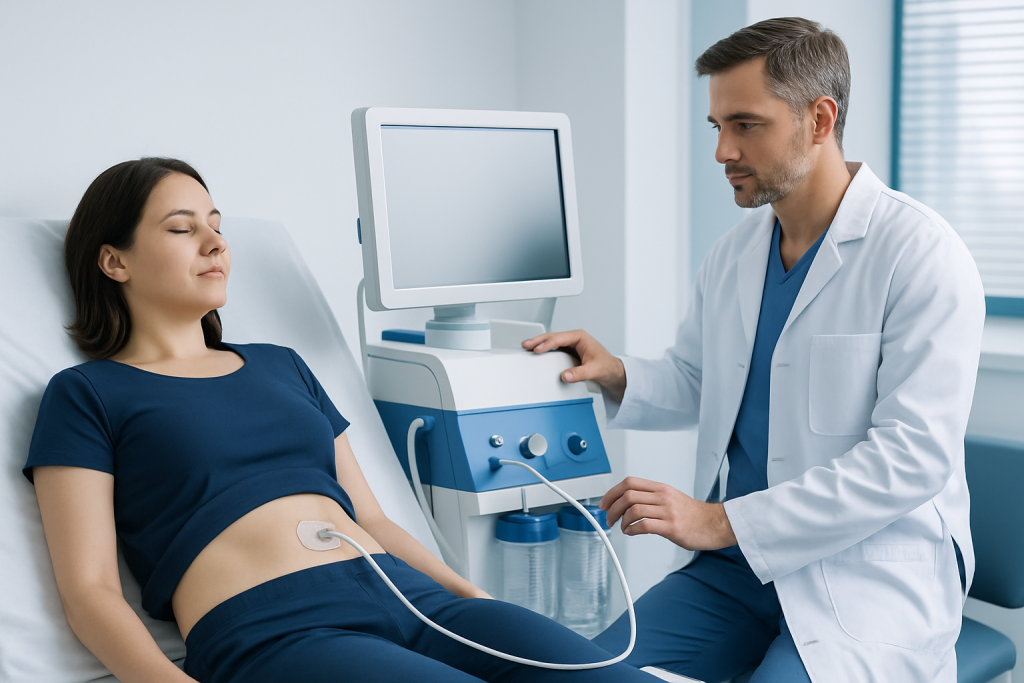
The stomach vacuum works by asking the deep core muscles to contract inward rather than outward. When done correctly, the lower abdomen moves gently toward the spine without forcing the ribs, shoulders, or neck to tense up.
This action mainly targets the transverse abdominis, which acts like a natural support belt around the abdomen. It also encourages coordination between breathing and core stabilization, which is useful in movements such as lifting, reaching, walking, and maintaining upright posture.
Many people notice that the stomach vacuum is more subtle than traditional abdominal exercises. There is usually no dramatic motion, which is normal. The goal is control, not intensity, and a short, steady hold with calm breathing is generally more useful than straining for a long time.
Potential benefits and limitations

The most realistic benefit of a stomach vacuum is improved core awareness. People may become better at gently bracing the abdomen during daily activities, which can support movement efficiency and posture. Some rehabilitation programs also use similar breathing-and-core techniques after abdominal weakness or during return-to-exercise planning.
However, the exercise has limits. It is often marketed as a way to flatten the abdomen quickly, but it is not a stand-alone solution for body composition or waist reduction. Visible changes depend on many factors, including overall activity level, nutrition, sleep, and underlying health.
It is also important to remember that more is not always better. Overdoing abdominal drawing-in maneuvers may lead to breath-holding, pelvic floor strain, or discomfort in people who are not ready for them. In a medical or rehabilitation setting, the exercise is usually introduced gradually and with attention to symptom response.
Who may benefit and who should be cautious
People who may benefit from learning a stomach vacuum include those working on posture, athletes refining core control, and some patients in guided rehabilitation after abdominal weakness or deconditioning. It may also be helpful for people who have difficulty sensing their deep abdominal muscles during exercise.
Caution is important for anyone with pregnancy, a recent abdominal or pelvic surgery, hernia symptoms, significant back pain, pelvic floor disorders, or conditions that make breath-holding uncomfortable. Individuals with heart or lung disease may also need tailored advice, because some versions of the exercise change pressure inside the chest and abdomen.
People with diastasis recti, postpartum recovery needs, or chronic digestive discomfort should not assume the exercise is automatically safe. In these situations, a clinician or physiotherapist can determine whether a modified version is appropriate and how it should be timed within recovery.
How it is diagnosed or assessed in a clinical setting
A stomach vacuum itself is not “diagnosed,” but a clinician may assess whether a person is using it safely and effectively. This usually starts with a review of symptoms, medical history, surgery history, breathing pattern, and exercise goals.
In a physiotherapy or rehabilitation visit, the provider may observe posture, rib movement, abdominal activation, and whether the person can breathe normally while engaging the deep core. If pain, bulging, dizziness, or poor coordination appears, the exercise may be modified or replaced.
Sometimes the real question is not whether the stomach vacuum can be done, but whether another exercise would be better suited to the person’s condition. That is especially true after childbirth, after abdominal surgery, or when there is back or pelvic floor involvement.
Safe ways to practice the exercise
When a clinician says it is appropriate, the stomach vacuum is usually practiced in a calm position such as lying down, sitting, or standing. The person exhales, gently draws the abdomen inward, keeps the shoulders relaxed, and avoids forcing the neck or chest.
A useful approach is to keep the movement small and controlled. The person should be able to continue breathing normally as skill improves, and the hold should stop immediately if there is pain, lightheadedness, pressure, or visible strain.
- Start in a stable position with good posture.
- Exhale gently before drawing the abdomen inward.
- Avoid holding the breath if it causes tension or dizziness.
- Stop if there is pain, bulging, or pelvic discomfort.
- Ask a physiotherapist for technique guidance if unsure.
In international-patient care, patients often find it useful to learn the movement during a supervised rehabilitation consultation before continuing it at home or while traveling. If needed, Acibadem Health Point’s multidisciplinary specialists and JCI-accredited hospitals diagnose and treat related abdominal and core concerns for international patients in a coordinated setting.
Prevention, self-care, and better core health
A stomach vacuum is only one small part of core health. People looking to support the abdomen and spine usually do better when they combine safe exercise with walking, gradual strength training, good hydration, and attention to breathing mechanics during daily tasks.
Self-care also includes recognizing when the body is asking for a slower pace. Persistent bloating, abdominal bulging, pelvic heaviness, or back pain should not be pushed through with harder core work. Those symptoms deserve assessment, because they may reflect a condition that needs a different approach.
For many people, the best long-term plan is a balanced one: exercises that strengthen the whole trunk, enough rest for recovery, and a technique that fits the person’s medical background rather than internet trends. Consistency and safety matter more than dramatic movements.
When to see a doctor
Medical advice is appropriate if a stomach vacuum causes pain, dizziness, shortness of breath, unusual abdominal bulging, or worsening pelvic or back symptoms. It is also wise to speak with a doctor before starting if there has been recent surgery, pregnancy, a hernia, or a known abdominal wall problem.
A clinician should evaluate symptoms that suggest the exercise is not tolerated well, such as pressure, heaviness, urinary leakage, or a sense that the abdomen is doming rather than drawing inward. These signs may point to a need for a modified rehabilitation plan.
If someone is unsure whether the movement is safe for their condition, a consultation is the best next step. A trained professional can decide whether the stomach vacuum is helpful, should be postponed, or should be replaced with a more suitable core exercise.
Frequently asked questions
01What is a stomach vacuum in simple terms?
A stomach vacuum is a core exercise that gently draws the abdomen inward to activate deep abdominal muscles. It is used to improve control, posture, and breathing coordination rather than to directly reduce fat.
02Does a stomach vacuum flatten the belly?
It may improve how the abdominal wall is controlled, which can affect posture and how the midsection looks during standing or movement. It does not remove body fat or guarantee a flatter stomach by itself.
03Is the stomach vacuum safe for everyone?
No, it is not ideal for everyone. People who are pregnant, recently post-surgery, or dealing with hernias, pelvic floor symptoms, or certain heart and lung conditions should ask a clinician first.
04Can a stomach vacuum help with back pain?
Sometimes improved core control can support the spine, but the exercise is not a universal treatment for back pain. If pain is present, it is best to have a physiotherapist or doctor evaluate the cause before starting.
05How long should a stomach vacuum be held?
There is no single correct time for everyone. Technique, comfort, and breathing control matter more than holding the position for a long period, especially when a person is just learning.
06Is a stomach vacuum the same as sucking in the stomach?
Not exactly. Casual stomach sucking often creates tension and can disrupt breathing, while a proper stomach vacuum is a controlled exercise focused on deep core activation with good body alignment.
This article is for general information only and is not a substitute for professional medical advice. Please consult a qualified doctor about your individual situation.
Medical weight-loss options in Turkey — costs & eligibility
JCI-accredited · board-certified surgeons · reply within 24h
Add us as a Preferred Source to see more of our trusted health content across Google Search, AI Overviews and Discover.


How can we help you today?
Meet an Acibadem specialist by secure video, before you travel.
Book a video visit