What Is Pimple Inside Nose? A Complete Medical Guide

Key Takeaways
- A pimple inside the nose is commonly linked to irritation or a mild infection of the nasal vestibule.
- Picking, squeezing, or plucking nose hairs can make the area worse and raise infection risk.
- Warm compresses and gentle hygiene are often enough for mild cases, but persistent or worsening symptoms need medical review.
- Swelling, spreading redness, fever, or severe pain are reasons to see a doctor promptly.
- Treatment may include topical or oral medicine if the cause is nasal vestibulitis, a boil, or another infection.
A pimple inside the nose is often a small inflamed spot or infected hair follicle near the nostril opening. It is usually minor, but because the area is sensitive and prone to infection, proper care matters.
Overview
A pimple inside the nose is usually a small, tender bump on the skin at the entrance of the nostril. In medical terms, it is often related to irritation or infection of the nasal vestibule, the short passage just inside the nostrils where tiny hairs and oil glands are found.
Most cases are not dangerous and improve with simple care. Even so, the inside of the nose is not an area to ignore, because small infections can sometimes become more uncomfortable than they first appear. Understanding what the bump is, and what it is not, helps a person choose safe next steps rather than trying to force it to heal.
For people who travel for care, an ENT evaluation can be useful when a bump keeps returning, seems unusually painful, or does not settle with basic home measures. A careful exam can distinguish a simple blocked pore from nasal vestibulitis, a boil, a cyst, or another condition that needs treatment.
Symptoms

The most common sign is a sore, raised spot inside one nostril. It may feel like a small pimple, a crusty sore, or a painful bump that stings when the nose is touched or rubbed.
Depending on the cause, symptoms may include redness, swelling, tenderness, a small amount of pus, crusting, or a feeling of pressure in the nostril. Some people notice pain when blowing the nose or when the upper lip moves, because the tissues around the nostrils are closely connected.
Symptoms that suggest something more than a simple pimple include a rapidly enlarging lump, spreading redness on the nose or face, fever, repeated bleeding, or a bump that keeps coming back in the same place. These changes deserve medical attention rather than continued self-care alone.
Causes & Risk Factors
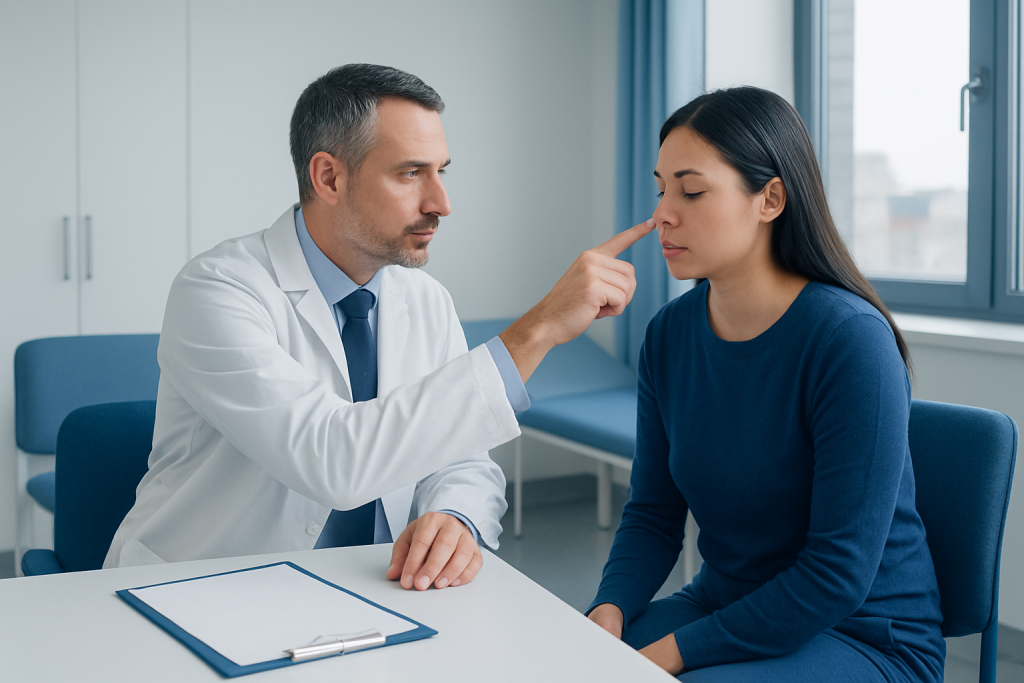
Several everyday factors can lead to a pimple-like bump inside the nose. The most common is inflammation of a hair follicle or skin pore near the nostril opening. This can happen after rubbing, frequent wiping, dry skin, or minor skin damage from nose picking or plucking nasal hairs.
Bacteria naturally present on the skin, especially Staphylococcus aureus, can enter through a small break in the skin and cause nasal vestibulitis or a boil. Less commonly, skin conditions such as acne, dermatitis, or eczema can irritate the area and create a similar-looking lesion.
Risk is higher in people who have dry nasal passages, frequent colds, allergies with repeated nose blowing, diabetes, or a tendency toward skin infections. Wearing masks for long periods, using nasal devices, or living in very dry environments may also contribute to irritation in some people.
Diagnosis
Diagnosis usually starts with a medical history and a close look at the nostril. An ENT specialist or primary care doctor can often identify the problem by appearance, location, and symptoms alone.
If the bump seems infected, the clinician may ask about recent trauma, nose picking, plucking, immune conditions, or any similar problems in the past. In some cases, a swab or culture may be taken if the infection is recurrent, severe, or not improving as expected.
When symptoms are unusual, or when a bump does not look like a routine pimple, further evaluation may be needed to rule out a cyst, abscess, herpes infection, or another nasal condition. The goal is to match treatment to the actual cause rather than treat every bump the same way.
Treatment Options
Mild cases often improve with conservative care. Warm compresses applied gently to the outside of the nose can help reduce discomfort and encourage natural drainage if the bump is small. Keeping the inside of the nose clean and avoiding picking are also important.
If a doctor suspects bacterial infection, treatment may include a topical antibiotic ointment or, in some cases, an oral antibiotic. The choice depends on the severity, the location, and whether the infection is limited to the skin or appears to be spreading. People should not use leftover antibiotics or put acne medications inside the nose unless a clinician specifically advises it.
Rarely, a larger boil or abscess may need drainage by a medical professional. This should never be attempted at home, since squeezing can push infection deeper into the tissue and increase the chance of complications. A doctor can decide whether the bump needs medication, drainage, or just observation.
If irritation rather than infection is the main issue, treatment may focus on restoring moisture and reducing triggers. A clinician may suggest saline sprays or other gentle measures to help the lining recover, especially when dryness or repeated nose blowing is part of the problem.
Prevention & Self-care
Prevention starts with protecting the delicate skin at the nostril opening. Gentle nose care matters more than aggressive cleaning. People should avoid picking inside the nose, squeezing bumps, or plucking hairs unless a doctor has recommended it.
Helpful self-care measures often include:
- Using a warm compress for comfort if the area is sore.
- Keeping hands clean and avoiding touching the nose repeatedly.
- Managing allergies or colds to reduce frequent rubbing and blowing.
- Using saline sprays or humidification if the nose feels dry, when appropriate.
It also helps to watch for patterns. If bumps appear after grooming, a new nasal device, or a dry climate, reducing that trigger may prevent repeat episodes. For international patients who are away from home, keeping symptoms simple and documented can make it easier for a doctor to assess what is happening during a short visit.
When to See a Doctor
Medical review is a good idea if the bump is very painful, does not improve after a few days of gentle care, or keeps returning. A doctor should also be seen sooner if the person has diabetes, a weakened immune system, or a history of serious skin infections.
Prompt evaluation is especially important if there is swelling of the nose or face, fever, increasing redness, headache, or any change in vision. These are not typical features of a simple pimple and may suggest a spreading infection that needs treatment.
People traveling for care may benefit from an ENT consultation when symptoms are persistent or the diagnosis is uncertain. Acibadem Health Point can connect international patients with multidisciplinary specialists and JCI-accredited hospitals for diagnosis and treatment of nasal and other ENT conditions.
Frequently asked questions
01Is a pimple inside the nose always an infection?
Not always. Some bumps are caused by irritation, blocked pores, or an inflamed hair follicle rather than a true infection. However, because bacteria are common in the nostril area, infection is a frequent cause and should be considered if the bump is painful, crusted, or draining.
02Can a person pop a pimple inside the nose?
No. Squeezing or popping can push bacteria deeper and worsen the problem. The safest approach is gentle care and medical evaluation if the bump is painful, enlarging, or persistent.
03How long does a pimple inside the nose take to heal?
Small, mild bumps may improve within a few days with gentle care. If it is caused by infection, healing may take longer and may require prescription treatment. A lack of improvement is a reason to seek medical advice.
04Is nasal vestibulitis the same as a pimple inside the nose?
They can look similar, but they are not exactly the same. Nasal vestibulitis is an infection and inflammation of the skin at the front of the nose, and it may appear as a pimple-like sore, crusting, or tenderness. A clinician can tell the difference on examination.
05When is a painful bump inside the nose urgent?
It is urgent if swelling spreads, the redness is moving across the face, fever develops, or the person feels very unwell. Sudden worsening pain or eye symptoms also deserve prompt medical care. These signs suggest something more than a simple pimple.
06What can help prevent repeated bumps inside the nose?
Avoiding nose picking, reducing dryness, and treating allergies or frequent colds can help. If bumps keep returning, a doctor may look for an underlying skin condition or recurring infection and recommend a more specific plan.
This article is for general information only and is not a substitute for professional medical advice. Please consult a qualified doctor about your individual situation.
Hair transplant in Turkey — costs, graft counts & a free assessment
JCI-accredited · board-certified surgeons · reply within 24h
Add us as a Preferred Source to see more of our trusted health content across Google Search, AI Overviews and Discover.