What Is Newborn Snoring? A Complete Medical Guide

Key Takeaways
- Newborn snoring is often related to mucus, congestion, or naturally small nasal passages.
- Not every noisy sleep sound means a medical problem, but persistent snoring deserves attention.
- Breathing effort, pauses, feeding problems, or poor weight gain are important warning signs.
- Home care may help if symptoms are mild, but babies should never be given over-the-counter cold medicines without medical advice.
- A doctor can determine whether the sound is coming from the nose, throat, or airway and advise next steps.
Newborn snoring is a noisy breathing sound during sleep that is often caused by temporary congestion or narrow nasal passages. Most cases are mild, but persistent or noisy breathing with other symptoms should be checked by a pediatrician.
Overview
Newborn snoring is a noisy breathing sound that happens during sleep and may sound like soft rattling, snorting, or gentle whistling. In many babies, the sound is not true adult-style snoring; it is often the result of a very small nose, temporary mucus, or normal newborn breathing patterns. The key question is not simply whether a baby sounds noisy, but whether the baby is breathing comfortably and feeding well.
Because newborns breathe mostly through their noses, even a small amount of congestion can sound dramatic. This can be especially noticeable during sleep, after feeding, or in dry air. Most of the time, the cause is temporary and improves as the baby grows, but ongoing snoring or unusually noisy breathing should not be ignored if it comes with other symptoms.
For families trying to decide whether to seek care, it helps to listen to the full picture: how the baby feeds, whether breathing looks relaxed, and whether there are pauses, color changes, or trouble waking. Those details are often more meaningful than the sound alone.
What newborn snoring can sound like
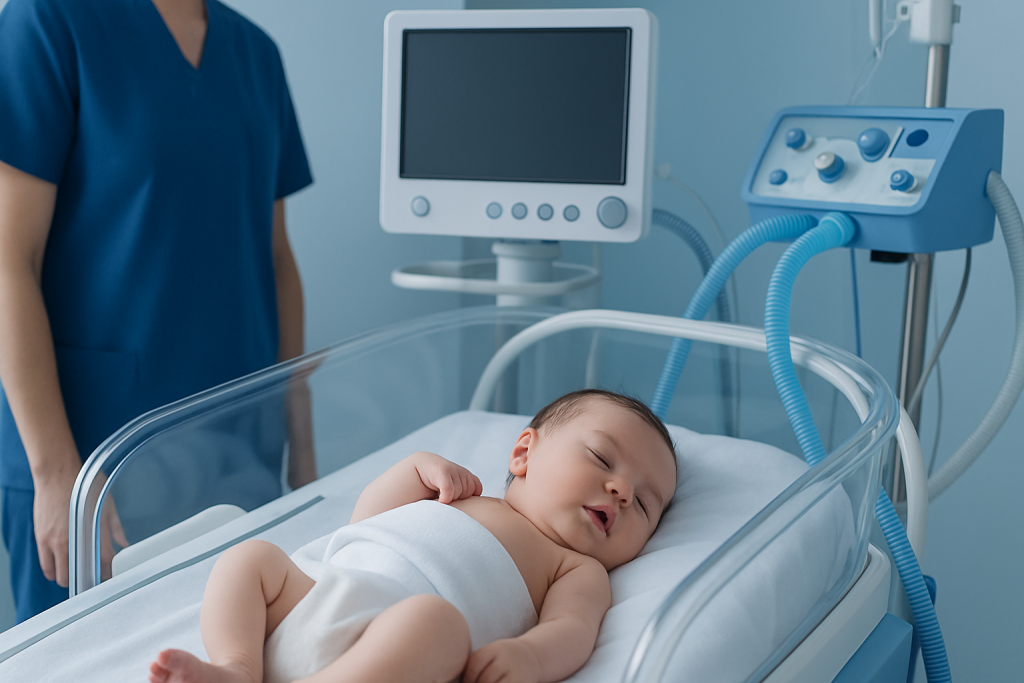
Parents often use the word snoring to describe several different sounds. In newborns, the noise may be a snort, a gurgle, a congested rattling sound, or a soft low rumble during sleep. Some babies sound noisy only when lying on their backs or shortly after a feed, while others make intermittent sounds throughout the night.
It is also common for newborns to have irregular breathing rhythms. They may breathe quickly, then more slowly, and occasionally pause for a few seconds before resuming. That pattern can be normal if the baby remains pink, comfortable, and responsive. What is not typical is loud breathing that seems effortful, constant, or linked to distress.
Different sounds can point to different causes. A blocked nose often creates snuffling or congestion sounds, while a higher-pitched noise may suggest narrowing higher in the airway. A doctor can help determine whether the sound is coming from the nose, throat, or deeper in the breathing passages.
Causes and risk factors

The most common reason for newborn snoring is simple nasal congestion. Newborns have tiny nasal passages, so even a little mucus, dried secretions, or mild swelling can make breathing noisy. Dry indoor air, reflux-related irritation, or leftover fluid after birth may also contribute in some babies.
Sometimes the noise is related to the way the upper airway is shaped. Some babies are born with naturally narrow nasal passages or softer tissues that vibrate during breathing. Less commonly, structural issues such as a deviated nasal septum, a congenital airway narrowing, or a problem affecting the palate or throat may be involved.
Factors that can make noisy breathing more noticeable include:
- Common colds or viral congestion
- Dry air or environmental irritants such as smoke
- Reflux that irritates the throat
- Prematurity, which can affect breathing control
- Congenital airway differences
Most newborn snoring does not point to a serious disorder, but risk increases when the sound is persistent, present every sleep cycle, or accompanied by feeding or breathing difficulty. Babies with a history of prematurity or known craniofacial differences may need closer observation.
How doctors diagnose the cause
Evaluation usually begins with a careful history and physical examination. A pediatrician will ask when the noise started, whether it happens only during sleep, whether it changes after feeds, and whether there are any pauses in breathing or color changes. Parents’ observations are often very helpful, especially if they can describe the sound or share a short video.
During the examination, the doctor will listen to the baby’s breathing, check the nose and mouth, and look for signs of congestion, retractions, or an unusually narrow airway. In many cases, this is enough to identify a likely cause and recommend simple care.
If the symptoms suggest a structural issue or another airway problem, the doctor may refer the baby to a pediatric ENT specialist. Depending on the case, evaluation can include a flexible scope, oxygen monitoring, or other tests to assess breathing during sleep. The goal is to understand whether the sound is harmless congestion or a sign that the baby needs treatment.
Treatment options
Treatment depends on the cause. If the problem is mild congestion, care may focus on clearing the nose and keeping the airway comfortable. This can include gentle saline drops, careful suctioning when needed, and keeping the baby in a safe sleep environment that follows standard infant sleep guidance. A pediatrician may also advise ways to reduce dryness in the room.
If reflux is contributing to throat irritation, the doctor may suggest feeding adjustments or other measures that are appropriate for the baby’s age. If a structural airway issue is suspected, treatment may involve observation, specialist follow-up, or, in selected cases, a procedure. The right approach depends on how the baby breathes, feeds, grows, and sleeps.
Important safety note: infants should not receive over-the-counter cold or cough medicines unless a doctor specifically recommends them. These products are not generally appropriate for newborns. Any treatment plan should be guided by a qualified clinician familiar with newborn care.
Prevention and self-care
Not every case of newborn snoring can be prevented, but families can reduce irritation and help a baby breathe more comfortably. Keeping the home free of cigarette smoke and strong fragrances is a practical first step. Gentle nasal saline, when recommended by a clinician, may also help loosen mucus before feeds or sleep.
Feeding and sleep routines can make a difference too. Smaller, more frequent feeds may be helpful for some babies with reflux-related symptoms, but any change should be discussed with the pediatrician. Parents should also follow safe sleep guidance: babies should sleep on their backs on a firm, flat surface without loose bedding or positioning devices unless a doctor has given a specific medical reason.
For families traveling from another country or staying away from home, it is worth planning ahead if the baby already has noisy breathing. Knowing where to find pediatric care, bringing discharge notes if the baby was recently born in another hospital, and recording a short audio or video sample of the sound can make follow-up easier and faster.
When to see a doctor
Medical review is recommended if snoring is persistent, happens most nights, or is getting louder over time. A baby should also be seen promptly if the noise comes with feeding trouble, poor weight gain, frequent choking, unusual sleepiness, or a breathing pattern that looks strained.
Seek urgent medical attention if the baby has pauses in breathing, bluish or gray lips, chest retractions, flaring nostrils, marked difficulty waking, or signs of dehydration. These symptoms do not mean the cause is necessarily serious, but they do mean the baby needs prompt assessment.
If families are unsure whether the sound is ordinary newborn congestion or something that needs investigation, it is reasonable to contact a pediatrician sooner rather than later. A calm, timely evaluation is usually the best way to protect both the baby’s comfort and the parents’ peace of mind. Acibadem Health Point’s multidisciplinary specialists and JCI-accredited hospitals also diagnose and treat newborn breathing concerns for international patients.
Living with a newborn who snores
Newborn snoring can be unsettling to hear, especially during the first weeks at home when parents are still learning what is normal for their baby. In many cases, the noise improves as the nasal passages grow and the baby gets past the early congestion that often follows birth. Patience, observation, and routine pediatric follow-up are usually part of the process.
Keeping a simple symptom log can help. Parents may note when the sound happens, whether it follows feeds, whether one nostril seems more blocked, and whether there are any changes in breathing effort. This information can help the doctor decide whether reassurance is enough or whether more evaluation is needed.
Most importantly, newborn snoring should be viewed as a symptom rather than a diagnosis. Once the cause is identified, the next steps are often straightforward and aimed at helping the baby breathe, feed, and sleep as comfortably as possible.
Frequently asked questions
01Is newborn snoring always normal?
Noisy breathing in newborns is common, and it is often caused by mild congestion or small nasal passages. Still, persistent snoring should be mentioned to a pediatrician, especially if it happens with feeding problems or other symptoms.
02Why do newborns sound so congested?
Newborns breathe mainly through their noses, and their nasal passages are very small. Even a small amount of mucus or dryness can make their breathing sound loud or rattly.
03Can a newborn have sleep apnea if they snore?
Snoring alone does not mean sleep apnea. However, pauses in breathing, color changes, or signs of effort during sleep should be assessed by a doctor.
04What can parents do at home for mild newborn snoring?
If a pediatrician agrees that the cause is mild congestion, gentle saline and careful suctioning may help. Parents should avoid giving cold medicines and should keep the baby’s sleep environment safe and uncluttered.
05When should a baby with snoring be checked urgently?
Urgent care is needed if the baby has breathing difficulty, blue or gray lips, chest retractions, pauses in breathing, or trouble waking. Feeding weakness and poor hydration are also reasons to seek prompt medical advice.
06Does newborn snoring go away on its own?
It often does, especially when the cause is temporary congestion or normal newborn anatomy. If the sound persists, worsens, or affects feeding and sleep, a doctor should evaluate the baby.
This article is for general information only and is not a substitute for professional medical advice. Please consult a qualified doctor about your individual situation.
Explore treatments in Turkey — costs, top hospitals & a free quote
JCI-accredited · board-certified surgeons · reply within 24h
Add us as a Preferred Source to see more of our trusted health content across Google Search, AI Overviews and Discover.