

What Is Nasal Blackheads? A Complete Medical Guide
- 9 min read
- Published November 27, 2026
Key Takeaways
- Nasal blackheads are open comedones caused by clogged pores, not dirt trapped in the skin.
- They often appear on the nose because this area has many oil glands and is prone to buildup.
- Gentle cleansing, non-comedogenic products, and some acne treatments can help reduce them.
- Picking, squeezing, or abrasive scrubs can irritate the skin and worsen the problem.
- A dermatologist or ENT clinician can help if the bumps are painful, inflamed, or hard to distinguish from other skin lesions.
Nasal blackheads are small, dark plugs that form when pores on or around the nose become clogged with oil and dead skin cells. They are common, usually harmless, and often improve with consistent skin care, but persistent or inflamed spots may need medical evaluation.
Overview
Nasal blackheads are small, dark-looking plugs that sit in the pores of the nose. They are usually a form of acne called open comedones, which means a pore has become blocked with oil, dead skin cells, and debris; the dark color comes from oxidation after the pore is open to air, not from dirt.
People often notice them on the nose because this area has a high concentration of sebaceous glands and tends to shine more than other parts of the face. For many patients, the concern is as much about appearance and texture as it is about health, especially when blackheads are persistent or appear alongside acne, irritation, or enlarged pores.
Most nasal blackheads are not dangerous, but they can be confused with other skin findings such as sebaceous filaments, milia, or inflamed acne. A careful look at the pattern, texture, and symptoms helps determine whether simple home care is enough or whether a clinician should examine the area.
Symptoms and How They Look
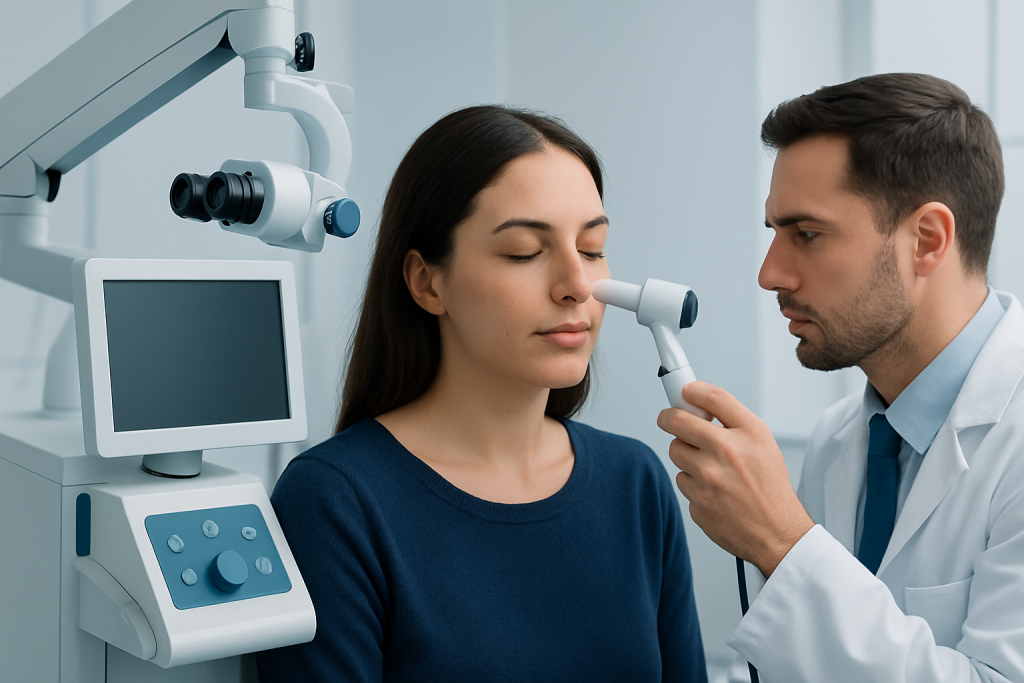
Nasal blackheads usually appear as tiny dark dots or plugs on the surface of the skin. They may be flat or slightly raised, and they often cluster along the sides of the nose, the bridge, or the area around the nostrils. Unlike a pimple, a blackhead is typically not red, swollen, or tender unless the skin has been irritated by squeezing or harsh treatment.
Some people notice that the nose feels rough or congested to the touch. Others see a combination of open comedones and oily skin, especially during puberty, periods of hormonal change, or times of stress when the skin becomes more active. The spots may become more visible under bright light or after sweating, cleansing, or using pore strips.
It is also useful to distinguish blackheads from other common findings. Sebaceous filaments, for example, are normal structures that help oil move through the pore and often look like fine gray or yellowish dots rather than distinct plugs. If there is bleeding, crusting, pain, rapid change, or a single unusual lesion, the concern is no longer simple blackheads and should be reviewed by a clinician.
Causes and Risk Factors

Nasal blackheads form when the opening of a pore becomes blocked by sebum and dead skin cells. The material inside the pore is exposed to air, which causes the surface to darken. This process is common and can happen even with good hygiene, because blackheads are linked more to skin biology than to cleanliness alone.
Several factors can make them more likely. Oily skin, hormonal fluctuations, family tendency toward acne, use of heavy or comedogenic makeup and skincare products, and inadequate removal of sunscreen or grime after the day can all contribute. Frequent touching of the face, sweaty environments, and friction from masks or eyewear may also worsen congestion for some people.
In a broader sense, the nose sits at the center of the face and is exposed to many environmental triggers. In international patients who travel for work or treatment, changes in climate, humidity, skincare routines, sleep patterns, and stress can all influence the skin’s oil production and make existing blackheads look more noticeable for a time.
Diagnosis
Most nasal blackheads can be recognized by a clinician through visual examination alone. A doctor will usually look at the size, color, location, and surrounding skin and ask how long the spots have been present, whether they itch or hurt, and what products the person uses on the face. This helps separate blackheads from acne, sebaceous filaments, folliculitis, cysts, or other skin conditions.
In many cases, no special tests are needed. However, if the lesion is unusual, persistent, or changing, a clinician may recommend a closer skin exam, sometimes with a dermatoscope, to look at the pore structure more clearly. If the appearance suggests another condition, the diagnosis may shift from a cosmetic concern to a medical one that deserves different treatment.
For people planning care while traveling, an accurate diagnosis matters because it determines whether treatment can begin with straightforward topical care or whether a procedure, prescription, or follow-up visit is needed. Clear guidance before travel can make aftercare easier and reduce unnecessary products or procedures.
Treatment Options
Treatment depends on how stubborn the blackheads are, whether acne is present elsewhere, and how sensitive the skin tends to be. Gentle cleansing is a sensible start, but it is rarely enough on its own if the pores are regularly clogging. Dermatology care often centers on encouraging regular cell turnover and reducing excess oil without irritating the skin.
Common approaches may include over-the-counter products containing salicylic acid, which helps loosen plugs in the pore, or retinoid-based treatments that improve skin cell turnover. For more persistent congestion, a clinician may suggest prescription options or professional extraction. These should be done carefully to avoid trauma, scarring, or post-inflammatory dark marks, especially on delicate or repeatedly irritated nose skin.
- Gentle cleansing: Removes surface oil and sunscreen without stripping the skin.
- Non-comedogenic moisturizer and sunscreen: Helps protect the skin without clogging pores.
- Topical acne treatments: May help dissolve or prevent new blackheads.
- Professional extraction: Can be considered for stubborn plugs when performed by trained professionals.
- Avoiding harsh methods: Abrasive scrubs, repeated pore strips, and squeezing often cause more irritation than benefit.
If the skin is inflamed or the diagnosis is uncertain, the treatment plan may need to shift. The goal is not only to remove visible blackheads but also to protect the skin barrier so that the nose does not become more reactive over time.
Prevention and Self-Care
Preventing nasal blackheads usually means keeping pores clear without overworking the skin. A steady routine is often more effective than occasional intensive treatments. Washing the face twice daily with a mild cleanser, especially after sweating, can help reduce buildup, while heavy scrubbing may trigger redness and more oil production.
Product choices matter. Makeup, sunscreen, and moisturizers labeled non-comedogenic or oil-free are often better tolerated by acne-prone skin. It also helps to remove makeup before sleep, keep hands off the face, and avoid repeated picking at the nose even when the plugs are tempting to remove.
For patients who travel frequently or are recovering after a skin procedure, consistency is especially important. Packing a familiar cleanser, keeping a simple routine, and following the clinician’s instructions can reduce flare-ups caused by changing climates, water quality, or long flights. When a person has several ongoing skin concerns, a dermatologist can help design a practical routine that fits daily life rather than adding unnecessary steps.
When to See a Doctor
Medical advice is helpful when blackheads do not improve after several weeks of gentle care, when they are associated with widespread acne, or when the area becomes red, painful, crusted, or swollen. A clinician should also assess any lesion that is growing, bleeding, or looking different from the surrounding skin, since not every dark bump on the nose is a blackhead.
It is reasonable to seek professional guidance sooner if the person has sensitive skin, a history of scarring, or strong reactions to over-the-counter treatments. Those who have tried multiple products without benefit may simply need a more targeted plan rather than stronger home remedies.
For international patients, an in-person evaluation can be especially useful when skincare has already been disrupted by travel or when there is uncertainty about whether a lesion needs medical treatment. Acibadem Health Point’s multidisciplinary specialists and JCI-accredited hospitals diagnose and treat conditions like nasal blackheads for international patients, with care plans that can be coordinated across visits when needed.
Living With Recurrent Blackheads
Recurrent nasal blackheads can be frustrating, but they are usually manageable once the skin’s pattern is understood. Some people simply have oilier pores in the T-zone and will always need a bit more maintenance than others. The aim is to keep the skin calm, reduce clogging, and avoid the cycle of squeezing, irritation, and more visible texture.
It can help to think of treatment as maintenance rather than a one-time fix. A patient who responds well to a certain cleanser or topical medicine may do best by using it consistently and checking in periodically with a clinician if the pattern changes. If the concern is mainly cosmetic, professional advice may still be worthwhile because it can prevent unnecessary trial-and-error and protect the skin from damage.
When blackheads are just one part of a larger skin concern, the most effective plan is often the simplest one that the person can actually maintain. A thoughtful routine, realistic expectations, and timely medical review usually lead to the best long-term results.
Frequently asked questions
01What are nasal blackheads, exactly?
Nasal blackheads are open clogged pores on or around the nose. They usually contain oil and dead skin cells that darken when exposed to air. They are common and are usually a mild form of acne rather than a sign of poor hygiene.
02Are blackheads on the nose the same as sebaceous filaments?
No, they are different. Sebaceous filaments are normal structures that help move oil through the pore, while blackheads are true plugs. Sebaceous filaments often look lighter, smaller, and more evenly distributed.
03Can blackheads be removed at home?
Some mild blackheads may improve with gentle cleansing and acne products such as salicylic acid or retinoid-based treatments. Squeezing or aggressive scrubbing is best avoided because it can irritate the skin and cause marks or inflammation. If the skin is sensitive, it is safer to ask a clinician for guidance.
04Do pore strips get rid of nasal blackheads?
Pore strips may remove some surface plugs temporarily, but they do not prevent new blackheads from forming. They can also irritate the skin if used often. A regular skincare routine and targeted acne treatment are usually more helpful over time.
05When should a doctor check a black spot on the nose?
A doctor should review any spot that is painful, swollen, bleeding, crusting, or changing in size or appearance. This is also important if the person is unsure whether it is really a blackhead. A careful exam helps rule out other skin conditions.
06Can diet cause nasal blackheads?
Diet is not usually the main cause of blackheads. Skin type, hormones, and skincare habits play a larger role. A balanced diet supports overall health, but it is not a substitute for appropriate skin care or medical treatment when needed.
This article is for general information only and is not a substitute for professional medical advice. Please consult a qualified doctor about your individual situation.
Explore treatments in Turkey — costs, top hospitals & a free quote
JCI-accredited · board-certified surgeons · reply within 24h
Add us as a Preferred Source to see more of our trusted health content across Google Search, AI Overviews and Discover.



How can we help you today?
Meet an Acibadem specialist by secure video, before you travel.
Book a video visit