What Is Kyphosis Disease and How Does It Affect the Spine?
Kyphosis is an increased outward curve of the upper back, sometimes called a rounded back or hunchback appearance. A mild curve is common and often harmless, but a noticeable, worsening, painful, or stiff curve should be assessed to identify its cause and guide care.
Overview: what is kyphosis disease?
What is kyphosis disease? Kyphosis is an increased forward rounding of the upper part of the spine, giving the back a more curved appearance when viewed from the side. The thoracic spine normally has a gentle outward curve, so a small degree of kyphosis is a normal feature of spinal anatomy rather than a disease.
People may use the term “kyphosis disease” when they notice rounded shoulders or a hump in the upper back. In many cases, especially when the curve is mild and flexible, it is not harmful. However, kyphosis can also result from changes in the spinal bones, discs, muscles, or nerves. A clinician can distinguish a normal or postural curve from a structural condition that needs follow-up.
Kyphosis may occur at any age. In teenagers, it is often related to posture or to a growth-related spinal condition. In older adults, a new or increasing curve can sometimes be linked with osteoporosis and compression fractures of the vertebrae. The outlook is usually good when the underlying cause is identified and care is tailored to the individual.
How kyphosis may look and feel
The most recognizable sign is an upper back that appears more rounded than usual. Some people also have shoulders that sit forward, a head position that leans forward, or a visible prominence in the upper spine. One shoulder may appear higher than the other, although this can also occur with other spinal alignment differences.
Kyphosis does not always cause discomfort. When symptoms are present, they may include aching or stiffness in the upper or middle back, tired back muscles after standing, and difficulty maintaining an upright posture. More pronounced curves may affect confidence or body image, particularly during adolescence; these concerns deserve respectful discussion as part of care.
Less commonly, a severe curve can reduce chest space and contribute to shortness of breath or reduced exercise tolerance. Tingling, numbness, weakness, unsteadiness, or changes in hand coordination are not typical features of uncomplicated postural kyphosis. These symptoms can suggest nerve involvement and should be medically reviewed.
- A curve that seems to relax or lessen when lying down may be postural and flexible.
- A curve that remains fixed, is painful, or becomes more noticeable over time may need further assessment.
- Sudden pain with a new rounded posture, particularly after a fall or minor strain in an older adult, can indicate a vertebral fracture.
Why kyphosis develops
Postural kyphosis is one of the most frequent patterns. It is often noticed during adolescence and may be associated with slouching, prolonged sitting, weak upper-back muscles, or tight chest and hip muscles. Posture is not a matter of willpower alone; comfort, muscle endurance, growth, activity habits, and emotional wellbeing can all influence how a person holds their body.
Scheuermann kyphosis is a structural condition that develops during growth. Several adjacent vertebrae develop a wedge-like shape, making the curve more rigid. Its exact cause is not fully understood, although family patterns can occur. It is different from simply having poor posture, and a clinician may monitor it while growth continues.
In adults, osteoporosis can weaken vertebrae and lead to compression fractures, increasing the upper-back curve. Other possible causes include age-related disc and joint changes, inflammatory arthritis, injury, infection, tumors, and conditions affecting muscles or nerves. Babies can rarely be born with vertebrae that did not form normally, causing congenital kyphosis.
Risk factors vary by cause. They can include a family history of spinal curvature, rapid growth, low bone density, previous fractures, long-term use of certain medicines that affect bone strength, and conditions that reduce mobility or muscle control. Having a risk factor does not mean that a person will develop significant kyphosis.
When to seek medical care
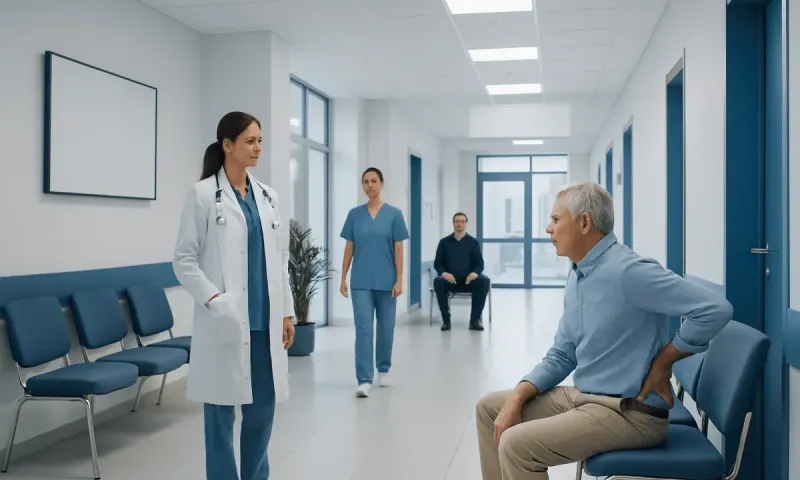
A routine appointment with a doctor is appropriate when a rounded upper back is becoming more noticeable, is causing pain or stiffness, or is affecting daily activities, sleep, confidence, or participation in exercise. Children and teenagers should be assessed if a parent, teacher, or the young person notices a persistent curve, especially during a growth spurt.
Prompt medical assessment is important for a new curve that appears after a fall, injury, or episode of sudden back pain. Adults with known osteoporosis, a previous fragility fracture, or prolonged use of medicines that can weaken bones should not assume that new back pain is simply part of aging.
Urgent medical care is needed for back pain accompanied by new weakness, numbness, difficulty walking, loss of coordination, loss of bowel or bladder control, fever, unexplained weight loss, or significant shortness of breath. These signs do not necessarily mean a serious condition, but they require timely evaluation to rule out causes that need prompt treatment.
How doctors diagnose kyphosis
Assessment usually begins with a conversation about symptoms, when the curve was first noticed, growth and medical history, injuries, medicines, and family history. The clinician will examine posture from the side and behind, assess spinal movement, and check for tenderness, muscle tightness, leg length differences, balance, strength, sensation, and reflexes when appropriate.
Standing spinal X-rays are commonly used to view the vertebrae and measure the curve. Doctors often use the Cobb angle, an angle measured on the image, to describe spinal curvature and to compare changes over time. The number alone does not determine treatment: symptoms, age, growth remaining, cause, and the rate of change all matter.
MRI or CT scanning is not required for everyone. These tests may be useful if there are neurological symptoms, concern for a fracture, infection, tumor, congenital abnormality, or a need for more detailed surgical planning. Bone density testing may be recommended for adults in whom osteoporosis or a fragility fracture is suspected.
It is also important to identify conditions that can look similar. For example, scoliosis is a sideways spinal curve that may occur alone or alongside kyphosis. Careful examination and imaging help ensure that the treatment plan addresses the correct spinal pattern and any underlying health issue.
Treatment options and everyday support
Treatment is based on the cause and the person’s needs. A mild, flexible curve without concerning symptoms may only need observation, education, and periodic review. For postural kyphosis, physiotherapy can help improve muscle endurance, spinal mobility, body awareness, and movement habits. Exercises are individualized; they are not intended to force a rigid curve straight.
Maintaining regular physical activity, including strengthening and weight-bearing exercise when suitable, can support overall spinal and bone health. A physiotherapist can advise on safe activities and on adapting work, school, and screen setups. Heat, activity pacing, and clinician-recommended pain management may help some people with muscular discomfort.
For a growing child or adolescent with a structural curve that is progressing, a spinal brace may sometimes be used to help limit further progression. Bracing is not necessary for all curves and works best when worn and monitored according to a specialist plan. Emotional support is also valuable, as visible body changes can affect self-esteem.
When osteoporosis or a compression fracture is involved, treatment focuses on pain control, safe rehabilitation, fall prevention, and improving bone health. This may include reviewing nutrition, vitamin D and calcium intake, medicines, and other fracture risks with a qualified clinician. Surgery is reserved for selected cases, such as severe or progressive structural curves, substantial pain that does not respond to non-surgical care, nerve compression, or major effects on function or breathing.
Prevention, monitoring, and outlook
Not every type of kyphosis can be prevented. Congenital and growth-related structural changes are not caused by a person’s posture, effort, or parenting. Nevertheless, practical habits can support spinal comfort: changing positions regularly, building strength gradually, staying active, and using an ergonomic setup that makes a neutral, comfortable posture easier to maintain.
Protecting bone health becomes increasingly important with age. Adequate nutrition, appropriate weight-bearing activity, avoiding smoking, limiting excess alcohol, and reviewing fall risks can all be helpful. People at risk of osteoporosis should discuss screening and prevention with their healthcare professional rather than relying on supplements or exercise alone.
Follow-up is especially important for children who are still growing and for anyone whose curve or symptoms are changing. A doctor may repeat examinations or X-rays at intervals while balancing the value of monitoring against unnecessary imaging. Most people with mild kyphosis remain active and manage well with conservative care.
Acıbadem Health Point’s multidisciplinary specialists and JCI-accredited hospitals can assess and treat spinal conditions, including kyphosis, for international patients. A personalized evaluation can clarify whether observation, rehabilitation, bone-health care, bracing, or specialist spinal treatment is most appropriate.
Frequently asked questions
01Is kyphosis a disease?
Kyphosis is a term for an increased outward curve of the upper spine, not a diagnosis by itself. A mild thoracic curve is normal, while a more pronounced curve may be postural or related to a specific structural or medical cause.
02Can poor posture cause kyphosis?
Posture can contribute to a flexible, rounded upper-back appearance, often called postural kyphosis. However, not all kyphosis is caused by posture; growth-related vertebral changes, fractures, osteoporosis, and other conditions can produce a fixed curve.
03Can kyphosis be corrected with exercise?
Exercise and physiotherapy may improve strength, flexibility, comfort, and postural control, particularly in postural kyphosis. They may not fully straighten a rigid structural curve, but they can still be an important part of symptom management and function.
04Does kyphosis get worse with age?
It depends on the cause. Some mild curves remain stable, while a curve may progress during adolescent growth or later in life if vertebral fractures, osteoporosis, or degenerative changes occur. Regular review is useful when a curve is changing or symptoms develop.
05How is kyphosis measured?
Doctors commonly use standing spine X-rays to measure the curve with the Cobb angle. The measurement is interpreted alongside symptoms, physical examination findings, age, remaining growth, and imaging evidence of any underlying cause.
06When is surgery needed for kyphosis?
Surgery is not needed for most people with kyphosis. It may be considered when a curve is severe or progressing, causes major pain or functional limitations despite non-surgical treatment, affects nerves or breathing, or is due to an unstable spinal problem.
This article is for general information only and is not a substitute for professional medical advice. Please consult a qualified doctor about your individual situation.
Joint and spine care in Turkey — expert assessment & treatment
JCI-accredited · board-certified surgeons · reply within 24h
Add us as a Preferred Source to see more of our trusted health content across Google Search, AI Overviews and Discover.