What Is Jaw Hurts Headache? A Complete Medical Guide

Key Takeaways
- Jaw pain and headache often come from the same nearby structures, especially the jaw joint, muscles, teeth, or sinuses.
- TMJ disorders and teeth grinding are common reasons the jaw and head hurt together, particularly in the morning or after chewing.
- A new, severe, or one-sided headache with jaw pain can sometimes signal a more serious condition and should be assessed promptly.
- Diagnosis usually starts with a history and physical exam, with dental, imaging, or blood tests used when needed.
- Self-care, stress reduction, bite protection, and treatment of the underlying cause can often reduce symptoms.
A jaw hurts headache usually means pain is being referred between the jaw, face, teeth, neck, or head. Common causes include temporomandibular joint (TMJ) problems, teeth grinding, dental issues, tension-type headache, and less commonly conditions that need prompt medical review.
Overview
When a person says, “my jaw hurts and I have a headache,” the symptom pattern often points to an issue that links the jaw, face, and head rather than two unrelated problems. The most common explanations are temporomandibular joint (TMJ) disorders, muscle tension, teeth grinding, or dental concerns, but headaches themselves can also make the jaw feel sore.
The jaw joint sits close to muscles, nerves, ears, teeth, and the temples, so pain can spread easily across these areas. That is why a jaw hurts headache may feel like pressure at the temples, aching near the ear, pain when chewing, or a dull headache that worsens as the day goes on.
For many people, the problem is manageable once the cause is identified. The key is to notice the pattern: when it starts, what makes it worse, whether chewing or opening the mouth changes it, and whether there are other symptoms such as ear pain, tooth sensitivity, facial stiffness, or clicking in the jaw.
Symptoms
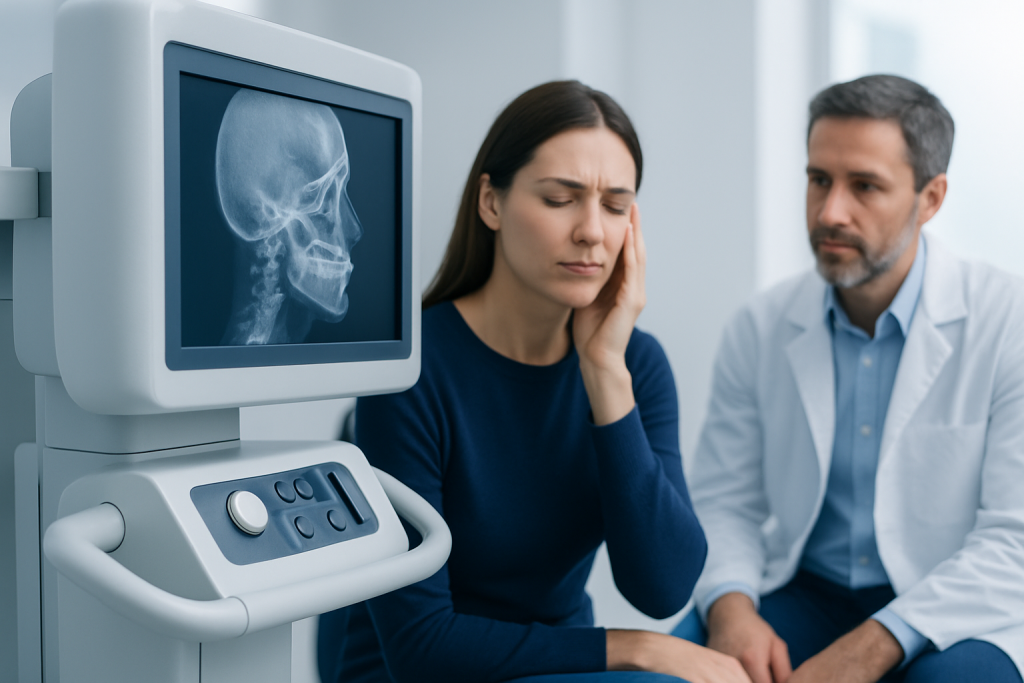
The pain can look different depending on the cause. Some people notice a tight, band-like headache with soreness at the jaw hinges, while others feel sharp pain when biting, yawning, or talking for a long time. The discomfort may be on one side or both sides and may extend to the temples, cheeks, neck, or around the ears.
TMJ-related pain is often described as tenderness in front of the ears, jaw stiffness after waking, or a clicking, popping, or grating sound during movement. Teeth grinding can add morning jaw pain, tooth wear, and a headache that feels worse after sleep. Dental problems may cause pain that seems to move between the jaw, head, and tooth roots.
- Pain with chewing or opening the mouth wide
- Jaw stiffness or limited mouth opening
- Clicking, popping, or locking of the jaw
- Temple pain or pressure headache
- Ear fullness or tenderness around the face
- Morning jaw soreness, especially after clenching or grinding
If the headache pattern is new or different from usual, it deserves attention, especially if it is paired with swelling, fever, vision changes, facial numbness, or difficulty swallowing.
Causes & Risk Factors

TMJ disorders are a frequent cause because the joint and its surrounding muscles can become strained by clenching, grinding, gum chewing, stress, or an uneven bite. In these cases, the jaw muscles stay overworked, which can trigger pain that travels into the head. Long hours at a computer, poor neck posture, and stress can contribute by increasing muscle tension.
Teeth grinding, also called bruxism, is another common driver. It often happens during sleep, so the person may not know it is occurring until they wake with a sore jaw or headache. Dental infections, impacted teeth, and misaligned teeth can also create pain that is felt in the jaw and head.
Less commonly, a jaw hurts headache may come from sinus pressure, migraine, cluster headache, ear disease, or nerve-related pain. In older adults, jaw pain with headache can sometimes be linked to temporal arteritis, a condition that needs rapid medical evaluation because it can affect vision.
Risk factors may include stress, anxiety, sleep problems, arthritis, prior jaw injury, frequent gum chewing, and occupations that require prolonged speaking. People who recently had dental work or used the jaw differently for a long period may also notice temporary jaw soreness and headache.
Diagnosis
Evaluation usually begins with a careful conversation about the pain itself: where it starts, how long it lasts, whether it is worse in the morning or after meals, and whether there is jaw locking or clicking. A clinician may also ask about teeth grinding, recent dental treatment, headaches elsewhere in the head, and any history of trauma or arthritis.
A physical exam often includes checking jaw movement, facial muscles, the teeth and gums, the bite, and the temples and neck. If a dental cause is suspected, a dentist may look for tooth wear, infection, or bite issues. If the symptoms suggest a TMJ disorder, the assessment may focus on how the joint moves and whether surrounding muscles are tender.
Tests are not always necessary, but they may help when symptoms are persistent, unusual, or severe. Depending on the situation, a doctor or dentist may recommend dental imaging, X-rays, CT or MRI, or blood tests if inflammation or temporal arteritis is a concern. The goal is not to chase every possible explanation, but to identify the most likely source of the pain safely and efficiently.
Treatment Options
Treatment depends on the cause, and many people improve with conservative care first. For TMJ and muscle-related pain, approaches often include rest for the jaw, soft foods for a short period, avoiding wide mouth opening, and reducing habits such as nail biting or chewing gum. Warm compresses and gentle jaw exercises may also help when advised by a clinician.
If teeth grinding is part of the problem, a custom night guard made by a dentist may protect the teeth and reduce strain on the jaw. Stress management can be important as well, because clenching often increases when a person is tense or sleep is poor. Physical therapy, posture work, and relaxation strategies may be useful in selected cases.
When a dental infection or another dental problem is the cause, treatment may involve dental procedures, cleaning, or management of inflammation. Some patients may need short-term medicines recommended by a doctor or dentist to ease pain and reduce inflammation, but the correct medicine depends on the diagnosis and the person’s other health conditions. If the headache is part of a migraine, sinus disorder, or another medical condition, treatment should address that underlying issue rather than only the jaw pain.
In more complex cases, care may involve several specialists working together, especially when jaw pain, headache, sleep issues, and dental wear overlap. This coordinated approach is often helpful for international patients who need a clear diagnosis, a practical treatment plan, and follow-up that can continue after they return home.
Prevention & Self-care
Not every episode can be prevented, but small changes often reduce how often jaw pain and headache appear. People who clench their teeth may benefit from noticing when it happens during the day and relaxing the jaw by keeping the lips together, teeth slightly apart, and tongue resting gently on the palate. Reducing gum chewing and avoiding very hard or chewy foods during flare-ups can also help.
Sleep habits matter because poor sleep and nighttime grinding often go together. Regular sleep routines, stress reduction, and good neck support can lower strain on the jaw muscles. Some people find that a warm compress, gentle stretching, and short breaks from prolonged speaking or chewing make symptoms easier to manage.
- Use the jaw gently during painful periods
- Avoid chewing ice, hard candy, and excess gum
- Manage stress with breathing, exercise, or counseling if needed
- Protect teeth if a dentist recommends a night guard
- Keep up with dental checkups and treat cavities or gum disease early
Travelers seeking care abroad should bring previous dental records, imaging, medication lists, and a short symptom diary. That information can make specialist evaluation faster and more precise, especially when time is limited during an international visit.
When to See a Doctor
Medical or dental evaluation is a good idea when jaw pain and headache are persistent, getting worse, or interfering with eating, speaking, sleeping, or work. It is also important to seek care if the jaw locks, the mouth cannot open normally, or there is ongoing clicking with pain. Even when symptoms seem mild, repeated episodes often deserve assessment so the underlying cause can be treated rather than repeatedly managed at home.
Prompt evaluation is especially important if the headache is new and severe, occurs with fever, facial swelling, vision changes, numbness, weakness, or a recent injury. In older adults, jaw pain with headache and scalp tenderness should be checked quickly because temporal arteritis requires timely treatment.
People traveling for treatment can usually expect a stepwise evaluation: history, exam, and targeted testing if needed, followed by a plan that may include dental, neurological, or musculoskeletal care. At Acibadem Health Point, multidisciplinary specialists and JCI-accredited hospitals diagnose and treat this condition for international patients, with attention to both the cause and the practicalities of recovery.
Living With Jaw Pain and Headache
When the jaw and head hurt together, the discomfort can become part of everyday life in a way that is easy to normalize. Yet repeated pain is a signal that something is being overloaded, irritated, or inflamed. Identifying the pattern early often prevents the cycle from becoming more stubborn.
It can help to track when the pain appears, what it feels like, and whether it is linked to sleep, stress, meals, or dental symptoms. This record gives clinicians a clearer picture and can shorten the path to treatment, particularly for patients who are balancing care across countries and need focused, efficient follow-up plans.
Most importantly, a jaw hurts headache is not a diagnosis by itself. It is a clue. With the right assessment, many causes can be treated effectively, and many patients are able to return to comfortable eating, speaking, and sleeping again.
Authoritative sources commonly used for this topic include guidance from the National Institute of Dental and Craniofacial Research, the American Dental Association, the Mayo Clinic, the Cleveland Clinic, and the American Academy of Neurology. These organizations provide patient education on TMJ disorders, headache evaluation, teeth grinding, and related conditions.
Readers should remember that online information cannot replace an exam by a qualified clinician. A doctor or dentist can determine whether the pain is likely muscular, dental, joint-related, or something that needs more urgent attention.
Frequently asked questions
01What does it mean when my jaw hurts and I have a headache?
It often means the pain is coming from a connected area such as the jaw joint, chewing muscles, teeth, or nearby nerves. TMJ disorders, teeth grinding, and dental problems are common causes, but headaches themselves can also make the jaw feel sore.
02Can TMJ cause a headache?
Yes. TMJ problems can strain the muscles around the jaw and temples, which may lead to a headache that feels like pressure or aching near the sides of the head. Chewing, yawning, or talking may make it worse.
03Why is my jaw pain worse in the morning?
Morning pain often suggests teeth grinding or clenching during sleep. People may wake with jaw soreness, tight facial muscles, or a headache because the jaw has been under stress overnight.
04When should jaw pain and headache be checked urgently?
Urgent evaluation is important if the headache is new and severe, the jaw is swollen or locked, or there are symptoms such as fever, vision changes, weakness, numbness, or trouble swallowing. Older adults with jaw pain and scalp tenderness should be assessed quickly.
05Can a dentist help with jaw hurts headache?
Yes, especially if the cause is TMJ strain, teeth grinding, bite issues, or a dental infection. A dentist can examine the teeth, jaw movement, and bite, and may recommend a night guard or other treatment.
06What can I do at home to ease jaw and head pain?
Short-term rest for the jaw, soft foods, warm compresses, and reducing gum chewing may help. If stress or clenching is part of the pattern, relaxation techniques and good sleep habits can also make a difference.
This article is for general information only and is not a substitute for professional medical advice. Please consult a qualified doctor about your individual situation.
Joint and spine care in Turkey — expert assessment & treatment
JCI-accredited · board-certified surgeons · reply within 24h
Add us as a Preferred Source to see more of our trusted health content across Google Search, AI Overviews and Discover.