What Is Hurts Under Ribs? A Complete Medical Guide

Key Takeaways
- Pain under the ribs is a symptom, not a diagnosis; the cause depends on the exact location, timing, and accompanying symptoms.
- Upper abdominal, gallbladder, stomach, intestinal, muscle, and lung problems can all create pain felt under the ribs.
- Sudden severe pain, fever, vomiting, shortness of breath, chest pain, or yellowing of the skin should be assessed promptly.
- Doctors usually use a history, examination, blood tests, and imaging to find the source of the pain.
- Self-care may help mild muscular or digestive discomfort, but persistent or recurring pain deserves medical review.
Pain that feels like it hurts under the ribs can come from the digestive tract, muscles, lungs, or gallbladder, and the location and type of pain often give important clues. Most causes are treatable, but certain patterns need prompt medical attention.
Overview
People often try to connect rib-area pain with a single organ, but the body does not always make location simple. A person with acid reflux may feel burning under the breastbone, while someone with gallstones may notice discomfort after eating fatty meals on the right side under the ribs, and a person with constipation may feel a dull pressure across the upper abdomen.
Because the causes vary so widely, self-diagnosis can be misleading. A brief medical conversation, especially when symptoms keep returning, can help separate a simple muscle strain from a digestive or biliary problem that needs treatment.
Symptoms
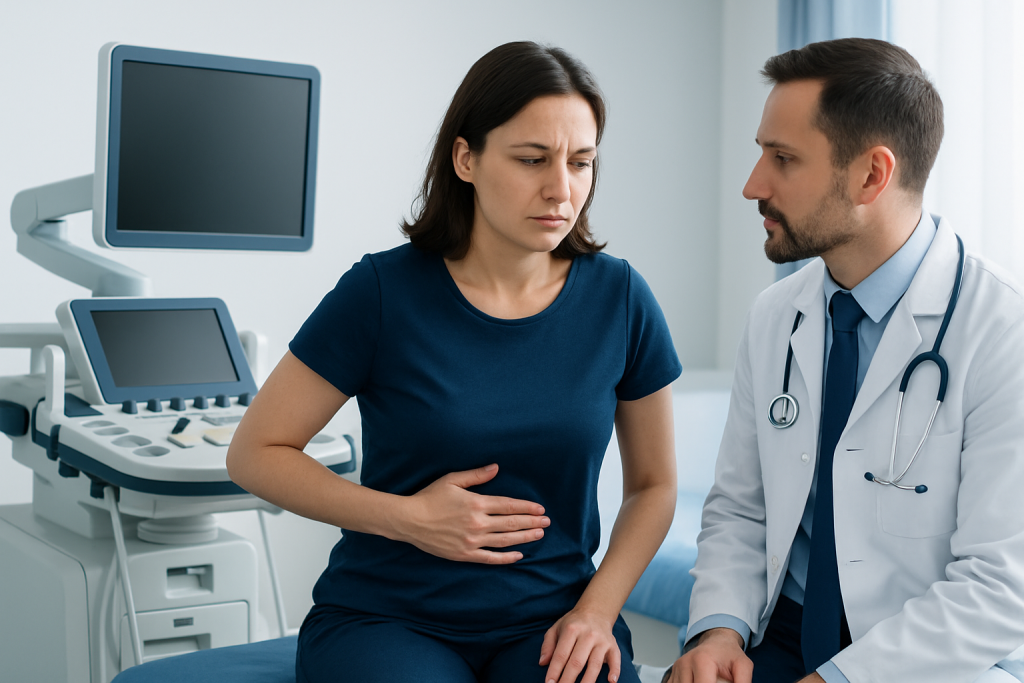
Some people notice that the pain comes and goes after meals; others feel it when twisting, lifting, or pressing on the area. Pain that can be reproduced by touching the ribs or moving the torso often points more toward the muscles or rib cage than the internal organs, although overlap is common.
It is also important to notice whether the pain stays local or spreads. Pain that travels to the back, shoulder, jaw, or chest, or that comes with sweating, dizziness, or faintness, deserves urgent assessment because the source may not be limited to the ribs or abdomen.
Causes & Risk Factors

Certain factors increase the likelihood of one cause over another. A history of fatty-food-triggered pain raises suspicion for gallbladder disease, frequent heartburn suggests reflux, and recent cough or respiratory infection makes chest wall or pleural irritation more plausible. Older age, pregnancy, obesity, rapid weight loss, and a family history of gallstones can also influence the risk profile.
Travel can complicate the picture. Long flights, disrupted eating patterns, unfamiliar foods, dehydration, and carrying luggage may worsen reflux, constipation, or muscle strain, which can all be felt as pain under the ribs. A careful travel history helps doctors understand whether symptoms began before or after a trip, and whether there was any infection exposure or injury along the way.
Diagnosis
In some situations, doctors may also recommend an electrocardiogram if upper abdominal or rib-area pain could actually be coming from the heart. This is particularly important when the pain is central, occurs with exertion, or is accompanied by shortness of breath, nausea, or sweating.
For international patients, organizing these tests in a clear sequence can make care feel more manageable. A good evaluation does not rush to a label; it builds a picture step by step so that treatment is matched to the real cause rather than the symptom location alone.
Treatment Options
People recovering away from home may need a follow-up plan that fits their travel schedule. That can include written medication instructions, diet guidance, and a clear list of reasons to return for reassessment. If procedures or surgery are needed, post-treatment monitoring and communication with the care team become especially important once the patient is back in another country.
At Acibadem Health Point, multidisciplinary specialists and JCI-accredited hospitals diagnose and treat conditions that can cause pain under the ribs for international patients, with coordinated care from evaluation through follow-up. This kind of structure can be helpful when symptoms are complex or when more than one specialty may be involved.
Prevention & Self-care
It can also help to keep a short symptom log. Noting the time of day, food intake, body position, activity, and associated symptoms can reveal patterns that are hard to remember during a brief clinic visit. That record is especially useful when the pain is intermittent or appears after travel.
People with known gallstones, ulcers, reflux, or chronic bowel problems may be given personalized advice by a doctor on diet, medicines, and warning signs. Following that plan consistently is often more effective than changing treatment on one’s own whenever the pain flares.
When to See a Doctor
For people arranging care from abroad, bringing a medication list, prior test results, and a short timeline of symptoms can make the consultation more efficient. That information helps the medical team decide what should be tested first and whether follow-up can be done locally after the patient returns home.
When pain under the ribs is persistent, recurrent, or accompanied by systemic symptoms, the safest next step is a doctor’s assessment. A thoughtful evaluation can distinguish a temporary irritation from a condition that needs a specific plan.
Frequently asked questions
01What does it mean if it hurts under the ribs on the right side?
Right-sided pain under the ribs is often associated with the gallbladder, liver, or the muscles and ribs on that side. It may also be related to the stomach or intestines depending on the exact location and associated symptoms. If it happens after meals, comes with nausea, or keeps returning, a doctor should evaluate it.
02What does it mean if it hurts under the ribs on the left side?
Left-sided discomfort can come from the stomach, colon, spleen, chest wall, or lower ribs. Gas, reflux, muscle strain, and inflammation are all possible explanations. Because left-sided pain can sometimes overlap with chest symptoms, new or severe pain should be assessed promptly.
03Can gas cause pain under the ribs?
Yes, trapped gas can create sharp, crampy, or pressure-like pain that is felt under the ribs or across the upper abdomen. The pain often moves, improves after passing gas or having a bowel movement, and may be linked to bloating. If the pain is severe or persistent, other causes should still be considered.
04How can someone tell if the pain is from muscles or an internal organ?
Muscle or rib pain often worsens with movement, twisting, coughing, or pressing on the area. Internal organ pain is more likely to be linked with meals, nausea, fever, bowel changes, or symptoms such as shortness of breath. Still, the distinction is not always obvious without a medical exam.
05Is pain under the ribs always digestive?
No. Digestive conditions are common, but the pain can also come from the lungs, ribs, muscles, nerves, or even the heart in some cases. That is why location alone is not enough to determine the cause.
06When should someone not wait and just see a doctor?
They should seek prompt medical care if the pain is sudden, severe, recurrent, or comes with fever, vomiting, yellowing of the skin, breathing difficulty, fainting, or chest pressure. Those features can signal a condition that needs timely evaluation. Even without emergency symptoms, persistent pain should be checked.
This article is for general information only and is not a substitute for professional medical advice. Please consult a qualified doctor about your individual situation.
Medical weight-loss options in Turkey — costs & eligibility
JCI-accredited · board-certified surgeons · reply within 24h
Add us as a Preferred Source to see more of our trusted health content across Google Search, AI Overviews and Discover.