What Is Finger Joint? A Complete Medical Guide

Key Takeaways
- Finger joints connect the bones of the fingers and make grasping, pinching, and bending possible.
- Pain, stiffness, swelling, or deformity can come from injury, arthritis, or inflammatory conditions.
- A careful exam, imaging, and sometimes blood tests help identify the cause.
- Many finger joint problems improve with rest, splinting, medication, hand therapy, or targeted procedures.
- Early evaluation matters when symptoms are severe, persistent, or follow an injury.
The finger joint is one of the small hinge-like connections that allow the hand to bend, grip, and perform precise movements. Problems in these joints can come from injury, arthritis, tendon issues, or inflammation, and the right treatment depends on the underlying cause.
Overview
A finger joint is the flexible connection between the bones of the fingers, and it is central to almost every daily hand movement. When someone asks what a finger joint is, the simple answer is that it is the hinge and glide point that lets the fingers bend, straighten, and grip with precision.
Each finger contains several joints, and together they allow tasks such as buttoning a shirt, holding a cup, typing, or opening a jar. Because these joints are used constantly and are small in size, even mild inflammation or injury can noticeably affect comfort and function.
The term also comes up when people describe finger joint pain, stiffness, swelling, clicking, or a change in finger shape. These symptoms are not a diagnosis on their own; they are clues that help a clinician look for an underlying issue such as arthritis, sprain, tendon irritation, or, less commonly, infection or a systemic inflammatory condition.
For international patients planning care, finger joint problems are often evaluated in a stepwise way: a history of the symptoms, a hand examination, and targeted tests when needed. This approach helps match treatment to the cause rather than treating every hand problem the same way.
Symptoms
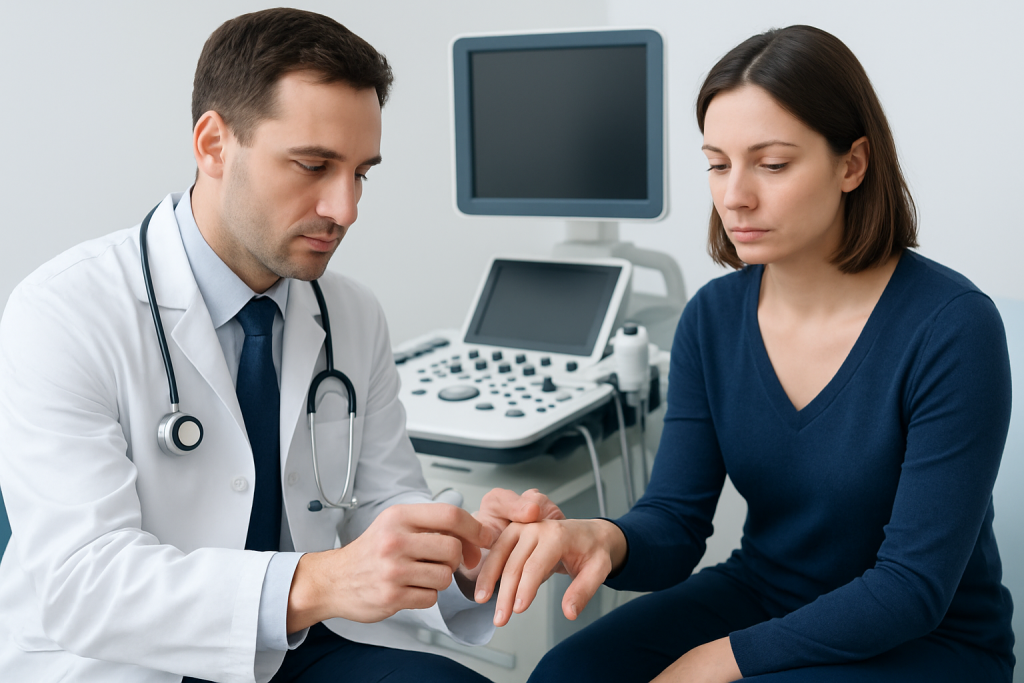
Finger joint problems can present in different ways depending on the cause. Some people feel a dull ache only when gripping, while others notice sharp pain after a fall or a sudden twist. Stiffness, especially in the morning or after rest, is another common complaint.
Swelling and warmth may suggest inflammation, while clicking, locking, or catching can point to tendon-related problems. In arthritis, the joint may gradually look larger, feel less flexible, or become tender with movement and everyday use.
Common symptoms include:
- Pain during bending, gripping, or pinching
- Swelling around one or more finger joints
- Morning stiffness or reduced range of motion
- Redness or warmth in the affected area
- Clicking, catching, or locking
- Visible deformity or change in finger alignment
Symptoms that develop quickly after an accident deserve prompt attention, especially if the finger looks crooked, cannot be moved normally, or is numb. A doctor will use the pattern of symptoms to decide whether the problem is likely due to a joint sprain, fracture, arthritis, or another condition.
Causes & Risk Factors

Finger joints can be affected by everyday wear, sudden injury, or conditions that inflame the joints throughout the body. Osteoarthritis is one of the most common causes and tends to develop gradually as the cartilage that cushions the joint wears down over time. Rheumatoid arthritis and other inflammatory diseases can also involve the finger joints, often causing swelling, stiffness, and pain in multiple joints at once.
Trauma is another major cause. A jammed finger, ligament sprain, dislocation, fracture, or tendon injury can all disrupt normal joint movement. Repetitive hand use, sports that strain the fingers, and occupations involving gripping or fine manipulation may increase irritation in susceptible people.
Risk factors may include:
- Older age, especially for wear-and-tear arthritis
- Previous finger injury or fracture
- Family history of arthritis
- Repetitive hand motions or heavy gripping
- Autoimmune conditions such as rheumatoid arthritis
- Gout or other crystal-related joint disease
Some causes are local to the hand, while others reflect a broader medical condition. That is why persistent or recurrent finger joint symptoms should not be dismissed as a simple strain, particularly when more than one joint is involved or when other joints are also painful.
Diagnosis
Diagnosis usually begins with a detailed medical history and a physical examination of the hand. A clinician will ask when the symptoms started, whether there was an injury, which movements worsen the pain, and whether swelling or stiffness appears in other joints as well. The shape of the finger, the quality of the skin, and the ability to bend or straighten the joint all provide useful clues.
Imaging may be ordered when a fracture, dislocation, arthritis, or tendon problem is suspected. X-rays can show bone alignment, joint space narrowing, or signs of degenerative change. In some cases, ultrasound or MRI helps evaluate soft tissues, including ligaments, tendons, and joint inflammation.
When inflammatory arthritis or gout is a concern, blood tests may help support the diagnosis, although they are not used alone to define the problem. If there is significant swelling, redness, or concern for infection, urgent assessment is important because joint infections need timely treatment.
For patients traveling from abroad, a well-organized orthopedic or rheumatology assessment can be especially helpful because it can combine examination, imaging, and a treatment plan in a short period. That can make follow-up easier once the patient returns home.
Treatment Options
Treatment depends on the cause, severity, and how much the finger joint is affecting daily life. Minor sprains or overuse injuries may improve with rest, temporary splinting, elevation, and guided hand exercises. A clinician may recommend anti-inflammatory measures or therapy to restore motion without aggravating the joint.
For arthritis, treatment often focuses on reducing pain, preserving function, and slowing further limitation. This may include hand therapy, activity modification, supportive splints, and medications recommended by a doctor. In some cases, injections or other procedures are considered when symptoms persist despite conservative care.
When the problem is a fracture, dislocation, tendon injury, or unstable ligament injury, treatment may require reduction, immobilization, or surgery. Surgical options are also considered for advanced arthritis, severe deformity, or joint damage that no longer responds to non-surgical measures.
Typical treatment approaches may include:
- Rest, ice, and temporary splinting after minor injury
- Hand therapy to improve motion and strength
- Anti-inflammatory or pain-relief medication as advised by a physician
- Joint injections in selected inflammatory cases
- Reduction, fixation, or surgical repair for unstable injuries
- Reconstructive procedures for advanced joint disease
Recovery is usually more successful when treatment is matched to the exact cause. For international patients, follow-up planning is important so rehabilitation, wound care, or medication review can continue smoothly after returning home.
Prevention & Self-care
Not every finger joint problem can be prevented, but many symptoms can be reduced by protecting the hands from repetitive strain and by managing chronic conditions early. Using proper technique during sports, wearing protective gloves when appropriate, and avoiding excessive gripping can help reduce injury risk.
At home, gentle movement is often preferable to complete inactivity once a serious injury has been ruled out. Small, regular range-of-motion exercises may help keep the joint from becoming overly stiff, but they should be done only within the limits recommended by a clinician or therapist.
Practical self-care measures may include:
- Taking breaks from repetitive hand tasks
- Using ergonomically designed tools when possible
- Applying ice after minor strain or swelling
- Supporting the joint with a splint if advised
- Keeping chronic arthritis under medical review
- Watching for new swelling, redness, or deformity
People with known inflammatory arthritis or gout should work with their doctor to keep the underlying condition controlled, because well-managed systemic disease often protects the fingers as well. A balanced approach to movement and rest usually gives the best chance of preserving hand function.
When to See a Doctor
A doctor should evaluate finger joint pain if it lasts more than a short time, keeps returning, or interferes with work, sleep, or basic hand use. Medical review is also important if the joint becomes visibly swollen, warm, or stiff, especially when several finger joints are involved.
Prompt assessment is recommended after an injury if the finger looks deformed, cannot be straightened, has reduced sensation, or becomes pale or cold. These findings may point to a fracture, dislocation, nerve injury, or circulation problem that should not wait.
People with fever, severe redness, or rapidly worsening swelling should seek urgent care, since infection can occasionally affect a finger joint. Likewise, symptoms in both hands, or in combination with fatigue, rashes, or other joint pain, may suggest an inflammatory condition that benefits from early diagnosis.
When appropriate, Acibadem Health Point’s multidisciplinary specialists and JCI-accredited hospitals can evaluate and treat finger joint problems for international patients, with coordinated orthopedic, rheumatology, imaging, and rehabilitation support.
Living Well With Finger Joint Problems
Most finger joint conditions can be managed effectively once the cause is identified. The key is not to ignore persistent pain or assume that stiffness is simply part of aging, because early treatment often protects motion and makes day-to-day tasks easier.
Patients who are traveling for care may benefit from a clear plan that covers diagnosis, treatment, rehabilitation, and follow-up before they leave. This is especially useful for hand conditions, where recovery often depends on consistent exercises and timely reassessment.
With the right diagnosis, many people regain comfortable use of the hand and return to normal routines. The goal is usually not only pain relief, but also preserving the fine movements that make the fingers so important in everyday life.
Frequently asked questions
01What is a finger joint in simple terms?
A finger joint is the place where two bones in the finger meet and move against each other. It allows the finger to bend, straighten, and grip objects. Because these joints are used constantly, even small problems can affect hand function.
02Why does my finger joint hurt when I bend it?
Pain with bending can happen with a sprain, tendon irritation, arthritis, or a past injury that has not fully healed. The pattern of pain, swelling, and stiffness helps narrow the cause. A clinician may recommend an exam and imaging if the symptoms persist.
03Is a swollen finger joint always arthritis?
No. Swelling can also come from injury, infection, gout, or tendon problems. Arthritis is common, but it is only one of several possible explanations, so persistent swelling should be assessed by a doctor.
04Can finger joint problems heal without surgery?
Many do, especially mild sprains, overuse injuries, and some arthritis symptoms. Rest, splinting, hand therapy, and medication may be enough in many cases. Surgery is usually reserved for unstable injuries, severe deformity, or advanced joint damage.
05When should finger joint pain be checked urgently?
Urgent care is advisable after a major injury, if the finger looks deformed, or if there is numbness, poor color, fever, or rapidly increasing swelling. These signs may indicate a fracture, dislocation, infection, or circulation issue. Quick evaluation helps prevent complications.
06How can someone protect finger joints during daily life?
Taking breaks from repetitive work, using supportive tools, and following hand therapy advice can help protect the joints. Managing arthritis or gout early is also important. Gentle movement is often helpful, but painful activities should not be forced.
This article is for general information only and is not a substitute for professional medical advice. Please consult a qualified doctor about your individual situation.
Joint and spine care in Turkey — expert assessment & treatment
JCI-accredited · board-certified surgeons · reply within 24h
Add us as a Preferred Source to see more of our trusted health content across Google Search, AI Overviews and Discover.