What Is Eyeball Ache? A Complete Medical Guide

Key Takeaways
- Eyeball ache is a symptom, not a diagnosis, and its cause can range from dryness to inflammation or injury.
- Pain with vision changes, redness, light sensitivity, nausea, or severe headache deserves prompt medical attention.
- Common triggers include eye strain, dry eye, sinus pressure, migraine, infection, and foreign bodies.
- A doctor may use an eye exam, vision testing, and pressure checks to identify the cause.
- Simple self-care can help some mild cases, but persistent or one-sided pain should be evaluated.
Eyeball ache is a broad term for pain, pressure, soreness, or discomfort felt in or around the eye. It can come from minor irritation, but it may also signal an eye condition that needs medical assessment.
Overview
Eyeball ache is the everyday description people use when the eye itself feels sore, tender, pressured, burning, or deeply uncomfortable. The sensation may be constant or come and go, and it can affect one eye or both. Because the eye has many sensitive nerves and nearby structures can also cause pain, the symptom needs a careful look rather than a guess.
In many situations, eyeball ache is linked to a relatively common problem such as dryness, eye strain, or irritation from contact lenses. In other cases, it can reflect inflammation, infection, elevated eye pressure, or injury. The key is to notice what accompanies the pain: changes in vision, redness, light sensitivity, discharge, swelling, headache, or nausea can help narrow the cause.
For people planning care across borders, this symptom can feel especially inconvenient because it may interrupt work, travel, and daily routines at the same time. A clear diagnosis matters, since the right treatment depends entirely on the reason for the pain. That is why a structured eye evaluation is often the most reassuring next step.
Symptoms
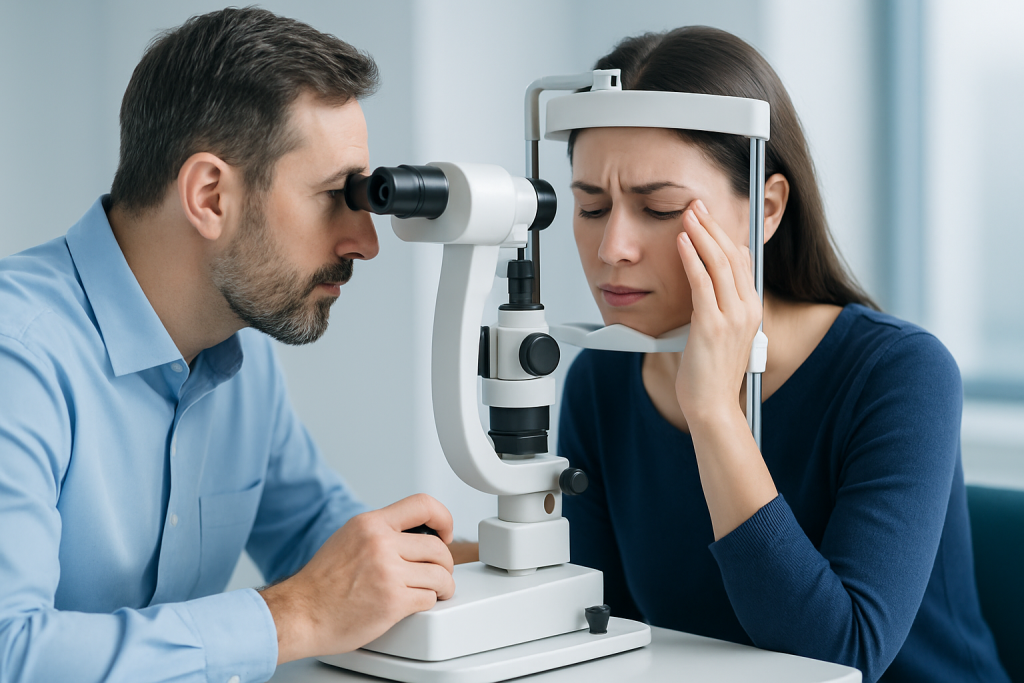
People describe eyeball ache in different ways. Some feel a dull ache behind the eye, while others notice sharp pain when blinking, moving the eye, or focusing for long periods. The discomfort may worsen in bright light, after reading, or when using a computer or phone.
Other symptoms can offer important clues. Dryness, tearing, itching, gritty sensation, redness, blurred vision, headache, eyelid swelling, or discharge may appear alongside the pain. If the discomfort follows trauma, a foreign body sensation, or contact lens wear, the cause may be related to the surface of the eye.
- Pressure or fullness behind the eye
- Burning, stinging, or scratchy sensation
- Pain when moving the eyes
- Sensitivity to light
- Blurred or reduced vision
- Redness or watering
Some symptoms point to more urgent conditions. Sudden severe pain, halos around lights, vomiting, double vision, or a rapid change in sight should not be ignored. Even if the pain seems mild, a one-sided symptom that persists is worth discussing with an eye specialist.
Causes & Risk Factors

Eyeball ache can come from the eye surface, the deeper structures of the eye, or nearby areas such as the sinuses. A very common cause is eye strain, especially after prolonged screen use, poor lighting, uncorrected vision problems, or long periods of focused near work. Dry eye is another frequent reason, particularly in air-conditioned environments, on flights, or with contact lens wear.
Inflammation and infection can also produce aching. Conjunctivitis, corneal irritation, uveitis, scleritis, and certain infections may cause pain together with redness and light sensitivity. Sinus congestion can create pressure that feels like eye pain, while migraine may cause pain around or behind the eyes even when the eye itself is healthy.
Risk increases when the eyes are exposed to irritants, trauma, prolonged screen time, or contact lenses that are not used safely. Autoimmune conditions, recent eye surgery, and a history of glaucoma or inflammatory eye disease can also raise concern. Because some causes need timely treatment, the exact pattern of symptoms matters more than the word “ache” alone.
Diagnosis
A doctor begins by asking when the pain started, where it is felt, whether it is one-sided or both-sided, and what makes it better or worse. Details about vision changes, contact lens use, trauma, headaches, fever, sinus symptoms, and recent travel can help guide the evaluation. The pattern of discomfort often reveals whether the issue is likely on the surface or deeper inside the eye.
The eye examination may include checking visual acuity, looking at the eyelids and cornea, examining the front and back of the eye, and measuring eye pressure when needed. A slit-lamp exam can help detect surface problems, inflammation, or foreign bodies. If a specialist suspects a sinus, nerve, or systemic cause, additional testing may be arranged.
For international patients, it is useful to bring previous prescriptions, surgery notes, contact lens details, and any recent imaging or eye records. This can shorten the path to diagnosis, especially when follow-up may need to continue after travel. A careful history often matters as much as the examination itself.
Treatment Options
Treatment depends entirely on the cause of the eyeball ache. Mild dryness or irritation may improve with lubricating drops, screen breaks, better hydration, or temporary contact lens rest. Eye strain often responds to vision correction, improved workstation habits, and regular pauses during close-up tasks.
When infection or inflammation is present, a doctor may recommend prescription eye drops or other targeted therapy. Some eye conditions need close monitoring because the wrong treatment can delay recovery or worsen symptoms. That is one reason self-treating persistent eye pain is not a good substitute for an exam.
If the pain is due to a foreign body, injury, or sudden pressure-related problem, management may need to be urgent and very specific. The treatment plan should also consider whether the patient is traveling, because follow-up timing, medication access, and warning signs must be explained clearly. In skilled multidisciplinary centers, ophthalmology teams can coordinate care when the cause is not straightforward.
Supportive steps may include reducing screen time, avoiding rubbing the eye, using protective eyewear when appropriate, and temporarily stopping contact lens wear until a clinician says it is safe to resume. If the symptom is linked to a broader condition such as migraine or sinus disease, the underlying issue should be treated as well.
Prevention & Self-care
Not every case of eyeball ache can be prevented, but many common triggers are manageable. A practical starting point is reducing eye strain: follow regular screen breaks, keep screens at a comfortable distance, and make sure lighting is balanced rather than harsh. People who work on computers for long stretches often notice improvement when they blink more often and avoid staring without pause.
Dry environments can make symptoms worse, so it may help to use a humidifier when appropriate and stay hydrated. Contact lens users should follow cleaning and replacement instructions carefully and avoid wearing lenses longer than recommended. Sunglasses can be useful in bright light, and protective eyewear should be worn for sports or activities with a risk of debris.
- Do not rub a painful eye
- Pause contact lens wear if the eye becomes irritated
- Use only eye drops that a clinician has approved
- Rest the eyes during prolonged reading or screen use
- Seek care early if symptoms do not settle
Self-care is appropriate only when the discomfort is mild and there are no warning signs. If the ache is associated with reduced vision, marked redness, or light sensitivity, home measures should not delay medical review.
When to See a Doctor
An eye doctor should be contacted promptly if eyeball ache is severe, persistent, or affecting only one eye without a clear explanation. The same applies when pain appears with blurry vision, double vision, significant redness, swelling, or discharge. A sudden change in sight always deserves prompt assessment.
Immediate medical attention is especially important if the pain follows an injury, chemical exposure, or contact lens-related problem. Pain with nausea, vomiting, halos around lights, or intense headache can indicate a more urgent eye condition. In those situations, the goal is not to wait and watch, but to be examined quickly.
For patients traveling from abroad, it is wise to seek care before a departure is disrupted by worsening symptoms. Acibadem Health Point’s multidisciplinary specialists and JCI-accredited hospitals can diagnose and treat eye conditions for international patients, including cases where coordination across imaging, ophthalmology, and follow-up care is needed. A clear plan before and after travel can make recovery safer and less stressful.
Frequently asked questions
01What does eyeball ache usually mean?
It refers to pain or discomfort felt in or around the eye, but it is not a diagnosis on its own. The cause may be something mild, such as dryness or eye strain, or something that needs treatment, such as inflammation or infection.
02Is eyeball ache the same as eye strain?
Not always. Eye strain can cause aching, tired eyes, and pressure, especially after screens or reading, but eyeball ache can also come from dryness, sinus pressure, migraine, injury, or eye disease. A full symptom pattern helps tell the difference.
03Can dry eye cause pain inside the eye?
Yes, dry eye can feel like aching, burning, or a gritty pain in the eye. People often notice it more in windy, air-conditioned, or screen-heavy settings. If symptoms persist, an eye exam can confirm the cause and guide treatment.
04When is eye pain an emergency?
Eye pain is more urgent when it is sudden, severe, or comes with vision loss, light sensitivity, halos, vomiting, or a history of injury. Those signs can point to a condition that should be assessed quickly. It is safer to seek prompt care rather than wait for it to pass.
05Can sinus problems feel like eyeball ache?
Yes, sinus pressure can create pain around or behind the eyes and may feel like the eyeball itself hurts. This is more likely when the person also has congestion, facial pressure, or a recent upper respiratory infection. If the pain is severe or vision changes are present, an eye exam is still important.
06What can a traveler do if eyeball ache starts during a trip?
The person should avoid contact lenses if the eye is irritated, rest the eyes, and seek medical evaluation if the pain is not mild or if warning signs appear. Keeping any prior eye records, prescriptions, and contact lens information can help the doctor assess the problem faster.
This article is for general information only and is not a substitute for professional medical advice. Please consult a qualified doctor about your individual situation.
Persistent digestive symptoms? Get evaluated in Turkey
JCI-accredited · board-certified surgeons · reply within 24h
Add us as a Preferred Source to see more of our trusted health content across Google Search, AI Overviews and Discover.