

What Is Eye Strain Headache? A Complete Medical Guide
- 8 min read
- Published November 26, 2026
Key Takeaways
- Eye strain headache is usually caused by sustained visual effort rather than damage to the eye itself.
- Common triggers include long screen time, poor lighting, uncorrected vision, dry eyes, and improper eyewear.
- The pain may feel like pressure around the eyes, forehead, temples, or the back of the head.
- Simple changes such as better lighting, regular breaks, and updated glasses can often reduce symptoms.
- Sudden, severe, or unusual headaches with vision changes need prompt medical assessment.
An eye strain headache is a common, usually temporary headache linked to prolonged visual effort such as reading, screen use, or uncorrected vision problems. It often improves when the underlying trigger is addressed, but persistent or severe symptoms should be reviewed by a clinician.
Overview
An eye strain headache is a headache that develops when the eyes are working harder than usual for a long period of time. People often notice it after reading, using a computer, driving in challenging light, or focusing on detailed tasks. The discomfort is commonly felt as pressure behind the eyes, aching in the forehead, or a tight band across the head.
This type of headache is usually linked to visual effort, not to a dangerous problem in the eye. It is often associated with digital eye strain, uncorrected vision changes, dry eyes, or glasses that are no longer a good match for a person’s needs. Understanding the trigger is important because treatment is often straightforward once the cause is identified.
For many people, the question is not only what the headache feels like, but why it keeps returning. That is especially true for international patients who spend long hours traveling, working remotely, or switching between devices and time zones, since fatigue and disrupted routines can make symptoms easier to notice.
Symptoms
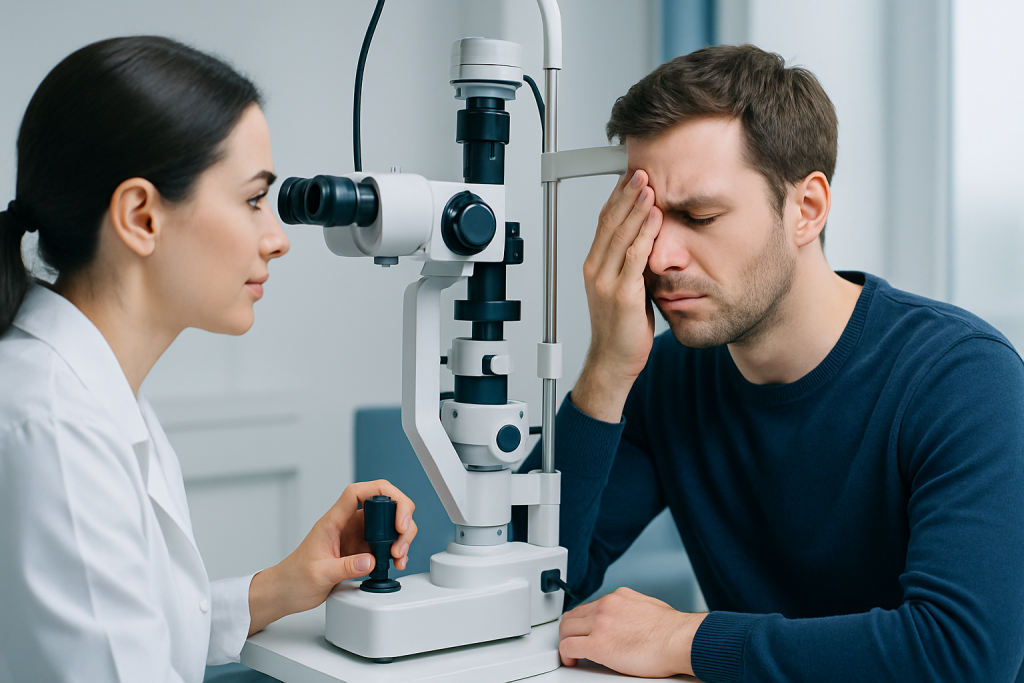
The symptom pattern can vary, but eye strain headaches usually have a recognizable connection to prolonged visual work. The headache may begin gradually during the task or shortly afterward, and it often improves when the eyes rest.
Common symptoms include:
- Pressure or aching around the eyes, forehead, or temples
- Blurred vision that comes and goes
- Burning, dryness, or tired-feeling eyes
- Difficulty focusing after reading or screen use
- Sensitivity to bright light
- Neck or shoulder tension that accompanies the headache
Some people also describe a sense of heaviness in the eyes, trouble concentrating, or the need to squint. These symptoms can overlap with other headache types, which is why the overall pattern and timing matter when a doctor evaluates the problem.
Causes & Risk Factors

Eye strain headaches usually develop when the visual system is under repeated stress. A person may be focusing hard for long periods, compensating for an eye prescription that is out of date, or trying to see clearly in a setting that is too dim, too bright, or visually busy.
Frequent causes include prolonged screen use, reading for long stretches, uncorrected nearsightedness, farsightedness or astigmatism, dry eye, glare, and poor posture while looking at a device. Some people are more sensitive when they are tired, dehydrated, stressed, or recovering from travel or illness.
Risk increases when visual demands are high and breaks are rare. Long workdays, multiple screens, nighttime device use, and environmental factors such as air conditioning or low humidity can all make symptoms more noticeable. In older adults, changes in vision or cataracts may also contribute to eye fatigue and related headaches.
Diagnosis
Diagnosis starts with a careful history, because the pattern of the headache often provides the strongest clue. A clinician may ask when the pain starts, how long it lasts, whether it follows reading or screen use, and whether there are vision changes, nausea, light sensitivity, or other neurological symptoms.
An eye examination is often an important part of the evaluation. This may include checking visual acuity, refraction, eye movement, eye pressure, and the health of the front and back of the eye. If the headache appears related to a refractive error, dry eye, or another eye condition, treatment can be tailored accordingly.
In some cases, the clinician may look beyond the eyes. Headache type, migraine history, sinus symptoms, medication use, stress, and sleep patterns may all be reviewed. Additional tests are only recommended when the symptom pattern suggests a different or more serious cause.
Treatment Options
Treatment depends on the cause, but many people improve with changes that reduce visual effort. If the headache is linked to an outdated prescription, new glasses or contact lens adjustments may help. When dry eye is a factor, lubricating drops, environmental changes, or treatment of the underlying tear problem may be recommended.
Practical strategies often include taking regular screen breaks, improving lighting, reducing glare, keeping screens at a comfortable distance, and adjusting posture so the neck and shoulders are not strained. Some people benefit from temporary changes in work habits, such as using larger text, alternating tasks, or avoiding long uninterrupted reading sessions.
If the headache is actually a migraine, tension-type headache, or another neurological condition, treatment will be different. That is one reason a proper assessment matters: an eye strain headache is common, but it should not be assumed without checking for other explanations when symptoms are persistent or changing.
Prevention & Self-care
Prevention focuses on lowering the amount of strain the eyes and surrounding muscles experience each day. A simple habit such as pausing regularly during computer work can make a meaningful difference, especially for people who spend most of the day on digital devices.
Helpful self-care measures include:
- Following a regular break routine during reading or screen use
- Keeping screens clean and positioned to reduce glare
- Using adequate room lighting, not very dim or harsh light
- Blinking more often and treating dryness when present
- Wearing the correct glasses or contact lens prescription
- Staying hydrated and maintaining good sleep habits
Travelers and remote workers may need extra attention to sleep, hydration, and screen habits, since unfamiliar schedules and long days can quietly increase strain. If symptoms recur often, it is sensible to arrange an eye exam before the problem becomes a repeated part of daily life.
When to See a Doctor
Medical review is advisable when headaches happen often, interfere with work or daily life, or do not improve with basic changes. It is also important to seek care if vision seems persistently blurred, if glasses no longer seem effective, or if eye discomfort is becoming more frequent.
Prompt evaluation is especially important if the headache is sudden and severe, comes with double vision, vision loss, eye redness, nausea or vomiting, weakness, confusion, fever, or pain after an injury. These features do not fit a simple eye strain pattern and deserve timely assessment.
For patients traveling from another country, it can be helpful to plan follow-up care before leaving, especially if a new prescription, dry eye treatment, or neurological assessment is needed. Acibadem Health Point’s multidisciplinary specialists and JCI-accredited hospitals diagnose and treat eye strain-related complaints for international patients within coordinated care pathways.
Living With Recurring Eye Strain Headaches
When eye strain headaches happen repeatedly, the goal is to identify the pattern rather than simply treat each episode. Tracking screen time, lighting, reading distance, sleep, and symptom timing can reveal useful triggers for the clinician. A short symptom diary often helps separate visual strain from migraine or tension-related headache.
Some people find that symptoms improve only after several small changes are made together. For example, updating a prescription, improving workstation setup, and managing dry eye may work better as a combined plan than any one step alone. That approach is often especially useful for people who work across time zones or spend long hours in airports, hotels, or shared workspaces.
Outlook
The outlook for an eye strain headache is usually good when the cause is recognized and corrected. Many people experience fewer headaches once their eyes receive the right prescription, their workspace is adjusted, and visual breaks become part of the day.
What matters most is not assuming that every headache near the eyes is harmless or, on the other hand, assuming it always signals something serious. A measured evaluation helps confirm the source and supports the right treatment plan. For most patients, that leads to practical improvement and fewer disruptions to work, travel, and daily comfort.
Frequently asked questions
01What is an eye strain headache?
An eye strain headache is head pain that develops after prolonged visual effort, such as reading or using screens for long periods. It often feels like pressure around the eyes, forehead, or temples and usually improves with rest or correction of the trigger.
02Is eye strain headache the same as a migraine?
No. Eye strain headaches are usually linked to visual fatigue or focusing problems, while migraines are a neurological headache disorder with their own pattern of symptoms. Because the two can overlap, a clinician may need to review the history carefully if headaches recur.
03Can dry eyes cause a headache behind the eyes?
Yes, dry eyes can contribute to eye discomfort and sometimes a headache-like ache behind or around the eyes. When dryness is part of the problem, treating the tear film and reducing screen-related strain may help.
04Do I need glasses if I get eye strain headaches?
Not always, but an outdated or incorrect prescription is a common cause. An eye exam can show whether glasses, contact lenses, or another eye treatment would reduce the strain.
05How can someone reduce eye strain from screens?
Regular breaks, better lighting, reduced glare, and keeping the screen at a comfortable distance are useful first steps. It also helps to blink more often, use the correct prescription, and avoid very long uninterrupted sessions.
06When should eye strain headache be checked urgently?
It should be checked urgently if the pain is sudden and severe, or if it comes with vision loss, double vision, eye redness, vomiting, weakness, confusion, or fever. Those features suggest a problem beyond routine eye strain and should not be ignored.
This article is for general information only and is not a substitute for professional medical advice. Please consult a qualified doctor about your individual situation.
Joint and spine care in Turkey — expert assessment & treatment
JCI-accredited · board-certified surgeons · reply within 24h
Add us as a Preferred Source to see more of our trusted health content across Google Search, AI Overviews and Discover.


How can we help you today?
Meet an Acibadem specialist by secure video, before you travel.
Book a video visit