What Is Effusion in Joints? A Complete Medical Guide

Key Takeaways
- Effusion in joints is a sign, not a diagnosis, and usually points to irritation, injury, or inflammation inside the joint.
- Common symptoms include swelling, stiffness, reduced range of motion, pain, and sometimes warmth around the joint.
- A doctor may use a physical exam, imaging, and sometimes fluid analysis to find the cause.
- Treatment may include rest, ice, compression, elevation, medication, drainage, or rehabilitation, depending on the underlying problem.
- Sudden swelling, fever, inability to bear weight, or severe pain should be assessed promptly.
Effusion in joints means extra fluid has collected inside a joint, most often causing swelling, stiffness, and discomfort. It can happen after injury, overuse, arthritis, or infection, and the right treatment depends on the cause.
Overview
Effusion in joints is the medical term for extra fluid collecting inside a joint space. In everyday language, people often describe it as a “swollen joint” or “fluid on the knee,” although effusion can affect many joints, including the shoulder, ankle, elbow, wrist, and hip.
This finding is not a disease by itself. It is the body’s response to something irritating the joint, such as an injury, inflammatory arthritis, infection, or repeated stress. The key question is not only whether fluid is present, but why it is there, because treatment is guided by the cause.
For many patients, the journey begins with a visible change: a joint looks fuller, feels tight, or bends less freely than before. In an international-patient setting, doctors often focus first on confirming the source of swelling, then on choosing the least disruptive treatment that helps the person move safely and recover function.
Symptoms
The most obvious sign of joint effusion is swelling around the joint. The area may feel tense, puffy, or larger than usual, and the person may notice that the joint does not move as easily. In weight-bearing joints such as the knee or ankle, walking may become uncomfortable or unstable.
Other symptoms often depend on the underlying cause. Pain may be mild or more pronounced, and the joint may feel warm or stiff, especially after rest. Some people notice reduced range of motion, a sense of pressure inside the joint, or a catching sensation when they try to bend or straighten it.
When effusion is related to infection or a major inflammatory flare, symptoms can progress more quickly. Fever, marked redness, inability to use the joint, or severe tenderness should never be ignored. These features deserve prompt medical evaluation because the cause may require urgent treatment.
- Visible swelling
- Stiffness or tightness
- Pain with movement or weight-bearing
- Warmth or tenderness
- Reduced range of motion
Causes & Risk Factors

Effusion in joints can appear after trauma, even when the injury seems minor at first. A twist, fall, ligament sprain, meniscus tear, or fracture can trigger the joint lining to produce more fluid as part of the inflammatory response. Overuse and repetitive strain can also irritate the joint over time.
Inflammatory conditions are another major group of causes. Osteoarthritis, rheumatoid arthritis, gout, pseudogout, and other autoimmune or crystal-related disorders can all lead to recurrent fluid buildup. Infections inside the joint, although less common, are especially important to rule out because they can damage the joint quickly if untreated.
Risk increases when a person has a history of joint disease, previous injury, heavy physical activity, obesity, or occupational strain. Age can also matter, since degenerative changes become more common over time. In some people, fluid buildup is temporary and resolves with rest; in others, it is a recurring sign that the joint needs a deeper assessment.
Diagnosis
Diagnosis starts with a careful conversation about when the swelling began, whether there was an injury, and what makes the symptoms better or worse. A clinician will usually examine the joint for warmth, tenderness, instability, and range of motion, and may compare it with the opposite side.
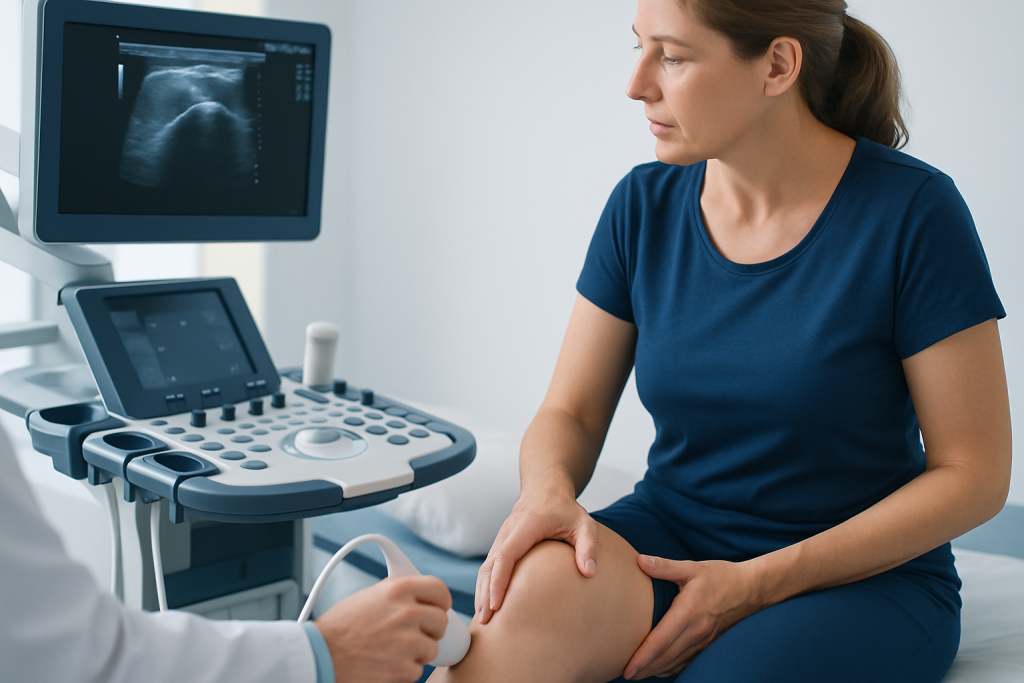
Imaging tests are often used to clarify the problem. X-rays can show fractures, arthritis, or joint alignment issues, while ultrasound can confirm fluid and guide drainage if needed. MRI may be helpful when doctors suspect soft-tissue injury, cartilage damage, or internal structures that are not visible on plain X-rays.
In some cases, the joint fluid itself is tested. This procedure, called aspiration, can help identify infection, crystals, blood, or signs of inflammation. Fluid analysis is especially useful when the cause is unclear or when symptoms suggest a condition that needs specific treatment.
Treatment Options
Treatment for joint effusion depends on the underlying cause, the size of the swelling, and how much it limits daily life. For many mechanical injuries, initial care may include rest, activity modification, ice, compression, elevation, and short-term support such as a brace or bandage. These measures can help reduce discomfort while the joint settles.
Medication may be recommended when inflammation is a major factor. A doctor may suggest anti-inflammatory medicines, pain-relief options, or disease-specific treatment for arthritis or gout. If infection is suspected, urgent drainage and targeted antimicrobial treatment may be needed. Repeated or large effusions sometimes require aspiration to ease pressure and to obtain fluid for testing.
Rehabilitation is often an important part of recovery. Physical therapy can restore mobility, strengthen the muscles around the joint, and improve stability after injury or flare-ups. For structural damage such as a torn ligament or meniscus, or for recurrent unexplained swelling, an orthopedic specialist may discuss additional procedures or surgery.
People traveling for care often want a clear sequence: confirm the diagnosis, control pain and swelling, then rebuild safe movement before returning home. That staged approach is especially useful when follow-up must be coordinated across countries and time zones.
Prevention & Self-care
Not every case of effusion can be prevented, but joint health habits can reduce risk. Warm-up before exercise, increase activity gradually, use proper footwear, and avoid sudden overload when returning to sport or work. If a joint has been injured before, protecting it during recovery matters more than pushing through pain.
At home, short periods of rest, ice wrapped in a cloth, and elevation can help ease swelling after minor strain. Keeping a healthy body weight can also reduce stress on the knees, hips, and ankles. For people with chronic arthritis, sticking to a treatment plan and attending routine reviews can help limit flare-ups.
It is wise to avoid self-medicating for long periods without a clinician’s guidance, especially when swelling keeps returning. Recurrent effusion usually means the joint needs proper evaluation rather than repeated temporary relief alone.
- Use gradual training and good technique
- Support healing after injury
- Maintain healthy weight and muscle strength
- Follow arthritis treatment plans consistently
- Seek assessment for recurring swelling
When to See a Doctor
Medical evaluation is recommended if a joint becomes swollen without a clear reason, if the swelling lasts more than a short time, or if it keeps coming back. This is especially important when the joint feels unstable, locks, or limits normal walking or use.
Prompt care is needed if swelling appears after a significant injury, if the joint is hot and very painful, if fever is present, or if the person cannot bear weight or move the joint normally. These symptoms may point to infection, fracture, or another condition that should be assessed quickly.
A doctor can determine whether the fluid is a short-term reaction or a clue to a larger problem. For international patients seeking organized evaluation, Acibadem Health Point offers multidisciplinary specialists and JCI-accredited hospitals that diagnose and treat joint conditions with coordinated care.
Living With Recurrent Joint Effusion
When joint effusion happens more than once, the goal is not only to reduce the swelling but also to understand the pattern behind it. Some people notice flare-ups after exercise, long travel, or seasonal changes in inflammatory disease, while others develop fluid after repeated mechanical stress. Tracking these triggers can help clinicians tailor treatment more accurately.
Practical follow-up often includes symptom notes, imaging when needed, and a rehabilitation plan that matches the person’s daily demands. This is particularly helpful for patients who split care between countries, because a clear record makes it easier for another clinician to continue treatment without repeating unnecessary tests.
With the right diagnosis and a structured plan, many people regain comfortable movement and reduce future flare-ups. The important step is to treat effusion as a meaningful signal from the joint, rather than as a problem to simply wait out.
Frequently asked questions
01What does effusion in joints mean?
Effusion in joints means that extra fluid has built up inside a joint. It is usually a sign that something is irritating or inflaming the joint, such as injury, arthritis, or infection.
02Is joint effusion the same as swelling?
Joint effusion often causes swelling, but the terms are not exactly the same. Swelling can also come from nearby tissues, while effusion specifically refers to fluid inside the joint space.
03Can effusion in joints go away on its own?
Sometimes it can improve on its own, especially after a minor strain or short-term irritation. If the swelling lasts, keeps returning, or follows an injury, it should be evaluated to find the cause.
04How is fluid in a joint diagnosed?
Doctors usually start with an exam and may use X-rays, ultrasound, or MRI. If needed, they may remove a small sample of fluid from the joint to look for infection, crystals, or inflammation.
05When is joint effusion an emergency?
It should be assessed urgently if the joint is very painful, hot, red, or associated with fever, inability to bear weight, or sudden severe loss of movement. These can be signs of infection or a serious injury.
06Can exercise make joint effusion worse?
Yes, if the joint is already irritated, too much activity can increase pain and swelling. Gentle movement may be helpful later in recovery, but the right level of activity depends on the cause and should be guided by a clinician.
This article is for general information only and is not a substitute for professional medical advice. Please consult a qualified doctor about your individual situation.
Joint and spine care in Turkey — expert assessment & treatment
JCI-accredited · board-certified surgeons · reply within 24h
Add us as a Preferred Source to see more of our trusted health content across Google Search, AI Overviews and Discover.