What Is Dry Above Eyelids? A Complete Medical Guide

Key Takeaways
- Dry skin above the eyelids is often caused by irritation, allergies, eczema, or blepharitis rather than a serious eye disease.
- Symptoms may include tightness, flaking, redness, itching, burning, or swelling of the eyelid skin.
- Gentle cleansing, avoiding triggers, and using bland moisturizers can help many mild cases.
- Persistent, painful, one-sided, or vision-changing symptoms should be assessed by a doctor.
- A clinician may examine both the skin and the eyes to identify the underlying cause and guide treatment.
Dry above eyelids usually refers to dry, flaky, itchy, or irritated skin on the upper eyelid area. It is often linked to simple skin irritation, but it can also be caused by eczema, contact dermatitis, blepharitis, or other eye and skin conditions that may need medical care.
Overview
Dry above eyelids usually means the skin on or just above the upper eyelids feels rough, flaky, tight, itchy, or irritated. Because eyelid skin is thin and sensitive, it often reacts sooner than other areas when exposed to soaps, cosmetics, weather changes, rubbing, or inflammatory skin conditions.
In many people, the problem is a form of eyelid dermatitis, which is a broad term for irritation or inflammation of the eyelid skin. It may be short-lived and mild, or it may recur if the trigger remains in daily use. A careful look at symptoms, products, and overall skin or eye health helps narrow down the cause.
Although the word “dry” sounds simple, the reason behind it is not always just lack of moisture. The skin barrier may be inflamed, the eyelid margin may be irritated, or the area may be reacting to something touching the skin. That is why treatment works best when it is matched to the underlying cause rather than focused only on moisturising.
Symptoms
The first sign is often a change in how the eyelid skin feels. People may notice tightness when blinking, mild flaking at the crease above the eye, or a rough surface that becomes more obvious after washing the face or being outdoors in wind or cold air.
Common accompanying symptoms include:
- Itching or a stinging sensation
- Redness or mild swelling
- Scaling, peeling, or small dry patches
- Burning, especially after using cosmetics or cleansers
- Cracking in more severe irritation
Some people also have watery eyes, crusting along the lash line, or a feeling that the eyelid is heavy. If the discomfort is mainly on one side, keeps returning, or is linked with eye pain or vision changes, it deserves medical assessment rather than continued self-treatment.
Causes & Risk Factors

Several everyday factors can lead to dry skin above the eyelids. Contact dermatitis is one of the most common reasons and happens when the skin reacts to something that touches it, such as eye makeup, makeup remover, facial creams, sunscreen, shampoo, nail products, or airborne irritants. The reaction may be allergic or simply irritating.
Skin conditions are another frequent cause. Eczema, including atopic dermatitis, can affect the eyelids and make the skin dry and fragile. Seborrheic dermatitis may cause flaky, sometimes greasy scaling around the brows and eyelids. Blepharitis, which is inflammation of the eyelid margin, can also leave the surrounding skin irritated and dry.
Risk tends to be higher in people who have sensitive skin, seasonal allergies, a history of eczema, frequent eye rubbing, or regular exposure to cosmetics or workplace irritants. Dry indoor air, cold weather, and over-washing can make the problem more noticeable. In some cases, an underlying infection or another inflammatory condition needs to be ruled out by an eye or skin specialist.
Diagnosis
Diagnosis usually begins with a detailed conversation. A clinician will ask when the dryness started, whether both eyelids are affected, which products are used on the face and eyes, and whether there are other symptoms such as itching, crusting, tearing, or rash elsewhere on the body. Photos of the area can be useful if the problem fluctuates.
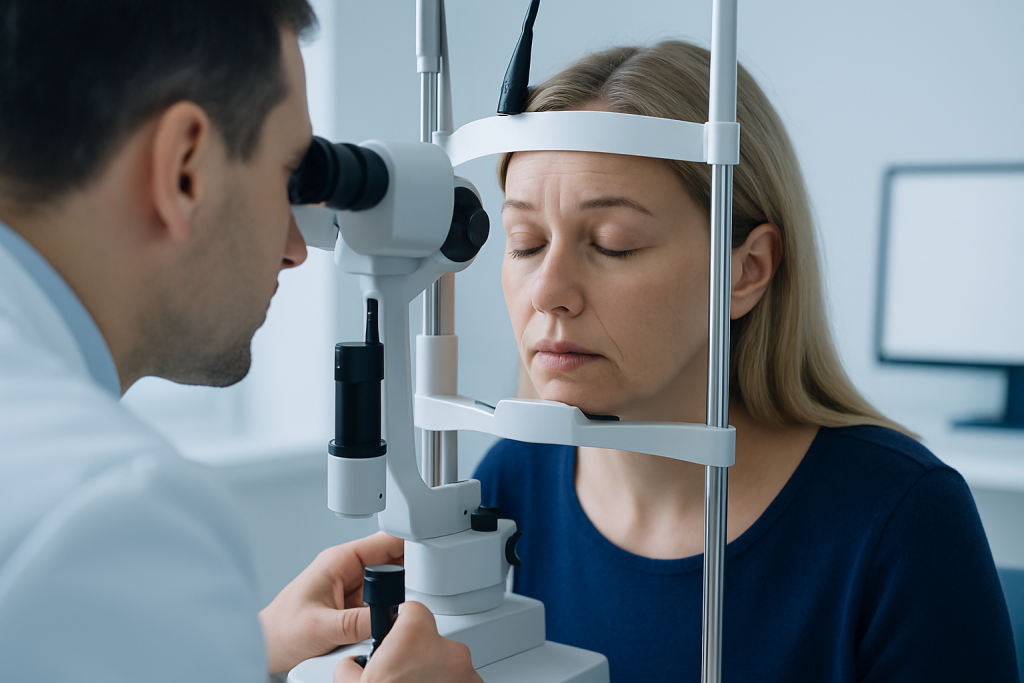
The examination often includes both the skin and the eyes, because eyelid symptoms can overlap with eye surface problems. The doctor may look for redness, scaling, swelling, lash-line changes, or signs of blepharitis, and may check whether the eye itself is irritated. If an allergic trigger is suspected, patch testing or referral to a dermatologist may be considered.
Most cases do not require extensive testing, but persistent, recurrent, or unusual symptoms may prompt further evaluation. The main goal is to distinguish simple dryness from conditions such as eczema, psoriasis, infection, or a reaction to a product that should be avoided.
Treatment Options
Treatment depends on the cause, but the first step is often to remove possible irritants. Many people improve when they stop using eye makeup, fragranced creams, new facial products, or harsh cleansers for a short period. Cleaning the eyelids gently with lukewarm water and a mild, non-irritating cleanser can help protect the skin barrier.
For mild dryness, a bland, fragrance-free emollient may be recommended for the skin above the eyelids, but it should be used carefully and only as directed by a clinician because the area is close to the eyes. If eczema or dermatitis is present, a doctor may suggest a short course of a suitable anti-inflammatory treatment. When blepharitis is involved, warm compresses and lid hygiene are often part of care.
It is important not to use random over-the-counter steroid creams near the eyes without medical advice. The eyelid area is delicate, and the wrong product can worsen irritation or create other problems. If an allergy is suspected, identifying and avoiding the trigger is usually more effective than repeatedly treating the skin after each flare.
In more stubborn cases, treatment may involve coordinated care between an eye specialist and a dermatologist. That approach can be especially helpful for people who have recurrent symptoms, other facial skin disease, or need a clearer plan for travel-related follow-up and product selection after they return home.
Prevention & Self-care
Daily habits often make a noticeable difference. The simplest strategy is to keep the area calm: avoid rubbing the eyes, remove makeup gently, and choose fragrance-free skin care when possible. A minimal routine is often better than layering several active products around sensitive eyelid skin.
Helpful self-care measures include:
- Use lukewarm water instead of hot water on the face
- Choose gentle, fragrance-free cleansers and moisturizers
- Pause new cosmetics if symptoms start soon after use
- Wash hands before touching the eyes or face
- Protect the skin from cold wind and very dry indoor air
- Replace old eye makeup if contamination is a concern
People with recurrent episodes may benefit from keeping a simple diary of products, weather changes, and symptoms. That record can help identify a pattern that is not obvious day to day. If a specific product seems to be the trigger, bringing the ingredient list to a doctor can make the evaluation more efficient.
When to See a Doctor
Medical evaluation is sensible if dry skin above the eyelids lasts more than a short time, keeps coming back, or does not improve with gentle skin care. It is especially important to seek care if the area becomes very red, swollen, painful, cracked, or increasingly itchy, because these features may suggest dermatitis, infection, or another treatable condition.
Prompt assessment is also recommended if there is discharge from the eye, crusting that interferes with opening the eyelids, sensitivity to light, blurred vision, or pain inside the eye. These symptoms may point to a problem beyond simple skin dryness and should not be ignored.
For people travelling for treatment, it can be reassuring to know that a clear diagnosis often comes from a straightforward consultation rather than complex testing. Acibadem Health Point’s multidisciplinary specialists and JCI-accredited hospitals diagnose and treat eye and skin-related conditions for international patients, with care plans that can be discussed before travel and followed after returning home.
Living With Recurrent Eyelid Dryness
When eyelid dryness keeps returning, the goal is not only to calm one flare but also to reduce future episodes. That usually means identifying the pattern, simplifying skin care, and treating any underlying eczema, allergy, or eyelid inflammation. Consistency matters more than using many different products.
Some people find that symptoms improve in one season and return in another, especially in dry or windy weather. Others notice a link with cosmetics, nail products, or facial cleansers that migrate to the eyelids. Small changes, such as switching to fragrance-free products and keeping the eye area free of unnecessary creams, can make the skin less reactive over time.
If symptoms remain unexplained, recurring care with the same clinician can help build a clearer picture. This is particularly useful for international patients who may need a practical plan that fits travel schedules, medication availability, and follow-up in their home country.
Frequently asked questions
01What is the most common reason for dry skin above the eyelids?
The most common causes are irritation or contact dermatitis from products, along with eczema or other inflammatory skin conditions. Blepharitis can also contribute when the eyelid margins are involved. A doctor can help identify which pattern is most likely.
02Can I use moisturizer on dry eyelid skin?
Sometimes a bland, fragrance-free moisturizer can help, but the eyelid area is delicate and not every product is suitable. It is best to choose gentle, non-irritating formulas and avoid getting them in the eye. If symptoms persist, medical advice is safer than trying multiple products.
03Is dry above eyelids the same as blepharitis?
Not always. Dryness above the eyelids refers to the skin, while blepharitis is inflammation along the eyelid margin and eyelashes. The two can happen together, which is why an eye examination may be helpful.
04Could makeup be causing the dryness?
Yes, makeup, removers, skincare ingredients, and even nail products can trigger eyelid irritation or allergy. If symptoms began after a product change, stopping the suspected item is a practical first step. A doctor may suggest patch testing if reactions keep recurring.
05When should eyelid dryness be checked urgently?
Urgent assessment is sensible if there is eye pain, blurred vision, marked swelling, pus-like discharge, or sensitivity to light. These symptoms can suggest a problem beyond simple dry skin. If in doubt, medical evaluation is the safest choice.
06How long does eyelid dermatitis usually take to improve?
Mild cases may improve within days to a couple of weeks once the trigger is removed and the skin is treated gently. More stubborn cases can take longer, especially if the trigger is still present or an underlying skin condition is involved. Ongoing or recurrent symptoms should be reviewed by a clinician.
This article is for general information only and is not a substitute for professional medical advice. Please consult a qualified doctor about your individual situation.
Explore treatments in Turkey — costs, top hospitals & a free quote
JCI-accredited · board-certified surgeons · reply within 24h
Add us as a Preferred Source to see more of our trusted health content across Google Search, AI Overviews and Discover.