What Is Calisthenics Exercise Program? A Complete Medical Guide

Key Takeaways
- A calisthenics exercise program uses the body’s own weight as resistance, with exercises that can be scaled from very easy to highly demanding.
- It can improve strength, balance, mobility, and heart health when practiced consistently and with good technique.
- People with pain, dizziness, heart symptoms, or recent injuries should get medical guidance before starting or progressing.
- Warm-ups, gradual progression, and recovery days are important to lower the risk of overuse injury.
- The right program is individual: age, fitness level, joint health, and other medical conditions all matter.
A calisthenics exercise program is a structured routine that uses bodyweight movements such as squats, push-ups, lunges, planks, and pull-ups to build strength, mobility, and coordination. It can be adapted for beginners, active adults, and people returning to exercise, but like any training plan, it works best when it matches a person’s health status, recovery, and goals.
Overview: What a calisthenics exercise program actually is
A calisthenics exercise program is a planned set of bodyweight exercises designed to improve strength, endurance, balance, and movement control without relying on gym machines or heavy weights. The core idea is simple: the person uses their own body as resistance, which makes the training flexible enough for a living room, hotel room, rehabilitation setting, or outdoor park.
Common movements include squats, lunges, push-ups, planks, step-ups, jumping jacks, and pull-up variations. More advanced programs may add handstand holds, dips, explosive jumps, or single-leg work. What makes it a “program” is not just the exercise list, but the structure: repetitions, sets, rest periods, progression, and recovery are organized with a goal in mind.
For many people, calisthenics is appealing because it is accessible and adaptable. A beginner can start with wall push-ups and assisted squats, while a more experienced exerciser may use slower tempo, one-sided movements, or higher skill drills. In a medical and wellness context, this adaptability is valuable because it allows the routine to be matched to joint comfort, current conditioning, and the person’s day-to-day demands.
Symptoms and signs that a routine is helping — or overdoing it
Exercise is meant to feel challenging but manageable. With a well-designed calisthenics exercise program, people often notice better stamina during daily tasks, easier stair climbing, improved posture, and gradual gains in strength or control. Mild muscle fatigue after a session is common, especially in the early weeks, and usually improves as the body adapts.
Less reassuring signs deserve attention. Sharp pain, joint swelling, pain that changes the way a person walks or uses the arm, dizziness, chest discomfort, unusual shortness of breath, or symptoms that worsen with each session are not typical training responses. These may point to a technique problem, overuse injury, poor recovery, or a separate medical issue that should be assessed.
Some people notice they are “doing the same workout” but feeling more tired instead of more capable. That can happen when the program progresses too quickly, sleep is poor, nutrition is inadequate, or an underlying health condition is affecting exercise tolerance. Listening to these signals helps keep training beneficial rather than turning it into a source of strain.
Causes and risk factors: who benefits most, and who needs extra caution

Calisthenics works because muscles, tendons, and the cardiovascular system respond to repeated, gradually increasing stress. The body becomes more efficient when movements are repeated with good form and enough recovery. This is the same adaptation principle used in other forms of exercise, but calisthenics packages it in a practical, low-equipment format.
Certain factors can make a person more likely to benefit from, or need modifications in, a calisthenics exercise program. These include a sedentary lifestyle, long hours of sitting, mild deconditioning after illness, reduced access to gym equipment, and the desire to improve functional movement for everyday life. On the other hand, people with arthritis, back pain, osteoporosis, balance problems, uncontrolled blood pressure, recent surgery, or a history of fainting may need a clinician’s guidance before starting.
Risk is also shaped by programming choices. Skipping warm-ups, jumping into high-repetition training, copying advanced online routines, or ignoring recovery days can increase the chance of tendon irritation or muscle strain. A safer plan usually starts with a realistic baseline and builds slowly, especially if the person is returning after time away from exercise or traveling and trying to restart a routine in a new environment.
Diagnosis and assessment: how doctors and physiotherapists evaluate readiness
There is no single “test” for whether a person can begin calisthenics safely. Instead, health professionals look at the whole picture: medical history, current symptoms, medications, past injuries, baseline activity level, and any warning signs that suggest exercise should be modified. The main question is not whether calisthenics is good in general, but whether it is appropriate for that person right now.
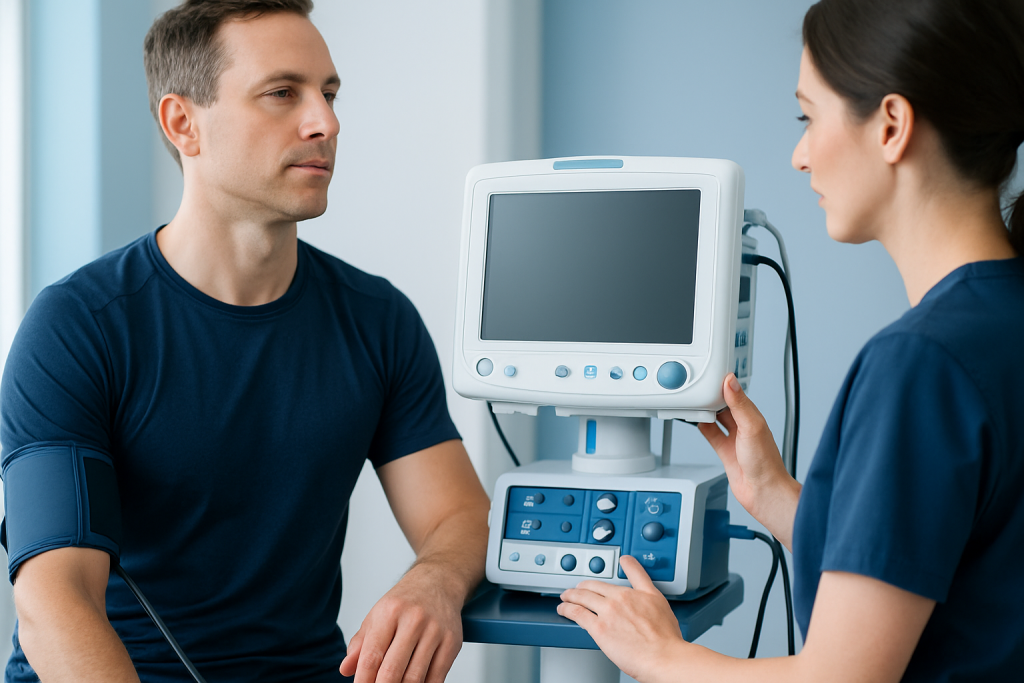
A clinician may assess blood pressure, heart and lung symptoms, joint range of motion, core control, balance, and functional movements such as squatting or stepping. If there is pain, they may try to determine whether it is muscular, joint-related, nerve-related, or linked to a specific injury. When needed, further tests can be arranged to evaluate the heart, bones, or joints before a training plan is approved.
This kind of assessment is especially useful for international patients who want to combine medical advice with a practical exercise plan after treatment. A personalized evaluation can help the person return home with clearer guidance on safe progression, recovery, and follow-up.
Treatment options: how calisthenics is used in health and fitness care
In wellness and rehabilitation settings, calisthenics may be used to improve strength, mobility, and movement confidence. The exact exercises depend on the goal. A person recovering general fitness after inactivity may begin with chair squats, wall push-ups, marching in place, and short planks. Someone aiming for athletic conditioning may add split squats, push-up progressions, pull-up variations, or controlled jump training.
The best program usually follows a few principles. Exercises are selected for the person’s current ability, then progressed one variable at a time: more repetitions, more sets, longer holds, slower lowering, or more difficult leverage. Rest days are built in so the body can adapt. If there is a medical limitation, the routine can be adjusted around it rather than abandoned completely.
In some cases, structured exercise is part of a broader treatment plan that also includes physical therapy, weight management, pain management, or cardiovascular risk reduction. For example, a clinician might recommend core and hip strengthening for low back discomfort, or low-impact bodyweight training for a person who needs to stay active while protecting the joints. The goal is sustainable movement, not performance at any cost.
- Beginner-friendly examples: wall push-ups, chair squats, bird-dog, dead bug, calf raises.
- Intermediate examples: standard push-ups, lunges, side planks, glute bridges, inverted rows.
- Advanced examples: pistol squat progressions, dips, handstand holds, explosive push-ups, pull-ups.
Prevention and self-care: making the program safer and more effective
Good results from calisthenics usually come from consistency, not intensity spikes. A brief warm-up can prepare the joints and muscles for work, while a cool-down may reduce stiffness afterward. People should pay attention to form, especially when fatigue begins, because technique often degrades before they realize it.
Recovery matters just as much as the workout itself. Enough sleep, regular hydration, and balanced meals all support muscle repair and energy. People who train frequently should plan lighter days or rest days, particularly if they are also walking more, traveling, or recovering from another activity such as long flights or a change in routine. Pain should not be “trained through” if it is sharp, persistent, or worsening.
Self-care also means choosing progression that fits real life. A person who has not exercised in months does not need an advanced online challenge; they need a repeatable plan they can maintain. Starting with short sessions two or three times a week, then increasing gradually, is often more effective than trying to do too much too soon. For those working remotely or moving between countries, a bodyweight program can be especially practical because it is easy to resume without special equipment.
When to see a doctor: red flags and useful next steps
Medical review is a good idea before starting calisthenics if a person has heart disease, chest pain with exertion, uncontrolled blood pressure, diabetes with complications, severe obesity, osteoporosis, recent surgery, or a history of fainting. The same applies if there is ongoing joint pain, repeated falls, or a recent injury that has not been evaluated. A clinician can help decide what movements are safe and which ones should wait.
During training, stop and seek medical advice if there is chest discomfort, fainting, severe shortness of breath, unusual palpitations, swelling after exercise, or pain that limits normal function. Also seek help if a muscle or joint problem is not improving after a sensible rest period or if repeated flare-ups are preventing progress. Exercise should support health, not create a cycle of setbacks.
For people planning treatment or recovery abroad, it can be helpful to choose a center that can evaluate fitness, injury risk, and ongoing rehabilitation in one place. Acibadem Health Point’s multidisciplinary specialists and JCI-accredited hospitals diagnose and treat a wide range of conditions for international patients, which can make follow-up planning more coordinated and practical.
How a calisthenics exercise program can fit into long-term health
A well-built calisthenics exercise program is less about chasing difficult tricks and more about creating a dependable base of strength and mobility. When it is tailored to the individual, it can support better daily function, healthier body composition, and a more confident return to movement after a period of inactivity or treatment.
It also offers a realistic option for people whose schedules, travel plans, or access to equipment make gym-based routines harder to maintain. Because the movements are simple to scale, the program can evolve over time rather than being replaced every few weeks. That flexibility is one reason calisthenics remains relevant across ages and fitness levels.
As with any health plan, the safest approach is personalized. A doctor, physiotherapist, or exercise professional can help match the exercises to the person’s joints, heart health, symptoms, and goals so the routine supports long-term wellbeing rather than short-lived enthusiasm.
Frequently asked questions
01What is the main purpose of a calisthenics exercise program?
The main purpose is to improve strength, endurance, mobility, and movement control using bodyweight exercises. It can be adjusted for beginners or advanced exercisers, which makes it practical for many fitness levels. The best program is one that matches the person’s current ability and recovery capacity.
02Is calisthenics good for beginners?
Yes, calisthenics can be very beginner-friendly because exercises can be scaled down. Wall push-ups, chair squats, and short planks are common starting points. A gradual approach helps reduce soreness and makes the routine easier to maintain.
03Can a calisthenics exercise program build muscle?
It can, especially when the exercises become progressively more challenging over time. Muscle growth depends on factors such as exercise difficulty, volume, recovery, and nutrition. For many people, calisthenics is enough to build noticeable strength and muscle tone, particularly in the early stages.
04How often should someone do calisthenics?
Many people start with two to four sessions per week, depending on their fitness level and goals. Rest days are important because muscles and connective tissue need time to recover. A clinician or exercise professional can help set an appropriate schedule if there are medical concerns.
05Can calisthenics cause injury?
Yes, especially if the program is too advanced, technique is poor, or recovery is inadequate. Common problems include muscle strains, tendon irritation, and joint pain. Pain that is sharp, persistent, or worsening should be evaluated rather than ignored.
06Should someone with back or knee pain do calisthenics?
Sometimes, but the exercises may need to be modified. A health professional can help identify which movements are safe and which ones might worsen symptoms. In many cases, gentle strengthening and controlled movement are useful, but the plan should be individualized.
This article is for general information only and is not a substitute for professional medical advice. Please consult a qualified doctor about your individual situation.
Joint and spine care in Turkey — expert assessment & treatment
JCI-accredited · board-certified surgeons · reply within 24h
Add us as a Preferred Source to see more of our trusted health content across Google Search, AI Overviews and Discover.