What Is Blackheads in Ear? A Complete Medical Guide

Key Takeaways
- Blackheads in the ear are usually clogged pores rather than a serious ear disease.
- Picking, squeezing, or using sharp tools can irritate the ear and raise the risk of infection.
- Oil, sweat, friction, and product buildup can contribute to ear blackheads.
- A clinician may recommend gentle topical treatments or safe extraction when needed.
- Pain, swelling, discharge, hearing changes, or repeated lesions deserve medical review.
Blackheads in the ear are usually open comedones, a form of clogged pore that can develop on the outer ear, ear canal entrance, or nearby skin. They are often harmless, but persistent, painful, or recurring spots should be assessed to rule out infection, inflammation, or other skin conditions.
Overview
Blackheads in the ear are usually small open clogged pores, also called open comedones, that form when oil and dead skin collect inside a pore and darken at the surface. They may appear on the outer ear, around the ear folds, or near the entrance of the ear canal, where skin can be exposed to sweat, hair products, earbuds, helmets, or frequent touching.
For most people, ear blackheads are more of a skin concern than an ear emergency. Still, the ear is a delicate area, and what looks like a blackhead may sometimes be a pimple, cyst, trapped debris, or an irritated skin lesion. A careful look from a qualified clinician is helpful when the spot is painful, keeps coming back, or does not look typical.
Because patients often worry that anything inside the ear must be serious, it helps to separate common clogged pores from deeper ear problems. The outer ear has skin, oil glands, and hair follicles, so it can develop the same kinds of blocked pores seen on the face, chest, or back.
Symptoms
Most ear blackheads look like a tiny dark dot in a pore with little or no discomfort. They may feel slightly raised or rough, but they usually do not cause significant pain unless they become inflamed or are repeatedly squeezed.
Typical features can include:
- A small black or dark plug in a pore
- One or several similar spots on the outer ear
- Mild tenderness if the area has been irritated
- Temporary redness after cleaning or touching
Symptoms that suggest something other than a simple blackhead include swelling, warmth, pus, crusting, a foul smell, significant itching, or hearing changes. If the lesion is deep in the canal, especially if it blocks the opening, a clinician should examine it rather than assuming it is a standard blackhead.
Causes & Risk Factors

Blackheads form when a pore becomes plugged with sebum and dead skin cells. In the ear, this process can be encouraged by skin oiliness, hormonal changes, and the natural shape of the ear, which can trap moisture and residue in folds and creases.
Common contributors include:
- Frequent use of earbuds, hearing aids, or headphones
- Hair products, sunscreen, or makeup transferring to the ear
- Sweat and humidity
- Friction from helmets, masks, or tight headwear
- Oily skin or acne-prone skin
- Touching, scratching, or picking at the ear
Some people are more likely to develop blocked pores because their skin produces more oil or because they already have acne or seborrheic skin changes. Poorly cleaned devices and accessories can also leave residue that contributes to clogging, although cleanliness alone does not fully prevent blackheads.
Diagnosis
In many cases, blackheads in the ear are identified by a straightforward visual examination. A doctor or dermatologist can usually tell whether the spot is a comedone, a pimple, an epidermoid cyst, wax near the entrance of the canal, or another skin change.
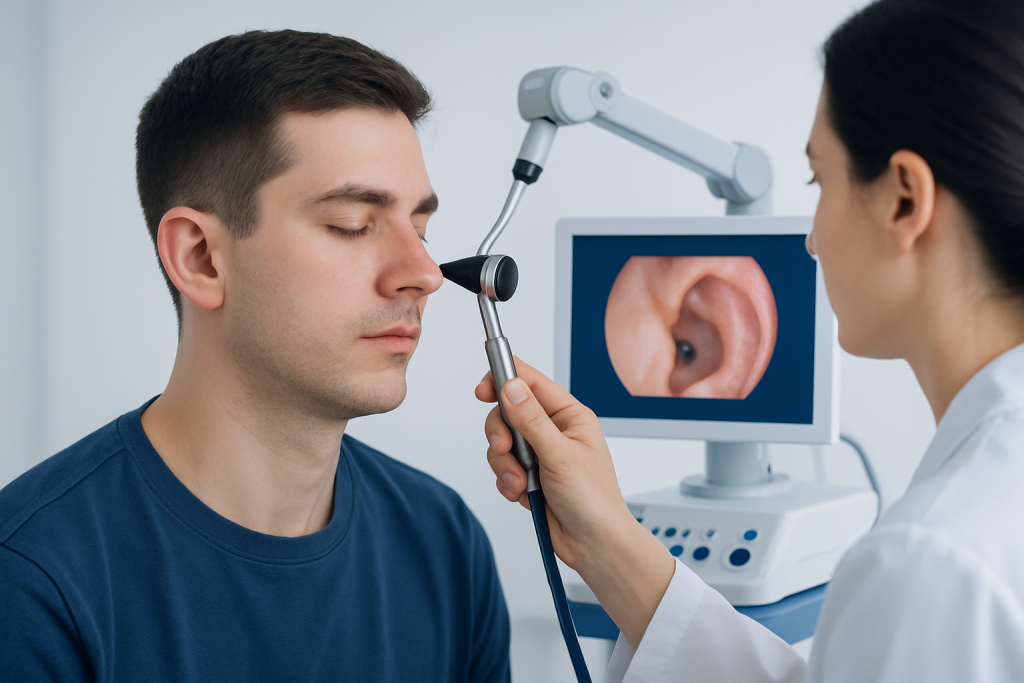
When the spot is close to the ear canal or symptoms are unusual, an ENT specialist may use an otoscope to inspect the area more closely. This is important because lesions inside the canal can be confused with earwax, folliculitis, dermatitis, or infection, and the right diagnosis helps avoid unnecessary manipulation.
Testing is not often needed for a routine blackhead. However, if there is repeated inflammation, drainage, or a persistent lump, a clinician may consider additional evaluation to check for infection or a different skin condition that needs another treatment approach.
Treatment Options
Safe treatment depends on where the blackhead is located and whether the skin is calm or irritated. Small, nonpainful blackheads on the outer ear may improve with gentle cleansing and acne-directed topical care, but anything near the ear canal should be handled more cautiously.
Common medical approaches may include:
- Gentle cleansing with nonirritating skin care products
- Topical acne treatments recommended by a clinician
- Professional comedone extraction in selected cases
- Treatment for inflammation or infection if present
It is best not to squeeze ear blackheads at home, especially with fingernails, pins, or cotton swabs. The ear skin can tear easily, and forceful squeezing can push debris deeper, create swelling, or introduce bacteria. If a lesion is recurrent or difficult to remove, a doctor can advise the safest option.
People who wear hearing aids or earbuds may also need device hygiene guidance so the skin has a chance to recover. If an acne-like pattern is present elsewhere on the face or body, treatment may focus on the broader skin condition rather than a single spot.
Prevention & Self-care
Prevention usually centers on reducing blockage, friction, and irritation. A simple routine is often more effective than aggressive cleaning, especially in the sensitive folds of the ear.
Helpful habits include:
- Wash the outer ear gently during regular bathing
- Clean earbuds, headphones, and hearing aids as directed by the manufacturer
- Limit touching, rubbing, or picking at the ear
- Remove makeup, sunscreen, or hair products from the ear area
- Choose headwear that does not create constant pressure or rubbing
For people with acne-prone skin, a clinician may suggest products that reduce clogged pores without over-drying the skin. It is also wise to avoid using strong exfoliants or alcohol-heavy cleaners inside or near the ear canal, because irritation can make the skin more reactive and prone to further problems.
When to See a Doctor
Medical review is a good idea if the blackhead is painful, enlarging, bleeding, or repeatedly inflamed. A lesion that does not look like a typical blackhead, especially one with a firm lump underneath, should also be examined.
Prompt attention is important if there is discharge, fever, spreading redness, significant swelling, hearing changes, or a feeling that the ear canal is blocked. These signs may point to infection or another condition that deserves treatment, rather than a simple clogged pore.
People who have diabetes, poor wound healing, eczema, or a history of recurring skin infections may want earlier evaluation because ear irritation can become more complicated in those settings. International patients who are deciding whether to travel for care should seek a clear diagnosis first; Acibadem Health Point’s multidisciplinary specialists and JCI-accredited hospitals diagnose and treat ENT and skin-related ear problems for international patients in a coordinated way.
Living With Recurrent Ear Blackheads
When blackheads keep returning, the best approach is usually to identify the pattern behind them. Some people notice flare-ups after workouts, during humid weather, or after frequent use of earbuds, and changing those triggers can make a meaningful difference.
It also helps to distinguish blackheads from other ear lesions. Recurrence in the same spot may suggest a persistent pore blockage, but it can also reflect an underlying cyst, dermatitis, or another skin condition that needs a different plan. That is why repeated self-treatment is not ideal when the problem does not settle.
With the right diagnosis, most people can manage ear blackheads successfully using gentle care and targeted treatment. A clinician’s guidance is especially valuable when the issue affects appearance, comfort, or confidence, or when the ear is sensitive enough that home methods feel uncertain.
Frequently asked questions
01Are blackheads in the ear the same as earwax?
No. Blackheads are clogged pores in the skin, while earwax is a normal substance made by the ear canal. They can sometimes look similar near the opening of the ear, which is why an exam may be needed if the spot is not clear.
02Can blackheads in the ear go away on their own?
Some small blackheads may stay stable or gradually improve if the skin is left alone. Others persist if the pore remains clogged, especially when friction or oily products continue to irritate the area.
03Is it safe to squeeze a blackhead in the ear at home?
It is usually not recommended. The ear skin is delicate, and squeezing can cause injury, inflammation, or infection. A clinician can remove it safely if treatment is needed.
04Why do blackheads form around earbuds or hearing aids?
These devices can trap heat, sweat, and oil while also creating friction against the skin. That combination can clog pores and make blackheads more likely in the surrounding area.
05When should a blackhead in the ear be checked by a doctor?
It should be checked if it is painful, swollen, draining, recurring, or affecting hearing. A doctor should also evaluate any spot that does not look like a typical blackhead.
06What treatments are usually used for ear blackheads?
Treatment often starts with gentle cleansing and avoiding irritation. Depending on the case, a doctor may suggest topical acne products or professional extraction, especially when the blackhead is persistent or in a sensitive location.
This article is for general information only and is not a substitute for professional medical advice. Please consult a qualified doctor about your individual situation.
Hair transplant in Turkey — costs, graft counts & a free assessment
JCI-accredited · board-certified surgeons · reply within 24h
Add us as a Preferred Source to see more of our trusted health content across Google Search, AI Overviews and Discover.