What Is Banana Big Calories? A Complete Medical Guide

Key Takeaways
- Banana calories vary mainly by size, not by the fruit being inherently high in calories.
- A medium banana is a moderate-calorie snack and also provides fiber and potassium.
- Riper bananas may taste sweeter, but their calorie difference is usually small.
- Bananas can fit into weight management, diabetes meal plans, and sports nutrition when portions are individualized.
- People with specific medical needs should look at the whole meal pattern, not one fruit alone.
“Banana big calories” usually refers to how the calorie count changes with banana size, ripeness, and serving amount. Bananas can be a healthy part of eating patterns for many people when portion size is understood in context.
Overview
If someone searches for banana big calories, they are usually asking a simple but practical question: how many calories are in a banana, and does a bigger banana count as a high-calorie food? The short answer is that bananas are not usually considered “big calorie” foods, but the calorie count does rise with size. A small banana has fewer calories than a large one, and an extra-large banana has more still.
That difference matters because many people eat fruit casually, without measuring portions. For most healthy adults, bananas can be a convenient and nutritious snack, but it helps to understand that one banana is not always the same as another. In nutrition counseling, the fruit itself is less important than the portion, the rest of the meal, and the person’s health goals.
This guide explains banana calories in plain language, including why size matters, what else bananas contribute beyond energy, and how they can fit into a balanced diet for weight control, diabetes care, and active lifestyles. It also addresses when a person may need more individualized advice from a qualified clinician or dietitian.
How Many Calories Are in a Banana?
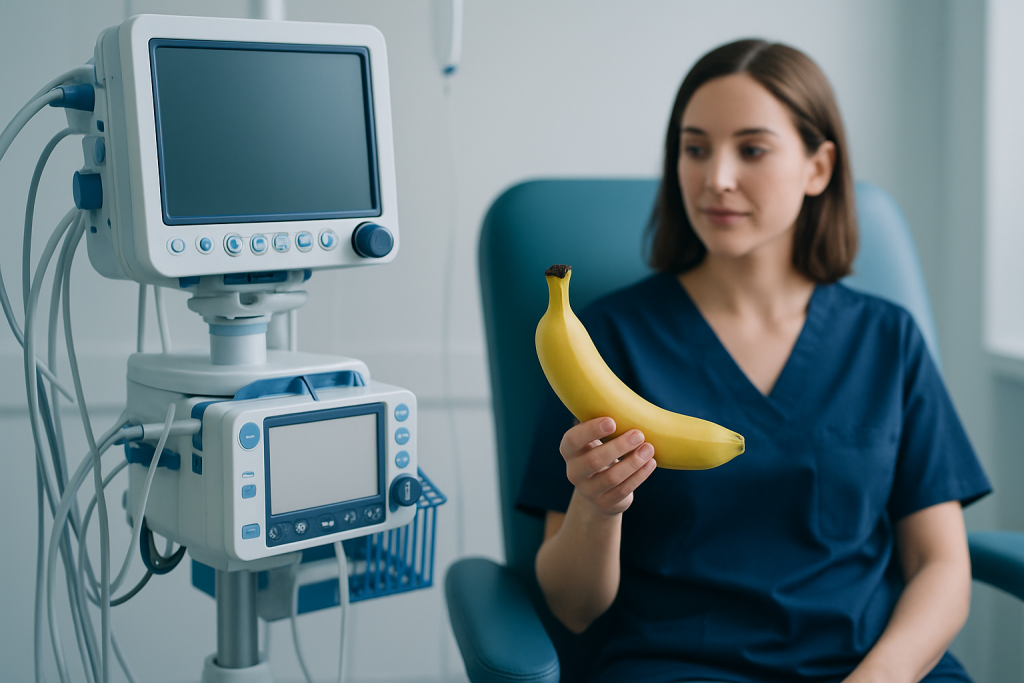
Banana calories are usually estimated by size. A smaller banana provides less energy than a larger one, because it contains more edible fruit. The peel is not eaten, so what matters is the amount of fruit inside. This is why two bananas that look similar at first glance may have noticeably different calorie counts.
As a general guide, a small banana tends to be a lighter snack, a medium banana is a moderate snack, and a large banana provides more energy and carbohydrate. Exact values can vary by variety and weight, but the pattern is consistent: the bigger the banana, the more calories it contributes to the day’s intake.
Another reason the phrase banana big calories comes up online is confusion about ripeness. A ripe banana tastes sweeter because its starches have changed into sugars, but that does not usually create a major calorie jump. The more important difference is how much banana is eaten, not whether the peel has a few brown spots.
- Small banana: lower calorie portion
- Medium banana: moderate calorie portion
- Large or extra-large banana: higher calorie portion
What Bananas Contribute Beyond Calories

Calories are only one part of a food’s value. Bananas also provide carbohydrates, fiber, and several micronutrients, especially potassium and vitamin B6. That combination helps explain why bananas are often recommended as a practical everyday fruit rather than a “diet” food or a “bad” food.
The fiber in bananas can support fullness, especially when the fruit is eaten whole rather than blended into a sweetened drink. The carbohydrate content gives quick, usable energy, which is one reason bananas are common in pre-exercise snacks and in travel diets where simple, portable foods are useful. For international patients recovering away from home, bananas are often easy to find, gentle on the stomach for many people, and simple to portion.
It is also worth remembering that the overall eating pattern shapes health more than one fruit does. A banana eaten with yogurt, nuts, or oats behaves differently from a banana baked into a dessert or mixed into a sugary smoothie. In medical nutrition, context matters as much as the food label.
Why Banana Size Changes the Calorie Count
Banana size matters because calories come from the amount of edible tissue. A larger banana contains more fruit, and therefore more carbohydrate and energy. This is a straightforward food-portion issue, similar to how a small apple and a large apple do not contribute the same amount of energy to a meal plan.
Some people assume that all bananas are roughly equivalent, but that is not accurate. Grocery store bananas can vary widely. One person may eat a compact fruit with one hand, while another may choose a long, thick banana that provides a substantially larger portion. In practical nutrition, that variation is often more important than the botanical name or the exact shade of the peel.
For people tracking calories, portion awareness can be more useful than avoidance. If a banana is part of breakfast, the rest of the meal can be adjusted accordingly. If it is a snack, it can be paired with protein or healthy fat to make the snack more satisfying and prevent quick hunger afterward.
Bananas and Common Health Goals
For weight management, bananas can still be part of a balanced plan. The key is to choose the size that fits the person’s calorie needs and to consider what else is being eaten during the day. A banana is not “fattening” by itself; surplus calories over time are what affect weight gain.
For people with diabetes, bananas do contain carbohydrate and can raise blood glucose, so portion size and meal pairing matter. A smaller banana may fit better than a large one for some individuals, especially if the meal already includes other carbohydrate sources. People using insulin or glucose-lowering medicines should discuss fruit portions with their healthcare team, because personalized meal planning is often more helpful than broad food rules.
For athletes and active travelers, bananas are often useful because they are easy to carry, quick to eat, and provide readily available energy. They may be especially practical before or after exercise, during long hospital appointments, or on travel days when regular meals are delayed. Again, the amount should match the person’s energy needs rather than a generic recommendation.
- Weight goals: choose portions that fit the day’s energy budget
- Blood sugar goals: match fruit portions with the rest of the meal
- Activity goals: use bananas as convenient fuel when needed
How Ripeness, Preparation, and Pairings Affect the Picture
Ripeness changes the taste and texture of a banana more than it changes the calorie content. A greener banana tends to feel firmer and less sweet, while a very ripe banana is softer and sweeter. Some people find that a ripe banana is easier to digest, but that experience varies from person to person.
Preparation matters more than many people realize. A plain banana has a very different nutrition profile from banana bread, banana chips, a milkshake, or a dessert topped with syrup. Once sugar, oil, flour, or large amounts of dried fruit are added, the calorie count can rise quickly. This is often where the phrase banana big calories becomes misleading, because the banana itself is not usually the main source of excess calories in a recipe.
Pairing also changes how a banana is experienced in the body. Combined with peanut butter, plain yogurt, or a handful of nuts, it may keep someone satisfied longer than fruit alone. For some people, that is helpful. For others, especially if they are monitoring calories closely, a simple banana without added ingredients may be the better choice.
Prevention & Self-care: Choosing Bananas Wisely
The most practical self-care step is to treat bananas as one piece of the daily food pattern rather than as a standalone “good” or “bad” choice. Reading fruit by size can help: if the goal is a lighter snack, a smaller banana may be enough. If the goal is exercise fuel or a more substantial snack, a larger banana may be appropriate.
People who are watching calories can also benefit from mindful eating. Eating slowly, noticing fullness, and avoiding automatic double portions can make a meaningful difference over time. When bananas are used in smoothies or baked items, it helps to look at the whole recipe, because the fruit is only one ingredient among several.
For patients managing chronic conditions from another country, a clinician or dietitian can help translate local food patterns into a workable plan. In that setting, practical advice often matters more than strict rules. Acibadem Health Point’s multidisciplinary specialists and JCI-accredited hospitals diagnose and treat a wide range of conditions for international patients, and nutritional guidance can be coordinated with broader medical care when needed.
- Choose fruit size based on the meal context.
- Prefer whole bananas over sweetened banana products when possible.
- Use pairings to improve satiety if needed.
- Adjust portions rather than eliminating fruit entirely.
When to See a Doctor
Most people do not need medical attention just because they are asking about banana calories. However, it is wise to speak with a doctor or registered dietitian if fruit choices are part of a larger health concern, such as diabetes, unexplained weight changes, poor appetite, digestive symptoms, or a need for medically supervised weight management.
Medical advice is also helpful when a person has kidney disease, takes medications that affect potassium, or follows a specialized diet after surgery or during recovery. In those situations, even everyday foods like bananas may need to be adjusted according to lab values, medication use, and overall nutrition goals.
If someone is traveling for treatment, follow-up planning matters. A local food environment may be very different from home, and a clinician can help set realistic guidance for grocery choices, snacks, and meal timing. Questions about bananas are often a starting point for a broader, more useful discussion about sustainable eating patterns.
Frequently asked questions
01What does “banana big calories” mean?
It usually refers to searches about how many calories a banana has, especially when the banana is large. The main point is that banana calories increase with size, so a bigger banana contributes more energy than a smaller one.
02Are bananas high in calories?
Bananas are generally considered a moderate-calorie fruit, not a high-calorie food. They can fit well into a balanced diet when the portion size matches the person’s needs.
03Does a ripe banana have more calories than a green banana?
The calorie difference is usually small. Ripeness changes sweetness and texture more than total calories, so portion size matters much more than peel color.
04Can people trying to lose weight eat bananas?
Yes, bananas can be included in a weight-loss plan. The key is choosing an appropriate portion and accounting for the banana within the rest of the day’s meals and snacks.
05Are bananas okay for people with diabetes?
They can be, but portion size and meal pairing are important because bananas contain carbohydrate. Some people do better with a smaller banana or with fruit eaten alongside protein or healthy fat.
06Is banana bread the same as eating a banana?
No. Banana bread often contains added sugar, flour, oil, or butter, which can raise the calorie count significantly. A plain banana is usually a much simpler and lighter choice.
This article is for general information only and is not a substitute for professional medical advice. Please consult a qualified doctor about your individual situation.
Medical weight-loss options in Turkey — costs & eligibility
JCI-accredited · board-certified surgeons · reply within 24h
Add us as a Preferred Source to see more of our trusted health content across Google Search, AI Overviews and Discover.