What Is Bad Hair Implants? A Complete Medical Guide

Key Takeaways
- Bad hair implants is not a medical diagnosis, but a common phrase for an unnatural or disappointing hair transplant outcome.
- The most noticeable signs include a pluggy hairline, wrong hair direction, low density, visible scarring, or uneven growth.
- Problems may stem from surgical planning, technique, donor-hair limitations, healing issues, or unrealistic expectations.
- A qualified hair restoration specialist can assess whether revision surgery, graft redistribution, camouflage, or non-surgical treatment is more appropriate.
- Early evaluation is useful, especially if there is pain, infection, poor healing, or concern about the long-term cosmetic result.
Bad hair implants usually refers to an unsatisfactory or poorly performed hair transplant, where the new hairline, density, angle, or healing result looks unnatural. This article explains how to recognize the problem, why it happens, and what corrective options may help.
Overview
The phrase bad hair implants is commonly used when a hair transplant does not look or feel the way a patient expected. It may describe a result that appears too straight, too dense in one area and sparse in another, or simply unnatural when viewed up close or in different lighting.
In medical terms, the concern is usually not the “implant” itself but the overall outcome of a hair restoration procedure. That outcome depends on planning, surgical technique, the quality of the donor hair, how the grafts are placed, and how the scalp heals afterward.
For patients traveling from another country, disappointment can feel especially stressful because follow-up care is not always easy to arrange. That is why it helps to understand what a poor result looks like, what can still improve over time, and which corrective options are realistic before making decisions about revision treatment.
Symptoms and Signs of a Poor Hair Transplant Result
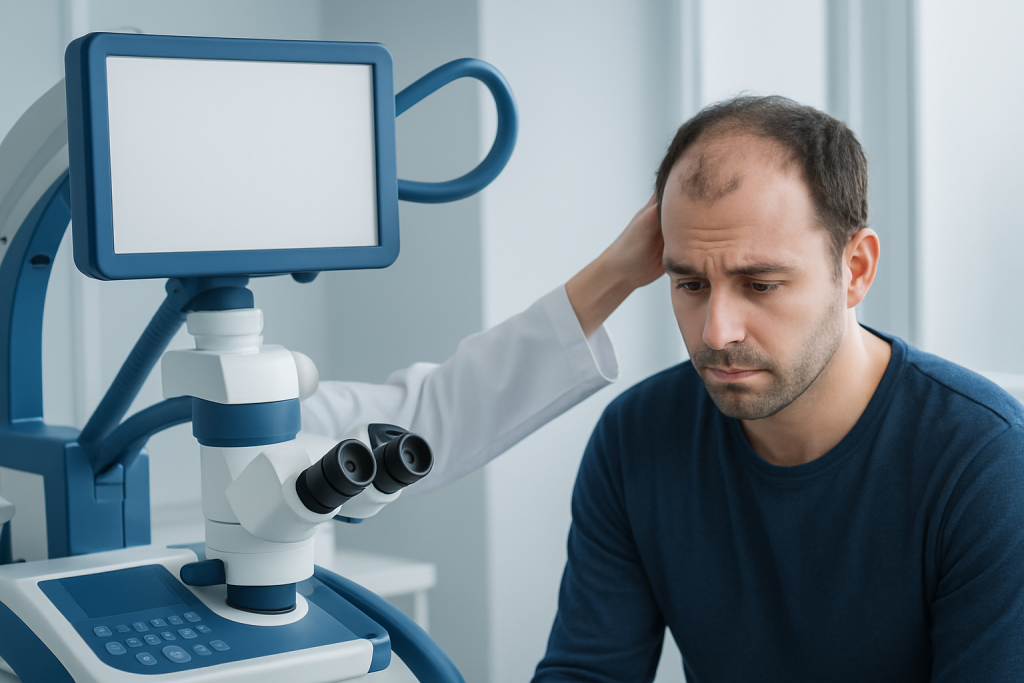
A bad result is often visible rather than painful. The most common sign is a hairline that looks harsh, artificial, or “drawn on,” especially if the front edge is made of grafts that are too thick, too evenly spaced, or placed in the wrong direction.
Other signs may include patchy growth, obvious gaps between grafts, an uneven density pattern, or hair that grows at awkward angles. Some people notice that the transplanted area does not blend naturally with the surrounding native hair, making the procedure noticeable even at a normal conversation distance.
Healing issues can also point to a complication rather than a cosmetic mismatch. These may include prolonged redness, scabbing that does not settle, tenderness, swelling that seems out of proportion, or areas of scarring where the scalp surface looks shiny, raised, or irregular.
- Unnatural hairline design
- Visible “plug” appearance
- Uneven or sparse growth
- Hair growing in the wrong direction
- Scarring or prolonged healing changes
Causes and Risk Factors

Several different factors can lead to a disappointing result. One of the most common is poor surgical planning, such as placing a hairline too low, using a shape that does not match the face, or creating density that does not look balanced from the front and sides.
Technical errors also matter. Grafts may be placed at the wrong angle, handled too roughly, or distributed in a way that fails to follow the natural direction of hair growth. If too many grafts are concentrated in one area, or too few are used where coverage is needed, the result can look irregular.
Some outcomes are affected by the patient’s own biology. Limited donor hair, advanced hair loss, scalp scarring, autoimmune conditions, smoking, poor wound healing, or ongoing inflammation can all reduce the predictability of the result. Even when surgery is performed well, a patient who has rapidly progressive hair loss may need future treatment to preserve the overall appearance.
Risk is also higher when treatment is obtained from clinics that prioritize volume over individualized planning, or when the procedure is performed without a careful assessment of the donor area, hair characteristics, and long-term pattern of loss.
How Doctors Diagnose the Problem
Evaluation usually starts with a detailed scalp examination and a discussion of the original procedure. A specialist may ask when the transplant was done, which technique was used, how many grafts were placed, and what healing was like during the first weeks and months.
The doctor will typically look at the hairline shape, graft direction, density pattern, donor area quality, and any scarring or signs of ongoing inflammation. In some cases, photographs from before and after surgery help show whether the current appearance is part of normal maturation or a true revision concern.
Diagnosis is often about timing as much as appearance. Hair transplants take months to mature, and early swelling, redness, or shedding does not necessarily mean a poor final result. A corrective plan is best made after the scalp has had enough time to heal fully, unless there is infection, severe pain, or another urgent problem.
Treatment Options
Not every unsatisfactory transplant requires surgery right away. Some patients benefit from observation, especially if the procedure was recent and growth is still developing. In other cases, the main issue may be styling limitations, and a temporary cosmetic approach may be enough while healing continues.
When the result truly needs correction, options depend on the specific problem. Revision surgery may involve removing or redistributing grafts, softening a harsh hairline, adding grafts to low-density zones, or covering poorly healed areas. If grafts are growing in an unnatural direction, a specialist may suggest targeted repair rather than a full repeat procedure.
Non-surgical strategies may also be part of the plan. These can include medical therapy to stabilize hair loss, camouflage fibers or styling changes, and treatment for scalp inflammation if present. The right approach depends on the donor supply, the extent of the issue, and how much improvement is realistically possible.
In international-patient settings, a second opinion is often valuable because it can clarify whether the problem is technical, biological, or simply still within the normal healing window. Acibadem Health Point’s multidisciplinary specialists and JCI-accredited hospitals diagnose and treat hair restoration concerns for international patients in a coordinated setting.
Prevention and Self-care
Prevention begins before surgery, when the expected hairline, density, and donor limitations should be discussed in plain language. A careful consultation should include a review of medical history, pattern of hair loss, scalp condition, and the patient’s goals so the plan is realistic rather than idealized.
After treatment, the scalp should be cared for exactly as instructed by the surgical team. Gentle washing, avoiding trauma to grafts, protecting the scalp from sun exposure, and attending follow-up checks can support healing. Smoking reduction, good nutrition, and control of any chronic scalp disease may also help recovery.
Self-care also means keeping expectations grounded. A transplant can improve appearance, but it cannot fully reverse advanced hair loss or recreate someone else’s hair density. Patients who are considering treatment abroad should ask for a clear aftercare plan, especially if they will need remote follow-up once they return home.
- Choose a surgeon with specific hair restoration experience
- Ask to see cases similar to your hair type and loss pattern
- Confirm donor limits before agreeing to a design
- Follow postoperative instructions closely
- Plan how follow-up care will work after travel
When to See a Doctor
Medical review is sensible if the transplant looks clearly unnatural, if growth seems stalled long after the expected healing period, or if there are scars, bumps, or persistent irritation in the treated area. A specialist can help determine whether the issue is temporary, correctable, or best managed without further surgery.
Prompt attention is especially important if there are signs of infection, spreading redness, fever, drainage, increasing pain, or sudden worsening of swelling. These are not typical cosmetic concerns and should be assessed without delay.
Patients who are unhappy with a procedure performed elsewhere may benefit from a structured second opinion before deciding on revision. A careful review can reduce the risk of unnecessary intervention and help choose the safest path forward, whether that is observation, medical therapy, or corrective surgery.
Recovery, Revision Planning, and Long-Term Outlook
The outlook depends on what went wrong and how much donor hair remains available. Some results can be improved significantly with one focused revision, while others need a more conservative plan because the scalp has limited graft supply or prior scarring makes surgery more complex.
Revision procedures are usually approached more cautiously than first-time transplants. The goal is often not to “erase” everything, but to soften unnatural features, improve blending, and create a result that looks more believable over time. That may involve staged treatment rather than a single large procedure.
For patients managing care across borders, long-term planning matters. The best outcome is usually achieved when the original issue is reviewed carefully, the scalp has fully stabilized, and the patient has a realistic follow-up plan that fits travel, healing, and future hair-loss progression.
Frequently asked questions
01What does bad hair implants mean?
It is a common phrase for an unsatisfactory hair transplant result. People usually mean the hairline looks unnatural, the density is uneven, or the grafts do not blend well with the rest of the hair.
02Can a bad hair transplant be fixed?
Often, yes, but the best solution depends on the specific problem. Some cases improve with time, while others may need revision surgery, graft redistribution, or non-surgical camouflage.
03How long should someone wait before judging the result?
Hair transplants take months to mature, so early appearance is not the final result. A specialist usually evaluates the true outcome after enough healing and growth have occurred, unless there are signs of infection or other complications.
04What are the most common signs of an unnatural hair transplant?
A harsh or straight hairline, visible plugs, hair growing at the wrong angle, and patchy density are common signs. Scarring or persistent redness may also suggest a healing problem.
05Is a second hair transplant always the answer?
No. A second procedure may help in some cases, but not every poor result should be treated with more surgery. A doctor will first consider timing, donor availability, scalp health, and whether non-surgical management is safer.
06Should patients seek a revision opinion from the same clinic?
They can, but a second opinion from an independent hair restoration specialist is often useful. This is especially true for international patients who need a clear plan for correction and follow-up before traveling again.
This article is for general information only and is not a substitute for professional medical advice. Please consult a qualified doctor about your individual situation.
Hair transplant in Turkey — costs, graft counts & a free assessment
JCI-accredited · board-certified surgeons · reply within 24h
Add us as a Preferred Source to see more of our trusted health content across Google Search, AI Overviews and Discover.