

What Is 4000 Hair Grafts? A Complete Medical Guide
- 10 min read
- Published November 25, 2026
Key Takeaways
- A graft is a follicular unit that may contain one to four hairs, so 4000 grafts can represent a much larger number of individual hairs.
- Whether 4000 hair grafts is enough depends on the pattern of hair loss, the thickness of the donor hair, and the density goal for each area.
- Hair transplant planning is individualized; the same graft count can look very different from one person to another.
- Recovery usually involves mild swelling, scabbing, and temporary shedding before new growth begins.
- A qualified hair restoration specialist should confirm candidacy, donor capacity, and realistic expectations before surgery.
4000 hair grafts refers to the number of follicular units transplanted during a hair restoration procedure, not the number of individual hairs. It may provide meaningful coverage for moderate to advanced hair loss, but the final result depends on hair characteristics, donor supply, scalp health, and surgical planning.
Overview
When people ask what 4000 hair grafts means, they are usually trying to understand how much hair can be restored in one procedure. The short answer is that 4000 grafts is a substantial transplant session for many patients, and it may be used to cover a receding hairline, the front and mid-scalp, or a broader thinning area depending on the pattern of hair loss.
A graft is not the same thing as a single hair. It is a naturally occurring follicular unit, and each unit can contain one, two, three, or sometimes four hairs. For that reason, 4000 grafts may translate into many more individual hairs than the number suggests at first glance. The practical result, however, depends on how those grafts are distributed, how thick the donor hair is, and how much scalp area needs coverage.
For international patients considering treatment abroad, the most useful way to think about graft numbers is not as a fixed promise but as part of a treatment plan. A thorough consultation should explain where the grafts will come from, which zones of the scalp will benefit most, and whether a single session or staged approach is the safer and more natural-looking choice.
What a Hair Graft Actually Is

A hair graft is a small tissue unit taken from the donor area, usually the back or sides of the scalp, where hair is more resistant to thinning in many types of pattern hair loss. Under magnification, surgeons can identify and preserve these follicular units so they can be relocated to thinning or balding areas.
The term is often confused with “hair count,” but that can lead to unrealistic expectations. One graft may have one hair, while another may have several. Two people both receiving 4000 grafts can end up with very different visual outcomes because one may have finer hair and another may have thicker, denser grafts.
This is why experienced surgeons focus on more than the headline number. They assess hair caliber, curl, color contrast, scalp laxity, donor reserve, and the shape of the recipient area. These details help determine how 4000 grafts should be placed to create the most natural result.
What 4000 Hair Grafts May Cover
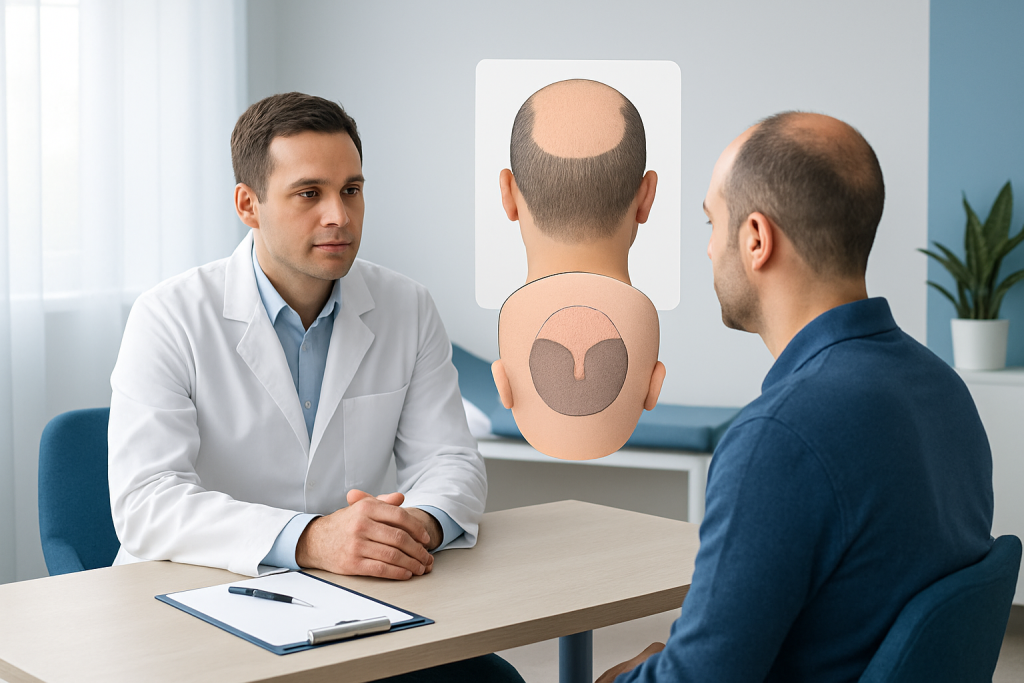
Coverage from 4000 hair grafts varies widely. In some patients, it may be enough to rebuild a frontal hairline and add density behind it. In others, it may be used to improve a larger thinning crown or to balance both the front and mid-scalp while leaving the crown for a later session.
The appearance of coverage depends on the patient’s starting point. A person with diffuse thinning and strong donor hair may notice a substantial cosmetic change, while someone with extensive baldness may need more grafts than are safely available in one operation. Surgeons often have to make decisions about priority zones, placing grafts where they will make the greatest visual difference.
A practical question is not only “How many grafts?” but also “Where should those grafts go first?” The answer is usually the area most visible in everyday life, such as the hairline and frontal third of the scalp. That approach often creates the biggest improvement in framing the face and making hair look fuller overall.
Who May Need 4000 Hair Grafts
People who might be considered for a 4000-graft procedure often have moderate to advanced androgenetic alopecia, also known as pattern hair loss. This may include men with a receding hairline and thinning at the crown, or women with certain stable thinning patterns who are appropriate surgical candidates after evaluation.
That said, not every patient with hair loss is a candidate for surgery. Hair transplantation works best when hair loss is reasonably stable and the donor area is strong enough to supply grafts without creating obvious thinning behind the ears or at the back of the head. If hair loss is still progressing quickly, a specialist may suggest medical treatment first or in combination with surgery.
Age alone does not decide candidacy. What matters more is the pattern of hair loss, medical history, scalp condition, and long-term planning. For someone traveling for care, this discussion should happen before booking surgery so that the trip, recovery time, and number of sessions are matched to the actual treatment plan.
Common Causes and Risk Factors for Hair Loss
Hair loss has several possible causes, and the right treatment depends on identifying the pattern correctly. The most common cause in surgical hair restoration is androgenetic alopecia, which is influenced by genetics and hormones. Other causes may include traction, inflammatory scalp disease, nutritional issues, medication effects, and certain medical conditions.
Risk factors vary by cause. A family history of thinning hair, earlier onset of hair loss, and ongoing progression can all influence the amount of restoration needed. In some cases, smoking, poorly controlled medical conditions, or scalp inflammation can affect healing or reduce the quality of the result.
- Genetic pattern hair loss
- Previous trauma or scarring
- Ongoing shedding from medical causes
- Limited donor hair reserve
- Unrealistic density expectations
Because the underlying cause matters so much, a careful diagnosis should come before any graft count is discussed. Transplanting hair without understanding why it is thinning can lead to disappointing or temporary outcomes.
How Doctors Diagnose and Plan the Procedure
Planning a hair transplant begins with a detailed scalp examination. The specialist typically reviews the hair loss pattern, examines donor density, assesses hair shaft thickness, and checks the scalp for signs of inflammation, scarring, or other conditions that could affect healing.
In many clinics, the consultation also includes photographs from different angles and a discussion of the patient’s goals. For international patients, this stage is especially important because it helps align expectations before travel. A remote review or in-person consultation can clarify whether 4000 grafts is the right number or whether a smaller, larger, or staged plan would be more appropriate.
Planning is also about distribution. Surgeons estimate how many grafts are needed for the hairline, temples, mid-scalp, and crown, then decide where density will matter most. A conservative plan may be safer than trying to spread grafts too thinly across a very large area.
Treatment Options: FUE, FUT, and Combined Approaches
Most modern hair transplants use either follicular unit extraction (FUE) or follicular unit transplantation (FUT), sometimes called strip surgery. In FUE, grafts are removed individually from the donor area. In FUT, a strip of scalp is removed and dissected into grafts under magnification. Each method has advantages, and the best choice depends on the patient’s hair characteristics, goals, and donor availability.
For a 4000-graft plan, FUE is often discussed because it can avoid a linear scar and may suit patients who prefer shorter hairstyles. FUT can sometimes yield a large number of grafts in a single session and may be recommended when donor quality and surgical goals make it the better option. Some patients benefit from a combined approach to maximize graft yield while preserving the donor area.
The procedure is usually performed under local anesthesia, with the patient awake but comfortable. Surgical time can be several hours, particularly when a large number of grafts is placed carefully for natural direction and density. Precision matters as much as the graft count because the angle and distribution of hairs influence how seamless the result looks.
Recovery, Growth Timeline, and Self-care
Recovery after a 4000-graft hair transplant is generally gradual rather than dramatic. Mild swelling, redness, tightness, and tiny scabs are common early on. The transplanted hairs often shed in the weeks after surgery, which can be unsettling for patients who are not expecting it, but this is often part of the normal growth cycle.
New hair growth usually begins slowly and becomes more noticeable over the following months. Final cosmetic improvement takes time because transplanted follicles need to settle, cycle, and produce new shafts. The exact timeline varies from person to person, and hair texture, healing speed, and adherence to post-operative instructions all play a role.
Useful self-care usually includes gentle washing as directed, avoiding rubbing or scratching, protecting the scalp from sun exposure, and attending follow-up visits. Patients traveling home soon after surgery should leave enough time for an early review and should know exactly how to contact the clinic if questions arise after departure.
When to See a Doctor
Anyone considering 4000 hair grafts should first see a qualified hair restoration specialist, ideally one who can evaluate both the cosmetic goal and the medical cause of hair loss. A consultation is especially important if hair loss is fast, patchy, associated with scalp symptoms, or affecting a very young patient, because surgery may not be the first step in those situations.
After surgery, medical advice should be sought if there is increasing pain, heavy bleeding, fever, spreading redness, foul-smelling drainage, or any concern that healing is not progressing normally. These symptoms do not necessarily mean a serious complication, but they do deserve prompt assessment.
Patients who are planning care from another country should also ask about follow-up arrangements before they travel. At Acibadem Health Point, multidisciplinary specialists and JCI-accredited hospitals diagnose and treat hair loss for international patients, helping align surgical planning, recovery guidance, and aftercare in one coordinated pathway.
Frequently asked questions
01What does 4000 hair grafts mean in plain language?
It means 4000 follicular units are transplanted from the donor area to thinning areas of the scalp. Because each graft can contain more than one hair, the total number of hairs may be much higher than 4000. The visual effect depends on placement and hair characteristics, not graft count alone.
02Is 4000 hair grafts a lot?
For many patients, yes. It is often considered a fairly large session and may be suitable for rebuilding the front of the scalp, improving the mid-scalp, or addressing selected crown thinning. The exact meaning depends on the extent of hair loss and the available donor supply.
03How many hairs are in 4000 grafts?
There is no single number because grafts vary naturally. Some contain one hair, while others contain two, three, or more. A specialist can estimate the total based on donor characteristics and the planned transplant area.
04Can 4000 grafts cover the whole head?
Usually not if the hair loss is advanced. In many cases, 4000 grafts are better used strategically in the most visible or important areas rather than spread too thinly across the entire scalp. A surgeon will help decide which zones should be prioritized.
05How long does it take to see results after a 4000-graft transplant?
Early healing happens over the first days to weeks, but visible growth develops gradually over months. The most meaningful cosmetic change usually appears later, after transplanted follicles begin producing new hair in a natural cycle. Follow-up timing can vary by clinic and procedure type.
06Is 4000 grafts enough for a receding hairline?
It can be, depending on how far the recession has progressed and how dense the surgeon aims to build the hairline. Some patients need fewer grafts for a refined hairline, while others need more because the frontal zone and temples both need work. A personalized examination is the best way to judge this.
07What should a patient ask before traveling for a hair transplant?
They should ask how the grafts will be distributed, what recovery support is available after they return home, and whether the donor area is strong enough for the planned procedure. It is also helpful to ask about follow-up communication, expected healing signs, and any medications or care steps required after surgery.
This article is for general information only and is not a substitute for professional medical advice. Please consult a qualified doctor about your individual situation.
Hair transplant in Turkey — costs, graft counts & a free assessment
JCI-accredited · board-certified surgeons · reply within 24h
Add us as a Preferred Source to see more of our trusted health content across Google Search, AI Overviews and Discover.



How can we help you today?
Meet an Acibadem specialist by secure video, before you travel.
Book a video visit