What Follicle Size Is Best for IVF Egg Retrieval?
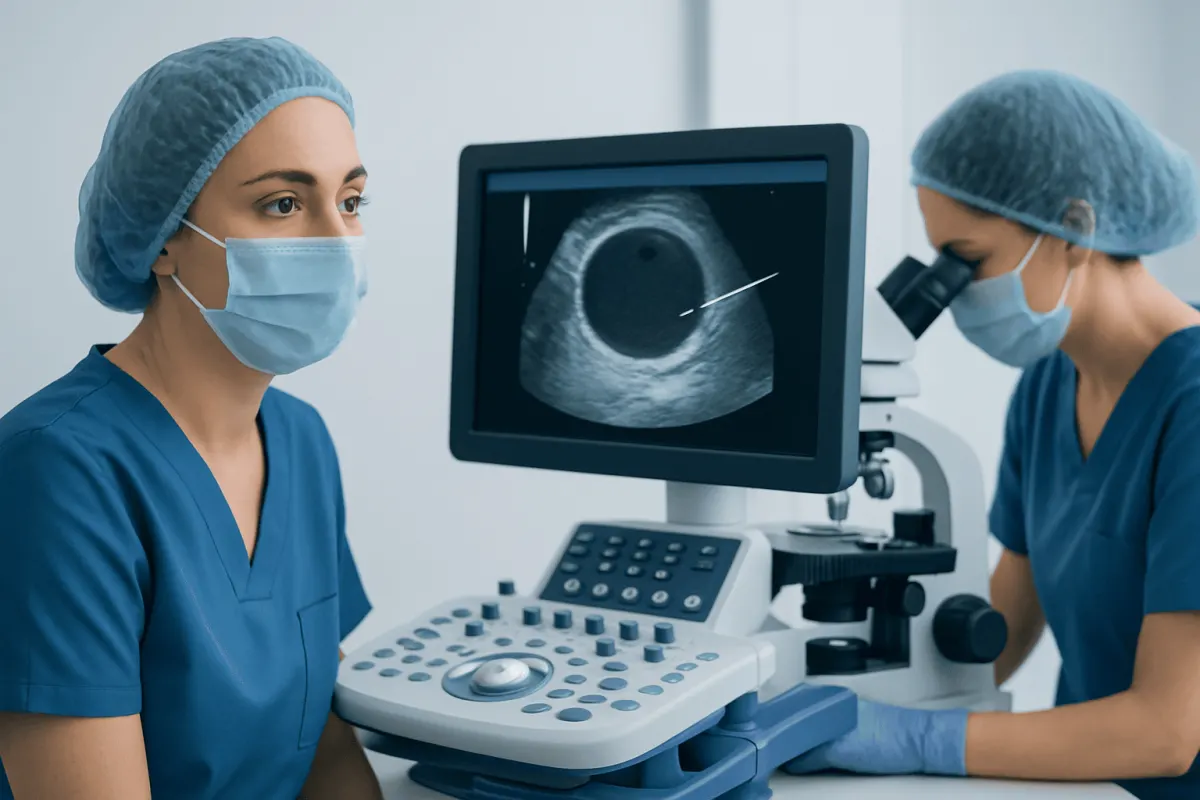
Egg size for IVF is assessed indirectly by measuring ovarian follicles on ultrasound, because eggs themselves cannot be measured reliably before retrieval. Many clinics consider follicles measuring roughly 17–22 mm likely to contain mature eggs, but timing is individualized using ultrasound findings, hormone levels and the overall stimulation response.
Overview: what does egg size for IVF mean?
Egg size for IVF is a commonly used phrase, but fertility specialists usually assess the size of the follicle, not the egg itself. A follicle is the small fluid-filled sac in the ovary where an egg develops. During ovarian stimulation, ultrasound scans measure follicles to help the care team estimate when eggs may be mature enough for collection.
For many people, follicles measuring approximately 17–22 millimetres near the time of the trigger injection are considered likely to contain mature eggs. This is a useful guide rather than a fixed rule. A mature egg can sometimes be obtained from a smaller or larger follicle, while a follicle in the expected range may occasionally contain no egg or an immature egg.
The goal is not simply to obtain the highest number of follicles. The team aims to choose a retrieval time that balances the number of available eggs with their expected maturity and the person’s safety. In vitro fertilization (IVF) treatment uses this individualized information alongside laboratory assessment after retrieval.
How follicle monitoring and egg retrieval work
IVF begins with medicines that encourage several ovarian follicles to grow during one menstrual cycle. A clinician monitors the response through transvaginal ultrasound scans and blood tests, usually measuring hormones such as estradiol. These checks show how many follicles are developing, how quickly they are growing and whether the ovaries are responding safely.
When the follicles and hormone pattern suggest that the timing is appropriate, a trigger medicine is given to support final egg maturation. Egg retrieval is planned at a precise interval after the trigger, commonly about 34–36 hours later, before ovulation would usually occur. The exact schedule should be followed closely because it affects the likelihood of collecting mature eggs.
During retrieval, a fertility specialist uses ultrasound guidance to pass a fine needle through the vaginal wall into each accessible follicle. Follicular fluid is gently collected, and embryologists immediately examine it in the laboratory to identify eggs. The eggs are then assessed for maturity before conventional IVF or intracytoplasmic sperm injection may be considered.
Monitoring egg size before retrieval also helps identify situations in which treatment may need adjustment. For example, follicles developing too slowly, an unexpectedly low response or signs of excessive response can influence medication decisions and the safest timing of the procedure.
Who may benefit and how readiness is decided

IVF may be considered for people with blocked or damaged fallopian tubes, certain ovulation disorders, endometriosis, reduced ovarian reserve, unexplained infertility or fertility concerns related to sperm factors. It may also be used when other fertility treatments have not resulted in pregnancy. Whether IVF is appropriate depends on the individual or couple’s medical history, test results, reproductive goals and preferences.
Follicle measurements are only one part of readiness for egg retrieval IVF. Clinicians also consider age, ovarian reserve testing, previous treatment response, medication dose, estradiol levels and the pattern of follicle growth. A person with fewer follicles may still have mature eggs available, while a person with many follicles may need careful monitoring to reduce treatment-related risks.
There is no universal ideal number of eggs, follicles or embryos. The expected response varies considerably, particularly with age and ovarian reserve. A fertility specialist can explain what a realistic response may look like in an individual cycle and discuss whether changes could be useful in a future cycle if needed.
- Follicles often grow at different rates during stimulation.
- Follicle diameter estimates the environment in which the egg is developing.
- Egg maturity is confirmed only after collection and laboratory assessment.
- Embryo quality and transfer decisions are determined later in the IVF process.
What is the ideal size of eggs for IVF retrieval?
The ideal size of eggs for IVF retrieval cannot be measured directly before collection. Instead, clinicians monitor follicle diameter. Follicles around 17–22 mm are often viewed as a practical range in which a mature egg is more likely to be present at retrieval, particularly after the trigger injection has been given.
However, egg size for retrieval IVF should not be treated as a pass-or-fail measurement. Some eggs from follicles below 17 mm can be mature, and some follicles above 22 mm can still yield usable eggs. The best retrieval timing is based on the full cohort of follicles, their rate of growth and blood hormone results rather than on one measurement alone.
A scan may show a mixture of follicle sizes. This is normal and does not necessarily mean that smaller follicles will not contribute to the cycle. The fertility team determines the trigger timing that offers the best overall chance of collecting mature eggs while taking safety into account.
Does 6 follicles mean 6 eggs?
No. Six follicles seen on ultrasound does not always mean that six eggs will be retrieved. A follicle may contain no egg, an egg may not be recovered during aspiration, or the egg may be immature. Conversely, the ultrasound follicle count is an estimate and may not perfectly match the final number found by the embryology laboratory.
It is common for the number of retrieved eggs to differ from the number of measured follicles. After retrieval, the laboratory reports how many eggs were collected and how many were mature. If fertilization is planned, later updates may include how many mature eggs fertilized and how many embryos continued to develop.
These stepwise changes can feel emotionally significant, but they are expected features of IVF. A fertility specialist can place each result in context and explain what it may mean for the current cycle, without assuming the final outcome from follicle count alone.
Is getting 7 eggs retrieved in IVF a good result?
Getting 7 eggs retrieved in IVF can be a good result, especially if several are mature and develop into embryos after fertilization. Whether it is a good outcome depends on the person’s age, ovarian reserve, medical history, response to stimulation and the number of mature eggs obtained, rather than on one number alone.
Not every collected egg will be mature, and not every mature egg will fertilize or form an embryo suitable for transfer or freezing. This natural reduction at each stage is why fertility teams focus on the whole treatment pathway. A lower egg number does not rule out pregnancy, and a higher number does not guarantee it.
Seven eggs may represent an appropriate and safe response for some patients, particularly where ovarian reserve is lower or where medication has been tailored to reduce the risk of excessive stimulation. The treating team is best placed to compare the result with the goals established before the cycle.
Is IVF with 3 eggs retrieved successful?
IVF with 3 eggs retrieved can be successful. Pregnancy is possible if one or more eggs are mature, fertilize and form an embryo with the potential to implant. However, with fewer eggs, there are fewer opportunities for an embryo to develop, so the chance of having an embryo available may be lower than in a cycle with more mature eggs.
Success is influenced by many factors beyond egg number, including age, egg and sperm quality, embryo development, uterine health and whether there are underlying fertility conditions. Some people achieve pregnancy from a single embryo, while others may need more than one treatment cycle. No individual cycle result can be predicted with certainty.
A clinician may discuss whether proceeding with fertilization, considering embryo transfer if available, or planning another cycle is appropriate. The decision should reflect medical findings, emotional wellbeing, time considerations and personal preferences.
Recovery, benefits, risks and when to seek medical care
Egg retrieval is usually an outpatient procedure performed with sedation or anesthesia. Most people go home the same day with a responsible adult. Mild pelvic cramping, abdominal fullness, fatigue, light vaginal spotting and temporary bloating are common for the first day or several days. Normal activities can often resume gradually as comfort allows, but the care team’s specific instructions should take priority.
The benefit of retrieval is that it allows eggs to be assessed, fertilized and cultured in a controlled laboratory setting. It also enables embryo freezing when appropriate. Risks are uncommon but include bleeding, infection, injury to nearby structures, reactions to sedation and ovarian hyperstimulation syndrome, a condition in which enlarged ovaries and fluid shifts can cause more significant symptoms.
When to seek medical care: Contact the fertility clinic promptly for worsening or severe abdominal pain, persistent vomiting, fever, heavy vaginal bleeding, fainting, very reduced urination, rapid weight gain, pronounced abdominal swelling, chest pain or shortness of breath. Urgent symptoms require immediate medical assessment rather than waiting for a routine follow-up.
After retrieval, adequate fluids, balanced meals, gentle movement and rest can support comfort. People should avoid strenuous exercise and follow advice about sexual activity, medications and travel. Acıbadem Health Point’s multidisciplinary fertility specialists and JCI-accredited hospitals provide assessment and IVF care for international patients, with treatment plans guided by individual clinical needs.
Frequently asked questions
01What follicle size is usually considered ready for IVF egg retrieval?
Follicles measuring about 17–22 mm are often considered likely to contain mature eggs near the time of retrieval. This is an estimate, not a guarantee, because egg maturity can only be confirmed after collection in the laboratory. The timing also depends on hormone results and the complete pattern of follicle growth.
02Can follicles that are smaller than 17 mm contain mature eggs?
Yes, smaller follicles can sometimes yield mature eggs, particularly because eggs continue their final maturation after the trigger injection. However, on average, mature eggs are more likely to be found in follicles closer to the commonly targeted range. The clinical team evaluates all follicles rather than excluding a cycle based on one smaller measurement.
03Can a large follicle be too mature for IVF?
A larger follicle may still contain a usable egg, but very large follicles can sometimes be associated with an egg that has matured too far or is less likely to be recovered. This is one reason trigger timing is carefully planned. A single larger follicle is interpreted alongside all other follicles and hormone findings.
04How long does recovery take after egg retrieval?
Many people feel well enough for light daily activity within one or two days, although bloating and mild cramps can last several days. Recovery can take longer if the ovaries are enlarged or if symptoms of ovarian hyperstimulation develop. The fertility clinic should be contacted if symptoms are severe, worsening or concerning.
05Why were fewer eggs retrieved than follicles seen on the scan?
Not every visible follicle contains an egg, and some eggs cannot be collected or may be immature. Ultrasound measurements are also estimates, so the follicle count may not precisely match the laboratory egg count. This difference is common and does not, by itself, determine the likelihood of treatment success.
06Does a higher number of retrieved eggs always mean a better IVF outcome?
No. More eggs may provide more opportunities for mature eggs and embryos, but egg quality, embryo development and individual health factors are also important. Very high ovarian responses can increase the risk of treatment complications, so the aim is an effective and safe response rather than the largest possible number.
This article is for general information only and is not a substitute for professional medical advice. Please consult a qualified doctor about your individual situation.
Hair transplant in Turkey — costs, graft counts & a free assessment
JCI-accredited · board-certified surgeons · reply within 24h
Add us as a Preferred Source to see more of our trusted health content across Google Search, AI Overviews and Discover.