What Does a Lyme Disease Tick Look Like?

Most tick bites do not cause Lyme disease, and a tick’s appearance alone cannot confirm infection. The ticks that can spread Lyme disease are usually blacklegged ticks (often called deer ticks), which are small, flat, dark-legged ticks that may be difficult to notice on the skin.
What Does a Lymes Disease Tick Look Like?
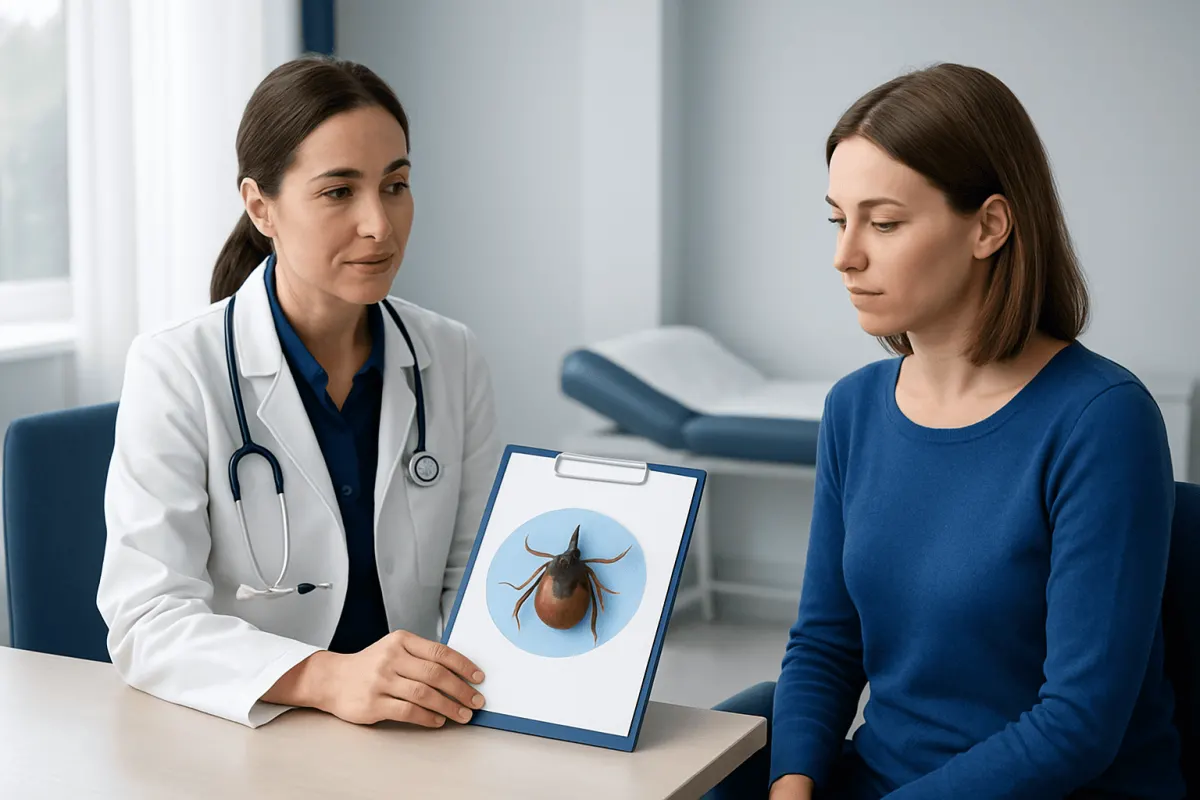
A tick that can transmit Lyme disease is usually a blacklegged tick, also called a deer tick. It has dark legs and a small, flattened body. Adult females commonly have a reddish-orange or rust-colored abdomen with a darker shield-like area behind the head, while adult males are generally darker brown or black over most of the body.
Most tick bites are harmless, and seeing a tick does not mean a person has Lyme disease. Blacklegged ticks are small and may be mistaken for a freckle, a tiny scab, or a speck of dirt—especially before feeding. The risk depends on the tick species, where exposure occurred, how long it was attached, and whether it carried the bacteria that cause Lyme disease.
Ticks grow larger and rounder as they feed. A fed tick may no longer resemble the familiar flat, small image seen online, so appearance alone cannot reliably determine species or infection risk. When possible, a clear photo or the removed tick kept in a sealed container may help a healthcare professional or local public health service guide next steps.
How Blacklegged Ticks Differ by Life Stage
Blacklegged ticks pass through several life stages: larva, nymph, and adult. Larvae are extremely small and have six legs; they are not usually recognized by people. Nymphs have eight legs and are approximately the size of a poppy seed. Because they are so small, nymphs may remain attached unnoticed and are an important source of Lyme disease infections in areas where the disease is common.
Adult blacklegged ticks are easier to see, although they can still be small. An unfed adult female is often compared with a sesame seed, while an adult male is slightly smaller. After feeding, either may become noticeably larger and grayish or brownish, with a rounded appearance.
Other ticks may look similar but do not have the same role in Lyme disease transmission. For example, dog ticks are often larger and may have pale or patterned markings. Lone star ticks may show a distinct white dot on the back of adult females. Geographic location matters: blacklegged ticks are associated with Lyme disease in parts of North America, while related Ixodes species transmit Lyme disease in some parts of Europe and Asia.
- Dark legs: a useful feature of blacklegged ticks.
- Flat body before feeding: ticks swell after taking a blood meal.
- Small size: nymphs can be particularly easy to miss.
- Orange-brown and dark coloring: often seen in adult females, but color can vary with feeding and lighting.
Why a Tick Bite Does Not Always Cause Lyme Disease
Lyme disease is caused by Borrelia bacteria, which can be transmitted when an infected blacklegged tick feeds on a person. Not every blacklegged tick carries these bacteria, and not every bite from an infected tick results in illness. In general, prompt removal reduces the chance of transmission, which is why daily tick checks after time outdoors are helpful.
Risk is influenced by the region where the bite occurred. Lyme disease is more common in certain wooded, brushy, and grassy areas, particularly where blacklegged ticks are established. A clinician may ask where a person traveled, when the tick may have attached, and whether it looked engorged, meaning swollen after feeding.
People should not rely on a tick’s appearance to decide whether they need care. Instead, they should remove the tick correctly, note the date and possible exposure location, and watch for symptoms during the following weeks. This practical approach supports timely assessment without causing unnecessary worry after every tick encounter.
Symptoms to Watch for After a Tick Bite
The most recognized early sign of Lyme disease is erythema migrans, a rash that gradually expands over days. It may become large and can sometimes develop a clearer center, creating a target-like pattern. However, it is not always shaped like a bull’s-eye, and it may appear as a uniformly red or bluish-red expanding patch, depending on skin tone.
A small red area immediately around a bite is common and often reflects local skin irritation rather than Lyme disease. This irritation is typically limited in size and improves within a day or two. A Lyme-related rash tends to enlarge and may occur several days to weeks after the bite; it is often not painful or itchy.
Other possible early symptoms include fever, chills, headache, tiredness, muscle aches, joint aches, and swollen lymph nodes. Without appropriate treatment, some people may develop facial weakness, numbness or tingling, severe headache with neck stiffness, palpitations, dizziness, or episodes of joint swelling. These symptoms have many possible causes, but they deserve timely medical assessment after a relevant tick exposure.
For general information about the condition and its management, readers can review Lyme disease.
How Doctors Assess a Possible Lyme Disease Tick Bite
A doctor begins by considering the whole clinical picture rather than identifying a tick by color alone. They may ask about outdoor activity, travel, the location of the bite, how long the tick may have been attached, whether it was engorged, and the timing of any rash or other symptoms. Photographs of the tick or rash can sometimes be useful, particularly if the skin change has faded before the appointment.
When a person has a characteristic expanding rash and relevant exposure, a clinician may diagnose early Lyme disease based on the examination and history. Blood tests are not always helpful in the first days or weeks after infection because the immune response can take time to develop. Testing may be more appropriate when symptoms are less specific, later symptoms are present, or the diagnosis remains uncertain.
Doctors also consider other tick-borne infections and non-tick-related illnesses where appropriate. This careful evaluation helps avoid both missed diagnoses and unnecessary treatment. Anyone who is pregnant, immunocompromised, has a young child with concerning symptoms, or develops neurological or heart-related symptoms should seek individualized medical advice promptly.
Safe Tick Removal and Prevention
If a tick is attached, it should be removed as soon as possible with fine-tipped tweezers. Grasp the tick close to the skin and pull upward with steady, even pressure. Twisting, crushing, burning, covering the tick with substances, or trying to make it detach with home remedies is not recommended, as these methods can irritate the tick or delay removal.
After removal, clean the bite site and hands with soap and water or an appropriate skin cleanser. If small mouthparts remain in the skin, they may work their way out naturally; a healthcare professional can advise if the area becomes increasingly painful, red, swollen, or shows signs of infection. It is reasonable to record the date of removal and take a photograph of the tick if identification may be needed.
Prevention includes wearing long sleeves and trousers in tick habitats, using appropriate insect repellent according to its label, and checking the body after outdoor activity. Ticks often attach in the scalp, behind the ears, under the arms, around the waist, behind the knees, and in the groin area. Showering after being outdoors and checking clothing, gear, and pets can help find ticks before they attach.
There is no need to panic after finding a tick. A calm response—prompt removal, symptom monitoring, and medical guidance when indicated—is the most effective way to manage exposure.
When to Seek Medical Care
Medical care is recommended if an expanding rash develops after a tick bite or time in a tick-prone area, even if no tick was noticed. A person should also contact a clinician for fever, unusual fatigue, headache, body aches, facial drooping, numbness, palpitations, fainting, shortness of breath, severe headache, neck stiffness, or new pain and swelling in a large joint.
It is especially sensible to seek advice when a tick may have been attached for an extended period, appears engorged, or was acquired in an area where Lyme disease is known to occur. A clinician can determine whether observation, testing, or preventive or therapeutic medication is appropriate. Antibiotics should not be started without professional guidance, as the best approach varies according to the person’s circumstances and local disease patterns.
Acıbadem Health Point’s multidisciplinary specialists and JCI-accredited hospitals can assess suspected Lyme disease and related symptoms for international patients. A timely clinical review can clarify the likely cause of symptoms and support an appropriate care plan.
Frequently asked questions
01Can Lyme disease ticks jump or fly?
No. Ticks cannot jump or fly. They usually wait on grass, leaf litter, or low vegetation and attach when a person or animal brushes past them.
02How small is a Lyme disease tick?
The nymph stage of a blacklegged tick can be about the size of a poppy seed, making it difficult to spot. Adult females are often compared with a sesame seed before feeding, although they enlarge after feeding.
03Does every deer tick carry Lyme disease?
No. Not all blacklegged ticks are infected with the bacteria that cause Lyme disease. The likelihood of infection also varies by geographic area and by how long the tick was attached.
04Can a tick bite cause a small red bump without Lyme disease?
Yes. A small, localized red bump can occur as a normal reaction to a tick bite and often settles within a short time. An expanding rash that develops or grows over days should be assessed by a healthcare professional.
05Should a removed tick be tested for Lyme disease?
Testing ticks is not routinely recommended in many settings because results do not reliably predict whether a person will become ill. Monitoring for symptoms and discussing the exposure with a clinician is usually more useful.
06How soon do Lyme disease symptoms appear after a tick bite?
Early symptoms may occur several days to a few weeks after a bite. The timing varies, so a person should monitor for an expanding rash or flu-like symptoms and seek medical advice if these develop.
This article is for general information only and is not a substitute for professional medical advice. Please consult a qualified doctor about your individual situation.
Explore treatments in Turkey — costs, top hospitals & a free quote
JCI-accredited · board-certified surgeons · reply within 24h
Add us as a Preferred Source to see more of our trusted health content across Google Search, AI Overviews and Discover.