What Do Cavities Look Like in Their Early Stages?
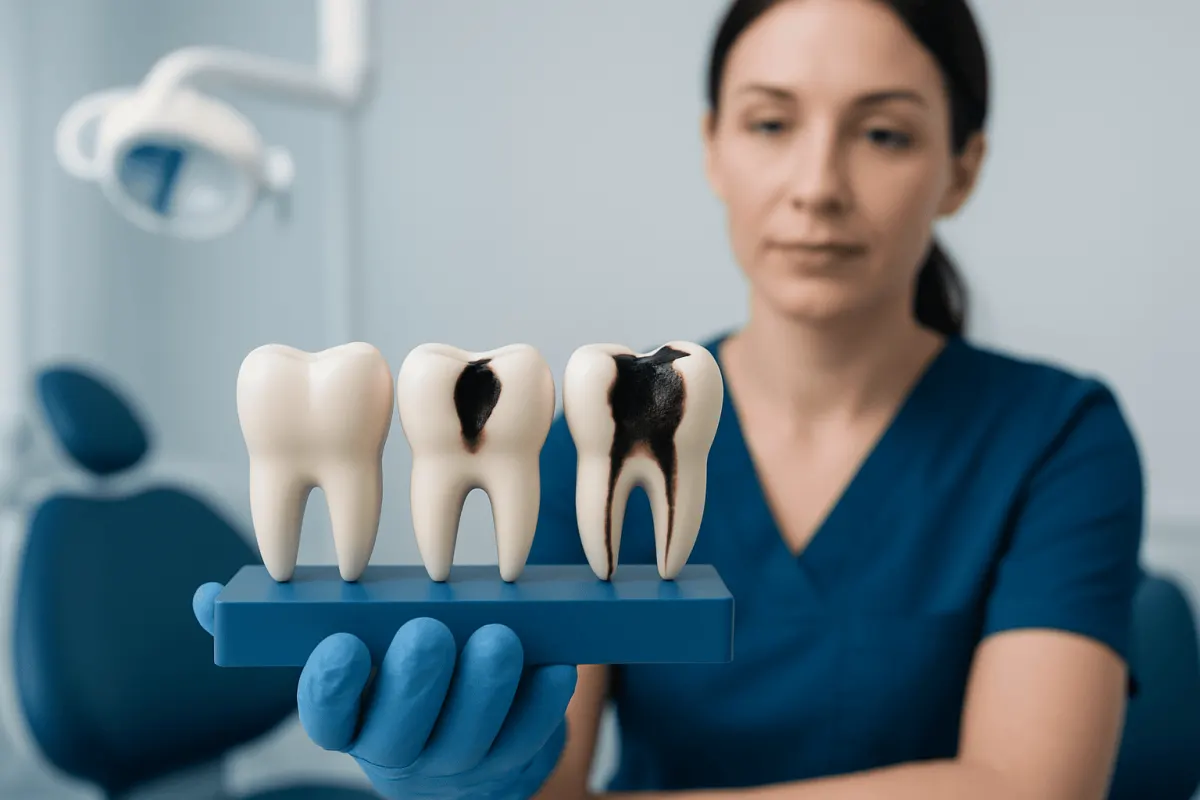
Cavities are areas of permanent tooth damage caused by decay. They may look like faint white spots at first and later develop brown or black discoloration, rough areas, or visible holes, although many early cavities cannot be recognized without a dental examination.
Overview: What Is a Cavity?
A cavity is an area of tooth decay that has damaged the hard outer surface of a tooth. The clinical term is dental caries. It develops when bacteria in dental plaque use sugars and starches from food and drinks to produce acids. Over time, these acids can remove minerals from tooth enamel and create a weakened area or hole.
Cavities can affect the chewing surfaces of back teeth, the sides between teeth, the smooth front or side surfaces, and areas close to the gumline. They can occur in children and adults, including around the edges of existing fillings or crowns. Because decay may begin beneath the surface or between teeth, it is not always visible in a mirror.
Finding decay early matters because enamel damage can sometimes be stabilized with preventive dental care before a hole forms. Once a cavity has created a permanent opening in the tooth, it generally needs professional dental treatment to restore the tooth and prevent the decay from progressing.
What Do Cavities Look Like at Different Stages?
The first visible sign of early decay may be a dull, chalky white spot on the tooth. This is called a white spot lesion and can indicate that enamel is losing minerals. It may look less shiny than the surrounding enamel and can be especially noticeable near the gumline. At this stage, there may be no discomfort at all.
As decay advances, the area may turn light brown, dark brown, or black. A cavity can look like a tiny dot, a dark line in a tooth groove, a rough patch, or a small pit. With more extensive decay, there may be a clearly visible hole, a chipped or broken part of the tooth, or a dark area that appears to extend deeper into the tooth.
Decay between teeth may not be visible from the outside. It can sometimes cause a dark shadow beneath the enamel, a rough edge, or a space where food repeatedly becomes trapped. A dentist may use careful examination and dental X-rays to assess these areas accurately.
- Early stage: chalky white or matte-looking spot.
- Developing decay: brown or black mark, stain-like patch, or roughened groove.
- Established cavity: visible pit, hole, darkened area, or loss of tooth structure.
- Advanced decay: a larger broken area, deep hole, or dark tooth discoloration, sometimes with swelling nearby.
What Can Look Like a Cavity but Is Not One?
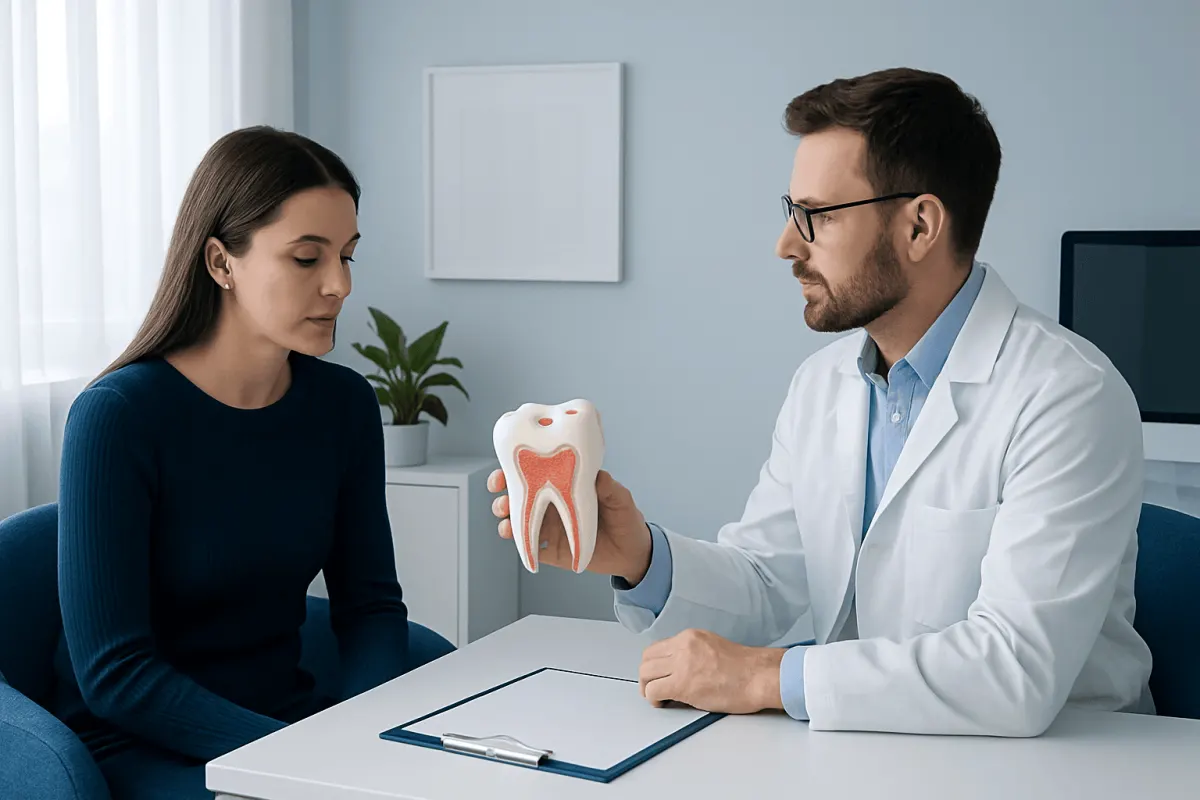
A dark mark does not always mean there is a cavity. Natural grooves on molars can collect color from foods, drinks, tobacco, or bacteria and may look dark even when the enamel remains sound. Coffee, tea, red wine, and strongly colored foods can also contribute to surface staining.
Old fillings, sealants, and crowns can have darker edges or changes in color over time. Some people also have naturally deeper tooth grooves, small enamel defects, or discoloration related to past injury or certain medications. These changes need assessment, but they do not automatically indicate active decay.
Only a dental professional can reliably distinguish staining from a cavity. Dentists examine the tooth surface, assess its texture, look for plaque retention, and may take X-rays when decay between teeth or beneath a restoration is suspected. Avoid trying to probe a dark spot at home, as this can irritate the gums or damage a weakened area.
Symptoms That May Accompany a Cavity
Many early cavities do not hurt. This is why routine dental checkups are important even when teeth feel normal. Once decay reaches deeper layers of the tooth, a person may notice sensitivity to cold, hot, sweet, or acidic foods and drinks. The sensitivity may be brief or may linger after the trigger is removed.
Other possible signs include toothache, pain when biting, a rough or sharp spot that catches the tongue, bad taste, or food repeatedly lodging in the same place. A visible hole or a missing piece of tooth can also suggest more advanced decay. Symptoms vary widely and do not always reflect how deep a cavity is.
If infection develops inside or around a tooth, symptoms can include persistent throbbing pain, gum swelling, a pimple-like bump on the gum, facial swelling, fever, or difficulty opening the mouth. These symptoms require prompt dental assessment. Significant facial swelling, trouble swallowing, or difficulty breathing needs urgent emergency medical care.
Why Cavities Develop and Who Is at Risk
Cavities occur when tooth surfaces are exposed repeatedly to acids produced by plaque bacteria. Frequent intake of sugary snacks, sweetened drinks, and refined carbohydrates gives these bacteria repeated fuel. The total number of sugar exposures across the day can be important, not only the amount consumed at one time.
Risk can also rise with inadequate brushing or cleaning between teeth, limited fluoride exposure, dry mouth, gum recession, and difficulty accessing regular dental care. Dry mouth may be linked to medicines, medical conditions, dehydration, or some treatments. Saliva normally helps wash away food particles and neutralize acids, so reduced saliva can increase the risk of decay.
Children, older adults, people with braces or other orthodontic appliances, and individuals with previous cavities may need especially attentive prevention. Teeth with deep grooves, crowded teeth, exposed roots, or older restorations can also have areas where plaque is harder to remove.
How Dentists Diagnose Cavities
Dentists diagnose cavities through a combination of history, visual examination, and, when appropriate, dental X-rays. During an examination, they look for changes in tooth color, texture, shape, and areas where plaque tends to collect. They also assess gums, existing restorations, bite patterns, and overall oral hygiene.
X-rays can help identify decay between teeth, beneath fillings, or in areas that cannot be seen directly. They are especially useful because a tooth may look normal on the outside while decay is developing inside or between contact points. The dentist will recommend imaging based on individual risk and clinical findings.
Dental examinations can also identify conditions that may increase cavity risk, such as dry mouth, erosion from acid exposure, or gum recession. This allows preventive care to be tailored to the person rather than relying on appearance alone.
Treatment Options and Prevention
Treatment depends on how far decay has progressed. Early mineral loss without a hole may be managed with professional fluoride treatment, improved daily plaque removal, dietary changes, and monitoring. A dentist may also recommend sealants for vulnerable grooves in some patients. These approaches aim to strengthen enamel and reduce the chance that decay will advance.
When a cavity has formed, the decayed tooth material is usually removed and the tooth is restored with a filling. If decay is extensive, treatment may involve a larger restoration or crown. When decay reaches the pulp, which contains the tooth’s nerves and blood supply, root canal treatment may be needed to preserve the tooth, often followed by a protective restoration.
Daily prevention includes brushing twice a day with fluoride toothpaste, cleaning between teeth once daily with floss or an appropriate interdental cleaner, and limiting frequent sugary snacks and drinks. Water is usually a tooth-friendly choice between meals. Regular dental visits help detect problems early and provide individualized prevention advice.
Acıbadem Health Point’s multidisciplinary dental specialists in JCI-accredited hospitals assess and treat dental decay for international patients, with care plans based on the tooth’s condition and the person’s oral health needs.
When to See a Dentist
A person should arrange a dental appointment if they notice a new white, brown, or black spot; a pit or hole; a chipped tooth; recurring sensitivity; pain when chewing; or food repeatedly getting stuck between particular teeth. Even without pain, a new change in a tooth deserves an examination because early decay can often be treated more conservatively.
Prompt dental care is particularly important for persistent toothache, swelling of the gum or face, a bad taste or drainage from the gum, or a fever associated with dental pain. These may indicate a more advanced tooth problem or infection that needs timely treatment.
Regular checkups remain the most reliable way to find hidden cavities before they cause symptoms. A dentist can explain whether a dark area is staining, early enamel change, active decay, or another dental concern, and can recommend the most appropriate next step.
Frequently asked questions
01Can a cavity look like a black dot?
Yes. A cavity may appear as a small brown or black dot, particularly in the grooves of a molar. However, a black dot can also be harmless staining, so a dental examination is needed to determine whether decay is present.
02Can cavities be white?
Yes. Early tooth decay may appear as a chalky, opaque white spot where enamel has begun to lose minerals. At this early stage, there may be no pain, and a dentist may be able to help stabilize the area with preventive care.
03Can a cavity be present without a visible hole?
Yes. Decay can begin beneath the enamel surface or between teeth, where it cannot be seen easily. Dental X-rays and a professional examination can detect cavities that are not visible in a mirror.
04Do cavities always hurt?
No. Small and early cavities commonly cause no symptoms. Pain or sensitivity may occur when decay reaches deeper layers of the tooth, which is why routine dental visits are important.
05Can brushing remove a cavity?
Brushing with fluoride toothpaste helps remove plaque and can support remineralization of very early enamel changes. It cannot close or repair a formed hole in the tooth, which generally needs treatment from a dentist.
06How quickly can a cavity get worse?
The rate varies depending on oral hygiene, diet, fluoride exposure, saliva flow, the location of the decay, and individual health factors. Because it is difficult to predict progression at home, a suspected cavity should be evaluated by a dentist.
This article is for general information only and is not a substitute for professional medical advice. Please consult a qualified doctor about your individual situation.
Explore treatments in Turkey — costs, top hospitals & a free quote
JCI-accredited · board-certified surgeons · reply within 24h
Add us as a Preferred Source to see more of our trusted health content across Google Search, AI Overviews and Discover.