Warts vs Molluscum: Key Differences Explained

Key Takeaways
- Warts and molluscum are both viral skin conditions, but they usually look and behave differently.
- Warts often have a rough or thickened surface, while molluscum commonly appears as smooth bumps with a central dimple.
- Both conditions can spread by direct contact or shared items, especially when skin is irritated or broken.
- Many cases can be diagnosed by appearance alone, but a clinician may examine the skin more closely if the diagnosis is uncertain.
- Treatment depends on age, location, comfort, and spread; some cases improve without active treatment.
Warts versus molluscum can look similar at first glance, but they are different viral skin conditions with distinct features, causes, and treatment approaches. Recognizing the pattern of the bumps helps guide the next step, whether that means simple observation, in-office treatment, or a medical review.
Overview
When people compare warts versus molluscum, the first useful distinction is simple: both are caused by viruses, but they do not look exactly the same and they do not always need the same approach. Warts are caused by human papillomavirus, while molluscum contagiosum is caused by a poxvirus. In everyday life, they may both show up as small bumps on the skin, which is why they are often confused.
Warts tend to feel firmer and rougher, and they may appear on the hands, fingers, feet, or other areas that are frequently rubbed or touched. Molluscum usually appears as smooth, dome-shaped bumps that often have a tiny central dip or “belly button” in the middle. That visual clue is one of the most helpful ways to tell them apart.
For patients deciding whether to seek care locally or travel for treatment, the practical question is not only what the bumps are, but whether they are spreading, uncomfortable, or causing uncertainty. A dermatologist can usually sort out the difference with a careful skin examination, which helps avoid unnecessary treatment and gives a clear plan for follow-up.
Symptoms and Appearance
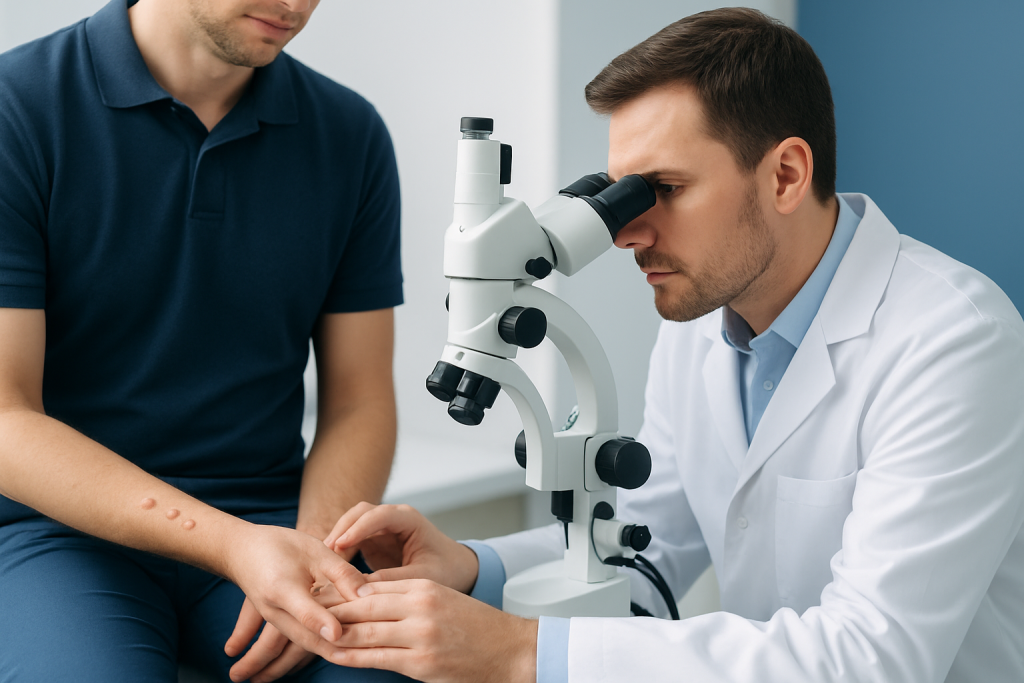
Warts often have a coarse surface and may look like a small cauliflower-like growth or a hard, raised bump. On the feet, they can become flattened by pressure and may be mistaken for calluses. Some warts contain tiny dark dots, which are small clotted blood vessels rather than dirt.
Molluscum contagiosum usually creates smaller, smooth, pearl-like bumps that are flesh-colored, white, or pink. The center indentation is common, although not every lesion shows it clearly. Molluscum can also cause surrounding redness or mild itching, especially as the bumps begin to resolve.
There are a few pattern clues that help clinicians separate them:
- Texture: Warts are usually rough; molluscum is usually smooth.
- Shape: Warts are more irregular; molluscum is often round and dome-like.
- Center: Molluscum often has a central dimple; warts usually do not.
- Location: Warts are common on hands and feet; molluscum can appear on the trunk, arms, face, or genital area.
Both conditions can appear in clusters, and both may spread to nearby skin if scratched or irritated. That is one reason it can be helpful to have a qualified clinician confirm the diagnosis early, especially if the bumps are changing, numerous, or in a sensitive area.
Causes and Risk Factors

Warts and molluscum are both contagious, but they spread in slightly different ways. Warts are linked to HPV entering the skin through tiny breaks, often after direct contact or through shared surfaces. Molluscum spreads by skin-to-skin contact, shared towels or sports equipment, and sometimes by autoinoculation, meaning a person transfers the virus from one area of skin to another by touching or scratching.
Children are commonly affected by molluscum, partly because close contact during play makes transmission easier. Warts are also common in children and adolescents, but they can occur at any age. People with eczema, frequent skin friction, shaving irritation, or a weakened immune system may be more likely to develop multiple lesions or have them last longer.
International patients often ask whether travel itself causes these conditions. Travel does not create the virus, but busy schedules, close-contact activities, shared swimming areas, gym equipment, and skin irritation from climate changes can make transmission more likely. The key issue is exposure, not geography.
Diagnosis
In many cases, a dermatologist can diagnose the condition by looking carefully at the skin and asking about how the bumps started, where they have spread, and whether there has been itching, pain, or contact with others who have similar lesions. A simple in-office exam is often enough.
If the appearance is not typical, the clinician may use a dermatoscope, a handheld magnifying tool that reveals details not visible to the naked eye. Rarely, a skin sample may be taken if the diagnosis is unclear or if another condition needs to be ruled out. This is more likely when bumps are unusually large, inflamed, or located in a sensitive area.
Because some other skin problems can resemble warts or molluscum, accurate diagnosis matters. Conditions such as skin tags, folliculitis, milia, genital lesions, or even certain infections may look similar at a glance. A proper evaluation helps the patient avoid treating the wrong problem.
Treatment Options
Treatment is tailored to the person, the number of lesions, their location, and whether the bumps are causing discomfort, cosmetic concern, or ongoing spread. Some warts and many molluscum lesions can eventually resolve on their own, but that does not mean treatment is always unnecessary. Active treatment may be useful when lesions are persistent, bothersome, or in a location where spread is likely.
For warts, common in-office options include freezing the lesion with cryotherapy, topical treatments that help the skin shed the infected tissue, or other procedures selected by a dermatologist. Plantar warts on the feet may require more than one visit because pressure makes them harder to clear. For molluscum, options may include careful removal, cryotherapy, or other clinician-directed approaches, especially when lesions are widespread, persistent, or socially distressing.
Choice of treatment is influenced by age and skin sensitivity. In children, clinicians often weigh the benefits of intervention against discomfort and the possibility of spontaneous improvement. In adults, especially those traveling for care, the plan may also include the practicality of follow-up, whether the lesions are in one area or several, and how soon the patient needs to return home.
It is important not to pick, squeeze, or aggressively cut at either type of bump at home. That can spread the virus, irritate the skin, and increase the chance of scarring or secondary infection.
Prevention and Self-Care
Good skin habits reduce the chance of spread and reinfection. Patients are usually advised to avoid sharing towels, razors, socks, shoes, or athletic gear. Covering lesions when appropriate, especially during contact sports or shared activities, can help protect others and limit spread to nearby skin.
Keeping the skin healthy also matters. Gentle cleansing, moisturizers for dry or eczema-prone skin, and minimizing friction can make the surrounding skin less vulnerable. For molluscum, reducing scratching is particularly helpful; for warts, preventing pressure and repeated trauma may reduce irritation.
- Wash hands after touching the affected area.
- Keep lesions covered when practical and recommended by a clinician.
- Do not shave over active bumps.
- Avoid sharing personal care items.
- Use separate towels for the affected area if possible.
For patients who are receiving care away from home, the follow-up plan should be discussed before travel. Some treatments require repeat visits, while others are chosen specifically because they fit better into an international schedule. Clear instructions from the treating team help patients continue self-care safely after returning home.
When to See a Doctor
A medical review is sensible when the bumps are painful, rapidly spreading, bleeding, inflamed, located on the face or genitals, or causing concern about diagnosis. It is also worth seeking care if the lesions do not improve over time or if home attempts have made the skin worse.
People with eczema, diabetes, immune suppression, or a history of skin infections should be assessed earlier, since bumps may spread more easily or behave less predictably. For children, persistent itching, irritation, or repeated scratching are good reasons to arrange an evaluation. In adults, any uncertainty about whether the lesion is a wart, molluscum, or another skin condition should prompt a professional opinion.
If care is being arranged from another country, a dermatologist can help decide whether one visit is enough or whether a short follow-up window is needed after treatment. At Acibadem Health Point, multidisciplinary specialists and JCI-accredited hospitals diagnose and treat these skin conditions for international patients, with planning that supports both treatment and recovery.
Living With the Condition
Although warts and molluscum can be frustrating, they are common and manageable. Most patients benefit from understanding that these bumps are usually a surface skin issue rather than a sign of poor hygiene. That reassurance can reduce worry, especially for families dealing with a child who has several lesions.
Patience is sometimes part of the plan. Some cases improve slowly, and treatment may take time to show results. A practical approach is to track whether new lesions are appearing, whether any existing lesions are changing, and whether the surrounding skin is becoming irritated. Those details help the clinician adjust care if needed.
With the right diagnosis, a sensible treatment plan, and basic prevention steps, most people can manage the condition without major disruption to daily life.
Frequently asked questions
01How can someone tell warts versus molluscum apart at home?
Warts are usually rough, thickened, and irregular, while molluscum tends to be smooth and dome-shaped with a small central dimple. That said, not every lesion fits the classic pattern. If the bumps are spreading or the appearance is unclear, a clinician can usually confirm the diagnosis quickly.
02Are warts and molluscum contagious?
Yes, both can spread through direct skin contact and shared personal items. Molluscum is especially easy to pass in close-contact settings, while warts often spread through tiny skin breaks. Good hygiene and not picking at the bumps can help limit transmission.
03Do these conditions go away on their own?
They can, but the timeline varies. Some warts and many molluscum lesions eventually resolve without treatment, though this may take months or longer. Treatment is often chosen when lesions are persistent, spreading, or bothersome.
04Is it safe to treat them with over-the-counter products?
Some wart products are available without a prescription, but they are not suitable for every location or every patient. Molluscum is often managed differently, and self-treatment can irritate the skin if the diagnosis is wrong. A doctor’s guidance is the safest starting point when there is uncertainty.
05Can adults get molluscum contagiosum?
Yes. Although it is common in children, adults can get molluscum through skin-to-skin contact, shared items, or sexual contact when lesions are in the genital area. Adults should have new genital or spreading lesions checked by a clinician.
06When should a person worry that a bump is not a wart or molluscum?
A lesion that bleeds easily, changes quickly, becomes very painful, or looks very different from the usual pattern deserves medical review. Any bump that is uncertain, especially on the face or genital area, should be assessed rather than guessed at. A dermatologist can help rule out other skin conditions.
This article is for general information only and is not a substitute for professional medical advice. Please consult a qualified doctor about your individual situation.
Explore treatments in Turkey — costs, top hospitals & a free quote
JCI-accredited · board-certified surgeons · reply within 24h
Add us as a Preferred Source to see more of our trusted health content across Google Search, AI Overviews and Discover.