Walking With a Limp: Causes and Safe Assessment
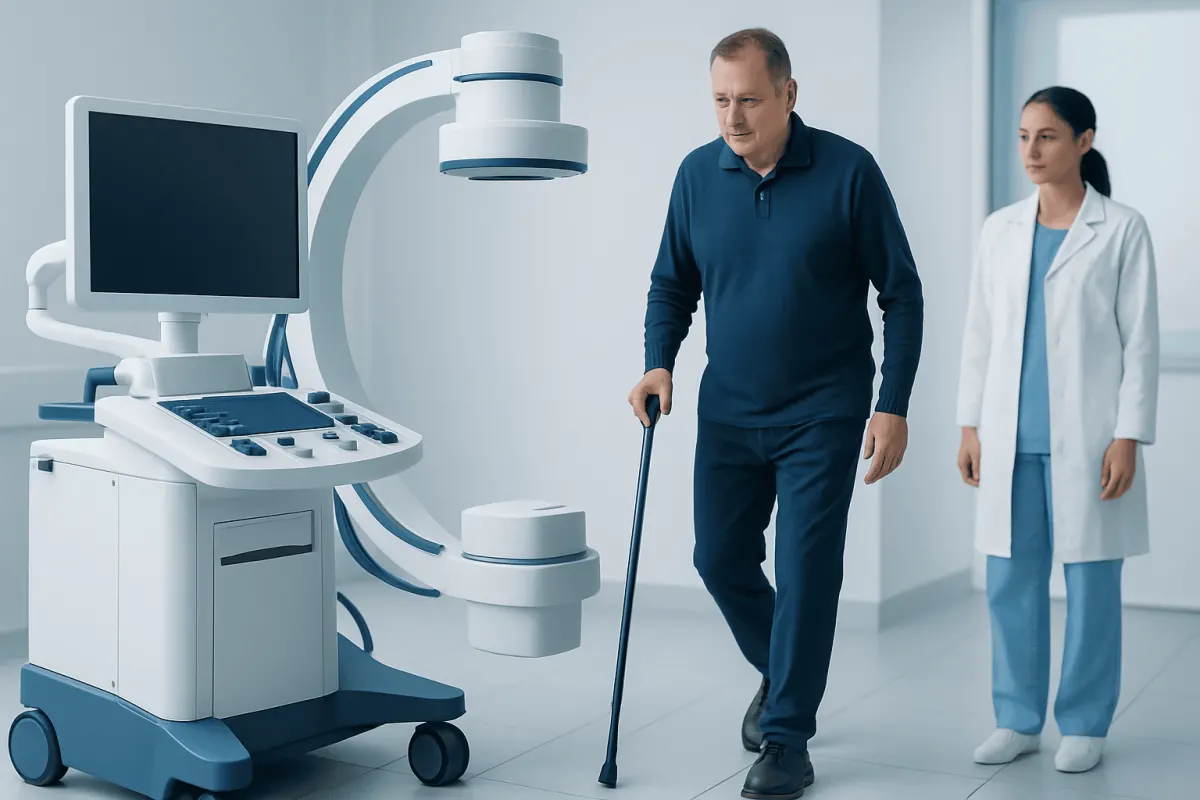
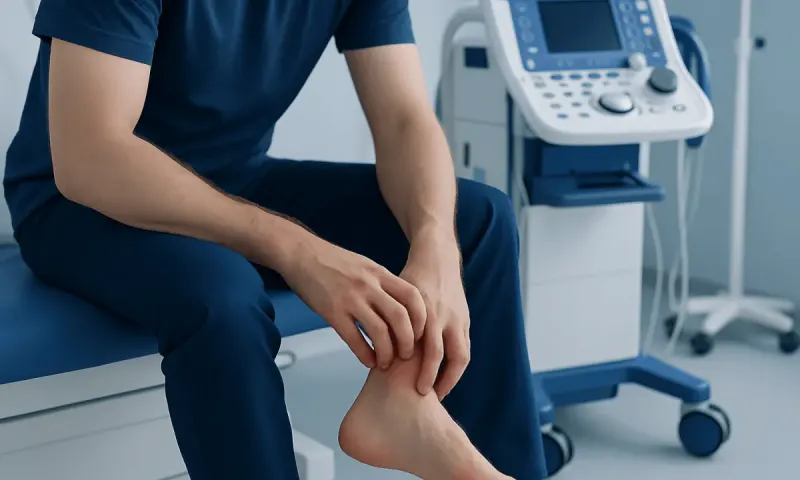
Walking with a limp is a change in the usual walking pattern, often caused by pain, stiffness, weakness, or a difference in leg function. It may improve as a minor injury heals, but persistent, worsening, or sudden limping should be assessed by a qualified clinician to identify the underlying cause.
Overview: what does walking with a limp mean?
Walking with a limp means that a person’s usual gait, or walking pattern, has changed. They may take shorter steps, place less weight on one leg, swing a leg outward, drag a foot, or lean the body to one side. A limp is often the body’s way of protecting a painful or weak area, but it can also occur when joints, muscles, nerves, or balance systems are not working normally.
Some limps begin after an obvious event, such as twisting an ankle, increasing exercise, or falling. Others develop gradually with arthritis, tendon problems, spinal conditions, or changes in muscle strength. In children, limping can sometimes be difficult to interpret because they may not clearly describe pain. The most useful next step is usually to consider when the limp began, whether it is painful, and whether there are other symptoms.
A short-lived limp after minor soreness may settle with sensible activity modification. However, limping that persists beyond a few days, repeatedly returns, affects daily activities, or has no clear explanation deserves medical assessment. Identifying the cause early can help prevent compensatory strain in the back, hips, knees, and unaffected leg.
How the pattern of a limp can provide clues
Clinicians observe how a person rises, stands, walks, turns, and balances. This examination does not diagnose a condition by appearance alone, but different patterns can guide further questions and tests. A painful limp commonly causes shorter time spent standing on the sore leg. This is sometimes called an antalgic gait, meaning a gait adapted to avoid pain.
Weakness around the hip can cause the trunk to lean toward the weaker side while walking. Difficulty lifting the front of the foot may lead to a higher-than-usual step or a foot that catches on the ground; this can be associated with nerve or muscle problems. Stiffness in a hip, knee, ankle, or foot may make a leg swing differently or limit stride length.
Other important observations include whether one shoe wears down differently, whether the pelvis appears uneven, and whether the person uses furniture or walls for balance. A limp may also be linked to pain felt somewhere other than the true source. For example, hip conditions can be felt in the groin, thigh, or knee, while lower-back nerve irritation can cause leg symptoms.
- A limp that starts with pain after activity may suggest an overuse injury or joint problem.
- A limp with numbness, tingling, or foot weakness may indicate nerve involvement.
- A limp without pain, especially if progressive, should still be evaluated for weakness, joint alignment, or neurological causes.
Common causes of limping
Musculoskeletal causes are common. Sprains, strains, bruises, stress injuries, tendon inflammation, and fractures can make weight-bearing uncomfortable. Painful conditions affecting the sole of the foot, Achilles tendon, ankle, knee, hip, or pelvis may all change the way a person walks. Poorly fitting shoes, blisters, corns, and ingrown toenails can also cause a noticeable limp.
Longer-term joint conditions may lead to stiffness and pain that are worse after rest or activity. Osteoarthritis is a frequent example in adults, particularly in the hips and knees. Inflammatory joint diseases, bursitis, tendon disorders, and previous injuries may also contribute. A true or functional difference in leg length can alter pelvic alignment and walking mechanics; this may be present from childhood or develop after injury, surgery, or joint changes.
Not every limp begins in a joint. Nerve compression in the lower back, peripheral nerve injury, stroke, Parkinsonism, multiple sclerosis, and neuromuscular disorders can affect strength, coordination, or sensation. Circulation problems may cause leg pain during walking that eases with rest, while some infections or inflammatory conditions can cause warmth, swelling, and pain around a bone or joint.
Children may limp after a minor injury, but clinicians also consider hip disorders, temporary inflammation around the hip, infection, developmental differences, and less common bone conditions. Because a child may appear well despite a significant problem, a new unexplained limp should not be dismissed, particularly if it persists or is accompanied by fever, pain at night, or reluctance to walk.
What happens during medical assessment?
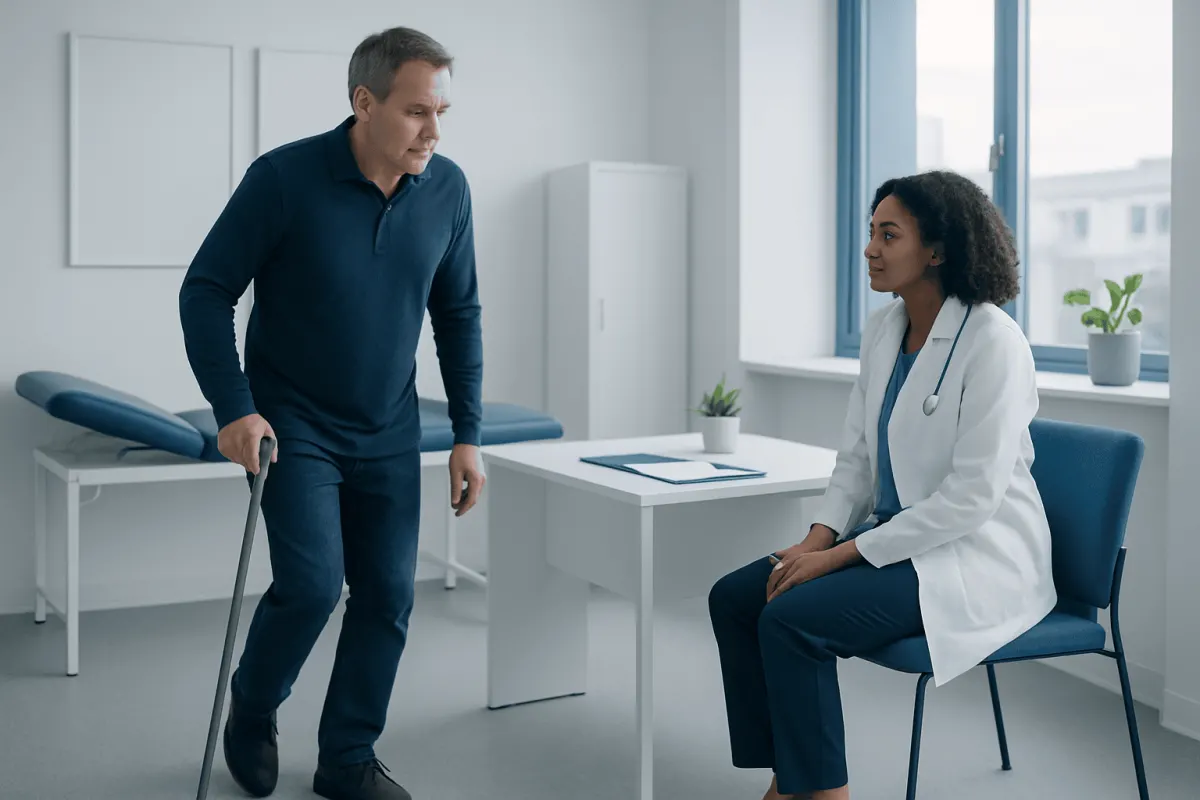
A clinician will usually ask when the limp began, whether there was an injury, where pain is felt, and what makes symptoms better or worse. They may ask about recent illness, fever, exercise changes, numbness, weakness, back pain, medications, previous surgery, and medical conditions. For children, questions may include recent infections, play activity, developmental history, and whether the child can bear weight.
The physical examination often includes watching the person walk, checking posture and balance, and comparing both legs. The clinician may assess joint movement, muscle strength, reflexes, sensation, pulses, tenderness, swelling, skin changes, and spinal movement. A careful examination of the hip is important when knee or thigh pain is present, because pain can be referred from the hip.
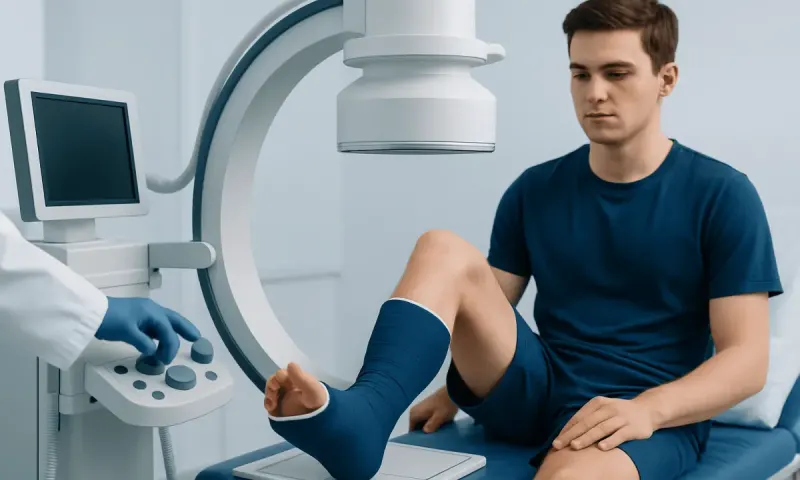
Tests are selected based on the suspected cause rather than ordered routinely for every limp. X-rays can help assess fractures, alignment, and some joint changes. Ultrasound may help evaluate fluid around a joint or soft-tissue structures. Magnetic resonance imaging may be considered for certain stress injuries, soft-tissue problems, spine conditions, or when X-rays do not explain ongoing symptoms. Blood tests can be useful when infection, inflammation, or another systemic condition is suspected.
Keeping a brief record before an appointment can be helpful. A person can note when the limp occurs, pain location and severity, recent activity, footwear, falls, and associated symptoms. If safe, a short video of the walking pattern at home may also help, since symptoms can vary during the day.
Treatment options and rehabilitation
Treatment for walking with a limp depends on its cause. For a minor soft-tissue injury, clinicians may recommend temporary reduction of aggravating activity, gradual return to movement, and measures to ease discomfort. Complete inactivity is not always beneficial, especially for persistent problems, so advice should be individualized. A clinician or pharmacist can advise whether pain-relieving medicines are suitable in light of a person’s health history and other medicines.
Physiotherapy is often valuable for improving strength, flexibility, joint movement, balance, and confidence in walking. A rehabilitation plan may include exercises for the hips, thighs, calves, core, or feet, depending on the diagnosis. It can also address movement habits that developed while a person was protecting a painful area. Exercises should be tailored, as the wrong type or intensity may worsen some injuries.
Supportive footwear, shoe inserts, braces, walking sticks, crutches, or other aids may be recommended for selected patients. These can reduce stress on an injured area and improve safety while recovery takes place. For significant arthritis, fractures, tendon tears, nerve compression, or structural problems, referral to an orthopedic, neurological, vascular, rheumatology, or rehabilitation specialist may be appropriate. Some causes require procedures or surgery, but this is not necessary for most people who limp.
The treatment goal is not only to reduce pain but also to restore safe, efficient movement and address the reason for the altered gait. Follow-up is important if a limp does not improve as expected, because the diagnosis or management plan may need to be reconsidered.
Practical self-care while symptoms are being assessed
Until the cause is clear, it is sensible to avoid activities that sharply increase pain or make the limp worse. This may mean reducing running, jumping, long walks, heavy lifting, or uneven-ground activity for a short period. However, gentle movement within comfortable limits can help prevent stiffness in many situations. A clinician should guide activity after a suspected fracture, major injury, or surgery.
Supportive, well-fitting shoes with adequate room for the toes can make walking more comfortable and reduce avoidable foot pressure. People should avoid repeatedly “pushing through” severe pain or borrowing braces and shoe inserts that were prescribed for someone else. If a walking aid is used, it should be fitted and used correctly to prevent falls and strain on the wrists, shoulders, or opposite side of the body.
Maintaining general strength, balance, and bone health can support mobility over time. Regular age-appropriate physical activity, adequate nutrition, smoking cessation, and management of long-term conditions can all be relevant. For people with diabetes or reduced sensation in the feet, regular foot checks and prompt attention to cuts, redness, swelling, or sores are especially important.
At Acıbadem Health Point, multidisciplinary specialists in JCI-accredited hospitals can assess gait changes and coordinate care for international patients when orthopedic, neurological, rehabilitation, or imaging expertise is needed.
When to seek medical care
Prompt medical care is advised if a person cannot bear weight, has severe or rapidly worsening pain, a visible deformity, or significant swelling after an injury. Urgent assessment is also important for a hot, red, swollen joint; fever with limping; an open wound; or pain that is severe at rest. These features can require timely treatment.
New weakness, numbness, loss of coordination, facial drooping, speech difficulty, sudden severe back pain with leg weakness, or loss of bladder or bowel control should be treated as urgent symptoms. Emergency services should be contacted for possible stroke symptoms or after a major injury. A cold, pale, blue, or unusually swollen leg also needs urgent assessment because circulation problems can be serious.
A routine medical appointment is appropriate for a limp lasting more than several days, recurring symptoms, unexplained limping, pain that interrupts sleep, or a limp that limits work, school, exercise, or daily activities. Children should be assessed promptly if they refuse to walk, have fever, seem unwell, wake at night with pain, or develop a limp without a clear minor explanation.
Frequently asked questions
01Can walking with a limp go away on its own?
A limp caused by mild soreness, a minor bruise, or a simple strain may improve as the tissues recover. Persistent, recurrent, or unexplained limping should be checked, because the underlying cause may need specific treatment or rehabilitation.
02Is it normal to limp after an ankle sprain?
It is common to limp temporarily after an ankle sprain because placing weight on the ankle can be painful. If pain, swelling, instability, or difficulty bearing weight is substantial or does not improve, a clinician should assess for a more serious sprain or fracture.
03Can hip problems cause knee pain and a limp?
Yes. Pain from the hip can sometimes be felt in the thigh or knee, particularly in children and older adults. A clinician may examine both the hip and knee when either area is painful.
04What type of doctor should a person see for a limp?
A primary care doctor, family physician, pediatrician, or orthopedic clinician can often provide an initial assessment. Depending on the findings, referral may be made to physiotherapy, neurology, rheumatology, vascular medicine, or another specialty.
05Should a person exercise while limping?
This depends on the cause and severity of symptoms. Gentle activity may be appropriate for some conditions, but activities that increase pain, instability, or limping should usually be reduced until professional advice is available.
06Why might a person limp without feeling pain?
A painless limp can occur with muscle weakness, stiffness, leg-length differences, balance changes, nerve disorders, or learned movement patterns after an earlier injury. It still merits assessment if it is new, progressive, or affects normal function.
This article is for general information only and is not a substitute for professional medical advice. Please consult a qualified doctor about your individual situation.
Joint and spine care in Turkey — expert assessment & treatment
JCI-accredited · board-certified surgeons · reply within 24h
Add us as a Preferred Source to see more of our trusted health content across Google Search, AI Overviews and Discover.