Veneers in Turkey Cost 2026: Prices, Packages and What’s Included

Key Takeaways
- Veneer pricing in Turkey is normally quoted per tooth, so the total depends on how many teeth are treated and which material is selected.
- No clinic can give a reliable figure before a dentist reviews photographs, X-rays or a video consultation — early estimates are planning ranges, not quotes.
- Packages often bundle consultation, imaging, laboratory work, hotel nights, airport transfers and interpreter support; flights and unrelated dental work are usually separate.
- Most veneer plans require two visit phases or one longer stay, because preparation, laboratory fabrication and final bonding cannot all be safely rushed.
- Accreditation such as JCI, verifiable dentist credentials and clear written treatment plans matter more than headline pricing.
- Aftercare continues at home: a local dentist for check-ups, plus a documented plan the traveling patient can share.
Patients researching veneers cost turkey in 2026 usually find that pricing is quoted per tooth and varies with the material chosen, the number of teeth treated, laboratory work and the level of package support included. This guide explains how estimates are built, what packages typically cover, how to judge accreditation and credentials, and how to plan travel and aftercare.
Why So Many U.S. Patients Compare Veneer Prices Abroad
When people in the United States search for information about veneers cost turkey, they are usually trying to answer two practical questions at once: how much a smile makeover might realistically cost, and whether traveling for treatment is a sensible use of time and money. Cosmetic dentistry is rarely covered by dental insurance in the U.S., so the full amount is typically out of pocket. That reality is what pushes many patients to look at international options, where the combination of dental fees, laboratory costs and living costs can produce a noticeably lower total.
Turkey has become a familiar destination for elective dental work partly because of its large, well-equipped private hospital and clinic sector, direct flight connections from major U.S. hubs, and a long-established infrastructure for international patients — interpreters, coordinators, hotel partnerships and airport transfers. For a treatment that involves several appointments over a short period, that logistical support is part of what patients are paying for.
It is worth being clear about what this article can and cannot do. It explains how costs are structured and what a well-organized journey looks like. It does not replace a clinical assessment. Whether veneers are the right option at all — as opposed to whitening, bonding, orthodontics or restorative treatment — is a decision that belongs to a qualified dentist who has examined the teeth and gums.
Veneers Cost Turkey: How 2026 Estimates Are Built
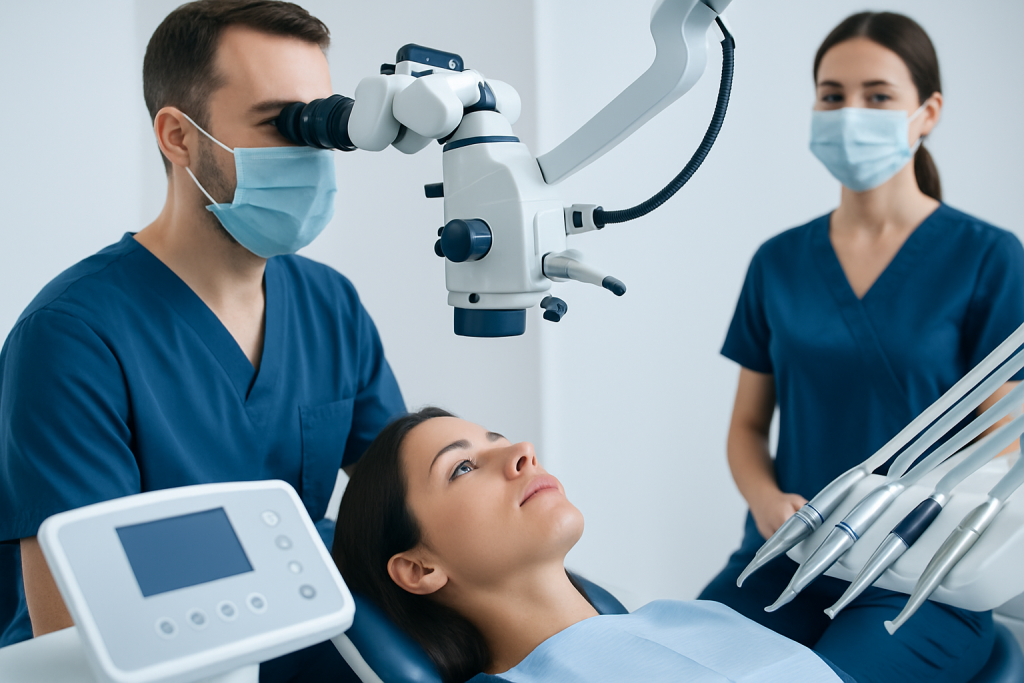
Anyone comparing veneers cost turkey figures in 2026 will notice that clinics quote per tooth rather than per smile. The total is then shaped by a handful of variables, and understanding them makes advertised ranges far easier to interpret.
- Number of teeth. Some patients treat only the upper front teeth; others treat both arches. This is the single largest driver of the total.
- Material and technique. Composite veneers, feldspathic porcelain, pressed ceramics and zirconia-based restorations sit in different price tiers, with laboratory-crafted ceramics generally in the higher bands.
- Digital planning and laboratory work. Digital smile design, intraoral scanning, mock-ups and custom shade matching add value and cost.
- Preparatory treatment. Gum treatment, fillings, root canal therapy or extractions may be needed first and are usually priced separately.
- Clinic profile. Hospital-based departments, accreditation status, seniority of the dentist and technology all influence fees.
Because of this, responsible providers avoid quoting a fixed figure before reviewing clinical records. What patients can reasonably expect early on is an indicative planning range — a band that assumes a certain number of teeth and material — accompanied by a clear statement that the final plan may change after examination. Any offer that promises an exact all-in price for a smile that has not been assessed should prompt further questions rather than a deposit.
A useful way to compare offers is to convert everything to the same basis: cost per tooth, plus preparatory work, plus travel-related items, plus any warranty or revision policy. Two quotes that look far apart on the surface often differ mainly in what has been folded into the headline number.
What Treatment Packages Typically Include

Most international dental packages in Turkey are assembled around the clinical work, with hospitality elements added to simplify the trip. While the details vary, a package commonly covers the initial in-person consultation and examination, necessary dental imaging, the agreed number of veneers including laboratory fabrication, temporary restorations while the permanent ones are made, fitting and bonding appointments, and a final review before departure.
On the travel side, packages frequently include airport-to-hotel-to-clinic transfers, a set number of hotel nights close to the clinic, interpreter or English-speaking coordinator support, and assistance with appointment scheduling. Some also provide a written aftercare summary and remote follow-up contact once the patient is home.
Items that are usually not included deserve equal attention: international flights, travel insurance, visa fees where applicable, meals beyond any stated hotel arrangement, extra hotel nights if the schedule extends, and any dental treatment discovered during examination that was not part of the original plan — such as gum therapy, endodontic treatment or extractions. Prescription medicines, night guards and future replacement of restorations are also typically separate.
Patients should ask for the inclusion list in writing, in English, before committing. A clear document that states what happens if the plan changes mid-treatment is a stronger sign of professionalism than a low advertised figure.
Accreditation, Credentials and How to Judge a Provider
Price comparison only becomes meaningful once quality and safety criteria are satisfied. Joint Commission International (JCI) accreditation is one widely recognized benchmark; it evaluates hospitals against international standards for patient safety, infection control, medication management and clinical governance. Accreditation applies to the institution rather than to an individual result, but it indicates that systems have been externally reviewed.
Alongside accreditation, patients should look at the dentist who will actually perform the treatment. Reasonable questions include where they trained, how long they have practiced restorative and cosmetic dentistry, whether they are registered with the relevant Turkish authorities, and whether they will be present at every stage or delegate parts of the work. Reputable providers answer these questions without hesitation and are willing to arrange a video consultation with the treating clinician rather than only a sales representative.
Other practical markers of a well-run service include: a written treatment plan listing tooth numbers and materials; use of a named dental laboratory; a clear policy on revisions and what is covered if a restoration fails within a defined period; documented consent in English; and realistic language. Claims of guaranteed outcomes, permanent results or a “perfect” smile are not consistent with how dentistry actually works, since longevity depends on oral hygiene, bite forces, gum health and habits such as grinding.
Planning the Trip: Timing, Appointments and Length of Stay
Veneer treatment cannot be compressed into a single afternoon. A typical sequence begins with examination and imaging, followed by discussion of shape, shade and expectations, then tooth preparation and impressions or digital scans. The laboratory needs time to fabricate the restorations, during which temporary veneers are usually placed. Fitting, adjustment, bite checks and final bonding follow, ideally with a review appointment before the flight home.
In practice this means most plans are organized either as one continuous stay of roughly a week or slightly longer, or as two shorter visits separated by several weeks. The exact schedule depends on the number of teeth, the material, whether preparatory treatment is needed and how the individual case progresses — which is why patients are advised to build flexibility into travel dates rather than booking tight, non-refundable connections.
Sensible planning steps include arriving a day before the first appointment to recover from the flight, choosing accommodation close to the clinic to reduce daily travel, avoiding scheduling other demanding activities during the treatment week, and arranging travel insurance that acknowledges the purpose of the trip. Patients with medical conditions, those taking blood thinners, or anyone with a history of dental anxiety should disclose this during the remote consultation so the schedule can be adapted.
Aftercare Once the Patient Flies Home
The value of a dental journey is largely determined by what happens after the return flight. Before leaving Turkey, patients should collect a complete record: the treatment plan carried out, materials and shades used, laboratory details, X-rays or scans, any prescriptions, and written care instructions. This documentation allows a dentist in the United States to understand exactly what was done if a question arises later.
Short-term expectations usually include some gum tenderness and temperature sensitivity that settles over days to weeks, plus a period of adjusting to the new bite and speech. Guidance often covers avoiding very hard foods initially, careful flossing around margins, and returning to routine hygiene as soon as it is comfortable. Any persistent pain, a loose or fractured restoration, a bite that feels wrong, or gum swelling should be reported promptly — first to the treating clinic’s follow-up contact, and to a local dentist if urgent attention is needed.
Longer term, veneers require the same maintenance as natural teeth plus a little extra care: regular professional cleanings, treatment of grinding with a night guard if recommended, and moderation with staining habits. Establishing a relationship with a local dentist before traveling — so that follow-up is already arranged — is one of the most useful preparations a patient can make.
When to Speak to a Patient Coordinator
A patient coordinator is worth contacting early, not only at the booking stage. Coordinators can explain what records a dentist needs to review before giving an indicative plan, arrange a video consultation with the treating clinician, outline realistic scheduling for the number of teeth involved, and clarify exactly which items sit inside and outside a package. They can also assist with visa guidance, hotel options, transfers, interpreter support and second-opinion requests when a patient wants an independent view of a proposed plan.
Good questions to raise include: what happens if additional treatment is found during examination; how revisions are handled; who to contact after returning home; and how medical records will be shared. Coordinators do not replace clinical advice, but they make the pathway predictable, which is precisely what most international patients are looking for.
Acibadem Health Point coordinates care for international patients across Acıbadem’s JCI-accredited hospitals and clinics in Turkey, where multidisciplinary dental and medical specialists assess each case individually and plan treatment alongside travel and follow-up arrangements. As with any elective procedure, the appropriate next step is a personal assessment by a qualified dentist, who can confirm whether veneers are suitable and what a realistic plan would involve.
Frequently asked questions
01Why can't clinics give an exact veneer price before I travel?
Veneers are quoted per tooth, and the total depends on how many teeth are treated, the material selected and whether any preparatory dental work is required. None of that can be confirmed without reviewing photographs, X-rays or an in-person examination. Early figures should therefore be treated as planning ranges rather than binding quotes.
02How long should I plan to stay in Turkey for veneers?
Most veneer plans involve either one continuous stay of about a week or slightly longer, or two shorter visits separated by several weeks, because laboratory fabrication takes time between preparation and final bonding. The exact schedule depends on the number of teeth and whether other treatment is needed first. Building spare days into travel plans is advisable.
03What is usually included in a dental package in Turkey?
Packages commonly include the consultation and imaging, the agreed veneers with laboratory work, temporary restorations, fitting appointments, hotel nights, airport transfers and interpreter support. Flights, insurance, visa fees and any additional dental treatment discovered at examination are typically excluded. Always request the inclusion list in writing before committing.
04Does JCI accreditation guarantee a good cosmetic result?
No. JCI accreditation assesses institutional standards such as patient safety, hygiene and clinical governance, which is important context, but it does not predict an individual aesthetic outcome. Results also depend on the dentist's experience, the laboratory, the patient's oral health and realistic expectations agreed in advance.
05What happens if a veneer breaks after I return to the United States?
Contact the treating clinic's follow-up service promptly and ask about their revision or warranty policy, which should have been provided in writing before treatment. For urgent problems such as pain, a sharp edge or a lost restoration, see a local dentist without delay. Carrying full treatment records makes local care far easier.
06Are veneers covered by U.S. dental insurance if done abroad?
Cosmetic veneer treatment is generally not covered by dental insurance whether performed in the United States or overseas, though coverage rules vary by plan. Some plans reimburse restorative work performed for functional reasons under specific conditions. Patients should confirm details directly with their insurer before traveling.
07When should I contact a patient coordinator?
It is helpful to make contact early, before booking flights, so that records can be reviewed, a video consultation with a dentist can be arranged and a realistic schedule can be discussed. Coordinators also clarify package inclusions, visa guidance and accommodation. They support logistics, while clinical decisions remain with the treating dentist.
This article is for general information only and is not a substitute for professional medical advice. Please consult a qualified doctor about your individual situation.
Explore treatments in Turkey — costs, top hospitals & a free quote
JCI-accredited · board-certified surgeons · reply within 24h
Add us as a Preferred Source to see more of our trusted health content across Google Search, AI Overviews and Discover.