Unipolar Neurons Carry Sensory Signals to the Spinal Cord
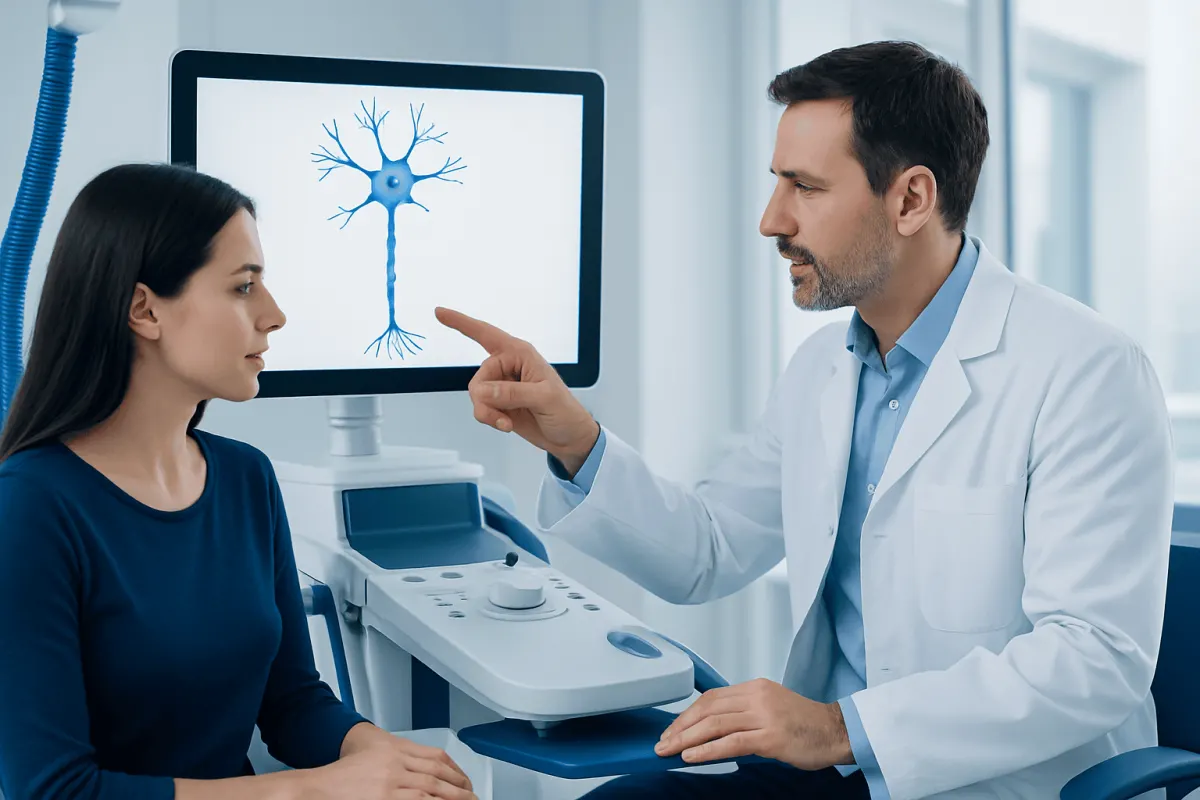
Ever pulled your hand back from a hot pan before you even thought about it? That reflex-fast message travelled along a unipolar neuron — a nerve cell best known for carrying sensory information from the body toward the spinal cord and brain.
For most patients, the term matters because these neurons help explain how touch, pain, temperature, and body position are detected, and how some nerve disorders cause numbness, tingling, or neuropathic pain.
Overview: What Is a Unipolar Neuron?
A unipolar neuron is a nerve cell that has one main projection extending from its cell body. In basic biology, this structure is described as a single process, unlike bipolar neurons, which have two, or multipolar neurons, which have many. In humans, the sensory neurons often referred to as unipolar are usually more accurately called pseudounipolar neurons, because their single process later divides into two branches.
One branch carries information from the body, such as the skin, muscles, or joints, while the other branch sends that information toward the spinal cord. This design helps sensory messages travel efficiently. These neurons are especially important in the peripheral nervous system, where they connect the body’s sensory receptors to the central nervous system.
You will not be diagnosed with a “unipolar neuron”. It is simply an anatomical and functional concept that helps explain how sensation works and why certain neurological symptoms develop. If these neurons or their pathways are affected, you may notice numbness, tingling, burning pain, reduced sensation, or balance problems.
How Unipolar Neurons Work in the Body
Unipolar sensory neurons act as messengers. They receive signals generated by receptors in the skin, muscles, joints, and internal tissues. These signals may represent light touch, pressure, vibration, pain, temperature, or proprioception, which is the sense of body position and movement.
The special shape of a pseudounipolar neuron helps transmit information quickly. Instead of passing through a long chain of cells before reaching the spinal cord, the signal can travel along the neuron’s branching process more directly. This makes the system well suited for rapid sensory communication, such as withdrawing a hand from something hot or recognizing where the feet are while walking.
These neurons are located in collections of nerve cell bodies called dorsal root ganglia beside the spinal cord and in certain cranial sensory ganglia near the head. Their proper function depends on healthy nerve fibers, protective myelin, adequate blood supply, and normal metabolic support. When any of these are disrupted, sensory symptoms may appear.
This also explains why odd symptoms turn up together. Someone with sensory nerve damage may feel both numbness and pain, because the same broad pathway carries different kinds of sensory information.
Where They Are Found and Why the Terminology Matters

In introductory science, unipolar neurons are often described in simple structural terms. In human medicine, however, the more precise term is usually pseudounipolar neuron. This reflects the fact that one process leaves the cell body and then splits into a peripheral branch and a central branch. Even so, patients and non-specialist resources often use the phrase unipolar neuron interchangeably.
These neurons are mainly associated with sensory function rather than movement. Motor neurons, which control muscles, are generally multipolar. This difference matters because symptoms involving sensation, such as tingling or altered pain perception, often point to sensory pathways, while weakness may suggest motor pathway involvement, although some conditions affect both.
Unipolar or pseudounipolar neurons are especially important in the dorsal root ganglia. These ganglia serve as relay points for sensory information entering the spinal cord. If inflammation, compression, infection, metabolic disease, or immune-related damage affects these structures, the result may be pain, sensory loss, or unusual sensations.
The exact word matters far less than what these cells do. Your doctor may use the term to explain the biology behind a symptom pattern, a nerve test result, or a condition involving the peripheral nerves.
Symptoms Linked to Problems in Sensory Neurons
A disorder of unipolar sensory neurons does not usually announce itself by name. Instead, people notice symptoms related to impaired sensory signaling. Common examples include numbness, tingling, pins-and-needles sensations, burning discomfort, reduced ability to feel temperature, or unexplained sensitivity to touch.
Some people also have trouble with balance, especially in the dark or on uneven ground. This can happen when the neurons that carry position sense from the feet and legs are not working normally. Others may feel sharp, shooting, or electric-like pain if the sensory pathway is irritated rather than simply weakened.
Symptoms may affect one small area, such as after a local nerve injury, or they may involve both feet and hands in a more widespread pattern, as can happen in peripheral neuropathy. The pattern often helps doctors narrow down whether the problem is in a single nerve, a nerve root, multiple peripheral nerves, or the spinal cord.
- Numbness or decreased sensation
- Tingling or prickling
- Burning or shooting pain
- Reduced awareness of heat, cold, or vibration
- Unsteadiness related to poor position sense
Causes and Risk Factors Affecting These Neurons
Many medical conditions can affect sensory neurons or their fibers. Diabetes is one of the most common causes of peripheral nerve damage. Other contributors include vitamin deficiencies, excessive alcohol use, kidney disease, thyroid disorders, autoimmune disease, infections, certain medications, and inherited neurological conditions.
Physical compression or injury can also interrupt sensory signaling. Examples include trauma, repetitive strain, or pressure on a nerve root in the spine. In some cases, disorders involving the spinal column can irritate the sensory pathways before they enter the spinal cord, such as in herniated disc or other degenerative spine conditions.
Inflammatory and immune-mediated disorders may target sensory nerves or ganglia more directly. Less commonly, tumors or treatment-related nerve damage may play a role. Age can increase risk because nerves may become more vulnerable over time, especially when combined with chronic health conditions.
Sensory symptoms do not always mean serious nerve disease. A limb that has been sat on, a minor injury, or brief irritation can do it. But if symptoms persist, worsen, or have no obvious explanation, get them checked so that treatable causes are not missed.
How Doctors Evaluate Sensory Neuron Problems
Assessment begins with a medical history and neurological examination. The doctor will usually ask where the symptoms occur, when they started, whether they are constant or intermittent, and whether there are associated issues such as weakness, back pain, falls, or changes in bladder or bowel function. On examination, they may test reflexes, sensation, coordination, muscle strength, and gait.
Further testing depends on the suspected cause. Blood tests may look for diabetes, vitamin deficiency, thyroid dysfunction, inflammation, or other systemic conditions. Imaging such as MRI can be helpful if a spinal or brain cause is suspected, especially when symptoms follow a nerve-root pattern or are associated with pain radiating from the neck or back. In some situations, doctors may recommend MRI scanning to look more closely at the nervous system structures.
Nerve conduction studies and electromyography can help determine whether the problem lies in the peripheral nerves, nerve roots, muscles, or related structures. These tests do not diagnose a “unipolar neuron disorder” as a standalone condition, but they can identify the broader pattern of nerve involvement. If symptoms are severe, atypical, or rapidly changing, referral to a neurologist may be appropriate.
In specialized cases, additional tests may include skin biopsy for small-fiber neuropathy, cerebrospinal fluid analysis, genetic testing, or targeted infectious and autoimmune investigations. The goal is to find the underlying cause, because treatment works best when it addresses that cause directly.
Treatment Options and Everyday Self-Care
Treatment depends on why the sensory neurons are being affected. If diabetes is contributing, blood sugar management is important. If a vitamin deficiency is found, correcting it may improve symptoms or prevent further nerve damage. When compression, disc disease, or structural problems are involved, treatment may include physical therapy, posture and activity changes, pain management, or selected procedures. In some cases of significant structural compression, doctors may discuss options such as spine surgery.
Symptom relief may also be part of care. Clinicians may recommend medicines for neuropathic pain, treatment for associated sleep disruption, or a rehabilitation plan to improve balance and safety. If hand or foot function is affected, supportive strategies such as footwear changes, fall prevention, and home adjustments can be helpful. Some patients benefit from physical therapy and rehabilitation to improve mobility, coordination, and confidence.
Self-care measures are supportive, not a substitute for diagnosis. These include limiting alcohol, maintaining a balanced diet, keeping chronic conditions well controlled, avoiding prolonged pressure on nerves, and protecting areas with reduced sensation from heat or injury. Gentle regular activity can support circulation and overall nerve health.
Some people need several specialists working together. At Acıbadem Health Point, our multidisciplinary teams and JCI-accredited hospitals evaluate neurological symptoms for international patients and build treatment plans when nerve, spine, or rehabilitation care is needed.
When to Seek Medical Care
Medical advice is appropriate if numbness, tingling, burning pain, or sensory loss lasts more than a short time, keeps returning, or begins to interfere with walking, sleep, daily tasks, or safety. A planned medical review is also important when symptoms occur in a person with diabetes, vitamin deficiency risk, cancer treatment history, or known neurological disease.
Urgent evaluation is needed if sensory changes develop suddenly, involve one side of the body, are accompanied by weakness, facial drooping, severe headache, new confusion, or trouble speaking. Immediate care is also important after significant injury, or if there is new loss of bladder or bowel control, severe back pain with leg symptoms, or rapidly worsening balance problems.
The term sounds technical, but it usually only comes up while making sense of a symptom or diagnosis. Getting assessed early helps identify causes that are treatable, prevent progression, and point you to the right specialist care.
Frequently asked questions
01Is a unipolar neuron the same as a pseudounipolar neuron?
In many patient-facing explanations, the terms are used loosely, but they are not exactly the same. In humans, most sensory neurons commonly called unipolar are more precisely pseudounipolar because one process leaves the cell body and then splits into two branches.
02What does a unipolar neuron do?
Its main role is to carry sensory information from the body toward the spinal cord and brain. These signals include touch, pain, temperature, vibration, and awareness of body position.
03Can a problem with unipolar neurons cause pain?
Yes. When sensory neurons or their pathways are irritated or damaged, they can produce neuropathic pain, burning sensations, tingling, or electric-like discomfort. The exact symptom pattern depends on where the pathway is affected and what the underlying cause is.
04Is a unipolar neuron disorder a specific disease?
Usually no. The term describes a type of nerve cell rather than a named disease. Doctors use it to explain how sensory pathways work and how symptoms may arise in conditions such as neuropathy, nerve injury, or spinal nerve compression.
05How are sensory neuron problems diagnosed?
Diagnosis starts with a medical history and neurological examination. Depending on symptoms, doctors may also use blood tests, imaging, nerve conduction studies, electromyography, and sometimes more specialized testing.
06Can sensory nerve damage get better?
Sometimes it can, especially if the underlying cause is identified and treated early. Recovery depends on the cause, the severity of the damage, and how long the symptoms have been present.
This article is for general information only and is not a substitute for professional medical advice. Please consult a qualified doctor about your individual situation.
Joint and spine care in Turkey — expert assessment & treatment
JCI-accredited · board-certified surgeons · reply within 24h
Add us as a Preferred Source to see more of our trusted health content across Google Search, AI Overviews and Discover.