Gallstone Pancreatitis Happens When a Stone Blocks the Duct
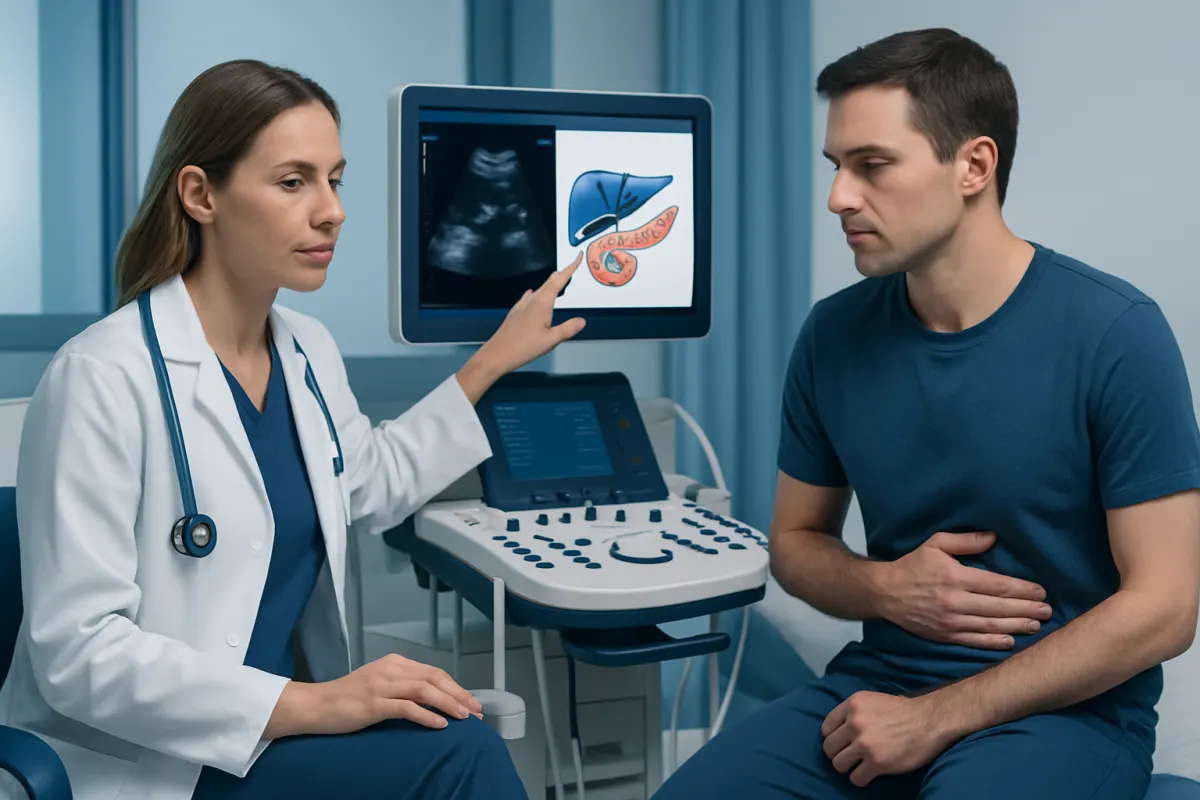
The pain usually arrives out of nowhere — a deep, steady ache high in your belly, often with nausea and vomiting that won’t stop. That can be gallstone pancreatitis: inflammation of the pancreas that starts when a gallstone blocks the normal flow of digestive juices, either briefly or persistently.
This is not something to wait out at home. It usually needs prompt medical assessment, both to relieve the blockage and support your recovery, and to stop it from happening again.
Overview: what gallstone pancreatitis means
Gallstone pancreatitis is a form of acute pancreatitis caused by gallstones. In simple terms, a small stone or thick bile sludge moves out of the gallbladder and blocks the shared drainage area where the bile duct and pancreatic duct empty into the small intestine. When this happens, pancreatic enzymes can become trapped and start irritating the pancreas itself, leading to inflammation.
This is not the same thing as quiet gallstones sitting in the gallbladder, and it is not indigestion. While some gallstones cause no symptoms at all, gallstone pancreatitis usually produces a sudden illness that needs prompt medical attention. Many people first notice severe pain in the upper abdomen that may spread to the back, often with nausea and vomiting.
Most people do get better with supportive hospital treatment, particularly once the blockage clears and complications are kept at bay. The longer-term goal is usually to treat the underlying gallstones so the problem does not return. Because gallstones are also linked with other biliary conditions, doctors may evaluate for related problems such as gallstones or acute pancreatitis.
How gallstones trigger inflammation in the pancreas
The pancreas is a gland behind the stomach that helps with digestion and blood sugar regulation. It sends digestive enzymes through a small duct into the first part of the small intestine. The gallbladder, which stores bile made by the liver, drains nearby through the bile duct. These channels meet close to the intestine, so a gallstone in that area can interfere with both systems.
When a stone temporarily lodges at the duct opening, pressure can build up inside the pancreatic duct. That pressure and the disrupted flow of digestive secretions can trigger inflammation. In some cases the obstruction lasts only a short time and the stone passes on its own. In others, the blockage persists and doctors may need to remove it with an endoscopic procedure.
That is why symptoms tend to hit suddenly, sometimes after a meal, sometimes not. It is also why your doctor looks hard for signs of a blocked bile duct, such as jaundice or abnormal liver blood tests. Knowing the cause matters, because treatment is not just about calming the inflamed pancreas — it is about dealing with the gallstones that set it off.
Symptoms and warning signs
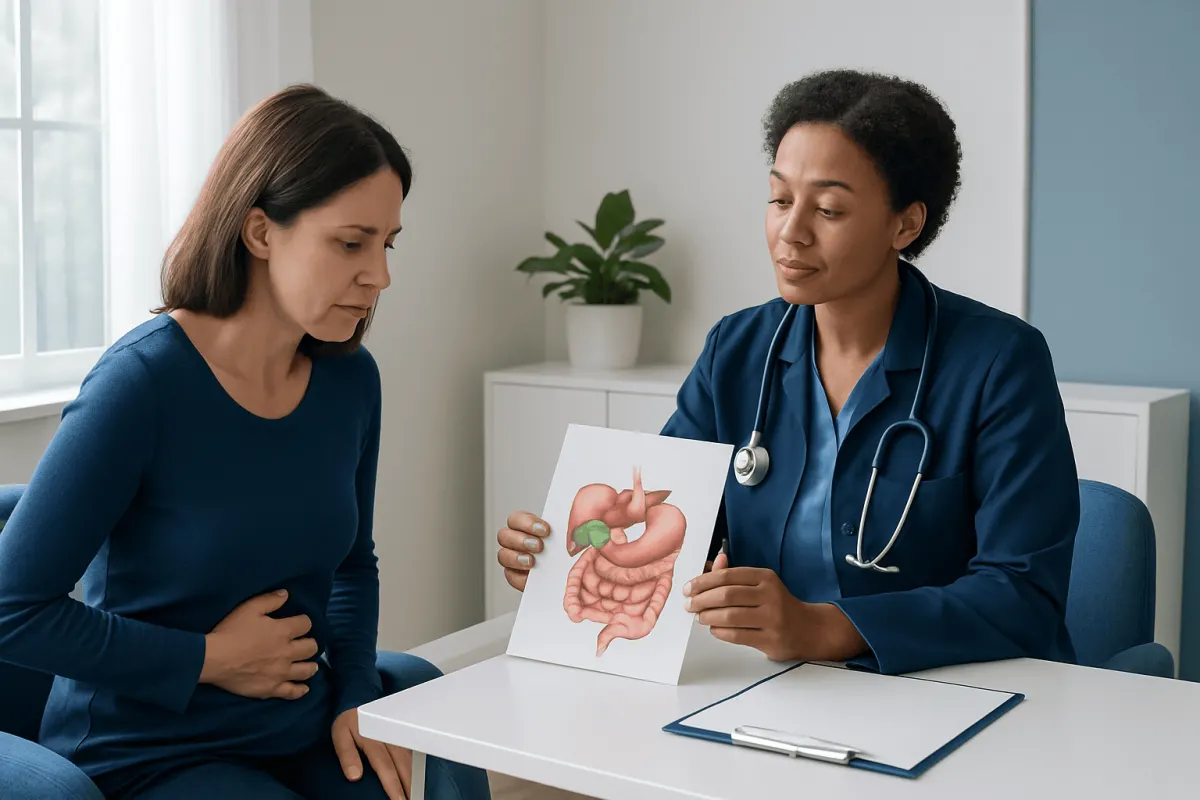
The hallmark symptom of gallstone pancreatitis is sudden pain in the upper abdomen, often centered in the middle or slightly to the right. The pain may be intense, steady rather than cramp-like, and may spread to the back or shoulder area. Many people also feel nauseated, vomit repeatedly, or lose their appetite.
Other symptoms can include abdominal bloating, tenderness when the abdomen is touched, fever, sweating, and feeling generally unwell. If a gallstone is also blocking the main bile duct, the skin or eyes may look yellow and urine may become dark. Some people describe the pain as worse after eating, especially a heavy or fatty meal, although this is not always the case.
Symptoms can range from mild to severe. A mild episode may improve over a few days with treatment, while more severe inflammation can affect breathing, blood pressure, kidney function, or other organs. So please don’t write off severe upper abdominal pain as heartburn or food poisoning, especially if it comes with vomiting, fever, or yellowing.
- Sudden severe upper abdominal pain
- Pain that may radiate to the back
- Nausea and repeated vomiting
- Fever or chills
- Yellowing of the skin or eyes
- Abdominal tenderness and bloating
Causes and risk factors
The immediate cause of gallstone pancreatitis is obstruction from a gallstone or biliary sludge. The deeper reason is usually the presence of gallstones in the gallbladder. Gallstones form when substances in bile, such as cholesterol or pigments, harden into stones. Some people have a single stone, while others have many small ones; both patterns can cause problems, but small stones are often more likely to pass into the ducts.
Several factors make gallstones more likely. These include increasing age, female sex, pregnancy, obesity, rapid weight loss, certain dietary patterns, and family history. Diabetes, liver disease, and some blood disorders may also contribute. Not everyone with gallstones will develop pancreatitis, but a history of gallbladder pain or prior bile duct problems can increase concern.
Doctors also consider other causes of pancreatitis because treatment and follow-up may differ. Alcohol use, high triglyceride levels, certain medications, infections, and rare anatomical problems can all inflame the pancreas. A careful history, blood tests, and imaging help clinicians confirm whether gallstones are truly responsible for the attack.
How doctors diagnose gallstone pancreatitis
Diagnosis usually begins with the pattern of symptoms and a physical examination. Blood tests are then used to look for raised pancreatic enzymes, especially lipase, which strongly supports acute pancreatitis. Doctors also commonly check liver tests, bilirubin, complete blood count, kidney function, electrolytes, and markers of inflammation to understand severity and look for bile duct obstruction.
Imaging is important because it can show gallstones, inflammation, or complications. An abdominal ultrasound is often the first imaging test because it is good at detecting stones in the gallbladder and signs of bile duct enlargement. A CT scan may be used to assess the pancreas more closely, especially if the diagnosis is uncertain or the person is not improving as expected. MRI and MRCP can provide detailed views of the bile ducts without an invasive procedure.
If a blocked common bile duct is strongly suspected, doctors may recommend endoscopic evaluation and treatment. This is most often done with ERCP to find and remove stones from the bile duct. In selected cases, endoscopic ultrasound may help clarify whether a stone is still present. No single test gives the answer here. The diagnosis comes from putting your symptoms, blood results, and imaging together.
Treatment options and hospital care
Most people with gallstone pancreatitis are treated in the hospital at least initially. Early care focuses on rest for the digestive system, intravenous fluids, pain relief, treatment of nausea, and careful monitoring. Doctors watch for signs of infection, dehydration, low oxygen levels, or effects on other organs. Food and drink may be limited for a short time, though nutrition is reintroduced as soon as it is safe.
If there is evidence that a gallstone is still blocking the bile duct, especially when jaundice, cholangitis, or ongoing obstruction is present, the blockage may need to be relieved promptly. In that setting, endoscopic stone removal with ERCP can be an important step. This procedure uses a flexible endoscope to reach the small intestine and access the bile duct, allowing doctors to remove stones or place a temporary stent if needed.
Once the acute inflammation settles, the long-term preventive treatment is often removal of the gallbladder, because the stones formed there in the first place. Gallbladder surgery is commonly recommended during the same hospital stay or soon after recovery, depending on the person’s condition and the severity of the attack. If complications develop, care may involve gastroenterology, surgery, intensive care, and sometimes interventional radiology. As the plan comes together, it can help to talk with specialists who treat pancreatitis regularly and handle the follow-up.
Recovery, prevention, and self-care after an attack
Recovery time varies. Some people improve within a few days, while others need a longer hospital stay if inflammation is more severe. After discharge, the care team may recommend a gradual return to regular meals, good hydration, and follow-up blood tests or imaging. Ask when you can get back to normal activity, work, and exercise.
Preventing recurrence is a key part of treatment. If the gallbladder remains in place after gallstone pancreatitis, another stone can trigger a new attack. For many patients, gallbladder removal offers the clearest prevention strategy. If surgery is delayed for a medical reason, doctors may advise dietary changes and close follow-up until definitive treatment is possible.
General self-care measures include avoiding very heavy or greasy meals during recovery, maintaining a healthy weight gradually rather than through crash dieting, and following advice for any associated conditions such as high triglycerides or diabetes. Alcohol should be avoided unless a doctor clearly advises otherwise, since alcohol can also irritate the pancreas. For international patients seeking coordinated care, Acıbadem Health Point’s multidisciplinary specialists in JCI-accredited hospitals diagnose and treat biliary and pancreatic conditions with individualized planning.
When to seek medical care
Prompt medical care is important for suspected gallstone pancreatitis because symptoms can overlap with other urgent abdominal conditions and complications can develop quickly. Severe or persistent upper abdominal pain should be assessed by a doctor, especially when it is accompanied by vomiting, fever, faintness, or yellowing of the eyes or skin.
Emergency evaluation is especially important if pain is intense, breathing feels difficult, confusion develops, urine output drops, or the person cannot keep fluids down. These features do not always mean a severe complication is present, but they deserve urgent medical review. People who have already been told they have gallstones should be particularly alert to new sudden abdominal pain.
Even after hospital treatment, follow-up matters. A doctor may need to confirm that the gallbladder has been addressed, liver tests have normalized, and no complications remain. Anyone with recurring pain, fever, jaundice, or ongoing digestive symptoms should contact a qualified clinician rather than trying to manage the problem alone.
Frequently asked questions
01Is gallstone pancreatitis the same as gallstones?
No. Gallstones are the stones themselves, usually formed in the gallbladder, while gallstone pancreatitis is inflammation of the pancreas caused when a stone blocks the duct opening. Many people with gallstones never develop pancreatitis, but when pancreatitis occurs it usually needs prompt medical care.
02Can gallstone pancreatitis go away on its own?
The blockage may sometimes clear on its own, and the inflammation may begin to settle. However, because it can be difficult to predict severity and because complications may develop, medical assessment is still important. Most people need hospital monitoring and supportive treatment.
03Will the gallbladder usually need to be removed?
In many cases, yes. Removing the gallbladder is often recommended after recovery because it lowers the risk of another attack caused by new stones. The exact timing depends on how severe the pancreatitis was and whether the person is medically ready for surgery.
04What tests are commonly used to confirm gallstone pancreatitis?
Doctors usually combine symptoms, blood tests, and imaging. Blood tests often show elevated lipase and may show abnormal liver tests, while ultrasound can detect gallstones and bile duct changes. CT, MRI, MRCP, or ERCP may be used when more detail is needed.
05How long does recovery usually take?
Recovery can be quick in mild cases, sometimes over several days, but it may take much longer if the inflammation is severe or complications develop. Energy levels and digestion may take time to normalize. Follow-up appointments help guide a safe return to normal eating and activity.
06What foods should be avoided after gallstone pancreatitis?
During recovery, doctors often suggest avoiding very fatty, fried, or heavy meals until symptoms have settled and eating feels comfortable again. A balanced diet with gradual meals and good hydration is usually easier to tolerate. Individual advice may differ depending on gallbladder plans, overall health, and other digestive conditions.
This article is for general information only and is not a substitute for professional medical advice. Please consult a qualified doctor about your individual situation.
Persistent digestive symptoms? Get evaluated in Turkey
JCI-accredited · board-certified surgeons · reply within 24h
Add us as a Preferred Source to see more of our trusted health content across Google Search, AI Overviews and Discover.