Tricep Stretches — Explained by Medical Evidence, Not Myths
Tricep stretches are gentle movements that lengthen the muscles at the back of the upper arm and can support flexibility, comfort, and overhead arm movement. The safest approach is controlled, pain-free stretching with steady breathing, rather than aggressive pulling or bouncing.
Overview: what tricep stretches do and do not do
Tricep stretches are movements designed to lengthen the triceps brachii, the large muscle on the back of the upper arm. This muscle helps straighten the elbow and supports many pushing and overhead activities. When performed correctly, tricep stretches may improve comfort and flexibility around the upper arm and shoulder, especially in people who exercise, work at a desk, or repeat overhead motions.
Medical evidence supports stretching as one part of a broader mobility routine, but it does not support common myths that stretching must be painful to be effective or that a single stretch can “fix” every source of arm or shoulder tightness. Mobility is influenced by muscles, tendons, joints, posture, activity level, and previous injuries. For that reason, tricep stretches are most useful when they are done gently and matched to the person’s symptoms and daily activities.
Another important point is that pain at the back of the arm is not always caused by a tight triceps muscle. Shoulder irritation, tendon problems, neck-related nerve symptoms, or overuse from sports and exercise can produce similar discomfort. If symptoms are recurring or difficult to explain, a clinical evaluation may help identify whether stretching is appropriate or whether another approach is needed.
How to do tricep stretches safely
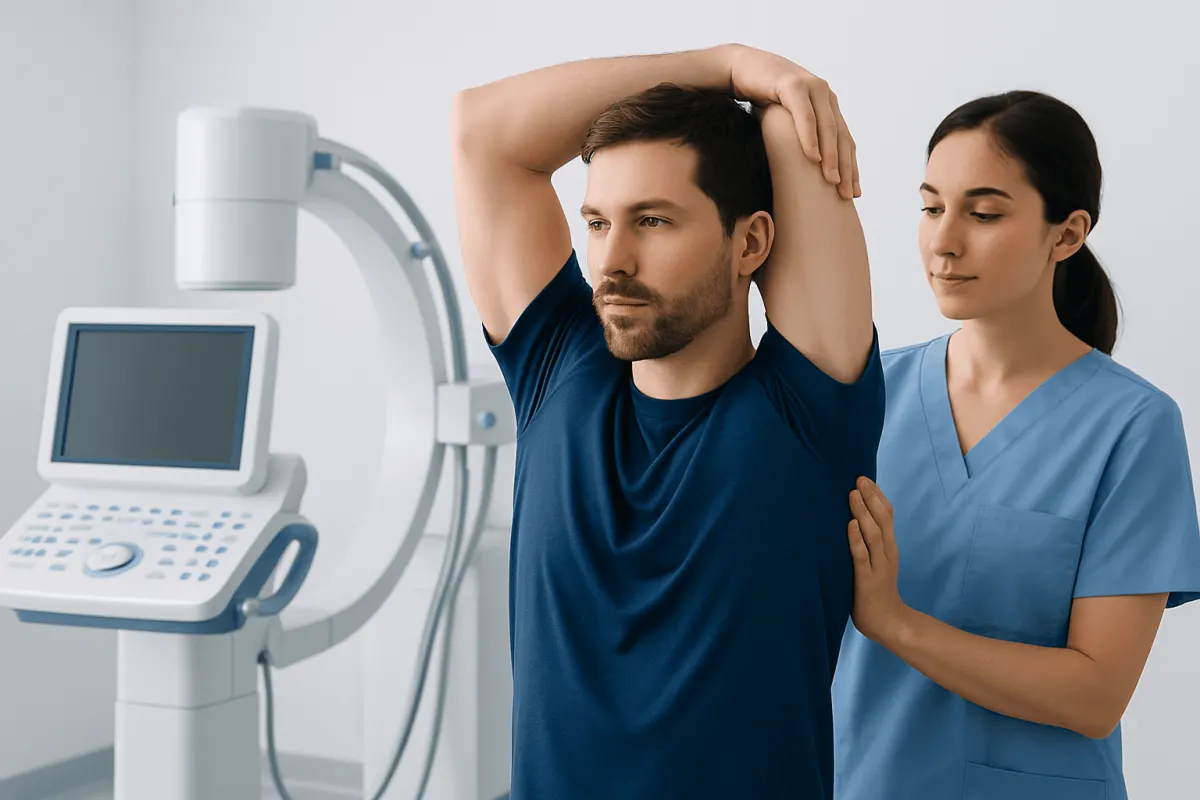
The classic overhead triceps stretch is usually done by lifting one arm overhead, bending the elbow so the hand reaches toward the upper back, and using the opposite hand to guide the elbow gently. The chest stays open, the neck relaxed, and the lower back neutral rather than arched. The goal is a steady feeling of tension along the back of the upper arm or around the side of the shoulder, without forcing the elbow into an extreme position.
Most people benefit from holding a gentle stretch briefly while breathing normally, then repeating on both sides. Ballistic or bouncing stretches are generally less controlled and may increase irritation in sensitive tissues. People often do better after a short warm-up such as walking, cycling, or light arm circles, because warmed tissues may tolerate movement more comfortably.
Helpful form points include:
- Keep the shoulder away from the ear rather than shrugging.
- Avoid twisting the trunk to create extra range.
- Do not pull hard on the elbow.
- Stop if there is sharp pain, tingling, or a sense of catching in the shoulder.
- Compare both sides, but do not force them to match exactly.
Alternative versions can be useful for people who cannot comfortably raise the arm overhead. A cross-body arm stretch, wall-assisted stretch, or a mobility program supervised by a clinician may be better choices if overhead movement is limited. In some cases, symptoms thought to be “tight triceps” are actually part of a broader shoulder issue such as shoulder pain, which may need more targeted care.
Potential benefits supported by clinical reasoning

Tricep stretches may help maintain or improve flexibility needed for reaching overhead, dressing, lifting, and sports movements such as throwing, swimming, or racket play. In people who train the upper body, stretching can also provide a gentle counterbalance to repeated strengthening exercises like push-ups, dips, or weight training. For some individuals, this may reduce the feeling of stiffness after exercise or prolonged sitting.
Stretching can also encourage body awareness. Many people notice that one shoulder is elevated, one arm moves less freely, or the rib cage and spine are contributing to the feeling of tightness. This awareness can support healthier movement patterns when paired with strengthening, posture changes, and ergonomic adjustments.
However, benefits vary from person to person. Some people experience improved comfort immediately, while others need a more complete program that includes shoulder blade control, rotator cuff strengthening, and progressive loading. When pain is related to overuse, a clinician may recommend not only stretching but also physical therapy and rehabilitation to improve movement quality and reduce strain on the arm and shoulder.
Common myths and what evidence-based care suggests instead
One common myth is that the deeper the stretch, the better the result. In practice, pushing into pain can make muscles guard more and can irritate tendons or the shoulder joint. Evidence-based guidance generally favors controlled, tolerable stretching over aggressive methods. A useful stretch should feel manageable and should not leave the arm more painful afterward.
Another myth is that stretching alone prevents all injuries. Injury risk is more complex and depends on training load, muscle strength, sleep, recovery, technique, and previous problems. Tricep stretches may be part of a healthy routine, but they are not a guarantee against tendon irritation, elbow pain, or shoulder injury.
It is also inaccurate to assume that every person needs the same stretching routine. Someone with limited overhead motion after an injury may need an individualized plan, while an athlete with normal mobility may benefit more from strength and load management than from extra stretching. If elbow discomfort is part of the problem, related conditions such as tennis elbow may need separate assessment and treatment rather than repeated stretching of the upper arm.
When stretching may not be enough
Tricep tightness sometimes reflects local muscle fatigue, but it can also be linked to tendon overload, shoulder impingement, posture-related strain, cervical spine problems, or exercise technique errors. If symptoms keep returning after workouts, worsen with pressing exercises, or limit normal activities, the issue may be more than simple stiffness. A clinician may look at the neck, shoulder, elbow, and movement pattern together rather than focusing on one muscle.
People recovering from injury or surgery should be especially careful. Starting stretches too soon, or using a range that the joint cannot yet tolerate, may delay recovery. In these situations, structured programs can help restore motion safely and gradually. Some patients benefit from orthopedic rehabilitation when pain, weakness, or reduced motion follows an injury affecting the arm or shoulder.
Stretching may also be less helpful when the main problem is weakness rather than tightness. For example, poor control of the shoulder blade can make the upper arm feel tense even when flexibility is adequate. In that setting, strengthening and movement retraining are often more effective than simply adding more stretches.
Prevention and self-care for healthy upper arm mobility
For many people, the best long-term strategy is not just stretching more, but moving more regularly through the day. Short activity breaks, changing positions, and avoiding long periods with the shoulders rounded forward may reduce the sense of arm and shoulder tightness. Before upper-body exercise, a gentle warm-up usually prepares tissues better than static stretching alone.
A balanced routine often includes:
- Light aerobic warm-up before exercise
- Mobility work for the shoulders and upper back
- Strengthening for the triceps, rotator cuff, and shoulder blade muscles
- Gradual progression in weight, repetitions, or sports intensity
- Rest and recovery after heavy upper-body training
Hydration, sleep, and training load also matter. Muscles that are repeatedly overloaded without recovery may feel persistently tight, even when stretching is done correctly. If a home program is not helping, a sports medicine or orthopedic assessment can clarify whether symptoms come from the muscle, tendon, joint, or surrounding structures.
Near the end of a care pathway, some people may need specialist input for persistent arm or shoulder pain. Acıbadem Health Point’s multidisciplinary specialists at JCI-accredited hospitals evaluate and treat musculoskeletal conditions for international patients, including cases where guided rehabilitation or orthopedic care is appropriate.
When to seek medical care
Medical advice is recommended if tricep stretches consistently cause pain rather than mild tension, or if symptoms do not improve with rest and activity modification. A person should also seek assessment if there is marked weakness, swelling, bruising, loss of range of motion, or pain after a fall, sudden pull, or sports injury. These features may suggest a strain, tendon injury, or shoulder problem that needs more than home stretching.
Urgent medical attention is important if arm discomfort comes with numbness, significant tingling, severe swelling, deformity, fever, chest pain, or shortness of breath. Although many cases are musculoskeletal and minor, these symptoms can point to conditions that should not be managed with exercise alone.
Children, older adults, and people with osteoporosis, inflammatory joint disease, or recent surgery should be cautious about self-directed stretching programs. A qualified clinician can advise on safe range of motion and whether imaging, rehabilitation, or specialist review is needed before continuing.
Frequently asked questions
01What are tricep stretches used for?
Tricep stretches are used to gently lengthen the muscles at the back of the upper arm. They may help support flexibility, overhead reach, and general comfort when included in a balanced mobility and strengthening routine.
02Should a triceps stretch feel painful to work?
No. A triceps stretch should usually feel like mild to moderate tension, not sharp pain. Pain, tingling, or joint pinching may mean the technique needs to be adjusted or that another problem is present.
03How often should tricep stretches be done?
Frequency depends on the person’s activity level, symptoms, and overall exercise plan. Many people do well with gentle stretching on a regular basis, especially after warming up, but a clinician or therapist can tailor this if there is pain or injury.
04Can tricep stretches help shoulder tightness?
Sometimes, yes, because the triceps muscle can influence overhead arm movement and the feeling of tightness around the upper arm. However, shoulder tightness may also come from the joint, rotator cuff, upper back, or posture, so stretching the triceps alone may not fully solve the problem.
05Are tricep stretches safe after a workout?
They are often more comfortable after exercise because the muscles are warm. The stretch should still be gentle, controlled, and stopped if it increases soreness significantly.
06When should someone stop stretching and see a doctor?
A person should seek medical advice if symptoms are persistent, worsening, or associated with weakness, swelling, bruising, numbness, or reduced arm function. Assessment is also important after a sudden injury or if daily activities become difficult.
This article is for general information only and is not a substitute for professional medical advice. Please consult a qualified doctor about your individual situation.
Joint and spine care in Turkey — expert assessment & treatment
JCI-accredited · board-certified surgeons · reply within 24h
Add us as a Preferred Source to see more of our trusted health content across Google Search, AI Overviews and Discover.