Tooth Decay Beginning Stages: Progression, Outlook and Care

Key Takeaways
- Early tooth decay often begins as enamel demineralization, which may look like white spots or feel like sensitivity.
- Many people do not notice symptoms at first, so routine dental checks are important.
- Fluoride, improved brushing habits, and diet changes may help reverse or slow very early decay.
- Once decay reaches deeper layers, treatment may require fillings or more advanced dental care.
- People with dry mouth, frequent snacking, or braces may have a higher risk of tooth decay.
Tooth decay beginning stages usually start with subtle enamel changes, such as white spots, mild sensitivity, or no symptoms at all. Early attention from a dentist can often stop the process before a cavity develops and help preserve the tooth with simpler care.
Overview
Tooth decay beginning stages are the earliest changes that happen when bacteria, food particles, and acids begin weakening the tooth surface. At this point, the damage is often limited to the outer enamel, which means there is still a meaningful chance to stop or slow progression with timely dental care.
For many people, early decay does not feel dramatic. A tooth may look slightly chalky, develop a white spot, or become a little sensitive to cold, sweet, or acidic foods. Because the first changes can be easy to miss, regular checkups matter even when the mouth feels normal.
In practical terms, this stage is important because it is the point where treatment can be simpler and more conservative. A dentist may recommend fluoride-based care, improved plaque removal, or closer monitoring rather than a filling, depending on how far the enamel has been affected.
Symptoms and Early Warning Signs

The earliest signs of tooth decay are often subtle and may appear on chewing surfaces, between teeth, or near the gumline. White, brown, or opaque spots on enamel can be one of the first visible clues, especially if the area feels rough or looks different from the surrounding tooth.
Some people notice brief sensitivity when drinking something cold or eating something sweet. Others have no discomfort at all, which is one reason early decay can progress quietly. A person might also notice food catching in a certain area, mild staining, or a tooth that feels slightly different when flossing.
When decay advances beyond the initial stage, symptoms usually become easier to recognize. These may include persistent toothache, pain when biting, or a visible pit or hole. Catching the process before those changes occur often leads to easier treatment and better preservation of the tooth structure.
Causes and Risk Factors
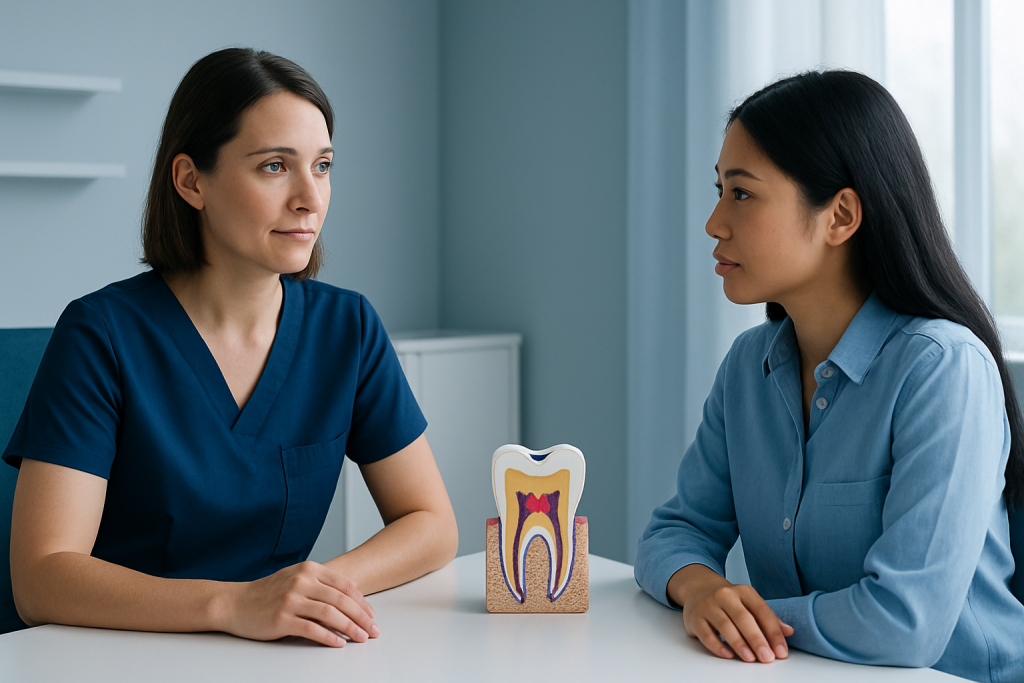
Tooth decay begins when bacteria in dental plaque feed on sugars and starches, producing acids that gradually remove minerals from enamel. If the mouth stays acidic too often, the tooth does not get enough time to recover through natural remineralization.
Certain habits and health factors can raise the risk of early decay. Frequent snacking, sipping sugary drinks over long periods, inconsistent brushing and flossing, and not using fluoride toothpaste can all make enamel more vulnerable. Dry mouth, whether from medications, mouth breathing, medical conditions, or dehydration, can also reduce the mouth’s natural protection.
Some people have added challenges, such as braces, deep grooves in teeth, crowded teeth that are harder to clean, or a history of cavities. Children, older adults, and people traveling between countries for dental care may need extra attention to follow-up planning, because continuity of prevention is just as important as the appointment itself.
- Frequent sugar intake or frequent eating
- Poor plaque removal between visits
- Low fluoride exposure
- Dry mouth
- Prior cavities or enamel weakness
- Orthodontic appliances or crowded teeth
How Dentists Diagnose Early Decay
Diagnosis usually starts with a clinical examination, where the dentist looks for color changes, texture changes, and areas where plaque tends to accumulate. A tooth that appears chalky or slightly softened may suggest the beginning of decay, even if no cavity hole is visible.
Dental X-rays are often used to check spaces that cannot be seen directly, especially between teeth. In some cases, a dentist may also use special tools or imaging methods to evaluate how far the lesion has progressed and whether the enamel has started breaking down more deeply.
For international patients, the diagnostic step may also include planning for continuity of care after returning home. A clear record of findings, photos, and follow-up recommendations can help another dentist continue the same treatment plan without repeating unnecessary procedures.
Treatment Options at the Beginning Stage
Early tooth decay is often managed without drilling if the enamel is still only demineralized and not yet cavitated. The main goal is to strengthen the tooth and restore minerals where possible. Fluoride toothpaste, fluoride varnish, or other dentist-recommended fluoride treatments may help the enamel recover.
Improving daily cleaning is another core part of care. Brushing twice a day with a fluoride toothpaste, cleaning between teeth, and reducing how often sugars are consumed can all lower the acid attack on enamel. In some cases, a dentist may also recommend sealants for teeth with deep grooves or more frequent monitoring to make sure the area stays stable.
If the lesion has already progressed into a true cavity, a filling or other restorative treatment may be needed. The right approach depends on the size, location, and depth of the decay, as well as the person’s overall oral health and ability to maintain the area afterward.
Prevention and Self-care
Prevention is most effective when it focuses on the habits that create repeated acid exposure. Brushing with fluoride toothpaste, flossing or using an interdental cleaner, and limiting snacks between meals can make a meaningful difference over time. Drinking water after meals and choosing less sugary drinks also supports a healthier mouth environment.
People with dry mouth may benefit from extra hydration, sugar-free gum if appropriate, and a discussion with a dentist or physician about possible causes. Those with orthodontic appliances may need special brushes or flossing aids to keep plaque from settling around brackets and wires. The aim is not perfection, but steady reduction of risk.
For someone preparing to travel for dental treatment, prevention should continue before departure and after returning home. Keeping a written list of the products used, the dentist’s recommendations, and the next review date can make follow-up easier across borders and help protect the treatment result.
- Brush twice daily with fluoride toothpaste
- Clean between teeth every day
- Limit frequent sugary snacks and drinks
- Drink water regularly, especially if dry mouth is present
- Attend scheduled dental checkups and cleanings
Outlook and What Happens if It Progresses
The outlook for tooth decay beginning stages is generally favorable when the problem is identified early. Enamel can sometimes be stabilized or partially repaired before a cavity forms, especially when fluoride exposure and oral hygiene improve.
If early decay is ignored, the process can continue into the dentin layer beneath the enamel. At that point, the tooth is less able to repair itself and the chances of needing restorative treatment increase. Deeper decay may eventually reach the nerve of the tooth, which can lead to pain, infection, or the need for more complex dental procedures.
This is why small warning signs should be taken seriously even if they do not interfere with eating or speaking. Early treatment tends to be simpler, less invasive, and easier to fit into a busy schedule or travel plan than care for an advanced cavity.
When to See a Doctor
A dentist should be seen if a tooth develops a white spot, unusual discoloration, sensitivity, or a rough area that was not there before. Appointment is also wise when food keeps catching in one place, floss begins to fray, or a person has a history of cavities and has not had a recent exam.
Prompt evaluation is especially important if there is pain when biting, swelling, a visible hole, or lingering sensitivity to hot or cold. These signs may mean the decay has moved beyond the earliest stage and needs treatment rather than observation.
People with dry mouth, diabetes, braces, frequent acid reflux, or a high cavity rate may benefit from more regular dental follow-up. Acibadem Health Point notes that its multidisciplinary specialists and JCI-accredited hospitals diagnose and treat dental conditions for international patients, which can be helpful when care needs to be planned across countries.
Frequently asked questions
01What are the beginning stages of tooth decay?
The beginning stages usually involve enamel demineralization, where minerals are lost from the outer tooth surface. This may appear as a white spot, slight discoloration, or a rough area, and it can occur before a visible cavity forms.
02Can early tooth decay be reversed?
Very early decay can sometimes be stopped or improved if the enamel has not yet broken down into a cavity. Fluoride, better plaque removal, and reducing frequent sugar exposure are common parts of this approach.
03Does early tooth decay hurt?
Not always. Many people have no pain at first, although mild sensitivity to cold, sweets, or acidic foods can happen.
04Do white spots on teeth always mean decay?
White spots can be an early sign of decay, but they can also come from other enamel changes. A dentist can examine the area and determine whether it needs treatment or simple monitoring.
05How fast does tooth decay progress?
Progression varies from person to person and depends on oral hygiene, diet, saliva flow, and other risk factors. Some lesions move slowly, while others worsen more quickly if the mouth stays acidic often.
06What is the most important step at home?
Consistent fluoride brushing is one of the most important steps, along with cleaning between teeth and limiting frequent snacking. These habits help reduce plaque and support enamel repair between meals.
This article is for general information only and is not a substitute for professional medical advice. Please consult a qualified doctor about your individual situation.
Explore treatments in Turkey — costs, top hospitals & a free quote
JCI-accredited · board-certified surgeons · reply within 24h
Add us as a Preferred Source to see more of our trusted health content across Google Search, AI Overviews and Discover.