Tongue Cancer Treatment: Diagnosis, Outlook, and Care

Tongue cancer treatment is planned around the tumor’s location, size, stage, and a person’s overall health. Care commonly combines surgery, radiation therapy, and systemic treatments, with rehabilitation supporting speech, swallowing, nutrition, and recovery.
Tongue cancer treatment: an overview
Tongue cancer treatment depends on whether the cancer begins in the front, mobile part of the tongue or at the base of the tongue near the throat. Most tongue cancers are squamous cell carcinomas, meaning they begin in the flat cells lining the mouth and throat. A specialist team uses the cancer stage, its exact location, lymph node involvement, test results, and the person’s general health to recommend care.
Treatment may involve surgery, radiation therapy, chemotherapy, targeted therapy, immunotherapy, or a combination of these approaches. For some people, treatment can be directed at curing the cancer. For others, it may focus on controlling the disease, relieving symptoms, and maintaining the best possible quality of life. Planning usually includes specialists in head and neck surgery, medical oncology, radiation oncology, pathology, radiology, dentistry, speech and language therapy, nutrition, and supportive care.
Tongue cancer is part of the broader group of oral and oropharyngeal cancers. Understanding the differences between these conditions helps clinicians select the most appropriate investigations and treatment pathway.
How tongue cancer is diagnosed and staged
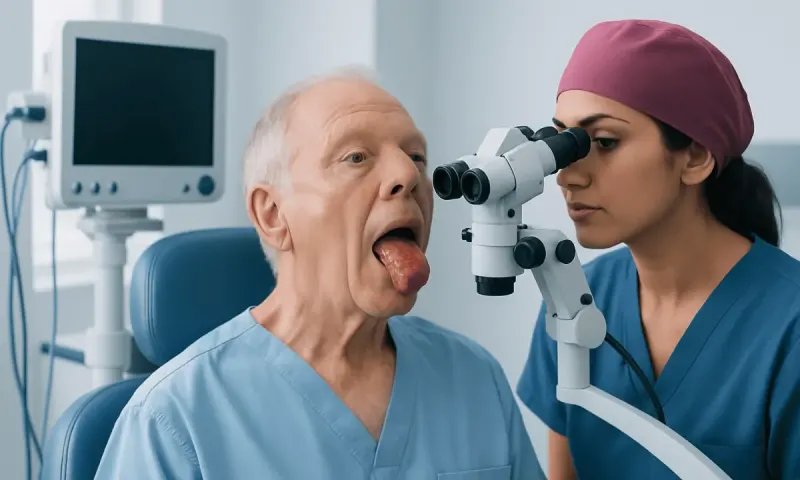
Diagnosis begins with a medical history and a careful examination of the mouth, tongue, throat, neck, and nearby lymph nodes. A clinician may use a small mirror or flexible camera to examine areas that are difficult to see, particularly when symptoms involve the base of the tongue or throat.
A biopsy is essential for diagnosis. During this procedure, a small sample of abnormal tissue is removed and examined by a pathologist. The pathology report identifies the cancer type and may include information that helps guide treatment. For cancers in the back of the tongue or oropharynx, testing for human papillomavirus (HPV)-related markers may also be relevant because HPV status can affect prognosis and treatment discussions.
Imaging tests such as CT, MRI, PET-CT, ultrasound, or chest imaging may be used to show the tumor’s size, depth, nearby tissue involvement, and whether cancer has spread to neck lymph nodes or distant organs. These findings are used to assign a stage. Staging helps the multidisciplinary team compare suitable options and discuss expected benefits and possible effects of treatment.
Modern tongue cancer treatment approaches

Surgery may be recommended for tumors of the oral tongue and for selected cancers at the base of the tongue. The operation may remove a small area of tongue, a larger portion of the tongue, and sometimes lymph nodes in the neck. Depending on the tumor’s extent, surgery may be performed through the mouth or through an external approach. Minimally invasive techniques may be suitable for carefully selected tumors in certain locations.
Radiation therapy uses high-energy beams to destroy cancer cells. It can be a main treatment for some tongue cancers, used after surgery to lower the chance of recurrence, or combined with chemotherapy for locally advanced disease. Modern planning methods aim to target the tumor and lymph node regions while reducing radiation exposure to nearby healthy tissues, although side effects can still occur.
Chemotherapy is often given with radiation therapy rather than as a stand-alone treatment for locally advanced tongue cancer. It can make cancer cells more sensitive to radiation. Targeted medicines or immunotherapy may be considered for recurrent or metastatic disease, depending on prior treatment, tumor testing, symptoms, and overall health. Medical oncology care helps coordinate systemic treatment and symptom support throughout this process.
Before treatment begins, clinicians may address dental health, nutrition, smoking cessation, and swallowing function. These steps can reduce complications and support recovery. The final recommendation should be individualized, with a clear discussion of treatment goals, likely side effects, and alternatives.
Can tongue cancer be reconstructed?
Yes. Tongue cancer can often be reconstructed after surgery, particularly when removal of a larger tumor leaves a significant defect. Reconstruction aims to restore the shape and movement needed for swallowing, speech, mouth closure, and appearance as far as possible. The method depends on how much tissue has been removed and which structures are affected.
For small defects, the remaining tongue tissue may heal well without a complex reconstruction. Larger defects may require tissue transfer, often called a flap reconstruction. Surgeons can use tissue from another part of the body, such as the forearm, thigh, or lower leg, to rebuild the tongue or nearby mouth structures. Microsurgical techniques may be used to connect tiny blood vessels and help the transferred tissue survive.
Reconstruction is only one part of functional recovery. Speech and language therapists, swallowing specialists, dietitians, dentists, and physiotherapists may all contribute to rehabilitation. Recovery differs from person to person, but many people make meaningful progress with consistent support and follow-up.
What is the survival rate for tongue cancer?
There is no single survival rate that can accurately predict an individual outcome. Tongue cancer outlook varies widely according to the stage at diagnosis, whether lymph nodes are involved, the tumor’s location, HPV status for relevant oropharyngeal cancers, the person’s general health, and how well the cancer responds to treatment.
In general, cancers diagnosed at an earlier stage, before spread to lymph nodes or distant parts of the body, have a more favorable outlook than advanced cancers. Survival figures published by cancer registries describe large groups of people treated over past years. They cannot account for every individual factor, improvements in modern treatment, or the response of a particular cancer.
A treating oncology team is best placed to explain prognosis using the full pathology report, imaging results, stage, and planned therapy. It can be helpful to ask about the purpose of treatment, likelihood of control or cure, possible long-term effects, and the schedule for follow-up after treatment.
Can you have mouth cancer for years without knowing?
Some mouth and tongue cancers can develop gradually and may not cause severe symptoms at first. A painless sore, thickened patch, small lump, or change in the tongue’s surface can be overlooked or mistaken for irritation from a tooth, denture, or bite injury. This is one reason persistent changes in the mouth should be checked rather than repeatedly self-treated.
However, mouth cancer does not always remain unnoticed for years, and symptoms do not necessarily indicate cancer. Many common mouth problems are benign, including ulcers from injury or infection. The key concern is a change that does not heal or improve, especially if it lasts longer than two to three weeks.
Routine dental examinations can support early detection because dental professionals examine the mouth, gums, tongue, and surrounding tissues. People who smoke, use smokeless tobacco, drink alcohol heavily, have a history of HPV-related disease, or have had prior head and neck cancer may benefit from discussing their individual risk and follow-up needs with a clinician.
Does tongue cancer hurt?
Tongue cancer may be painful, but it is not always painful, especially in its earlier stages. Some people notice a persistent sore area, burning sensation, pain when eating spicy or acidic foods, or discomfort when moving the tongue. Others may have no pain and instead notice a lump, red or white patch, bleeding, numbness, or a change in speech or swallowing.
As a tumor grows, it can cause pain that spreads to the ear, jaw, or throat, difficulty chewing, pain when swallowing, or reduced tongue movement. These symptoms can also result from infections, dental problems, injury, acid reflux, or other non-cancerous conditions. A clinical examination is needed to identify the cause.
Pain and other symptoms should be managed throughout treatment, not only after treatment is complete. Supportive care may include medicines, mouth-care guidance, nutritional support, swallowing therapy, and specialist pain management where needed.
When to seek medical care
A person should arrange a medical or dental assessment for a mouth or tongue ulcer that does not heal within two to three weeks. Review is also appropriate for a lump, thickened area, persistent red or white patch, unexplained bleeding, numbness, ongoing tongue pain, a neck lump, difficulty swallowing, persistent hoarseness, or unexplained weight loss.
Urgent assessment is important for new breathing difficulty, inability to swallow liquids, significant bleeding, rapidly worsening swelling, or severe dehydration. These symptoms do not always mean cancer, but they need prompt medical attention.
After diagnosis, care at a center with head and neck cancer expertise can help coordinate complex decisions. Acıbadem Health Point’s multidisciplinary specialists and JCI-accredited hospitals evaluate and treat tongue cancer for international patients, with rehabilitation and supportive services integrated into care planning.
Frequently asked questions
01What are the first signs of tongue cancer?
Possible early signs include a sore that does not heal, a lump or thickened area, a red or white patch, unexplained bleeding, numbness, or persistent tongue discomfort. Some tongue cancers cause little or no pain initially. Any change that lasts longer than two to three weeks should be examined by a dentist or doctor.
02Is a biopsy always needed for tongue cancer diagnosis?
A biopsy is generally needed to confirm tongue cancer. Imaging scans can show the size and spread of an abnormal area, but they cannot reliably identify the cell type on their own. The biopsy result also helps the clinical team plan the most suitable treatment.
03Will tongue cancer treatment affect speech and swallowing?
Treatment can affect speech, swallowing, taste, saliva production, and mouth opening, especially when a larger tumor requires surgery or radiation therapy. The degree of change depends on the tumor location and treatment approach. Early input from speech and swallowing therapists can help prepare for and support recovery.
04Can tongue cancer come back after treatment?
Tongue cancer can recur after treatment, which is why regular follow-up appointments are important. Follow-up usually includes examinations, discussion of symptoms, and imaging when clinically indicated. Avoiding tobacco, limiting alcohol, maintaining dental care, and reporting new symptoms promptly are also important.
05Is HPV linked to all tongue cancers?
HPV is most strongly linked with cancers of the oropharynx, including some cancers at the base of the tongue near the throat. Cancers of the front, oral part of the tongue are more commonly associated with tobacco, alcohol, and other factors, although causes can vary. A clinician can explain whether HPV testing is relevant in a specific case.
06How long does recovery take after tongue cancer surgery?
Recovery time varies with the size of the operation, whether reconstruction is needed, and whether radiation or chemotherapy is also part of treatment. Initial healing may take weeks, while speech, swallowing, and nutritional recovery can continue for months. Ongoing rehabilitation and follow-up help address changing needs during recovery.
This article is for general information only and is not a substitute for professional medical advice. Please consult a qualified doctor about your individual situation.
Oncology care in Turkey — second opinion and treatment plan
JCI-accredited · board-certified surgeons · reply within 24h
Add us as a Preferred Source to see more of our trusted health content across Google Search, AI Overviews and Discover.