Tiny Raised Spots on Skin: What You Need to Know

Key Takeaways
- Tiny raised spots on skin can have many causes, and the look of the bumps often matters more than the number of them.
- Itching, spreading, pain, fever, or drainage can suggest an irritant, infection, or another condition that needs medical review.
- A doctor usually diagnoses skin bumps by examining the skin and asking about timing, triggers, and other symptoms.
- Treatment depends on the cause and may include simple skin care, prescription creams, oral medicines, or procedure-based care.
- People should seek medical advice sooner if the bumps appear suddenly, keep returning, or are linked to breathing problems or swelling.
Tiny raised spots on skin are common and can come from many different causes, from harmless clogged pores to allergic reactions or infections. Their appearance, location, and any symptoms such as itching, pain, or fever help guide the next step in care.
Overview
Tiny raised spots on skin are a broad symptom, not a single diagnosis. They may look flesh-colored, red, white, or darker than the surrounding skin, and they can appear alone or in clusters. In many cases, they are minor and temporary, but some patterns point to eczema, acne, folliculitis, heat rash, hives, viral rashes, warts, keratosis pilaris, or other skin conditions.
The first helpful question is not simply “What are these bumps?” but “How do they behave?” A rash that comes and goes within hours is approached differently from one that stays for months. A bump that is itchy and scattered across the body raises different possibilities than one that is firm, painless, and unchanged.
For people deciding whether to seek care, the context matters. A traveler may notice a new rash after a hotel stay, a long flight, a new sunscreen, or outdoor exposure. The same person may need reassurance, a prescription, or an in-person skin exam depending on whether the spots are isolated, worsening, or associated with other symptoms.
Symptoms and Common Patterns
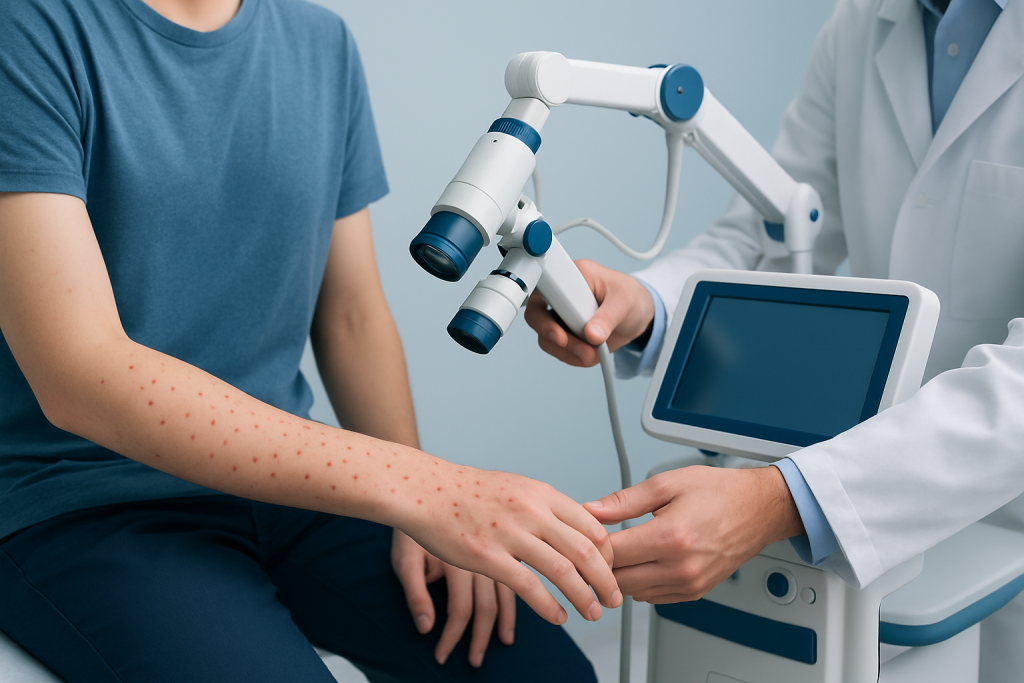
Tiny raised spots on skin may feel smooth, rough, soft, or firm. Some are dry and scaly, while others are shiny or fluid-filled. They may itch, burn, sting, or feel completely neutral. The location can offer clues: facial bumps often suggest acne or irritation, bumps on the arms and thighs can fit keratosis pilaris, and clusters after sweating or friction may point toward heat rash or folliculitis.
Several accompanying features are especially useful for evaluation. Color change, crusting, peeling, tenderness, or a central hair follicle can narrow the possibilities. When bumps are accompanied by swelling of the lips or face, trouble breathing, widespread hives, or a rapidly spreading rash, the situation deserves urgent medical attention.
- Itchy, scattered bumps: Often seen with allergic or irritant reactions, eczema, hives, or insect bites.
- Rough, persistent bumps: May be related to keratosis pilaris or chronic dryness.
- Pustules or hair-centered bumps: Can suggest folliculitis or acne.
- Flat-topped or firm bumps: Sometimes point to viral warts or other benign growths.
Because skin conditions can overlap, a person should avoid assuming that all bumps with the same appearance have the same cause. A careful history often helps more than self-diagnosis alone.
Causes and Risk Factors

There are many reasons tiny raised spots can develop. Common causes include clogged pores, excess keratin buildup, contact with an irritant, allergic reactions, sweating and friction, viral infections, and inflammation in hair follicles. In some people, genetics make them more prone to dry skin, eczema, or keratosis pilaris. In others, the trigger is environmental, such as a new detergent, sunscreen, cosmetic product, or medication.
Risk factors depend on the condition. Sensitive skin, a history of eczema or allergies, heavy sweating, shaving, tight clothing, and humid weather can all contribute to skin bumps. Exposure during travel can also matter: shared surfaces, insect bites, heat, friction from backpacks or uniforms, and new local products may all play a role. That is why a doctor may ask about recent trips, outdoor activities, and any changes in routine.
Not every cause is preventable, and not every bump is a sign of poor hygiene. Many common skin conditions arise even when a person cares well for the skin. Understanding likely triggers helps reduce recurrence and can prevent unnecessary irritation from over-washing or repeated use of strong products.
Diagnosis
Diagnosis begins with a close look at the skin. A clinician may ask when the bumps first appeared, whether they are itchy or painful, whether they have changed, and whether anything makes them better or worse. The pattern of spread, the body areas involved, and the presence of fever, sore throat, recent illness, or new products can all be important.
In many cases, a skin exam is enough to identify the likely cause. If the diagnosis is unclear, a doctor may recommend additional testing, such as a swab, scraping, allergy evaluation, or a skin biopsy. These tests are not always needed, but they can help distinguish between similar-looking rashes, infections, and growths.
For international patients, it can be useful to bring photographs of the rash from the day it started, a list of products used on the skin, and a timeline of travel, medication changes, or exposures. Those details can make a remote or in-person consultation more efficient and can help the clinician suggest the safest next step.
Treatment Options
Treatment depends on the cause, so there is no single remedy for all tiny raised spots on skin. Some conditions improve with basic measures such as gentle cleansing, fragrance-free moisturizers, and avoiding triggers. Others may need prescription creams, antifungal treatment, antibiotics, antihistamines, or short-term anti-inflammatory medicine under medical supervision.
When the bumps are related to acne, folliculitis, eczema, or allergic irritation, a doctor may recommend a targeted routine rather than a long list of products. In some cases, overusing scrubs, strong acids, or repeated spot treatments can make the skin more reactive. If the cause is a wart, a cyst, or another localized growth, in-office treatment may be suggested instead of home care alone.
It is important not to pop, pick, or aggressively exfoliate new bumps. That can cause bleeding, scarring, infection, or darker marks after healing. If a rash follows a new medication, supplement, or skin product, a clinician should review whether it should be stopped or substituted.
For people who need coordinated care across borders, a dermatology team can help plan diagnosis, treatment, and follow-up around travel. Acibadem Health Point’s multidisciplinary specialists and JCI-accredited hospitals diagnose and treat skin conditions for international patients in a structured, patient-centered way.
Prevention and Self-care
Simple skin habits can reduce irritation and may prevent some types of bumps from returning. Gentle, fragrance-free cleansers and moisturizers are often better tolerated than heavily scented or abrasive products. After sweating, showering promptly and changing out of damp clothing can help reduce friction and follicle irritation.
People with sensitive skin often do best by introducing one new product at a time. That makes it easier to identify a trigger if a rash appears. Sun protection, breathable clothing, and avoiding hot water may also help, especially when the skin is already dry or inflamed. If bumps seem linked to a specific fabric, detergent, cosmetic, or shaving method, stopping that exposure may be useful.
- Use mild, fragrance-free skin care products.
- Avoid scratching, picking, or squeezing bumps.
- Keep the skin moisturized if dryness is part of the problem.
- Wash new clothing before wearing it and note any product changes.
- Seek medical advice before using strong over-the-counter treatments on widespread skin changes.
Self-care should support, not replace, evaluation when symptoms are persistent or unusual. A brief dermatology visit can save time and prevent trial-and-error treatment that may irritate the skin further.
When to See a Doctor
Medical review is a good idea if tiny raised spots on skin last longer than expected, keep spreading, or recur without a clear reason. A doctor should also be seen if the bumps are painful, very itchy, blistering, crusting, or associated with hair loss, joint pain, or systemic symptoms such as fever and fatigue. Sudden hives, swelling, or breathing difficulty needs urgent care.
Evaluation is also wise when the bumps appear after starting a new medication, after travel, or after exposure to someone with a contagious rash. If the spots are on the face, genitals, around the eyes, or in a child, a professional opinion can help avoid delayed treatment and unnecessary worry.
People often wait because the bumps seem small, but skin changes are easier to manage when assessed early. A dermatologist or qualified clinician can explain whether the spots are likely harmless, need a prescription, or should be monitored over time.
Outlook and Practical Next Steps
Most tiny raised spots on skin are manageable once the cause is identified. Some disappear on their own, while others improve with a specific treatment plan and a few adjustments to daily skin care. The key is matching the response to the actual condition rather than trying multiple products at random.
If the bumps are new, persistent, or linked to other symptoms, the next step is a proper skin assessment. For patients who are planning care from another country, it helps to organize photos, timelines, and prior treatment details before the consultation so the visit is focused and efficient.
With the right diagnosis, many skin conditions can be treated calmly and effectively. The goal is not only to clear the spots, but also to understand why they appeared and how to reduce the chance of recurrence.
Frequently asked questions
01What do tiny raised spots on skin usually mean?
They can mean many things, including clogged pores, eczema, hives, folliculitis, heat rash, insect bites, or viral rashes. The best clue is often how the spots look and whether they itch, hurt, spread, or come and go quickly.
02Are small skin bumps always a sign of infection?
No. Many common bumps are not infectious and are related to dryness, irritation, allergies, or blocked follicles. Infection is more likely when there is pus, tenderness, warmth, spreading redness, or fever.
03When should a rash be checked by a doctor?
A doctor should evaluate bumps that persist, recur, spread, or are accompanied by pain, fever, swelling, or breathing issues. It is also sensible to seek advice if the rash follows a new medication or travel exposure.
04Why do some bumps itch while others do not?
Itching often happens when the skin is inflamed or reacting to an irritant, allergen, or dry environment. Non-itchy bumps can still be important, especially if they are firm, growing, or changing in shape or color.
05What information helps a dermatologist diagnose skin bumps?
Photos of the rash, the timeline of when it started, product or medication changes, recent travel, and any fever, itching, or pain are very helpful. These details can make the diagnosis clearer and reduce the need for guesswork.
This article is for general information only and is not a substitute for professional medical advice. Please consult a qualified doctor about your individual situation.
Hair transplant in Turkey — costs, graft counts & a free assessment
JCI-accredited · board-certified surgeons · reply within 24h
Add us as a Preferred Source to see more of our trusted health content across Google Search, AI Overviews and Discover.