Tibia Fracture: Symptoms, Causes and Treatment

Key Takeaways
- The tibia carries much of the body’s weight, so fractures often affect walking and daily movement.
- Pain, swelling, deformity, and inability to bear weight are common warning signs, but some fractures are less obvious.
- Diagnosis usually includes an examination and imaging, most often X-rays, with other scans used when needed.
- Treatment depends on the fracture pattern and may include immobilization, reduction, surgery, and structured rehabilitation.
- Recovery is gradual and often includes follow-up visits, repeat imaging, and a step-by-step return to activity.
A tibia fracture is a break in the shinbone, one of the main weight-bearing bones in the lower leg. This guide explains how it happens, what symptoms may appear, and how treatment and recovery are usually planned.
Overview
The tibia is the larger bone in the lower leg, often called the shinbone. Because it helps support body weight with every step, a fracture in this bone can be disruptive even when the break is small or the injury first seems manageable.
Tibia fractures may happen after a direct blow, a fall, a Knee Pain Relief: Causes and Treatment" class="ahp-ilk">Pain Relief" class="ahp-ilk">sports injury, a twisting accident, or a high-energy trauma such as a traffic collision. Some involve a clean break, while others are more complex, open, or associated with injury to nearby muscles, vessels, or nerves. The right treatment depends not only on where the bone is broken, but also on how stable the fracture is and whether the skin is intact.
For people considering care away from home, a tibia fracture often requires planning beyond the first hospital visit. The practical questions are usually simple and important: how quickly can the leg be stabilized, will surgery be needed, how long should travel be delayed, and what kind of follow-up will be necessary once the patient returns home? Those decisions are best made with an orthopedic team that can match treatment to the fracture pattern and the patient’s overall needs.
Symptoms
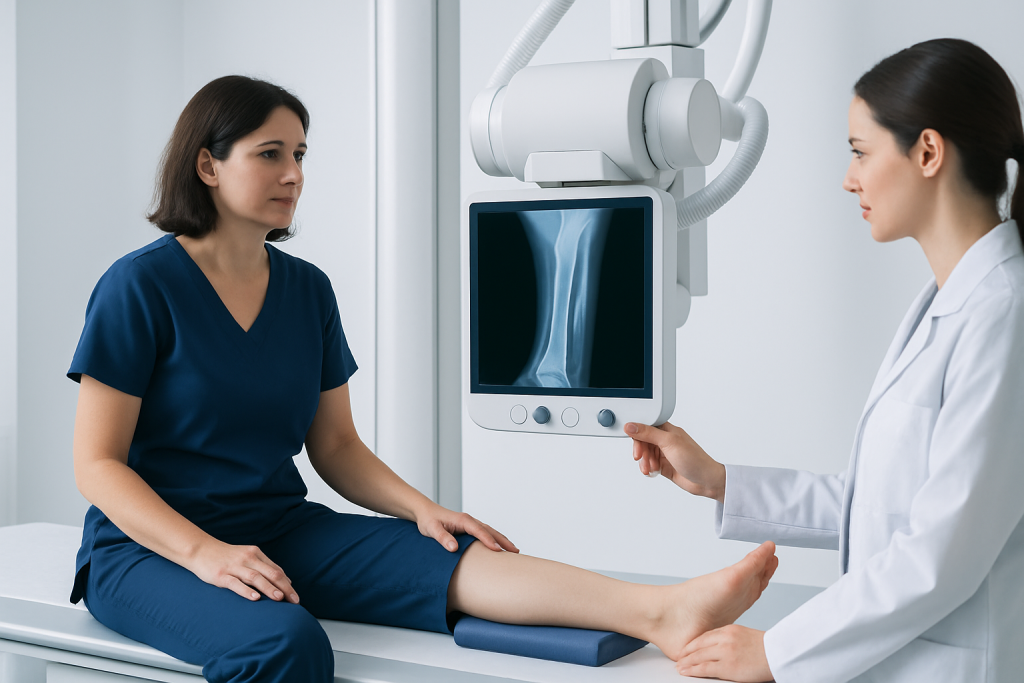
The most noticeable symptom is usually pain along the shin or lower leg, especially when trying to stand, walk, or move the ankle and knee. Swelling often appears quickly, and the leg may feel tender, tight, or warm around the injured area.
Other signs can be more visible. The leg may look crooked, shortened, or rotated, and bruising may spread over time. In open fractures, the bone may break through the skin, which needs urgent medical attention.
- Severe pain, especially with weight-bearing
- Swelling and bruising around the shin or calf
- Difficulty or inability to walk
- Visible deformity or abnormal leg position
- Numbness, tingling, or coolness in the foot
- Skin wounds over the fracture site
Not every tibia fracture looks dramatic. Stress fractures and some hairline breaks can cause pain that starts gradually and is mistaken for a strain. When symptoms do not settle with rest, or when pain becomes more focused with activity, an evaluation is still important.
Causes & Risk Factors
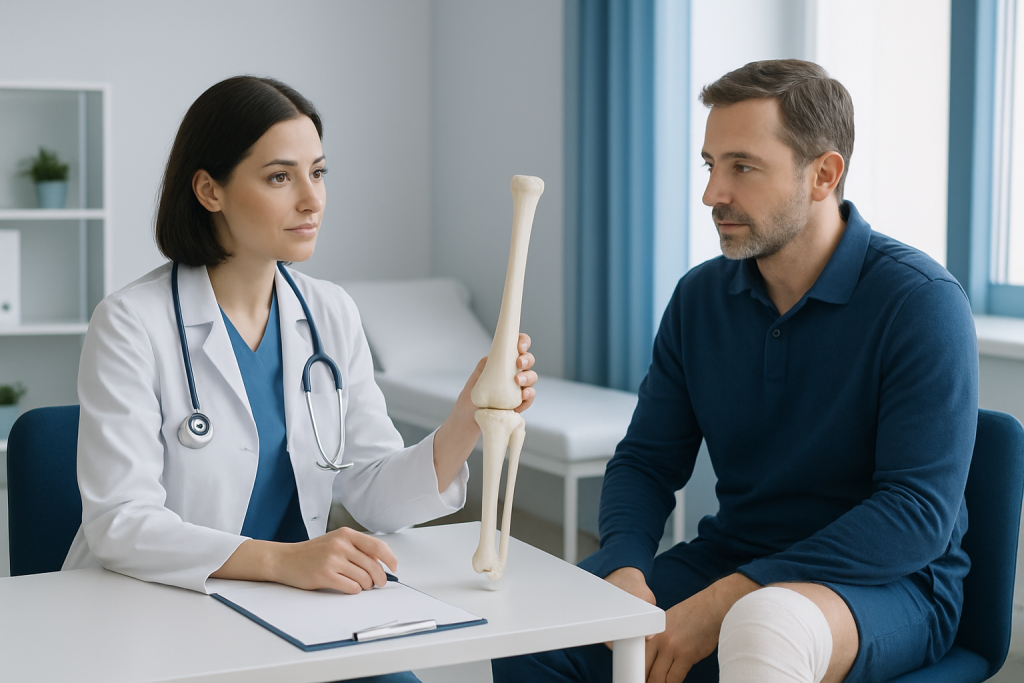
Tibia fractures are usually caused by either a sudden force or repeated stress. A fall, a sports collision, a heavy object hitting the leg, or a twisting injury can all break the shinbone. High-energy trauma can produce multiple fracture fragments or associated soft-tissue injury.
Some fractures develop more quietly. Repetitive loading from running, jumping, or a rapid increase in exercise can lead to a stress fracture. This is more likely when training intensity changes faster than the body can adapt.
Several factors can raise the chance of a fracture or influence how well the bone heals. These include low bone density, poor nutrition, smoking, certain medical conditions, prior fractures, and activities that place repeated impact on the lower leg. Age and overall health also matter, because they affect balance, bone strength, and recovery capacity.
In international patients, another practical factor is timing. A person injured while traveling may need care decisions made quickly, especially if returning home would interrupt proper stabilization or postoperative monitoring. In that situation, the fracture pattern and travel plans should be discussed together with the treatment team.
Diagnosis
Diagnosis begins with a careful history and physical examination. The clinician will ask how the injury happened, whether the patient can bear weight, where the pain is located, and whether any numbness, foot weakness, or skin wound is present.
X-rays are the usual first test and often show the fracture clearly. If the injury is complex, if the joint surfaces may be involved, or if surgical planning requires more detail, a CT scan may be recommended. When a stress fracture is suspected but not visible on X-ray, MRI can help identify early bone injury and surrounding tissue changes.
Because the tibia sits close to important blood vessels and nerves, circulation and sensation in the foot are also checked. This assessment is especially important after high-energy injuries, open fractures, or severe swelling. Prompt imaging and repeated examinations help clinicians choose the safest treatment path.
Treatment Options
Treatment is chosen according to the fracture type, alignment, skin condition, and the patient’s overall health. Some stable fractures can heal with a cast, brace, or boot that keeps the leg protected while the bone knits. Others need reduction, which means gently realigning the bone before immobilization.
When the tibia is displaced, unstable, open, or broken into multiple pieces, surgery is often considered. Common surgical methods include intramedullary nailing, plates and screws, or external fixation in selected cases. Open fractures usually require careful wound cleaning and timely antibiotic and tetanus management according to the treating team’s judgment.
Pain control, swelling reduction, and early safe movement are important parts of care regardless of the procedure. The plan may include crutches or a walker, instructions about how much weight can be placed on the leg, and scheduled follow-up imaging to confirm healing. For some patients, especially those traveling for treatment, the orthopedic team also helps determine what recovery can be safely managed before returning home and what follow-up can be coordinated remotely or locally.
Rehabilitation is often the bridge between bone healing and real-life function. A physical therapist may guide ankle motion, knee mobility, strengthening, balance work, and a gradual return to walking, work, and sport.
Prevention & Self-care
Not every tibia fracture is preventable, but some risks can be reduced. People who run, jump, or train intensely benefit from increasing activity in stages rather than all at once. Well-fitted footwear, cross-training, and rest days can also lower repetitive stress on the lower leg.
Bone health matters as well. Adequate calcium and vitamin D intake, regular weight-bearing exercise, and avoidance of smoking can support stronger bones over time. For people with known osteoporosis or other medical conditions that affect bone strength, ongoing medical management may reduce fracture risk.
After a fracture, self-care focuses on protecting the repair and watching for changes. Elevation, icing if advised, keeping dressings clean and dry, and using mobility aids as instructed can support recovery. It is also important not to return to sports or demanding work before the treating clinician clears the leg for more activity.
- Follow weight-bearing instructions exactly
- Attend all follow-up appointments and imaging checks
- Report increasing pain, swelling, fever, or drainage promptly
- Use prescribed braces, casts, or splints as directed
- Ask before flying or taking long trips during early recovery
People recovering far from where they were treated should keep copies of imaging reports, discharge instructions, and surgery details. That makes it easier for a local clinician to continue care if questions arise after travel.
When to See a Doctor
Any suspected tibia fracture should be evaluated promptly, especially if the person cannot bear weight, the leg looks deformed, or the skin is broken. These findings may indicate a more serious injury that should not be managed by guesswork at home.
Urgent medical care is also needed if the foot becomes cold, pale, numb, or weak, or if pain seems out of proportion to the visible injury. Those signs can suggest a circulation or nerve problem that needs immediate assessment.
Even after the initial treatment, a doctor should be contacted if swelling worsens instead of improving, if cast or splint pain becomes severe, or if there is fever, drainage, or new redness around a wound. A follow-up visit is also important if walking is not improving as expected or if new symptoms appear during recovery.
Acibadem Health Point offers multidisciplinary specialists and JCI-accredited hospitals that diagnose and treat tibia fractures for international patients, with coordinated care that supports both treatment and follow-up planning.
Recovery and Long-Term Outlook
Healing time varies widely because tibia fractures are not all the same. A simple, stable fracture may recover with immobilization and gradual weight-bearing, while a more complex fracture or one that needs surgery usually takes longer and requires more rehabilitation. The bone must heal, but muscles, joints, and walking patterns also need time to recover.
Follow-up visits help the clinician check whether the bone is aligning and healing properly. Repeat X-rays are common, and treatment may change along the way if healing is slower than expected or if activity needs to be advanced more cautiously.
Most people improve steadily with the right combination of protection, rehabilitation, and patience. A good outcome is supported by clear instructions, realistic activity limits, and communication between the patient and the orthopedic team. If treatment takes place while traveling, the recovery plan should be written in a way that can be continued safely after the patient returns home.
Frequently asked questions
01What is a tibia fracture?
A tibia fracture is a break in the shinbone, the main bone in the lower leg. It can range from a small crack to a complex injury involving several fragments or the skin. Because the tibia carries body weight, even a simple fracture can affect walking and daily movement.
02Can a person walk with a tibia fracture?
Some people can still take a few steps after the injury, but that does not mean the bone is intact or stable. Walking on a fractured tibia can worsen pain and may shift the bone out of alignment. Medical evaluation is important whenever a tibia fracture is suspected.
03How is a tibia fracture diagnosed?
Doctors usually start with a physical exam and X-rays. If the fracture is difficult to see or appears more complex, CT or MRI may be used to provide more detail. The foot’s circulation and nerve function are also checked during the assessment.
04Does every tibia fracture need surgery?
No. Some stable fractures can heal with a cast, brace, or boot and careful follow-up. Surgery is more likely when the fracture is displaced, unstable, open, or not likely to heal well without fixation.
05How long does recovery take?
Recovery depends on the location and severity of the fracture, the treatment used, and the person’s overall health. Healing is usually gradual and may involve several weeks to months of protection and rehabilitation. The treating clinician can give the most accurate timeline based on follow-up imaging and progress.
06What should someone do right after a suspected tibia fracture?
The leg should be kept still and protected, and weight should not be placed on it unless a clinician says it is safe. Medical evaluation should happen as soon as possible, especially if the leg is deformed, the skin is open, or the foot feels numb or cold.
This article is for general information only and is not a substitute for professional medical advice. Please consult a qualified doctor about your individual situation.
Hair transplant in Turkey — costs, graft counts & a free assessment
JCI-accredited · board-certified surgeons · reply within 24h
Add us as a Preferred Source to see more of our trusted health content across Google Search, AI Overviews and Discover.