Thyroid Nodules Diagnosis: Tests and Imaging
Thyroid nodules diagnosis usually begins with a medical history, neck examination, thyroid blood tests and ultrasound imaging. Most nodules are benign, and further testing such as a fine-needle aspiration biopsy is recommended only when ultrasound findings, size or symptoms suggest it may be helpful.
Overview: How Thyroid Nodules Are Diagnosed
Thyroid nodules diagnosis is a structured process used to identify a lump within the thyroid gland, assess whether it affects thyroid hormone production and estimate whether it needs further investigation. A clinician usually combines information from symptoms, medical history, a physical examination, blood tests and ultrasound rather than relying on one test alone.
A thyroid nodule is a localized area of growth in the thyroid, a butterfly-shaped gland at the base of the neck. Nodules may be solid, fluid-filled or mixed. They are often found incidentally during a routine examination or imaging performed for another reason, and many cause no symptoms at all.
The main goals of assessment are to determine whether the nodule is likely benign, whether it is producing excess thyroid hormone, whether it is causing pressure symptoms, and whether a biopsy or monitoring is the safest next step. For a broader overview of evaluation and management, readers may find thyroid nodules helpful.
Symptoms and Findings That May Lead to Testing
Many people do not notice a thyroid nodule themselves. A doctor may feel it during a neck examination, or it may appear on an ultrasound, CT scan, MRI scan or other imaging study. Finding a nodule does not by itself mean cancer or thyroid disease; it means that the nodule should be assessed in the appropriate clinical context.
Some nodules become noticeable as a lump or fullness in the lower front of the neck. Larger nodules can occasionally cause a sensation of pressure, difficulty swallowing, a persistent feeling of something in the throat, voice changes or discomfort when lying down. These symptoms can also have causes unrelated to the thyroid, so medical assessment is important.
If a nodule produces excessive thyroid hormone, symptoms may include palpitations, tremor, heat intolerance, sweating, unexplained weight loss, anxiety or changes in bowel habits. In contrast, symptoms of an underactive thyroid, such as tiredness, constipation, dry skin or feeling cold, may occur when there is an underlying thyroid condition but are not necessarily caused by the nodule itself.
Medical History, Examination and Thyroid Blood Tests
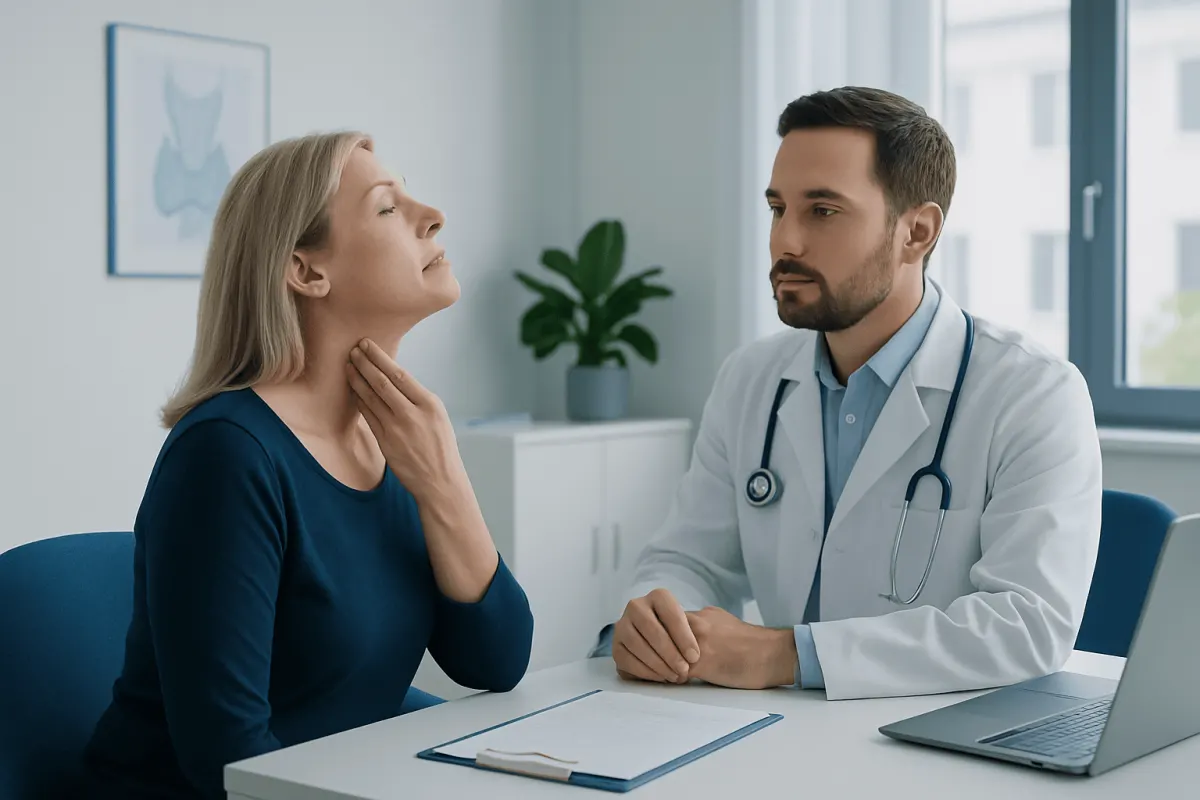
The first appointment commonly includes questions about when the lump was noticed, whether it has changed, and whether there are pressure or hormone-related symptoms. The clinician may ask about previous radiation exposure to the head or neck, family history of thyroid cancer or endocrine conditions, past thyroid disease, medications and pregnancy status.
During the neck examination, the clinician checks the size and texture of the thyroid, whether a nodule can be felt, whether it moves with swallowing and whether nearby lymph nodes seem enlarged. Examination findings help guide the next tests, but small nodules may not be detectable by touch.
A thyroid-stimulating hormone (TSH) blood test is typically the initial laboratory test. Depending on the result and the person’s history, clinicians may also measure free thyroid hormones or thyroid antibodies. These tests show how the thyroid is functioning; however, normal thyroid blood test results do not rule out a nodule, and abnormal results do not determine whether a nodule is benign or malignant.
If TSH is low, the clinician may consider a radionuclide thyroid scan to see whether the nodule is overactive. Overactive, or “hot,” nodules are generally less likely to be cancerous, although they may require treatment if they cause excess hormone production or symptoms.
Thyroid Ultrasound: The Key Imaging Test
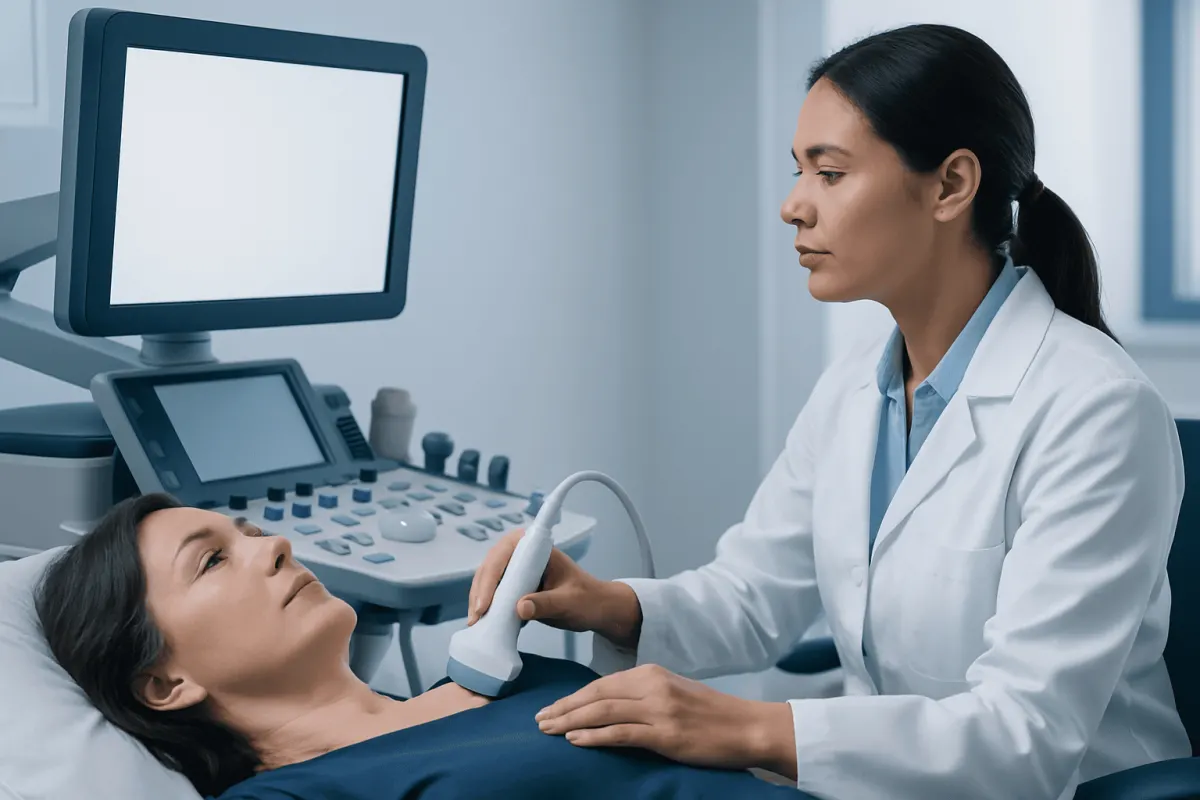
High-resolution thyroid ultrasound is the most important imaging test in thyroid nodules diagnosis. It uses sound waves rather than radiation and can show the nodule’s size, location, composition and internal features. It also assesses the rest of the thyroid gland and lymph nodes in the neck.
During the scan, the person lies on their back with the neck gently extended. A sonographer or radiologist applies gel to the skin and moves a small probe across the neck. The test is painless and generally takes a short time. No injections, fasting or recovery period are usually needed.
Ultrasound findings help clinicians estimate the level of concern and decide whether a biopsy is appropriate. Features considered include whether the nodule is solid or cystic, its shape, margins, brightness, calcifications and blood flow, as well as whether suspicious lymph nodes are present. These features are interpreted together with nodule size and individual risk factors.
CT and MRI are not routinely needed to characterize an uncomplicated thyroid nodule, but they may be useful when a large goiter extends into the chest or appears to affect nearby structures. Timely access to appropriate ultrasound and other imaging can help avoid unnecessary delay while ensuring that each test has a clear clinical purpose.
Fine-Needle Aspiration Biopsy: How It Works
Fine-needle aspiration (FNA) biopsy is the main procedure used when a nodule needs closer evaluation. It is not required for every nodule. A doctor may recommend it based on the ultrasound appearance, nodule size, growth over time, suspicious lymph nodes, relevant medical history or symptoms caused by the nodule.
FNA uses a very thin needle to collect cells from the nodule for examination under a microscope. In most cases it is performed with ultrasound guidance, which helps the clinician accurately place the needle within the area being assessed. The sample is reviewed by a pathology laboratory and reported using standardized thyroid cytology categories.
Before the procedure, the care team reviews medications and medical conditions, particularly blood-thinning medicines or bleeding disorders. Patients should not stop prescribed medication without specific advice from the clinician managing their care. The procedure is usually performed while the patient is awake and does not commonly require sedation.
For a detailed discussion of management pathways after assessment, including when surgery may be considered, see thyroid nodule treatment.
What to Expect During and After a Biopsy
For the biopsy, the person lies comfortably with the neck extended. The skin is cleaned, and a local anesthetic may be used in some circumstances. With ultrasound guidance, the clinician takes one or more samples through the skin. Most people describe brief pressure or a pinching sensation rather than significant pain.
Afterward, gentle pressure is applied to the area and a small dressing may be placed. People can usually return home shortly after the procedure and resume normal light activities the same day. Mild tenderness, bruising or temporary discomfort at the needle site can occur and generally settles within a few days.
Complications are uncommon but can include bleeding, swelling, infection or temporary voice change. Prompt medical advice is appropriate for rapidly increasing neck swelling, trouble breathing or swallowing, fever, significant bleeding, or persistent worsening pain. These symptoms are unusual but should be assessed without delay.
Biopsy results may be benign, suspicious for malignancy, malignant, non-diagnostic or indeterminate. A non-diagnostic sample does not mean cancer; it means there were not enough suitable cells to interpret, and a repeat biopsy may be advised. Indeterminate results may lead to repeat testing, molecular testing where available, or discussion of surgery depending on the overall situation.
Benefits, Limits and Next Steps After Diagnosis
The benefit of a careful diagnostic pathway is that it can identify nodules that need treatment while minimizing invasive testing for nodules that appear low risk. Ultrasound-guided FNA is a well-established, minimally invasive way to obtain cellular information and can often help avoid unnecessary surgery.
No test is perfect. Ultrasound describes risk patterns rather than providing a final diagnosis, and FNA may occasionally produce an insufficient or indeterminate result. Results are therefore interpreted alongside the ultrasound findings, clinical history and, when relevant, thyroid function tests.
When results are benign and symptoms are absent, follow-up may involve a clinical review and repeat ultrasound at an interval chosen by the treating clinician. Repeat assessment may be recommended if the nodule grows, develops new features or causes symptoms. A benign result is reassuring, but it is still important to attend planned follow-up appointments.
If surgery is discussed, the decision is individualized. Reasons may include confirmed or suspected cancer, significant compressive symptoms, an overactive nodule not suited to other treatments, or uncertainty after appropriate testing. The care team can explain expected benefits, alternatives and risks in relation to the individual patient’s results.
When to Seek Medical Care
Anyone who notices a new or enlarging lump in the neck should arrange a medical evaluation, especially if it persists. It is also sensible to seek advice for new hoarseness, ongoing trouble swallowing, neck pressure or unexplained symptoms of thyroid hormone excess or deficiency.
Urgent medical care is needed for sudden, marked neck swelling or difficulty breathing. Although these symptoms are not typical of most thyroid nodules, they require prompt assessment because airway-related symptoms should never be ignored.
People with a known thyroid nodule should contact their clinician if they notice clear enlargement, new pain, voice changes or pressure symptoms between scheduled visits. Regular monitoring should be based on the nodule’s imaging and biopsy findings, rather than self-examination alone.
At Acıbadem Health Point, multidisciplinary specialists in JCI-accredited hospitals support international patients with thyroid assessment, imaging and treatment planning when further evaluation is needed.
Frequently asked questions
01What is the first test for thyroid nodules diagnosis?
Assessment usually starts with a medical history, physical examination and a TSH blood test. A thyroid ultrasound is then commonly used to describe the nodule in detail and decide whether follow-up or biopsy is appropriate.
02Can blood tests tell if a thyroid nodule is cancerous?
No. Thyroid blood tests measure thyroid function and can identify an overactive or underactive thyroid, but they cannot determine whether a nodule is cancerous. Ultrasound findings and, when indicated, fine-needle aspiration biopsy provide more direct information.
03Does every thyroid nodule need a biopsy?
No. Many small nodules with low-risk ultrasound features do not need immediate biopsy and can be monitored. The decision depends on the nodule’s size, ultrasound pattern, symptoms, lymph node findings and personal risk factors.
04Is a thyroid fine-needle aspiration biopsy painful?
Most people experience only brief pressure or a pinching sensation during the procedure. Mild tenderness or bruising afterward is possible and usually temporary. The clinical team can discuss comfort measures and any individual bleeding risks beforehand.
05How long does it take to get thyroid biopsy results?
Timing varies by laboratory and healthcare setting. The care team will explain when and how results will be communicated, as well as what the possible result categories mean. Some results may require additional review or testing before a clear plan is made.
06What happens if a thyroid nodule biopsy is benign?
A benign result is reassuring and often means no treatment is needed immediately. The clinician may recommend periodic ultrasound monitoring, particularly if the nodule is large or has the potential to grow. New symptoms or significant changes should be reported between follow-up visits.
This article is for general information only and is not a substitute for professional medical advice. Please consult a qualified doctor about your individual situation.
Oncology care in Turkey — second opinion and treatment plan
JCI-accredited · board-certified surgeons · reply within 24h
Add us as a Preferred Source to see more of our trusted health content across Google Search, AI Overviews and Discover.