Oral Thrush: Symptoms, Causes and Treatment

Key Takeaways
- Oral thrush is usually caused by an overgrowth of Candida yeast in the mouth.
- White patches, redness, soreness, and a cottony feeling are common signs.
- It may be linked to antibiotics, inhaled steroids, diabetes, dentures, or a weakened immune system.
- Diagnosis is often clinical, though testing may be used if the cause is unclear or infections recur.
- Treatment usually includes antifungal medicine plus steps to address the trigger and improve oral hygiene.
Thrush in the mouth is a common fungal infection caused by an overgrowth of Candida, often leading to white patches, soreness, and taste changes. It is usually treatable, but an underlying trigger should be identified so it does not keep returning.
Overview
Thrush and mouth symptoms usually point to oral candidiasis, a yeast infection that develops when Candida organisms multiply beyond normal levels in the mouth. Candida can live harmlessly in the body, but certain changes in the mouth environment can allow it to grow more easily.
For many people, the condition is temporary and responds well to treatment. The more important question is often why it appeared in the first place, especially if someone is traveling, recovering from another illness, or using medicines that may affect the mouth’s natural balance.
International patients sometimes notice the problem only after a flight, a change in routine, or a recent medical treatment. In those situations, a clinician will usually look not only at the visible patches or discomfort, but also at the broader context: medications, oral care habits, denture use, blood sugar control, and immune health.
Symptoms
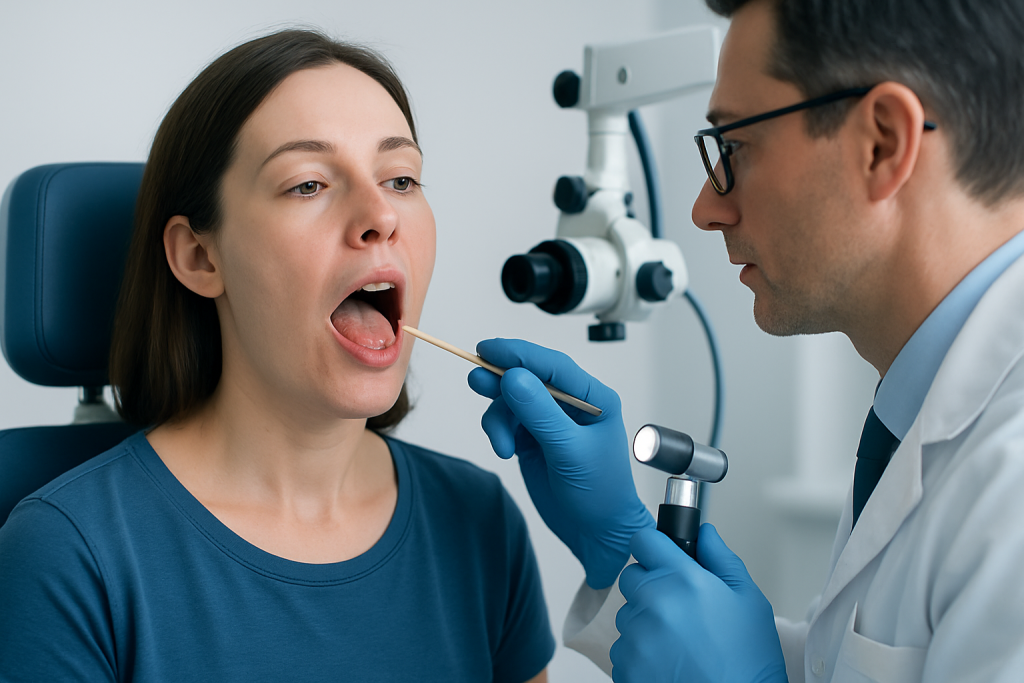
Oral thrush can look and feel different from one person to another. A classic sign is creamy white or yellowish patches on the tongue, inner cheeks, gums, tonsils, or roof of the mouth. These patches may sometimes wipe off, leaving a red or tender surface underneath.
Other symptoms may include:
- Soreness or burning in the mouth
- A cottony or dry feeling
- Cracks at the corners of the mouth
- Loss of taste or an altered taste
- Pain when eating, drinking, or swallowing
In babies, thrush may present as fussiness, feeding difficulty, or a white coating in the mouth. In some adults, especially those with dentures, the symptoms may be milder but still persistent, with redness under the denture or a raw sensation in the gums.
Causes & Risk Factors

Thrush develops when the balance of microorganisms in the mouth changes. The most common organism involved is Candida albicans, although other Candida species can also be responsible. This overgrowth is more likely when the body’s defenses are reduced or the oral environment becomes favorable for yeast.
Common risk factors include recent antibiotic use, inhaled corticosteroids without proper mouth rinsing, diabetes that is not well controlled, dry mouth, smoking, and wearing dentures, especially if they are not cleaned regularly or fit poorly. Older age, pregnancy, recent surgery, and certain cancer treatments can also increase vulnerability.
Immune suppression is another important factor. People living with conditions or treatments that affect immunity may be more prone to recurrent oral thrush, which is why repeated episodes deserve medical attention rather than repeated self-treatment alone.
Diagnosis
In many cases, a clinician can diagnose oral thrush by examining the mouth and asking about symptoms and recent health changes. The appearance of the patches, along with the location and the person’s medical history, is often enough to make the diagnosis.
If the picture is not straightforward, a swab or scraping from the mouth may be taken to confirm the presence of Candida or to rule out another condition. This may be especially helpful if symptoms keep returning, if treatment has not worked as expected, or if the sores look unusual.
Because several mouth conditions can resemble thrush, a careful assessment matters. White patches, redness, or soreness can also occur with irritation, other infections, nutritional problems, or inflammatory disorders, so diagnosis should not rely on appearance alone when the case is unclear.
Treatment Options
Most cases of oral thrush are treated with antifungal medicine. This may come as a liquid, lozenge, tablet, or gel depending on the person’s age, the severity of the infection, and whether the infection is limited to the mouth or involves other areas.
Treatment is often more effective when the trigger is addressed at the same time. For example, a person using an inhaler may be advised to rinse the mouth after each use, while denture wearers may need to improve cleaning and nighttime removal. People with diabetes may need closer blood sugar management, and those with dry mouth may benefit from measures that help restore moisture.
In more persistent or recurrent cases, a doctor may look for underlying contributors such as immune problems, medication effects, or oral conditions that need separate care. The goal is not only to clear the current infection, but also to reduce the chance of it coming back during future travel, treatment, or recovery.
Prevention & Self-care
Daily habits can make a real difference, especially for people who have had thrush before. Gentle but consistent oral care helps limit the conditions that allow Candida to multiply. Regular brushing, flossing, and routine dental checkups remain important, even when symptoms seem minor.
Helpful self-care steps include:
- Rinsing the mouth after using inhaled steroids
- Cleaning dentures carefully and removing them at night if advised
- Keeping the mouth hydrated and addressing dry mouth
- Limiting smoking and reducing irritants
- Managing blood sugar if diabetes is present
For patients traveling for treatment, it is sensible to pack medications exactly as prescribed, keep oral care items in hand luggage, and follow the clinician’s instructions before and after the trip. Clear written guidance is especially useful when follow-up care will continue in another country.
When to See a Doctor
Medical review is advisable if white patches or mouth soreness do not improve, if swallowing becomes painful, or if the symptoms keep returning. It is also wise to seek care if the person has diabetes, wears dentures, uses inhaled steroids, recently took antibiotics, or has a condition that weakens immunity.
Urgent assessment is not usually needed for typical oral thrush alone, but prompt evaluation is appropriate if there is significant pain, dehydration, trouble swallowing, fever, or concern that the infection may be spreading. In babies, people with frailty, or anyone with poor intake, earlier review can help prevent complications such as feeding difficulty and weight loss.
If a patient is considering treatment abroad, a consultation can help confirm the diagnosis before travel or arrange follow-up afterward. At Acibadem Health Point, multidisciplinary specialists and JCI-accredited hospitals diagnose and treat oral thrush for international patients with coordinated, patient-centered care.
Living With Recurrent Thrush
Repeated oral thrush can be frustrating, but it usually has an explanation. Recurrence often means that one or more underlying factors are still active, such as a medication effect, dry mouth, poorly fitting dentures, or an undiagnosed health issue that needs attention.
Keeping notes about when symptoms appear, what medicines were taken, and whether dentures, inhalers, or blood sugar changes were involved can help the clinician identify patterns. For people receiving ongoing treatment across borders, that record can be especially useful when care is transferred from one team to another.
With the right treatment plan and practical follow-up, most people can expect improvement. The most helpful approach is steady, not dramatic: treat the infection, support the mouth’s natural balance, and address the reason it appeared in the first place.
Frequently Asked Questions
Is oral thrush contagious?
Oral thrush is not usually considered highly contagious in healthy adults. Candida can already be present in the mouth, and the condition typically develops because of an imbalance rather than simple person-to-person spread.
Can thrush go away on its own?
Some mild cases may improve, but treatment is often needed to clear the infection fully and relieve symptoms. If an underlying trigger remains, the problem may return.
Does oral thrush always mean a serious illness?
Not always. It can happen after antibiotics, with inhaler use, or with dentures, but recurrent or persistent thrush should be checked because it may point to a broader health issue.
Can adults get thrush without dentures?
Yes. Adults can develop thrush even without dentures, especially if they have dry mouth, diabetes, recent antibiotic exposure, or use inhaled steroids.
How long does treatment take?
Many people begin to feel better within days, but treatment should be completed as prescribed. The exact timeline depends on the medicine used, the severity of the infection, and whether the triggering factor has been corrected.
Should someone with white patches in the mouth try home remedies first?
It is better to have the mouth examined if the patches are new, painful, persistent, or recurring. Home measures can support comfort, but they should not replace proper diagnosis when thrush is possible.
Frequently asked questions
01Is oral thrush the same as a mouth infection caused by poor hygiene?
Not exactly. Oral thrush is a yeast infection caused by Candida overgrowth, and poor oral hygiene can contribute, but it is not the only cause. Medicines, dry mouth, dentures, and immune changes can all play a role.
02Why does thrush sometimes come back after treatment?
Recurrent thrush often means the underlying trigger has not been fully addressed. A clinician may look for factors such as inhaler use, antibiotics, diabetes, dry mouth, or an immune-related issue.
03Can oral thrush affect eating or swallowing?
Yes. Some people feel burning or pain when eating, and more severe cases can make swallowing uncomfortable. If swallowing becomes difficult, medical review is important.
04Do dentures need special care if someone has thrush?
Yes. Dentures can hold Candida if they are not cleaned well or if they are worn overnight when they should be removed. A doctor or dentist may advise specific cleaning and fitting checks.
05Is thrush in the mouth common in babies?
Yes, babies can get oral thrush, especially during the early months of life. It often appears as white patches in the mouth and may be linked to feeding discomfort or fussiness.
This article is for general information only and is not a substitute for professional medical advice. Please consult a qualified doctor about your individual situation.
Explore treatments in Turkey — costs, top hospitals & a free quote
JCI-accredited · board-certified surgeons · reply within 24h
Add us as a Preferred Source to see more of our trusted health content across Google Search, AI Overviews and Discover.