Thoracic Scoliosis: Causes, Symptoms, Diagnosis and Treatment

Key Takeaways
- Thoracic scoliosis affects the middle or upper portion of the spine and may be painless in early stages.
- Common signs include uneven shoulders, a rib hump, clothing that hangs differently, and back fatigue.
- Diagnosis usually involves a physical exam and spinal imaging to measure the curve and guide treatment.
- Treatment depends on age, curve size, growth remaining, symptoms, and whether the curve is stable or progressing.
- Many people do well with observation, bracing, physical therapy, or surgery when needed.
- Regular follow-up matters because scoliosis decisions are often based on how the curve changes over time.
Thoracic scoliosis is a side-to-side curvature of the upper back spine that can range from mild and barely noticeable to more complex and symptomatic. Understanding the cause, monitoring the curve, and choosing the right treatment can help protect function, comfort, and long-term spinal health.
Overview
Thoracic scoliosis is a sideways curve that develops in the thoracic, or chest-level, part of the spine. In practical terms, it means the upper back does not stay in a straight line when viewed from behind. Some curves are small and never cause major problems, while others can change posture, create discomfort, or affect the shape of the chest and ribs.
The condition is not one single disease. It is a pattern of spinal curvature that can appear during childhood, the teenage growth years, or adulthood. For many families, the first clue is not pain but a visual change: one shoulder sits higher, the waist looks uneven, or the rib cage seems more prominent on one side. A careful medical assessment helps determine whether the curve is likely to stay stable or needs active treatment.
Because scoliosis care is tailored to the person rather than the X-ray alone, the response to thoracic scoliosis depends on age, curve magnitude, remaining growth, and symptoms. That is why evaluation by a qualified specialist is so important, especially when a curve is first noticed or seems to be changing.
Symptoms
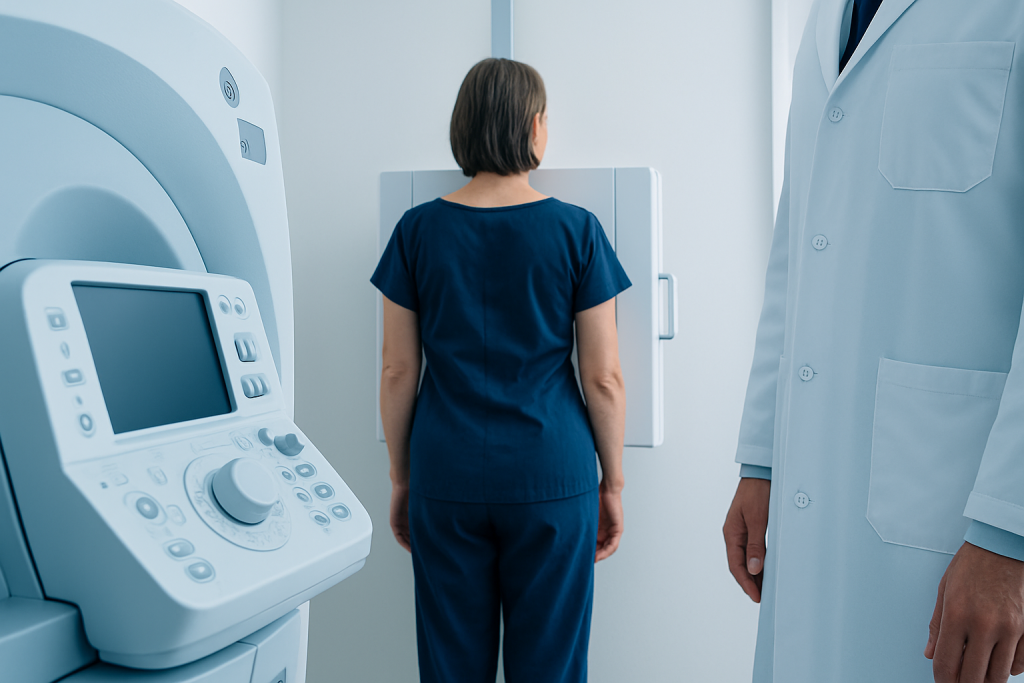
Thoracic scoliosis may be subtle at first. Many people do not feel pain and may only notice a postural change during a routine exam, school screening, or while looking in the mirror. When symptoms do appear, they often relate to posture, muscle strain, or the way the rib cage and shoulders sit relative to each other.
Common signs can include:
- One shoulder higher than the other
- Uneven shoulder blades
- A visible curve in the upper back
- Ribs that protrude more on one side when bending forward
- Uneven waistline or clothing fit
- Back fatigue, stiffness, or mild aching
More significant curves can occasionally affect breathing mechanics or cause reduced endurance, especially in larger thoracic curves. In adults, pain may also come from muscle imbalance or wear and tear around the spine rather than the curve itself. Any new numbness, weakness, balance difficulty, or rapidly worsening posture deserves medical attention.
Causes & Risk Factors

Thoracic scoliosis has several possible causes. The most common type in adolescents is idiopathic scoliosis, which means the exact cause is not known. It often appears during growth spurts and may run in families, suggesting a genetic tendency.
Other causes include congenital scoliosis, which results from the spine forming differently before birth, and neuromuscular scoliosis, which can occur in conditions that affect muscle tone or nerve control. In adults, thoracic scoliosis may reflect a curve that began earlier in life, or it may develop later because of disc degeneration, osteoporosis, or spinal imbalance.
Risk factors can include being in a rapid growth phase, a family history of scoliosis, connective tissue disorders, or medical conditions that affect posture and muscle support. While some risk factors cannot be changed, early recognition can still make a major difference in how a curve is monitored and treated.
Diagnosis
Diagnosis begins with a detailed history and physical examination. The clinician looks for shoulder asymmetry, rib prominence, spinal balance, and signs that the curve may be affecting function. A forward-bending test is often used to highlight rib rotation, which is common in thoracic scoliosis.
X-rays are the main tool used to confirm the diagnosis and measure the curve. The angle of the curve, called the Cobb angle, helps specialists decide whether observation, bracing, or surgery should be considered. In some situations, additional imaging such as MRI may be recommended, especially if the curve has unusual features, progresses quickly, or is associated with neurological symptoms.
For international patients planning care abroad, the evaluation process may be coordinated across orthopedics, radiology, and rehabilitation so that imaging is reviewed promptly and a treatment plan can be discussed without unnecessary delay. The goal is not just to label the curve, but to understand how it behaves and what it means for daily life.
Treatment Options
Treatment depends on the person’s age, skeletal maturity, curve size, symptoms, and whether the curve is progressing. Small, stable curves may only need observation with periodic follow-up. This is especially common when the person is still growing and the curve is mild enough that immediate intervention is not necessary.
Bracing is often used in growing children and adolescents when the curve is in a range where it may be more likely to progress. A brace does not usually straighten the spine permanently, but it can help slow further curvature while growth continues. Physical therapy, posture-focused exercise, and core strengthening may support comfort, body awareness, and spinal function, though they do not replace medical monitoring.
Surgery is considered when a curve is severe, progressing, or causing significant symptoms or imbalance. The most common operation is spinal fusion, which aims to correct and stabilize the curve. In selected cases, surgeons may discuss other techniques depending on the patient’s age and the pattern of the deformity. Any procedure should be planned after a clear discussion of benefits, risks, recovery time, and follow-up needs.
Prevention & Self-care
Most cases of thoracic scoliosis cannot be prevented because many develop without a known cause. Even so, self-care can support comfort and make it easier to live well with the condition. Staying active, maintaining good general fitness, and following the specialist’s advice on monitoring all play useful roles.
Helpful self-care steps may include:
- Keeping follow-up appointments to watch for curve progression
- Doing the prescribed exercise or rehabilitation plan consistently
- Using a brace exactly as directed if one is recommended
- Maintaining healthy bone support through nutrition and weight-bearing activity as appropriate
- Adjusting workstations, school setups, or travel arrangements to reduce strain
For people traveling from another country for scoliosis care, planning rest time before and after appointments can make recovery smoother. It also helps to arrange access to records, prior X-rays, and a clear follow-up plan before returning home. In some cases, Acibadem Health Point’s multidisciplinary specialists and JCI-accredited hospitals diagnose and treat thoracic scoliosis for international patients, with care coordinated around imaging, consultation, and rehabilitation.
When to See a Doctor
A medical evaluation is appropriate if a shoulder asymmetry, rib prominence, or visible spinal curve is noticed, even if there is no pain. Children and adolescents should be assessed sooner rather than later if the curve seems to be changing, because growth can influence progression.
Adults should also seek assessment if they develop new back pain, increasing deformity, reduced stamina, or changes in balance or walking. Symptoms such as numbness, weakness, trouble breathing, or bowel or bladder changes require prompt medical review, as these are not typical features of an uncomplicated scoliosis curve.
Early consultation does not automatically mean surgery or aggressive treatment. More often, it helps establish a baseline, decide how often to monitor the spine, and identify the least invasive option that matches the person’s situation.
Living With Thoracic Scoliosis
Living with thoracic scoliosis is often a long-term process of observation, adjustment, and support rather than a single event. Many people continue school, work, travel, and sport with only modest changes to routine. The key is understanding the pattern of the curve and responding to it in a planned way.
Families and adult patients often benefit from clear explanations, side-by-side review of imaging, and realistic discussion about what the curve is likely to do over time. That is especially important when deciding whether to monitor, brace, or consider surgery. A thoughtful care plan can reduce uncertainty and make follow-up easier to manage.
With the right diagnosis and specialist guidance, thoracic scoliosis can usually be approached in a calm, structured way. The aim is to preserve function, address symptoms appropriately, and help the person make informed decisions at every stage.
Frequently asked questions
01What is thoracic scoliosis exactly?
Thoracic scoliosis is a sideways curvature of the upper or middle part of the spine, located in the chest area. It may also involve some rotation of the vertebrae, which can make one side of the rib cage look more prominent.
02Does thoracic scoliosis always cause pain?
No, many people with thoracic scoliosis have little or no pain, especially when the curve is mild. When pain does occur, it is often related to muscle strain, posture, or associated spinal changes rather than the curve alone.
03How is thoracic scoliosis diagnosed?
Doctors usually diagnose it with a physical examination and spinal X-rays. The X-rays show the curve’s size and pattern, which helps guide whether observation, bracing, or another treatment is most appropriate.
04Can thoracic scoliosis get worse over time?
It can, especially during periods of growth or if the curve is already moderate to large. In adults, progression may be slower, but follow-up is still important because curves can change gradually over time.
05Is bracing effective for thoracic scoliosis?
Bracing can be helpful in children and adolescents who are still growing and whose curves are at risk of progressing. It is usually used to slow further curvature rather than to cure scoliosis.
06When is surgery considered for thoracic scoliosis?
Surgery may be discussed if the curve is severe, keeps progressing, or causes significant imbalance or symptoms. The decision depends on the overall clinical picture, not just a single X-ray measurement.
This article is for general information only and is not a substitute for professional medical advice. Please consult a qualified doctor about your individual situation.
Joint and spine care in Turkey — expert assessment & treatment
JCI-accredited · board-certified surgeons · reply within 24h
Add us as a Preferred Source to see more of our trusted health content across Google Search, AI Overviews and Discover.