The TMT Joint: Its Role in Midfoot Pain and Movement
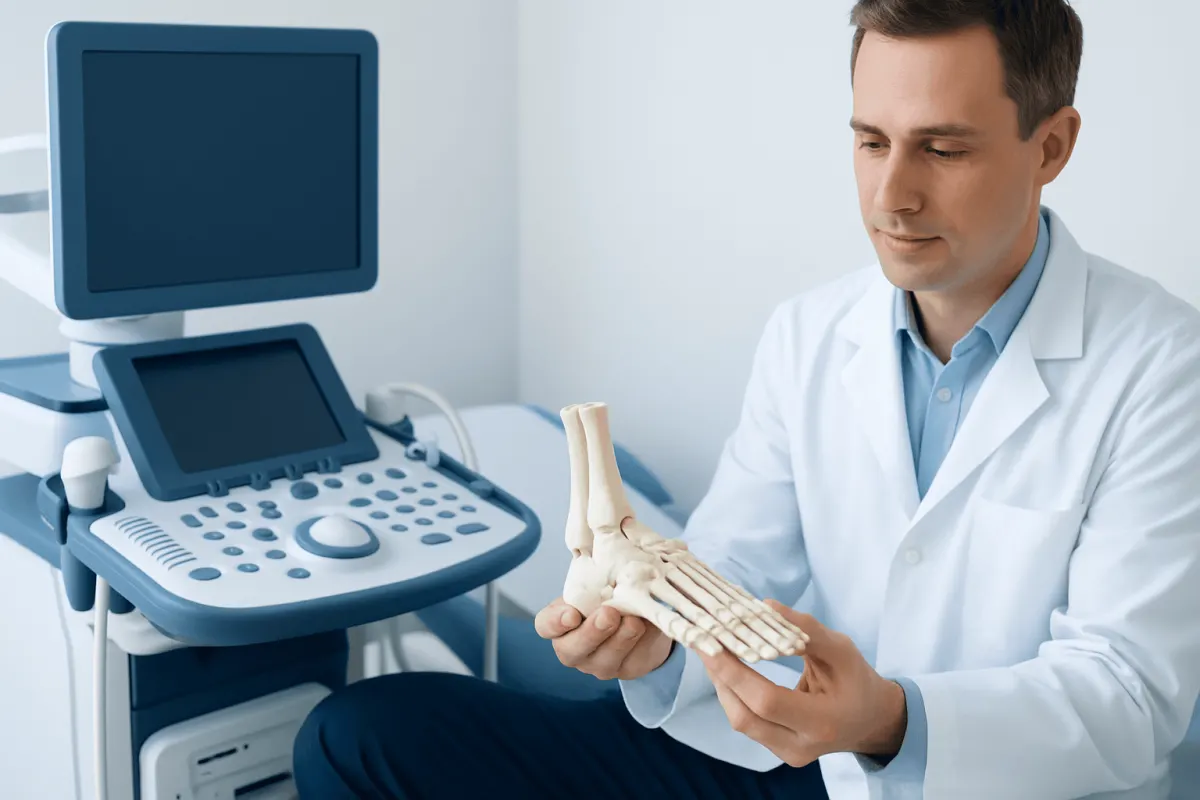
The tmt joint, also called the tarsometatarsal joint, is a group of joints where the long bones of the foot meet the midfoot bones. These joints provide stability during standing and walking, but may become painful after injury, overuse, arthritis, or changes in foot alignment.
What Is the TMT Joint?
The tmt joint refers to the tarsometatarsal joint complex in the middle of the foot. It is formed where the five metatarsals, the long bones leading to the toes, connect with the cuneiform bones and cuboid bone of the midfoot. Although it is often described in the singular, the TMT joint is a group of linked joints rather than one single joint.
This region is also known as the Lisfranc joint complex. Strong ligaments hold the bones in their precise positions, helping the foot transfer forces from the heel toward the toes. The first through third TMT joints are generally quite stable with limited motion, while the outer joints have somewhat more mobility to help the foot adapt to uneven ground.
A healthy TMT joint complex supports the arch of the foot and provides a firm base for walking, running, climbing stairs, and pushing off the ground. Pain in this area can affect everyday movement because even simple weight-bearing places repeated stress through the midfoot.
Why the TMT Joint Matters During Movement
During walking, the foot changes from a flexible structure that absorbs impact to a more rigid lever that propels the body forward. The TMT joints contribute to this change by maintaining alignment between the forefoot and midfoot. Their ligaments and joint surfaces help preserve the shape and stability of the arch.
When these joints are irritated, injured, or affected by arthritis, a person may notice discomfort while taking the final step forward, particularly when rising onto the toes or walking uphill. Uneven surfaces, running, jumping, and footwear that bends through the midfoot may also aggravate symptoms.
Not all pain in the middle of the foot comes from the TMT joints. Tendon problems, stress injuries, nerve irritation, and conditions affecting nearby joints can feel similar. A clinical assessment is important when pain persists or follows a significant twist, fall, or impact.
TMT Joint Symptoms and Common Patterns

TMT joint symptoms vary according to the underlying cause. Pain is commonly felt across the top of the foot or deep in the midfoot. It may develop gradually with activity, or begin suddenly after an injury. Some people describe a sharp pain with push-off, while others experience an aching sensation after standing or walking.
Other possible symptoms include localized swelling, tenderness when the midfoot is pressed, stiffness, and pain when the foot is twisted. A visible bony prominence on the top of the foot can occur with arthritis. Changes in gait may develop when a person unconsciously avoids placing weight through the painful area.
A Lisfranc injury may cause marked midfoot pain and swelling, but milder ligament injuries can be less obvious. Bruising on the sole of the foot is a particularly important sign that warrants medical assessment. Symptoms can sometimes appear manageable at first, even when there is a clinically meaningful injury to the joint complex.
- Pain in the midfoot, especially with walking or push-off
- Swelling or tenderness on the top of the foot
- Difficulty fitting into usual shoes because of swelling
- Pain with twisting motions or standing on tiptoes
- Bruising, deformity, or inability to bear weight after trauma
Causes and Risk Factors of TMT Joint Pain
Trauma is an important cause of TMT joint problems. A Lisfranc injury can occur when the foot twists while it is planted, such as during sport, a fall, or a misstep. Higher-energy injuries, including motor vehicle accidents, may cause fractures or dislocation around the TMT joints. However, lower-energy injuries can also damage the stabilizing ligaments.
Arthritis is another frequent cause of pain in this region. It may develop over time through wear of the joint cartilage, or after a previous injury has altered joint alignment. Post-traumatic arthritis can emerge months or years after an injury, particularly when the original injury involved joint surfaces or was not fully recognized.
Repeated loading may irritate the midfoot in people who run, play field sports, perform physically demanding work, or increase activity suddenly. Foot shape and biomechanics, such as a high arch, flatfoot, or limited ankle movement, may influence how forces pass through the TMT joints. Inflammatory arthritis and nerve-related loss of sensation can also affect the midfoot and require specialist evaluation.
Diabetes with peripheral neuropathy deserves special consideration. Reduced sensation may make it harder to recognize injuries, while a warm, swollen foot can occasionally indicate Charcot neuroarthropathy rather than a routine sprain. Prompt medical review is especially important in this situation.
How TMT Joint Problems Are Diagnosed
A clinician will ask how the pain began, what activities worsen it, whether there was a specific injury, and whether there are medical conditions such as diabetes, inflammatory arthritis, or osteoporosis. Examination usually includes checking swelling, tenderness, foot alignment, range of motion, circulation, sensation, and the ability to bear weight.
Weight-bearing X-rays are often the first imaging test because they show how the bones align while the foot is loaded. Comparison with the other foot may be helpful in selected cases. X-rays can reveal fractures, arthritis, joint narrowing, bony spurs, or widening between bones that may suggest a Lisfranc ligament injury.
If X-rays do not fully explain persistent symptoms, CT scanning may give a more detailed view of small fractures and joint alignment. MRI can be useful for assessing ligaments, bone bruising, cartilage, and stress-related injuries. The choice of scan depends on the suspected problem and the findings on examination.
Early diagnosis matters because an unstable TMT or Lisfranc injury may need different treatment from a stable sprain. It is best not to continue high-impact activity until a significant midfoot injury has been evaluated.
Treatment Options for TMT Joint Conditions
Treatment is tailored to the diagnosis, symptom severity, joint stability, activity needs, and overall health. For stable injuries and mild arthritis, initial care may include reducing activities that trigger pain, using supportive shoes with a firm sole, and considering an orthotic insert or brace. Resting from impact exercise may help while the tissues settle.
A clinician may recommend a period of immobilization in a walking boot or cast when a sprain, small fracture, or stress injury needs protection. Pain-relief medicines may be appropriate for some people, but the choice should take account of other health conditions and current medicines. Rehabilitation can gradually restore ankle and foot strength, balance, flexibility, and confidence with walking.
Injections may be considered in selected cases of confirmed joint inflammation or arthritis. They are generally used as part of a wider treatment plan rather than as a substitute for correcting instability. Persistent symptoms should be reassessed, especially if there is ongoing swelling or difficulty bearing weight.
Surgery may be recommended for unstable Lisfranc injuries, displaced fractures, or painful arthritis that has not responded to non-surgical measures. Depending on the condition, surgery may involve realigning and fixing the joints or fusing painful arthritic joints to create a stable, less painful foot. Orthopedic surgery decisions are individualized and should include a discussion of expected recovery, rehabilitation, and potential risks.
Self-Care, Foot Support and Prevention
For minor symptoms that have been assessed as non-urgent, reducing aggravating activity can be useful. Low-impact exercise, such as swimming or cycling, may be more comfortable than running while the foot recovers. Returning to impact activities should be gradual and guided by symptoms and professional advice.
Footwear can make a meaningful difference. Shoes that fit well, have a stable heel, and provide a firm, supportive sole may reduce stress through the midfoot. Worn-out athletic shoes or very flexible footwear may be less suitable when TMT joint pain is present. An orthotic prescribed or recommended by a clinician may improve comfort for some individuals.
Maintaining lower-leg and foot strength, improving balance, and increasing training loads gradually may reduce the chance of overuse problems. These measures cannot prevent every injury, particularly traumatic injuries, but they can support safer movement. People should avoid trying to force or manipulate a painful midfoot after an injury.
For international patients needing assessment of complex foot and ankle concerns, Acıbadem Health Point’s multidisciplinary specialists and JCI-accredited hospitals diagnose and treat musculoskeletal conditions with individualized care planning.
When to Seek Medical Care
Medical care should be sought promptly after a midfoot injury that causes significant swelling, bruising, deformity, severe pain, or difficulty taking four steps. Evaluation is also important if pain began after the foot twisted while planted, even if the person can still walk. These features may indicate a Lisfranc injury or fracture that requires timely assessment.
Urgent assessment is appropriate for a foot that is numb, cold, pale, increasingly swollen, or associated with an open wound. People with diabetes, reduced sensation in the feet, poor circulation, or immune system conditions should seek advice early for new foot pain, redness, warmth, or swelling.
A non-urgent appointment is sensible when midfoot pain lasts more than a few days, returns with activity, limits usual walking, or does not improve with simple supportive measures. A qualified clinician can identify whether the source is likely to be the TMT joints or another part of the foot and recommend the most appropriate next steps.
Frequently asked questions
01What does TMT joint stand for?
TMT stands for tarsometatarsal. It describes the joints between the metatarsal bones of the forefoot and the cuneiform and cuboid bones of the midfoot. Together, these joints help stabilize the arch and support push-off during walking.
02Is the TMT joint the same as the Lisfranc joint?
The terms are closely related. The Lisfranc joint complex includes the TMT joints and the important ligaments that stabilize them, especially in the central midfoot. A Lisfranc injury may involve ligaments, fractures, joint displacement, or a combination of these problems.
03Where is TMT joint pain felt?
TMT joint pain is usually felt in the middle of the foot, often on the top surface. It may worsen when walking, climbing stairs, running, or pushing off through the toes. Swelling and focal tenderness may also be present.
04Can a TMT joint injury heal without surgery?
Some stable sprains and non-displaced injuries can heal without surgery when they are properly protected and monitored. Treatment may involve immobilization, reduced weight-bearing, supportive footwear, and rehabilitation. Unstable or displaced injuries may require surgical treatment to restore alignment.
05How is TMT joint arthritis treated?
TMT joint arthritis is commonly managed first with activity adjustments, supportive footwear, orthotics, pain management when appropriate, and rehabilitation. In selected cases, injections may help clarify or temporarily relieve pain. Surgery may be considered when symptoms remain limiting despite appropriate non-surgical care.
06Can I walk with a Lisfranc injury?
Some people can walk with a Lisfranc injury, particularly when the injury is subtle or involves primarily ligaments. Being able to walk does not rule out a significant injury. Midfoot pain after twisting or impact, especially with swelling or sole bruising, should be assessed by a clinician.
This article is for general information only and is not a substitute for professional medical advice. Please consult a qualified doctor about your individual situation.
Joint and spine care in Turkey — expert assessment & treatment
JCI-accredited · board-certified surgeons · reply within 24h
Add us as a Preferred Source to see more of our trusted health content across Google Search, AI Overviews and Discover.