Temporomandibular Joint Disorder: Symptoms, Causes and Treatment

Key Takeaways
- TMJ disorder has no one-size-fits-all cure, but many cases respond well to conservative treatment.
- Common symptoms include jaw pain, clicking, limited opening, headaches, and facial tension.
- Care often starts with self-care, dental evaluation, and reversible treatments such as splints or physical therapy.
- Persistent or severe symptoms may need imaging, specialist review, or targeted procedures.
- Early assessment can help reduce long-term discomfort and protect jaw function.
Temporomandibular joint disorder, often called TMJ disorder or TMD, can make everyday actions like chewing, speaking, and yawning uncomfortable. There is no single universal cure, but many people improve with a stepwise plan that addresses muscle strain, bite-related issues, stress, and joint irritation.
Overview
Temporomandibular joint disorder affects the joints and muscles that help the jaw open, close, and move from side to side. Because these structures are used constantly for speaking, eating, yawning, and even swallowing, irritation in this area can become noticeable quickly and interfere with daily routines.
People often search for a cure for temporomandibular joint disorder, but the most accurate answer is that treatment depends on what is driving the symptoms. Some cases are linked to muscle overuse or clenching, while others relate to joint inflammation, arthritis, injury, or bite problems. Many patients improve when the underlying trigger is identified and managed in a careful, stepwise way.
TMJ disorder is usually not dangerous, but it can be frustrating and persistent. The good news is that many treatment approaches are conservative, reversible, and focused on helping the jaw move more comfortably again without rushing into invasive care.
Symptoms

TMJ disorder can feel different from person to person. Some notice a dull ache in front of the ear or along the jawline, while others feel tightness in the temples, face, neck, or shoulders. Pain may worsen when chewing tougher foods, talking for long periods, or opening the mouth wide.
Other common signs include clicking, popping, or grating sounds in the jaw joint. Some people also experience the jaw getting stuck briefly, limited mouth opening, or a sense that the bite feels “off.” Headaches, ear fullness, and tenderness when touching the jaw muscles may also appear.
Symptoms can come and go, or they may linger for weeks or months. In many cases, they are more noticeable during periods of stress, poor sleep, or repetitive jaw habits such as clenching or grinding.
Causes & Risk Factors
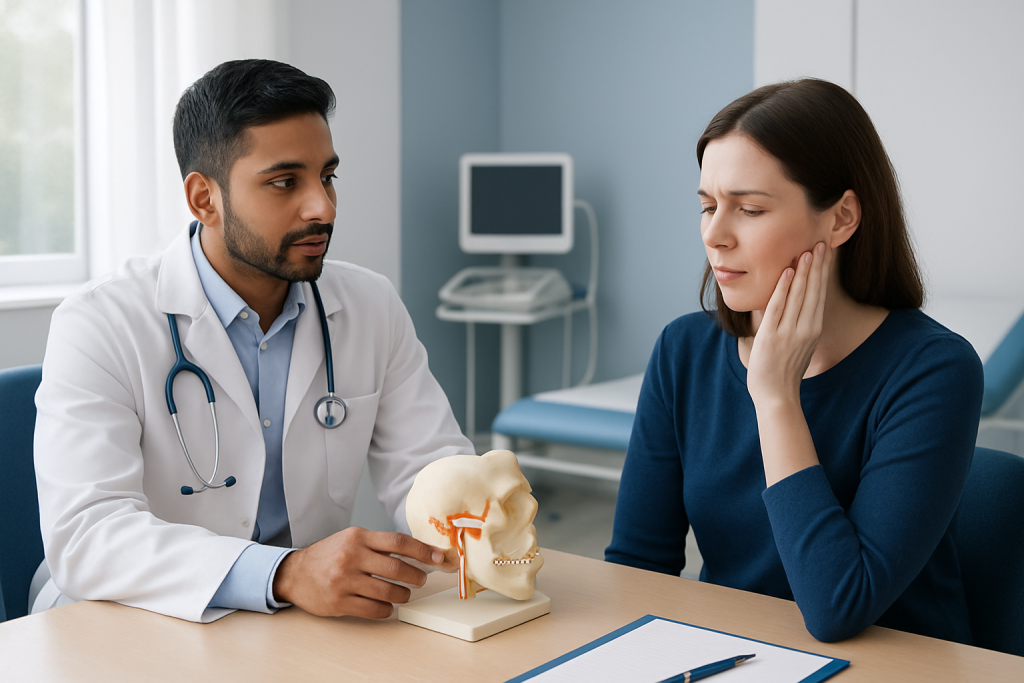
TMJ disorder usually develops from a mix of factors rather than a single cause. Muscle tension from clenching or grinding the teeth is a common contributor, especially during sleep or periods of emotional stress. Repeated overuse of the jaw, such as frequent gum chewing or wide mouth opening, may also add strain.
Joint-related causes can include arthritis, disc displacement, trauma to the jaw, or changes in the surrounding tissues. Dental alignment can sometimes play a role, although bite problems are not the explanation in every case. Because the joint is influenced by both mechanical and muscular factors, a thorough review is often needed before choosing treatment.
Certain factors may increase the chance of ongoing symptoms, including high stress levels, poor posture, sleep disruption, prior jaw injury, and habits that keep the jaw tense. Women are reported to seek care more often than men, though TMJ disorder can affect adults of any age.
Diagnosis
Diagnosis usually begins with a detailed history and a physical examination. A clinician may ask about pain patterns, chewing difficulties, jaw noises, headaches, recent injuries, stress levels, and habits such as tooth grinding or nail biting. The jaw, neck, and facial muscles are often examined for tenderness, asymmetry, and range of motion.
In many cases, the diagnosis is based on symptoms and examination findings alone. If the picture is unclear, or if symptoms are severe, imaging may be recommended to look more closely at the joint and nearby structures. Depending on the situation, this can include panoramic dental X-rays, CT, or MRI.
Some patients are referred to a dentist, oral and maxillofacial specialist, ENT physician, rheumatologist, or physical therapist. This broader evaluation can be especially useful for international patients who arrive with previous scans or treatment records and need a coordinated review before deciding on the next step.
Treatment Options
There is no single cure that fits every person with TMJ disorder, but many people improve with conservative care. Treatment usually begins with approaches that reduce strain on the jaw and calm irritated muscles or tissues. The goal is to restore comfortable function while avoiding unnecessary procedures.
Self-care and reversible treatments may include a soft-food period, warm compresses, gentle jaw exercises, posture correction, and avoiding habits that overload the joint. A dentist may recommend a night guard or stabilization splint if clenching or grinding is contributing to symptoms. Physical therapy can help address muscle tension, movement patterns, and neck posture.
If pain persists, medications may sometimes be used short term under medical guidance to ease inflammation or muscle spasm. In selected cases, injections, joint lavage, orthodontic review, or other procedures may be considered. Surgery is generally reserved for specific structural problems or cases that do not improve with less invasive care.
For people traveling from abroad, treatment planning often works best when the team reviews symptoms, scans, and prior dental work together. Acibadem Health Point’s multidisciplinary specialists and JCI-accredited hospitals diagnose and treat TMJ disorder for international patients in a coordinated way.
Prevention & Self-care
Daily habits can make a meaningful difference, especially when symptoms are mild or intermittent. The jaw usually responds better when it is not pushed to extremes. Smaller bites, softer textures during flare-ups, and avoiding chewy foods can reduce strain while tissues settle.
Helpful self-care steps may include:
- Keeping teeth slightly apart when at rest, with the tongue relaxed on the palate
- Avoiding gum chewing, pen biting, and jaw “testing” by repeatedly opening wide
- Using warm compresses for muscle tightness or short cold packs for recent irritation
- Practicing stress-management techniques such as breathing exercises or relaxation routines
- Improving sleep quality and considering a dental night guard if grinding is suspected
Posture matters as well. Forward-head posture and tension in the neck and shoulders can contribute to jaw strain, so regular movement breaks and ergonomic adjustments may help. These measures are not a cure on their own, but they often support recovery and lower the chance of flare-ups.
When to See a Doctor
Medical or dental evaluation is advisable if jaw pain lasts more than a few weeks, keeps returning, or begins to interfere with eating, speaking, or sleeping. A doctor should also be consulted if the jaw locks, opens only partway, or if the bite suddenly feels different. Early assessment can help distinguish TMJ disorder from tooth, ear, sinus, nerve, or inflammatory conditions that may need different care.
Urgent assessment is appropriate if symptoms follow an injury, if swelling or fever is present, or if there is significant difficulty opening the mouth. New facial numbness, unexplained weight loss, or severe pain that does not improve should also be reviewed promptly.
For people arranging care from another country, it can help to bring prior dental records, imaging, medication lists, and a brief symptom diary. That information makes it easier for the treating team to match the plan to the real cause of the problem and to organize follow-up after returning home.
Living With TMJ Disorder
Living with TMJ disorder is often about learning what the jaw tolerates and what tends to provoke symptoms. Some people do well with a simple routine and periodic dental review, while others need a longer treatment plan that also addresses stress, sleep, or posture. Progress may be gradual rather than instant, but improvement is common when the problem is managed consistently.
It is also important to avoid self-diagnosing every jaw click or ache as TMJ disorder. Similar symptoms can come from dental infection, ear conditions, nerve pain, arthritis, or injury. A careful diagnosis helps prevent unnecessary treatment and gives the best chance of lasting relief.
With the right guidance, most patients can continue eating, speaking, and working comfortably again. The aim is not only pain reduction, but also better jaw function and fewer flare-ups over time.
Frequently asked questions
01Is there a permanent cure for TMJ disorder?
There is not always a single permanent cure, because TMJ disorder can have several different causes. Many people, however, improve a great deal with conservative treatment that reduces strain and addresses the trigger behind the symptoms.
02What is the first treatment usually tried?
Treatment often begins with self-care, soft foods during flare-ups, stress reduction, and a dental evaluation. If grinding or clenching is suspected, a night guard or splint may be recommended.
03Can TMJ disorder go away on its own?
Mild symptoms sometimes settle with rest and better jaw habits. If pain keeps returning or the jaw starts locking, it is best to have it assessed rather than waiting indefinitely.
04Does TMJ disorder always need surgery?
No. Surgery is usually considered only when there is a specific structural problem or when other treatments have not helped. Most patients start with non-surgical, reversible options.
05Should a dentist or a doctor evaluate TMJ pain?
Either may be a good starting point, depending on the symptom pattern. Dentists, oral and maxillofacial specialists, ENT physicians, rheumatologists, and physical therapists may all be involved when needed.
06Can stress make TMJ symptoms worse?
Yes. Stress can increase jaw clenching and muscle tension, which may intensify pain or clicking. Relaxation techniques and sleep support can be useful parts of care.
This article is for general information only and is not a substitute for professional medical advice. Please consult a qualified doctor about your individual situation.
Joint and spine care in Turkey — expert assessment & treatment
JCI-accredited · board-certified surgeons · reply within 24h
Add us as a Preferred Source to see more of our trusted health content across Google Search, AI Overviews and Discover.