Symptoms of Hairline Fracture in Foot: Signs, Causes and When to See a Doctor

Key Takeaways
- Pain that increases with weight-bearing is a common early sign of a foot hairline fracture.
- Swelling, tenderness, and pain that improves with rest can point to a stress-type fracture.
- Overuse, sudden training changes, and low bone density can raise the risk.
- An exam and imaging tests may be needed because symptoms can overlap with a sprain.
- Rest, activity modification, and proper support are central to treatment and recovery.
Symptoms of a hairline fracture in the foot often begin as a dull, localized pain that worsens with walking, running, or standing. Because the signs can resemble a sprain or overuse injury, timely evaluation helps prevent the fracture from worsening and supports safer healing.
Overview
A hairline fracture in the foot is a small crack in a bone, often called a stress fracture when it develops from repeated load rather than one major injury. The symptoms of hairline fracture in foot usually begin subtly: discomfort that appears during activity, then lingers afterward, and may gradually start to show up with ordinary walking.
This kind of injury can happen to athletes, people who have recently increased their activity, and anyone whose foot is being asked to absorb more force than usual. It may involve the metatarsals, heel bone, navicular bone, or other parts of the foot. Because the pain is sometimes mistaken for a bruise or strain, many people keep using the foot until the crack becomes more irritated.
For international patients arranging care from another country, the practical question is often not just what the injury is, but how quickly it needs to be assessed. A careful orthopedic evaluation can distinguish a minor overuse injury from a fracture that needs immobilization and closer follow-up.
Symptoms
The earliest clue is usually pain in one specific spot on the foot. It may feel sharp at first with running, jumping, or long walks, then turn into an ache that is still present when the person rests. Unlike many soft-tissue injuries, the pain is often easy to point to with one finger.
Other common signs include swelling, mild bruising, and tenderness when pressure is applied to the area. Some people notice that the foot feels better in the morning and worse by the end of the day, especially after time on their feet. The discomfort may also increase when wearing shoes that press on the painful area.
Typical symptoms can include:
- Localized pain that worsens with weight-bearing
- Tenderness over one bone or a small area of the foot
- Swelling on the top, side, or bottom of the foot
- Pain that improves with rest but returns with activity
- Occasional limping or a change in walking pattern
Some people hear or feel a sudden worsening of pain after continuing activity on an already irritated foot. That change does not always mean the bone has moved, but it is a sign that the foot should be assessed rather than “pushed through.”
Causes & Risk Factors

Hairline fractures often develop when the same part of the foot absorbs repeated stress without enough time to recover. This can happen after a rapid increase in exercise, a change to harder training surfaces, or a switch to footwear that does not support the foot well. A long walk-heavy trip, standing for many hours, or a new job that keeps someone on their feet can also contribute.
Certain factors make these fractures more likely. People with low bone density, menstrual irregularities, nutritional deficiencies, or a history of previous stress fractures may be more vulnerable. Foot shape can matter too: high arches, flat feet, or altered gait mechanics can shift pressure onto a small area of bone.
Risk tends to rise when several factors overlap. For example, a runner who increases mileage quickly while recovering from another injury may place extra force on the foot before the bone has adapted. In travelers, jet lag, walking on unfamiliar terrain, and carrying luggage can make a mild injury feel more noticeable.
Diagnosis
A doctor usually starts with a history of the pain and a physical examination. The pattern of symptoms matters: where the pain is located, what makes it worse, and whether there was a recent increase in activity or an impact injury. The exam may include gentle pressure over the bone, movement tests, and an assessment of walking mechanics.
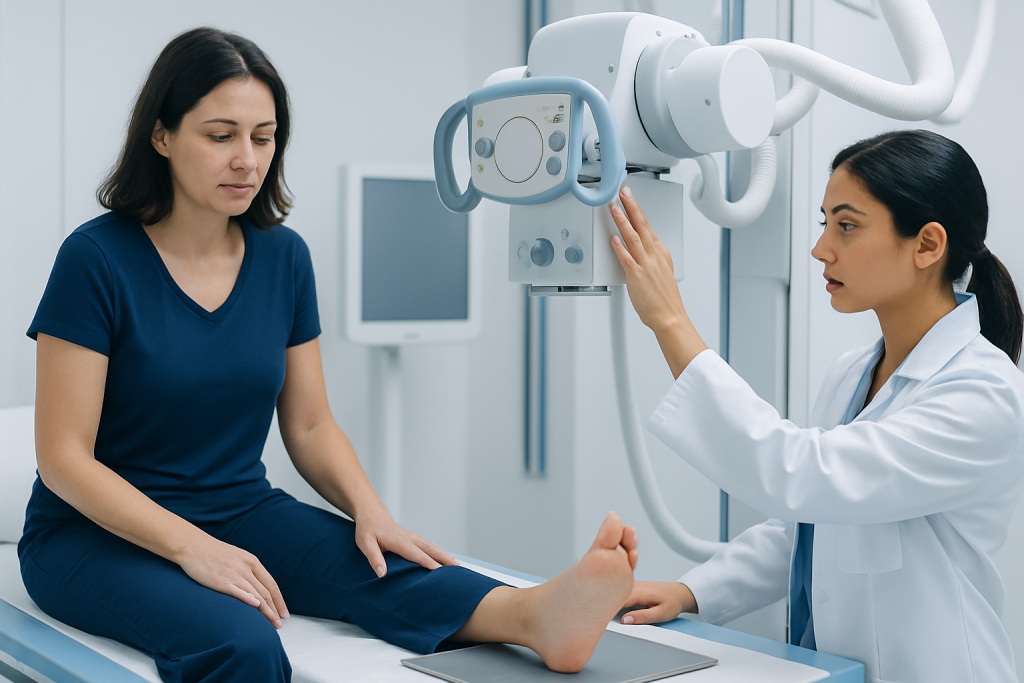
X-rays are often used first, but early stress fractures do not always show clearly on them. If the symptoms strongly suggest a fracture and the X-ray is normal, the doctor may recommend repeat imaging or a more sensitive test such as MRI, bone scan, or CT depending on the situation. These studies help confirm the diagnosis and show whether the crack is stable.
For patients traveling internationally, diagnosis may also include planning. A clinician may decide whether the foot should be protected before the person returns home, whether follow-up imaging is needed later, and how to reduce the chance of worsening during travel.
Treatment Options
Treatment depends on the location and severity of the fracture, but the main goal is to let the bone heal without additional stress. Rest from the activity that caused the pain is usually the first step. Many people also need temporary support such as a walking boot, stiff-soled shoe, or crutches if weight-bearing is painful.
Pain relief is generally managed with conservative measures and the doctor’s guidance. Ice, elevation, and modified activity can help reduce discomfort and swelling. In some cases, especially if the fracture is in a higher-risk bone or pain is significant, the foot may need a longer period of immobilization and closer orthopedic follow-up.
Healing is gradual. Returning to sport or long-distance walking too soon can slow recovery or turn a small crack into a more serious fracture. A doctor or rehabilitation specialist may recommend a stepwise return to activity once the foot is pain-free with normal daily use.
Prevention & Self-care
Prevention begins with load management. Increasing exercise time, distance, or intensity slowly gives bone and soft tissue time to adapt. Supportive shoes, appropriate rest days, and alternating high-impact activity with lower-impact options can all reduce stress on the foot.
Self-care is most useful when it supports healing rather than masking symptoms. If pain develops, the safest response is to reduce impact and seek assessment if the discomfort lasts more than a few days, becomes focal, or changes the way the person walks. Nutrition and bone health also matter, especially for people with recurring injuries or known low bone density.
Helpful habits include:
- Raising training volume gradually
- Replacing worn-out shoes when support declines
- Taking foot pain seriously early
- Maintaining adequate calcium and vitamin D intake as advised by a clinician
- Using cross-training to reduce repetitive load
For people recovering away from home, clear written instructions from the treating team can make follow-up easier across borders, especially if activity restrictions or repeat imaging are needed later.
When to See a Doctor
Medical evaluation is important when foot pain is localized, keeps returning with activity, or causes limping. A doctor should also be seen if swelling develops, the area is tender to touch, or the pain persists despite a few days of rest. These features can suggest a hairline fracture rather than a simple strain.
Prompt care is especially important if there was a sudden increase in pain, if walking becomes difficult, or if the person has risk factors such as osteoporosis, a recent change in training, or a prior stress fracture. Even when the injury seems mild, an early diagnosis can prevent the fracture from progressing.
Anyone traveling for treatment should arrange assessment before continuing long walks, flights, or sightseeing, since those activities can place extra stress on the foot. Acibadem Health Point’s multidisciplinary specialists and JCI-accredited hospitals can diagnose and treat this condition for international patients, with follow-up planning that supports recovery after travel.
Frequently asked questions
01What are the first symptoms of a hairline fracture in the foot?
The first signs are often a small area of pain that worsens with walking, running, or standing. Swelling and tenderness in one spot are also common. The pain may improve with rest but return once activity starts again.
02Can a hairline fracture in the foot heal on its own?
Many hairline fractures heal with rest and proper protection, but they should still be evaluated by a doctor. If the foot keeps being used, the crack can worsen and recovery can take longer. Treatment often depends on the bone involved and how painful the injury is.
03How can someone tell the difference between a sprain and a hairline fracture?
The two can feel similar at first, but a hairline fracture usually causes very focal tenderness over a bone and pain with weight-bearing. A sprain more often involves soft tissue around a joint. Because symptoms overlap, an exam and sometimes imaging are needed to tell them apart.
04Is it safe to keep walking on a suspected hairline fracture?
It is usually better to reduce weight-bearing until the injury is assessed. Continuing to walk or exercise on a fracture can increase pain and may delay healing. If the person is limping or the pain is getting worse, medical review is advisable.
05How long does recovery take?
Recovery time varies with the bone involved, the size of the crack, and how quickly the foot is protected. Many people improve over several weeks, but higher-risk fractures can take longer. A doctor can guide when normal walking and exercise can be resumed.
06What tests are used to diagnose a foot hairline fracture?
Doctors commonly begin with a physical exam and X-rays. If the X-ray is normal but the symptoms strongly suggest a fracture, MRI, CT, or bone scan may be used to look more closely. The choice depends on the suspected bone and the timing of the injury.
This article is for general information only and is not a substitute for professional medical advice. Please consult a qualified doctor about your individual situation.
Hair transplant in Turkey — costs, graft counts & a free assessment
JCI-accredited · board-certified surgeons · reply within 24h
Add us as a Preferred Source to see more of our trusted health content across Google Search, AI Overviews and Discover.