

Stickler Syndrome: Symptoms, Causes and Treatment
- 9 min read
- Published November 29, 2026
Key Takeaways
- Stickler syndrome is inherited and can affect several body systems, especially the eyes, ears, joints, and facial features.
- Early eye evaluation is important because some people have a higher risk of retinal problems and severe nearsightedness.
- Management usually focuses on monitoring, symptom relief, hearing support, and protecting vision and joint health.
- Genetic testing can help confirm the diagnosis and guide family counseling.
- Children and adults may benefit from coordinated care across specialties, especially when symptoms overlap.
Stickler syndrome is a genetic connective tissue disorder that can affect the eyes, ears, facial structure, joints, and sometimes the heart. Because its features can vary widely from one person to another, diagnosis often depends on recognizing a pattern of findings rather than a single test alone.
Overview
Stickler syndrome is a hereditary connective tissue condition. Connective tissue gives structure and support to many parts of the body, so changes in this tissue can show up in more than one place at once. A person may have eye problems, hearing differences, joint pain, facial features that are slightly different from usual, or a combination of these findings.
The condition is often noticed in childhood, but some people are not diagnosed until later because the signs can be subtle or may resemble more common concerns such as nearsightedness, frequent ear infections, or flexible joints. For families planning care across borders, this can mean that the first appointment is often not the last one; a careful diagnosis may involve genetics, eye care, ear care, and orthopedics working together.
There is no single course that fits everyone. Some individuals have mild symptoms and live active lives with periodic follow-up, while others need ongoing support to protect vision, hearing, or joint function. Understanding the pattern early helps clinicians tailor care before complications become harder to manage.
Symptoms

The symptoms of Stickler syndrome vary widely, even within the same family. A child may first come to attention because of very strong nearsightedness, repeated ear infections, a cleft palate or small jaw, or joints that seem unusually loose. In other cases, an adult may seek care after noticing hearing changes, early arthritis-like symptoms, or a family history that connects several seemingly unrelated problems.
Common features can involve several body systems:
-
Eyes: high myopia, a higher risk of retinal tears or detachment, cataracts, or other vitreous and retinal changes.
-
Ears: hearing loss that may be mild to moderate and can be conductive, sensorineural, or mixed.
-
Face and mouth: cleft palate, Pierre Robin sequence, a small lower jaw, or a flatter facial profile.
-
Joints and bones: hypermobility in childhood, pain, stiffness, or early degenerative joint changes later in life.
-
Spine and posture: scoliosis or other alignment issues in some people.
Because symptoms can be gradual, families sometimes normalize them until several pieces appear together. A pattern of eye, ear, and joint findings deserves medical review, especially when there is a known family history.
Causes & Risk Factors

Stickler syndrome is caused by changes in genes that help produce collagen, an important protein that supports connective tissues. When collagen formation is altered, structures that rely on it may develop differently or become more fragile over time. Different gene changes can produce different forms of the condition, which is one reason symptoms can range from mild to more complex.
The condition is usually inherited, most often in an autosomal dominant pattern, although other inheritance patterns can occur depending on the gene involved. In practical terms, this means an affected parent may pass the condition to a child, but a family history is not always obvious. Some cases arise from a new genetic change, so the absence of a known diagnosis in earlier generations does not rule it out.
Risk is higher when there is a family history of Stickler syndrome, early retinal problems, childhood hearing loss, cleft palate, or a combination of joint and facial features that suggest a connective tissue disorder. Genetic counseling can be especially helpful for families deciding about testing, future pregnancies, or care for children who may need evaluations in more than one country.
Diagnosis
Diagnosis starts with a detailed medical history and physical examination. Doctors look for the pattern of findings rather than relying on one symptom alone. Questions about vision, hearing, joint pain, facial development, cleft palate, and family history often provide the first clues.
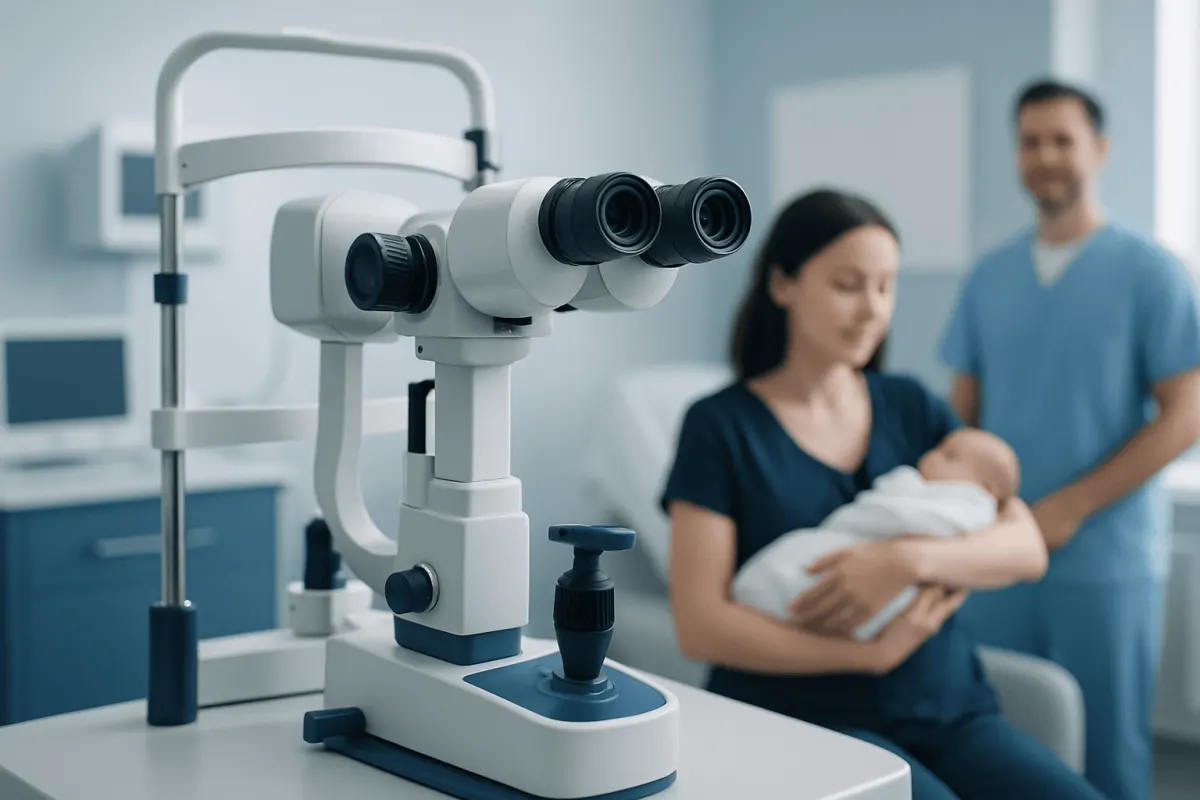
Several tests may be used to confirm or support the diagnosis. An eye examination by an ophthalmologist is important because retinal changes may be present even when vision seems stable. Hearing testing can identify hearing loss that might otherwise be mistaken for frequent ear infections or school-related listening difficulties. Imaging or orthopedic assessment may be used when joint or spine symptoms are present.
Genetic testing can help identify the specific gene involved and clarify the diagnosis. This can also be useful for relatives, since the result may guide surveillance and family planning. In international-patient settings, records from previous clinics, childhood photos, hearing results, and eye reports can be surprisingly useful when brought together before the first specialist visit.
Treatment Options
There is no cure that reverses the underlying genetic change, so treatment focuses on monitoring, symptom control, and preventing complications. The plan is usually individualized, because eye risk, hearing loss, jaw differences, and joint symptoms do not affect every person in the same way. Follow-up may continue over many years, with the exact schedule shaped by age and symptoms.
Eye care is often a central part of treatment. Regular retinal examinations help detect tears or detachment early, when treatment is more effective. People with severe nearsightedness may need updated glasses or contact lenses, and some may require procedures if complications occur. Sudden flashes of light, a shower of new floaters, or a curtain-like shadow in vision should be assessed promptly.
Other treatments may include hearing aids, speech and language support, treatment for recurrent ear problems, orthodontic or cleft palate care, and physical therapy for joint pain or mobility issues. In some cases, orthopedic surgery may be considered for specific structural problems, though conservative management is often the first step. Because care often spans several specialties, coordinated planning is especially valuable for patients traveling from abroad and hoping to complete multiple evaluations in a limited time.
Prevention & Self-care
Stickler syndrome itself cannot be prevented, but some complications can be reduced or detected earlier with regular care. For many families, the most practical self-care begins with staying organized: keeping eye, hearing, genetics, and orthopedic records together so that new clinicians can quickly see the full picture. This can be particularly helpful when moving between home-country and destination-country medical systems.
Useful self-care measures may include:
-
Attending regular eye and hearing follow-up appointments.
-
Watching for sudden changes in vision and seeking urgent assessment if they occur.
-
Using prescribed hearing aids or other assistive devices consistently.
-
Protecting joints with sensible activity choices and guided exercise when recommended.
-
Sharing the diagnosis with family members who may also benefit from genetic counseling or screening.
Children and adults may also benefit from education tailored to their lifestyle. For example, people with joint hypermobility may need advice about sports participation, while those with eye involvement may need guidance on eye protection and routine follow-up. A clear plan usually feels more manageable than trying to respond to each symptom in isolation.
When to See a Doctor
A medical review is worthwhile if a child or adult has a combination of high myopia, repeated ear problems or hearing loss, a history of cleft palate or small jaw, or unusually flexible joints. These features do not automatically mean Stickler syndrome, but they are enough to justify evaluation, especially when several occur together or when there is a family history.
Urgent eye assessment is important if there are flashes of light, a sudden increase in floaters, blurred or missing areas of vision, or a curtain-like shadow in the field of view. These symptoms can suggest a retinal problem and should not wait for a routine appointment. Hearing changes, persistent joint pain, or worsening mobility also deserve timely review, even if they have developed slowly.
For international patients, it can help to arrange a visit where genetics, ophthalmology, ENT, and orthopedics can coordinate the work-up rather than spacing it across many separate trips. At Acibadem Health Point, multidisciplinary specialists and JCI-accredited hospitals diagnose and treat conditions such as Stickler syndrome for international patients, with an emphasis on careful assessment and coordinated follow-up.
Living with Stickler Syndrome
Living with Stickler syndrome is often less about one dramatic treatment and more about steady, anticipatory care. When families know which organs need attention, they can plan school, work, travel, and sports with more confidence. The goal is not to limit life unnecessarily, but to keep risks visible and manageable.
Many people do well when their care is coordinated and their records are easy to share between providers. A patient who understands why repeated eye checks matter, or why hearing changes should be tracked over time, is better placed to make informed decisions. That is especially true when follow-up may continue after returning home from treatment abroad.
With the right monitoring and support, people with Stickler syndrome can address problems earlier and preserve function for longer. A thoughtful, multi-specialty approach often makes the biggest difference.
Frequently asked questions
01Is Stickler syndrome always easy to recognize in childhood?
No. Some children show clear signs early, while others have features that are mild or spread across different specialties. A diagnosis may become clearer only after eye, hearing, facial, joint, and family history details are reviewed together.
02Can Stickler syndrome affect vision even if glasses help with nearsightedness?
Yes. Glasses can correct refractive error, but they do not remove the risk of retinal complications in people who are susceptible. Regular eye examinations remain important even when vision seems well corrected.
03Does Stickler syndrome always cause hearing loss?
Not always, but hearing changes are common enough that testing is usually recommended. The type and degree of hearing loss vary, and some people notice it gradually rather than suddenly.
04Is Stickler syndrome inherited by every child of an affected parent?
Not necessarily. The inheritance pattern depends on the gene change involved, and not every child will be affected in every family. Genetic counseling can help clarify the chances for relatives.
05What specialists are usually involved in care?
An ophthalmologist is often essential, and many patients also benefit from genetics, ENT, audiology, orthopedics, orthodontics, or cleft palate specialists. The exact team depends on the person’s symptoms and age.
06When should retinal symptoms be treated as urgent?
Flashes of light, a sudden burst of new floaters, a dark curtain over vision, or a sudden drop in sight should be assessed promptly. These can be signs of retinal tearing or detachment and should not wait for a routine visit.
This article is for general information only and is not a substitute for professional medical advice. Please consult a qualified doctor about your individual situation.
Joint and spine care in Turkey — expert assessment & treatment
JCI-accredited · board-certified surgeons · reply within 24h
Add us as a Preferred Source to see more of our trusted health content across Google Search, AI Overviews and Discover.
How can we help you today?
Meet an Acibadem specialist by secure video, before you travel.
Book a video visit