Sore Eye When Blinking: What You Need to Know

Key Takeaways
- A sore eye when blinking usually comes from the eye’s surface or eyelids rather than the deeper eye structures.
- Dry eye, a trapped eyelash, infection, inflammation, or a corneal scratch are common causes.
- Vision changes, strong light sensitivity, discharge, swelling, or persistent pain deserve medical evaluation.
- Simple measures such as avoiding eye rubbing and using preservative-free lubricating drops may help some mild cases.
- Contact lens wearers and people with eye trauma should seek prompt care if blinking becomes painful.
A sore eye when blinking is often linked to surface irritation such as dryness, a foreign body, or a minor scratch on the eye. Most causes are treatable, but pain with vision changes, redness, swelling, or light sensitivity should be assessed by an eye doctor.
Overview
A sore eye when blinking is a symptom, not a diagnosis. It usually means that the surface of the eye, the eyelid, or the tissues around the eye are irritated, inflamed, or injured. Many people describe it as a sharp sting, a gritty sensation, or a tender spot that becomes more noticeable each time the eyelid moves.
In everyday life, this kind of discomfort is often caused by something relatively small, such as dryness, a lash under the eyelid, or a minor scratch on the cornea. Still, the eye is a delicate structure, and pain that continues, worsens, or comes with blurred vision should not be ignored.
For someone deciding whether to seek care, the key question is not just whether the eye hurts, but what else is happening at the same time. Redness, discharge, light sensitivity, swelling, or a sensation that something is stuck in the eye can help narrow the cause and guide the next step.
Symptoms
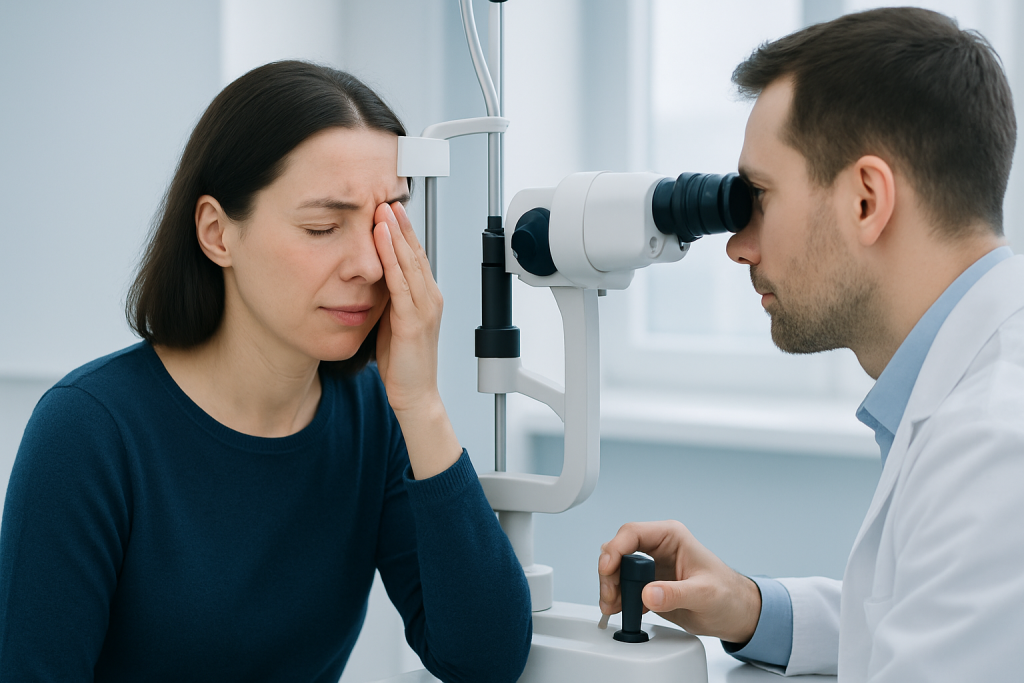
People with a sore eye when blinking may notice different patterns of discomfort depending on the cause. Some feel pain only when the eyelid closes, while others have a constant ache that becomes sharper during blinking. The eye may also feel dry, gritty, scratchy, or unusually sensitive.
Other symptoms can offer important clues. Redness, watery eyes, sticky discharge, crusting on the lashes, swelling of the eyelid, or increased sensitivity to light may point toward infection, inflammation, or irritation of the eye surface. A foreign body sensation is especially common when a small particle is trapped under the lid or when the cornea is scratched.
- Sharp or burning pain with blinking
- Redness or watery eyes
- Feeling that something is in the eye
- Light sensitivity
- Blurred or reduced vision
- Swollen or tender eyelids
Symptoms affecting only one eye often suggest a local problem in that eye, while pain in both eyes may be more consistent with dryness, allergy, or environmental irritation. When symptoms are paired with vision changes, urgent assessment is more important.
Causes & Risk Factors

The most common reason for pain in the eye when blinking is irritation of the ocular surface. Dry eye is one frequent example: when the tear film is unstable or insufficient, the eyelid can drag across the surface and make blinking uncomfortable. Air conditioning, wind, screen time, aging, and certain medications can all contribute to dryness.
Another common cause is a foreign body, such as dust, sand, makeup residue, or an eyelash. Even if the object is tiny, it can create a very noticeable scratchy or painful feeling with each blink. A corneal abrasion, which is a scratch on the clear front surface of the eye, can cause similar symptoms and often feels worse than the injury looks.
Inflammation and infection also matter. Conjunctivitis, blepharitis, styes, and inflammation of the cornea or deeper eye tissues can all make blinking sore. Less commonly, eye pain may relate to a more serious problem such as a corneal ulcer, uveitis, or elevated eye pressure, especially if the pain is severe or vision is affected.
Risk factors include contact lens wear, eye rubbing, poor eyelid hygiene, recent eye surgery, exposure to smoke or chemicals, and activities that increase the chance of eye injury. International travelers and people seeking care away from home should mention any recent flights, dusty environments, pool exposure, or new cosmetic products, as these details can be clinically relevant.
Diagnosis
Diagnosing a sore eye when blinking begins with a careful history and an eye examination. A clinician will usually ask when the pain started, whether the person wears contact lenses, whether there was any injury or exposure to dust or chemicals, and whether symptoms include discharge, light sensitivity, or reduced vision.
The eye exam often includes checking visual acuity, inspecting the eyelids and lashes, and examining the eye surface with a light or slit lamp. A dye called fluorescein may be used to highlight scratches, abrasions, or areas where the cornea is not protected well by tears. If a foreign body is suspected, the lower and upper lids may also be gently examined.
In some cases, the clinician may check eye pressure or look for deeper inflammation if the symptoms suggest more than simple surface irritation. For someone arriving from another country, bringing a list of current medicines, contact lens habits, and any recent treatments can help make the visit more efficient and reduce delays in follow-up planning.
Treatment Options
Treatment depends on the cause, which is why accurate diagnosis matters. Mild dryness may improve with preservative-free lubricating eye drops, better hydration, more frequent blinking during screen use, and reducing exposure to dry air or smoke. If the problem is a trapped eyelash or debris, careful removal by a clinician may bring quick relief.
Corneal abrasions and some infections may need prescription treatment. Depending on the situation, a doctor might recommend antibiotic ointment or drops, anti-inflammatory medication, or other targeted therapy. Contact lens wearers are often advised to stop wearing lenses until the eye has healed and a clinician confirms it is safe to resume.
It is important not to self-treat with leftover eye drops, especially steroid drops, unless they were prescribed for the current problem. Steroids can worsen certain infections and delay healing if used in the wrong setting. If pain is severe, worsening, or associated with vision changes, prompt professional evaluation is the safest path.
For patients who travel for eye care, treatment planning may include a clear schedule for follow-up, instructions for medications, and guidance on when they can safely fly home. Acibadem Health Point’s multidisciplinary specialists and JCI-accredited hospitals diagnose and treat eye conditions for international patients, with attention to both the eye problem and the practicalities of recovery away from home.
Prevention & Self-care
Not every sore eye when blinking can be prevented, but several habits may reduce the chance of irritation. Good hand hygiene, careful contact lens use, and avoiding eye rubbing are simple but effective measures. People who use contact lenses should follow their lens-care instructions closely and never wear lenses longer than recommended.
For dryness-related discomfort, regular breaks from screens, awareness of blinking, and the use of a humidifier in very dry environments can help. Protective eyewear is useful in dusty, windy, or worksite settings. Removing makeup before sleep and replacing old eye cosmetics may also lower irritation and infection risk.
Home care should stay gentle. Rinsing the eye with clean water or saline may help if a minor irritant is suspected, but nothing should be pressed or scraped against the eye. If symptoms do not settle quickly, or if the eye becomes more painful, red, or light-sensitive, self-care should give way to medical assessment.
When to See a Doctor
Medical evaluation is recommended if the sore eye when blinking lasts more than a short time, keeps returning, or is not improving with simple measures. It is especially important to seek prompt care if the person wears contact lenses, because lens-related infections can develop quickly and need timely treatment.
Immediate or urgent assessment is warranted if there is any change in vision, significant redness, swelling, discharge, severe light sensitivity, a chemical exposure, or a clear injury to the eye. Eye pain with nausea, headache, halos around lights, or a very hard-feeling eye also deserves attention because it may signal a more serious problem.
People should not wait if they suspect a foreign body that cannot be washed out, if the pain is intense, or if blinking remains painful after a day or two. An eye specialist can identify the cause, protect the cornea, and recommend the safest treatment plan.
Frequently asked questions
01What is the most common cause of a sore eye when blinking?
Dry eye, minor surface irritation, and small foreign bodies are among the most common causes. A corneal scratch or eyelid inflammation can also make blinking painful. Because the symptoms overlap, an exam is often the best way to identify the exact cause.
02Can a sore eye when blinking go away on its own?
Mild irritation sometimes settles with rest, lubrication, and avoiding eye rubbing. However, if pain continues, gets worse, or comes with redness, discharge, or vision changes, it should be checked by a doctor. Some causes need prescription treatment to heal properly.
03Should contact lens wearers worry if blinking hurts?
Yes, contact lens wearers should take eye pain seriously because lenses can increase the risk of corneal infection and scratches. They should stop wearing the lenses until a clinician advises otherwise. Prompt assessment is safest if the eye is red, painful, or sensitive to light.
04Is it safe to use eye drops for this symptom?
Lubricating drops can be helpful for dryness or mild irritation, especially if they are preservative-free. It is best to avoid using leftover prescription drops, particularly steroid drops, without medical advice. If there is any concern about infection or injury, an eye doctor should guide treatment.
05When is a sore eye when blinking an emergency?
It becomes urgent if there is sudden vision loss, severe pain, chemical exposure, a deep injury, or marked swelling. Severe light sensitivity, nausea with eye pain, or a foreign body that cannot be removed also warrant prompt care. When in doubt, it is safer to be examined sooner rather than later.
06What should someone do if something is stuck in the eye?
They should avoid rubbing the eye and try gentle rinsing with clean water or saline. If the sensation does not clear quickly, or if pain, redness, or blurred vision develops, a clinician should examine the eye. Trying to remove a deeply embedded object at home can cause more harm.
This article is for general information only and is not a substitute for professional medical advice. Please consult a qualified doctor about your individual situation.
Explore treatments in Turkey — costs, top hospitals & a free quote
JCI-accredited · board-certified surgeons · reply within 24h
Add us as a Preferred Source to see more of our trusted health content across Google Search, AI Overviews and Discover.