Skin Rash After a Tattoo: Causes and Warning Signs
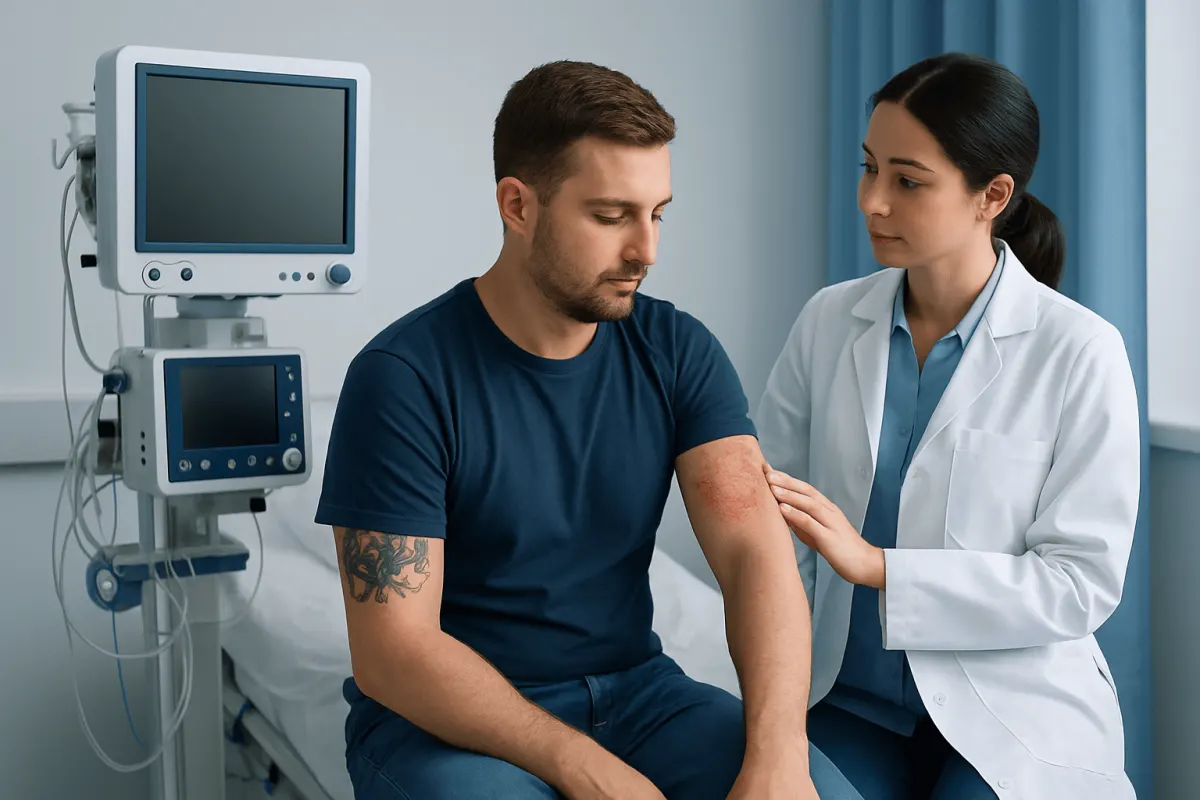
A skin rash tattoo reaction can develop soon after tattooing or years later. It may be caused by normal healing irritation, an allergy to pigment or aftercare products, infection, or a separate skin condition, so the appearance, timing, and associated symptoms matter.
Skin Rash Tattoo: What It Can Mean
A skin rash tattoo reaction may be a temporary part of early healing, but it can also signal irritation, allergy, infection, or a skin disorder that has appeared within or around the tattoo. Mild redness, slight swelling, sensitivity, and clear fluid during the first few days are often expected after tattooing because the needle has created many small skin injuries. These changes should gradually improve rather than become more intense.
A rash may look like itchy small bumps, raised plaques, dry or scaly skin, blisters, hives, or red areas extending beyond the tattoo. Some reactions occur within hours or days, while others develop months or years after the tattoo was completed. A delayed reaction may be limited to one pigment color or emerge after sun exposure, an illness, or use of a new skin product.
The term “tattoo rash” describes a symptom rather than one diagnosis. Looking at the timing, exact location, color distribution, symptoms, tattoo age, healing products, and general health can help a clinician distinguish likely causes. Persistent, painful, spreading, or recurrent changes should not simply be assumed to be normal tattoo healing.
How a Tattoo Rash May Look and Feel
Early healing commonly involves localized redness and tenderness that lessen over several days. As the surface heals, mild itchiness and flaking can occur. These symptoms should stay confined to the tattooed area and should not be accompanied by increasing pain, significant swelling, pus, or feeling unwell.
Irritant or allergic reactions often cause itch, burning, redness, dry scaling, or clusters of tiny bumps. The skin may become raised only where a particular ink color was used. Red, yellow, and some blue or green pigments have been associated with reactions, although any pigment or an ingredient in aftercare products may be involved.
Infection may cause increasing warmth, tenderness, swelling, cloudy drainage, crusting, or expanding redness. Some infections can produce pustules, open sores, or firm nodules. A rash may also represent an unrelated condition such as contact dermatitis, psoriasis, or eczema that has developed at a site of skin injury.
- More consistent with expected healing: mild symptoms that steadily improve.
- More concerning: symptoms that worsen after initially improving, spread outside the tattoo, or occur with fever or severe pain.
- Worth evaluating: itching or raised skin that persists beyond healing, even when it is not painful.
Common Causes and Related Conditions

Simple irritation is a frequent cause of a rash on a new tattoo. Friction from clothing, excessive washing, heavy ointments, fragranced lotions, adhesives, sweating, and sun exposure can inflame healing skin. Irritant reactions are not necessarily allergies; they occur when the skin barrier is disrupted or exposed to products that are too harsh for recently tattooed skin.
Allergic contact dermatitis can result from tattoo pigment, preservatives, metals, latex, topical antibiotics, fragrance, or other aftercare ingredients. An allergy may develop despite having tolerated tattoos or products in the past. It can appear soon after tattooing or after a long delay, and it may be particularly noticeable in one color of ink. Standard allergy patch testing may sometimes help, but it does not reliably predict every tattoo-pigment reaction.
Infection can arise when equipment, ink, water used to dilute ink, or aftercare practices introduce microorganisms into damaged skin. Bacterial infections are one concern, while less common infections from atypical mycobacteria or fungi may cause persistent bumps or sores. Infection risk is higher when tattooing is performed in settings with poor hygiene, but it can occur after any skin injury.
Some inflammatory diseases can develop in tattooed skin through a response to trauma known as the Koebner phenomenon. This may occur with conditions such as psoriasis or lichen planus. Granulomatous reactions, which can look like firm, raised papules or plaques in colored areas, may also occur. Rarely, these findings lead a clinician to look for an underlying inflammatory condition, but a tattoo rash alone does not establish such a diagnosis.
Assessment and Diagnosis
A doctor or dermatologist usually begins by examining the rash and asking when it began, whether the tattoo is new or old, which colors are affected, and what products or exposures occurred before symptoms started. It is useful to mention new lotions, sunscreens, soaps, medications, swimming, recent travel, other tattoos, and a history of eczema, psoriasis, allergies, or immune conditions.
Photos showing how the skin changed over time can be helpful, especially if the rash comes and goes. Depending on the appearance, a clinician may take a swab or culture if infection is suspected. They may also recommend a small skin biopsy when a rash is persistent, unusual, or needs to be distinguished from an allergic, granulomatous, infectious, or inflammatory condition.
Testing is tailored to the situation. Patch testing may identify reactions to certain allergens in skin products or metals, although tattoo inks are chemically complex and results do not always explain a pigment reaction. Blood tests are not usually needed for an uncomplicated tattoo rash, but may be considered when symptoms or examination findings suggest a wider health concern.
It is best not to start strong steroid creams, leftover antibiotics, or home remedies before an assessment if infection is possible. These treatments can alter the appearance of the rash, delay an accurate diagnosis, or in some cases make an infection harder to recognize.
Treatment Options and Safe Skin Care
Treatment depends on the cause. For uncomplicated irritation, a clinician may advise gentle cleansing with lukewarm water, careful patting dry, loose breathable clothing, and a simple fragrance-free moisturizer appropriate for healing skin. Avoiding scratching is important because broken skin increases the chance of secondary infection and can affect tattoo healing.
When an allergic or inflammatory reaction is diagnosed, treatment may include a suitable topical medicine or, in more extensive cases, other prescription treatment under medical supervision. The choice depends on the location, severity, duration, and whether infection has been excluded. A doctor may advise stopping a particular aftercare product and using only bland, fragrance-free alternatives while the skin recovers.
If there is a bacterial or other infection, the correct treatment is based on the likely organism and the severity of illness. This may include prescription antimicrobial medicine, wound care, or drainage when needed. People should not use non-prescribed antibiotics or attempt to drain blisters, bumps, or abscesses at home.
For persistent reactions to pigment, management can be more complex. Tattoo removal is not automatically the first step, and attempting removal during active inflammation may worsen a reaction. A dermatologist can discuss whether observation, medical treatment, biopsy, or a carefully planned removal approach is appropriate after the skin is stable.
Reducing the Risk of Tattoo-Related Rashes
Choosing a reputable tattoo professional who follows local hygiene standards is an important preventive step. Equipment should be sterile or single-use where appropriate, inks should be intended for tattooing, and the work area should be clean. People should be cautious about unregulated inks, ink dilution practices, and tattooing over irritated, sunburned, infected, or actively inflamed skin.
Before and after tattooing, following the artist’s written aftercare instructions is helpful, provided they are consistent with advice from a healthcare professional. In general, this means clean hands before touching the tattoo, gentle washing, avoiding prolonged soaking, and limiting friction and sun exposure while the skin heals. Swimming pools, hot tubs, lakes, and seawater are usually best avoided until the surface has healed.
New skincare products should not be introduced onto a healing tattoo without a clear reason. Fragrances, essential oils, harsh exfoliants, alcohol-based products, and thick occlusive layers can irritate the skin. People with a history of severe allergic contact dermatitis, chronic skin disease, or previous tattoo reactions may benefit from discussing risks with a dermatologist before getting another tattoo.
After healing, regular sun protection can help protect tattooed skin and may reduce sun-triggered irritation in susceptible people. Sunscreen should be applied only once the tattoo is fully healed, and any recurrent rash after sun exposure should be reviewed by a clinician.
When to Seek Medical Care
Urgent medical evaluation is appropriate for fever, rapidly spreading redness, severe or increasing pain, marked swelling, red streaks moving away from the tattoo, pus, extensive blisters, or skin that becomes dark, numb, or unusually cold. Emergency care is also needed for signs of a severe allergic reaction, including trouble breathing, swelling of the lips, tongue, or face, widespread hives, dizziness, or fainting.
A doctor should assess a rash that does not improve with gentle skin care, worsens after the first few days, repeatedly returns, spreads beyond the tattoo, or causes persistent itching, scaling, bumps, or changes in skin texture. Evaluation is particularly important for a new rash on an old tattoo, because the cause may not be related to recent tattoo healing.
People who have diabetes, reduced immune function, circulation problems, or a history of significant skin disease should seek advice promptly if a tattooed area appears infected or is not healing normally. They should not delay care because symptoms seem mild at first.
Acıbadem Health Point’s multidisciplinary specialists and JCI-accredited hospitals can assess tattoo-related skin symptoms and coordinate dermatology care for international patients when appropriate. A timely clinical review can clarify the cause and support safe, individualized treatment.
Frequently asked questions
01Is it normal to get a rash after a tattoo?
Mild redness, sensitivity, itching, and flaking can be part of normal healing during the first days after a tattoo. However, a true rash, worsening redness, increasing pain, pus, or symptoms that do not improve should be assessed by a healthcare professional.
02Can a tattoo cause an allergic reaction years later?
Yes. Delayed reactions to tattoo pigment can occur months or years after tattooing, sometimes affecting only one ink color. A rash in an old tattoo can also be triggered by sun exposure, new skin products, or an unrelated inflammatory skin condition, so medical assessment is useful.
03What does a tattoo infection look like?
Possible signs include worsening pain, heat, swelling, expanding redness, cloudy drainage, pustules, or sores. Fever, chills, red streaks, or rapidly spreading symptoms require urgent medical care because they may indicate a more significant infection.
04Should a person use hydrocortisone cream on a tattoo rash?
A topical steroid may be helpful for some allergic or inflammatory rashes, but it should not be used without advice when infection is possible. A clinician can determine the likely cause and recommend the safest treatment for the tattooed skin.
05Can scratching a tattoo rash damage the tattoo?
Scratching can injure healing skin, introduce bacteria, and increase inflammation. It may also interfere with normal healing and affect how the tattoo settles, so keeping nails short and using clinician-approved itch relief is preferable.
06Should a tattoo be removed if it causes a rash?
Not always. The first step is identifying and treating the cause, particularly excluding infection or a broader skin condition. Removal may be considered for some persistent pigment reactions, but it should be discussed with a dermatologist because procedures can sometimes aggravate active inflammation.
This article is for general information only and is not a substitute for professional medical advice. Please consult a qualified doctor about your individual situation.
Explore treatments in Turkey — costs, top hospitals & a free quote
JCI-accredited · board-certified surgeons · reply within 24h
Add us as a Preferred Source to see more of our trusted health content across Google Search, AI Overviews and Discover.