

Skin Allergy Problem: Causes, Symptoms, Diagnosis and Treatment
- 11 min read
- Published November 27, 2026
Key Takeaways
- Skin allergy problems often appear as itching, redness, swelling, hives, or dry, irritated patches.
- Common triggers include metals, fragrances, cosmetics, plants, latex, foods, and some medicines.
- Diagnosis usually depends on a careful history and, in some cases, patch testing or other allergy tests.
- Treatment focuses on avoiding triggers, calming inflammation, and relieving itching safely.
- Medical review is important if symptoms are widespread, persistent, recurrent, or affect breathing or the face/eyes.
A skin allergy problem happens when the skin reacts to an allergen or irritant, leading to redness, itching, swelling, or a rash. The right diagnosis matters because similar-looking skin changes can have very different causes and treatments.
Overview
A skin allergy problem is the body’s immune response to a substance that the skin or the whole body has come to recognize as a trigger. It may appear after touching something directly, after exposure to an airborne substance, or as part of a broader allergic reaction that shows up on the skin.
For many people, the first clue is not a medical term but a practical problem: a patch of skin starts itching, stinging, or turning red after a new soap, watch strap, cosmetic, plant, or food-related exposure. Because several skin conditions can look similar, the most useful next step is not guessing the cause, but identifying the pattern and the trigger.
Skin allergy problems range from short-lived hives to longer-lasting eczema-like rashes. Some are mild and settle with simple avoidance and soothing care, while others need medical assessment to prevent repeated flare-ups or to rule out infection or another skin disease.
Symptoms
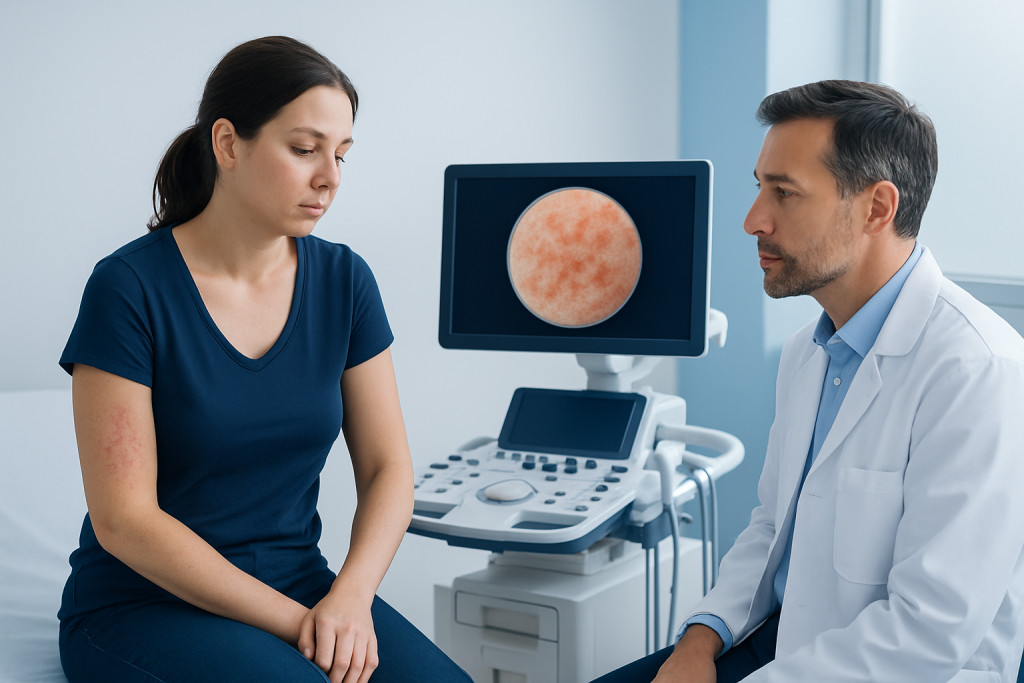
Symptoms can vary widely, but itching is one of the most common features. The skin may also become red, swollen, warm, dry, scaly, bumpy, or blistered. In allergic contact dermatitis, the rash often appears where the skin touched the trigger, such as under jewelry, on the hands, around the waistline, or on the face after a cosmetic product.
Hives are another common allergic skin reaction. These are raised, pale or red welts that can appear suddenly, move around the body, and fade within hours, only to return elsewhere. Some people also notice a burning or prickling sensation rather than itch, especially when the reaction is stronger.
More concerning symptoms can include swelling of the lips, eyelids, tongue, or throat; widespread rash with dizziness; or breathing difficulty. These signs may suggest a severe allergic reaction and should be treated as urgent.
- Redness or blotchy patches
- Itching or burning
- Swelling or puffiness
- Dry, cracked, or scaly skin
- Hives or raised welts
- Blisters or oozing in some cases
Causes & Risk Factors
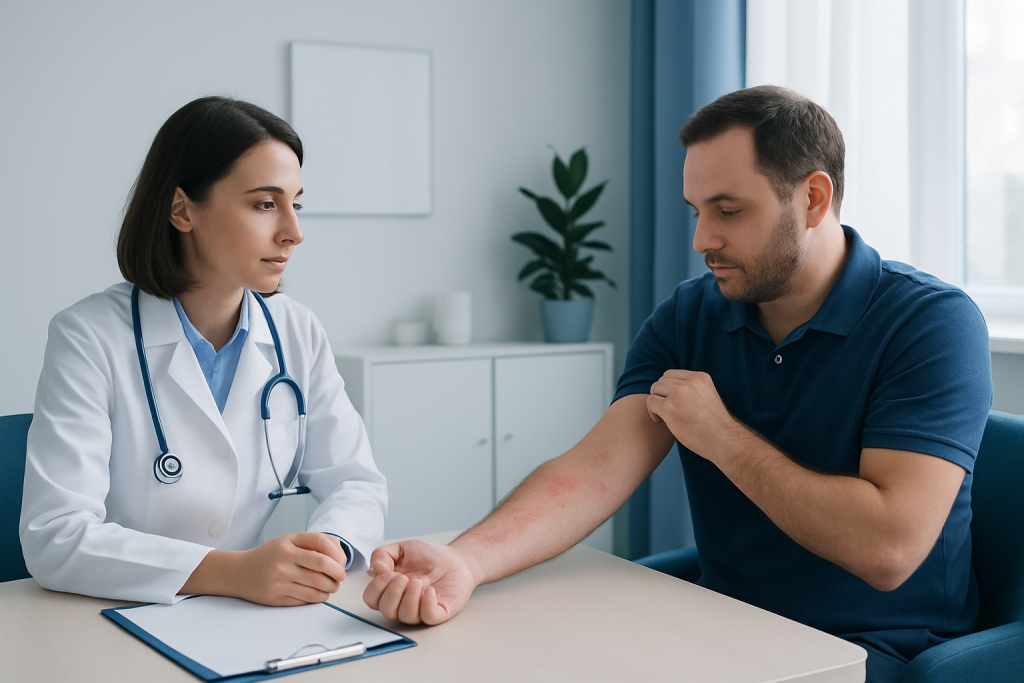
A skin allergy problem usually starts with exposure to a trigger. Common contact allergens include nickel in jewelry or fasteners, fragrances, preservatives in skin-care products, rubber chemicals, hair dye ingredients, and certain plant substances. Irritants such as harsh soaps or repeated handwashing can worsen the skin barrier and make reactions more likely, even when they are not true allergies.
Some skin allergies are part of a broader atopic tendency, meaning the person may also have asthma, hay fever, or eczema. A family history of allergies does not guarantee a skin reaction, but it may increase susceptibility. Occupational exposure can also matter, especially for people who work with cleaning agents, metals, solvents, gloves, adhesives, or hair and beauty products.
Medication reactions, insect stings, foods, latex, and airborne allergens can also affect the skin. In international patients, travel itself may complicate the picture because a new climate, different laundry products, hotel toiletries, sun exposure, or unfamiliar foods can all act as triggers during a trip.
Diagnosis
Diagnosis begins with a detailed history. A clinician usually asks when the rash started, where it appears, what it looks and feels like, how long it lasts, and whether there has been contact with new products, plants, metals, or medications. Photographs taken during a flare can be very helpful, especially if symptoms come and go before the appointment.
Physical examination often gives important clues. For example, a sharply bordered rash where a watch touches the skin points toward contact dermatitis, while fleeting raised welts suggest hives. If the cause is not obvious, a doctor may recommend patch testing to look for delayed skin allergies to common substances. In some cases, blood tests, skin prick testing, or other examinations may be needed to evaluate broader allergic disease.
Because rashes can sometimes resemble fungal infections, psoriasis, eczema, scabies, or a drug eruption, diagnosis is not just about labeling the skin. It is about matching the pattern to the right cause so the treatment is both effective and safe.
Treatment Options
Treatment depends on the type of reaction and how severe it is. The first step is usually to stop exposure to the suspected trigger whenever possible. If the skin has reacted to a cosmetic, metal, latex product, or detergent, continued use can keep the inflammation active even when the rash is being treated.
Doctors may recommend anti-inflammatory creams, oral medicines for itch, or other treatments based on the diagnosis. Moisturizers often play an important role because they help restore the skin barrier and reduce dryness that can intensify itching. For hives or more widespread allergic reactions, an oral antihistamine may be considered, while more significant inflammation may need prescription therapy.
If the reaction is severe, involves the face or breathing, or appears after a medication or sting, urgent evaluation is important. In those situations, treatment may need to be immediate and medically supervised. For patients traveling from abroad, this is one reason why a clear diagnosis and an organized follow-up plan matter: treatment should not stop at symptom relief, but also address how to prevent the next flare once the patient returns home.
- Avoiding the triggering substance
- Using gentle, fragrance-free skin care
- Applying prescribed topical treatments as directed
- Considering antihistamines when appropriate
- Seeking urgent care for severe or spreading reactions
Prevention & Self-care
Prevention starts with pattern recognition. If a rash appears after certain products, metals, foods, or activities, keeping a brief symptom diary can help identify the common thread. People who already know they react to a specific substance should read labels carefully and choose alternatives that are less likely to irritate the skin.
Skin-barrier care can make a meaningful difference. Mild, unscented cleansers, lukewarm water, regular use of moisturizers, and avoiding unnecessary scrubbing can reduce irritation. After a flare, it is usually wise to pause new cosmetic products until the skin is calm again.
Practical steps also matter during travel or busy work periods, when routines change. Packing familiar skin products, carrying a list of known allergens, and asking about ingredients before using local cosmetics or topical medications can lower the chance of an unexpected flare. For people with repeated reactions, patch-test results or an allergy plan can be useful to share with doctors in other countries.
- Choose fragrance-free skin and laundry products
- Remove jewelry or accessories if they seem to trigger a rash
- Wear protective clothing when handling plants or chemicals
- Keep nails short to reduce skin damage from scratching
- Seek advice before trying new creams on already inflamed skin
When to See a Doctor
Medical advice is recommended if the rash keeps returning, lasts more than a short time, becomes painful, or interferes with sleep or daily activities. A doctor should also assess any rash that is spreading quickly, oozing, crusting, or accompanied by fever, because these features can suggest infection or another condition in addition to allergy.
Urgent care is needed if there is swelling of the lips, tongue, throat, or any breathing difficulty. Even when symptoms seem to improve, a review may still be useful if the trigger is unclear, because repeated exposure can make future reactions harder to control.
Patients coming from abroad often benefit from an organized evaluation that combines dermatology and allergy expertise, especially when the rash has multiple possible causes. Acibadem Health Point’s multidisciplinary specialists and JCI-accredited hospitals diagnose and treat skin allergy problems for international patients, with attention to both immediate relief and longer-term prevention.
Living With Recurrent Skin Allergy Problems
When skin allergy problems recur, the goal shifts from reacting to each flare to building a practical long-term plan. That plan may include trigger avoidance, a simple skin-care routine, and clear instructions on what to do if symptoms return. Patients often do best when they understand which findings are expected and which ones need prompt review.
It can also help to keep a record of products used, foods eaten, new medications started, and where the rash appeared. This makes follow-up appointments more productive, especially when care is being coordinated across borders or between different specialists. A well-documented history can save time and reduce trial-and-error treatment.
With the right assessment, most skin allergy problems can be managed effectively. The key is to identify the pattern early, avoid repeated exposure, and use treatment in a way that matches the cause rather than just the appearance of the rash.
Recovery and Follow-up
Recovery depends on the trigger and how long the skin was inflamed before treatment started. Some reactions settle quickly once exposure stops, while others need time for the barrier to heal. Even after the visible rash improves, the skin may remain sensitive for a while, so gentle care is still important.
Follow-up can be useful if symptoms return, if a patch test is planned, or if a medicine needs adjustment. For people with a known allergy, follow-up may also focus on prevention: which products to avoid, which labels to watch, and what to do if an accidental exposure happens.
For international patients, follow-up does not always need to end with discharge. A clear written plan, translated instructions when needed, and guidance on which symptoms require re-evaluation can make recovery smoother after returning home.
Frequently Overlooked Triggers
Some triggers are easy to miss because they are hidden in everyday routines. Personal-care items labeled as “natural” may still contain fragrant plant extracts or preservatives, and household items such as wipes, cleaning sprays, or air fresheners can affect sensitive skin. Even a new pillowcase detergent or hotel soap can be enough to provoke a rash in some people.
Occupational and hobby-related exposures also matter. Gloves, adhesives, paints, hair products, craft supplies, and repeated hand sanitizing can all contribute to irritated or allergic skin changes. When the same rash keeps appearing in the same area, the location itself often offers an important clue.
Careful review of recent changes is often more helpful than trying to remember every exposure over months or years. That is why a structured consultation can be so valuable: it turns a confusing skin problem into a manageable list of likely causes.
Frequently asked questions
01What is a skin allergy problem?
A skin allergy problem is a reaction in which the skin becomes inflamed after exposure to an allergen or irritant. It may cause itching, redness, swelling, hives, or a rash that appears in the area of contact or more widely on the body.
02How can someone tell if a rash is allergy-related?
The pattern often offers clues, such as a rash appearing soon after a new product, jewelry, medication, food, or plant exposure. However, many skin conditions look alike, so a doctor may need to examine the rash and ask detailed questions before confirming the cause.
03Can stress cause a skin allergy problem?
Stress does not usually cause an allergy by itself, but it can make itching and skin inflammation feel worse. It may also make existing skin conditions harder to manage, so stress reduction can support overall skin care.
04What tests are used to diagnose skin allergies?
Doctors may use a history and physical examination first, then recommend patch testing, skin prick testing, or blood tests depending on the suspected trigger. The choice of test depends on whether the reaction seems to come from direct skin contact, a food or airborne allergen, or a broader allergic condition.
05When should a person seek urgent care for a skin allergy?
Urgent care is needed if there is trouble breathing, swelling of the tongue or throat, dizziness, or rapid spreading of the reaction. These symptoms can signal a severe allergic reaction and should not be watched at home.
06Can skin allergy problems come back?
Yes, they can return if the trigger is still present or if the skin remains sensitive. Identifying the cause, avoiding repeated exposure, and following a doctor’s treatment plan are the best ways to reduce recurrences.
This article is for general information only and is not a substitute for professional medical advice. Please consult a qualified doctor about your individual situation.
Explore treatments in Turkey — costs, top hospitals & a free quote
JCI-accredited · board-certified surgeons · reply within 24h
Add us as a Preferred Source to see more of our trusted health content across Google Search, AI Overviews and Discover.



How can we help you today?
Meet an Acibadem specialist by secure video, before you travel.
Book a video visit