Silicone Implant Types: Round and Shaped Options
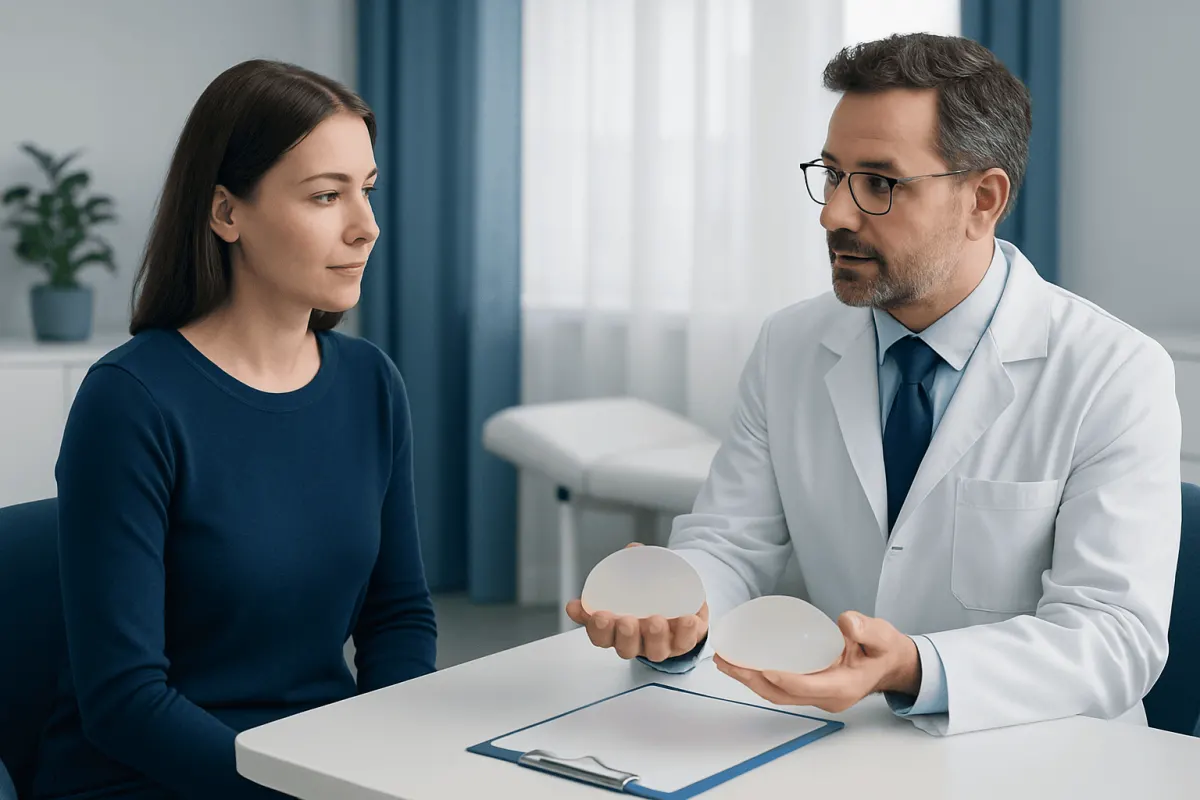
Silicone implants types include round and shaped implants with different gel cohesiveness, profiles and shell surfaces. The best choice is individual and should be made with a qualified plastic surgeon after discussing goals, anatomy, recovery needs and long-term follow-up.
Overview: Choosing Among Silicone Implants Types
Silicone implants types include round and shaped implants filled with silicone gel, with choices in gel cohesiveness, size, profile and shell surface. The appropriate option depends on a person’s body, goals, breast tissue and tolerance for trade-offs; no type is best for everyone.
Silicone breast implants can be used for cosmetic breast augmentation, breast reconstruction after cancer treatment or trauma, correction of asymmetry, and revision of earlier breast surgery. They are made with a silicone elastomer outer shell and silicone gel filling, designed to add volume or restore breast shape.
Results are visible after surgery, although swelling, implant position and scar maturation continue to change during healing. A consultation with a board-certified or appropriately accredited plastic surgeon helps set realistic expectations about breast size, shape, scars, sensation and the possibility of future procedures.
Understanding Implant Shape, Gel and Surface
Round implants provide fullness across the breast and are commonly chosen when upper-breast volume is desired. Shaped implants, sometimes called anatomical implants, are designed to have more fullness in the lower portion and may suit selected reconstruction or contour goals; because their shape has a fixed orientation, rotation can affect the breast appearance.
Silicone gel can vary in cohesiveness. More cohesive gel tends to hold its shape more firmly and is sometimes described as gummy-bear gel, while less cohesive gel may feel softer. Cohesiveness describes the gel’s physical behavior and does not by itself establish that one implant is safer or healthier than another.
Implants also differ in projection, diameter and surface. Smooth and textured surfaces have different characteristics, and availability varies by country and manufacturer. Textured implants have been linked with a higher risk of breast implant-associated anaplastic large cell lymphoma, so surgeons discuss surface choice carefully along with current local regulatory guidance.
Candidacy and Preoperative Planning
Suitable candidates are generally adults in good overall health who understand that implants can change breast appearance but cannot create perfect symmetry or stop natural aging. Candidates should have stable expectations and be able to attend follow-up appointments. Eligibility rules, including minimum ages for cosmetic surgery, vary between countries and devices.
During consultation, the surgeon reviews medical history, medications, allergies, previous breast operations, smoking or nicotine use, family history and plans for pregnancy. A breast examination and, when appropriate, breast imaging may be recommended before surgery. Active infection, untreated medical conditions or uncontrolled diabetes may need to be addressed first.
Implant selection should account for chest width, skin quality, existing breast tissue and desired proportions rather than cup size alone. People considering future pregnancy should discuss this openly, as pregnancy and breastfeeding can change breast shape and may affect aesthetic results regardless of implant type.
How the Breast Implant Procedure Works
Before surgery, the surgeon marks the planned incision and implant position while the patient is upright. Breast implant surgery is commonly performed under general anesthesia. The operation may be done as a day procedure, although the plan depends on the extent of surgery, medical history and whether reconstruction is also being performed.
The surgeon makes an incision, often in the breast crease, around the lower edge of the areola, or occasionally in the armpit. A pocket is created either above the chest muscle, below it, or partly beneath it in a dual-plane position. The selected implant is placed into the pocket, its position is checked, and the incision is closed in layers.
Dressings, a surgical bra or another support garment may be used after the procedure. The care team provides instructions for pain relief, bathing, wound care, sleeping position, arm movements and follow-up. The exact technique and incision location influence scarring, sensation, breastfeeding considerations and recovery, so these points should be discussed before consenting to surgery.
Recovery Timeline and Expected Results
Recovery differs between individuals and according to implant placement and the type of surgery performed. Most people do not need strict bed rest after breast implants; resting at home is important, but gentle walking soon after surgery is usually encouraged to support circulation and general recovery.
- First few days: soreness, tightness, swelling and fatigue are common. Assistance with daily tasks may be useful.
- First one to two weeks: many people can return to light, non-strenuous activities if their surgeon agrees. Driving should wait until a person is comfortable, mobile and no longer taking sedating pain medicine.
- Several weeks: lifting, vigorous exercise, chest-focused workouts and swimming are usually restricted until healing is sufficient.
- Several months: swelling reduces, scars mature and implants settle into a more natural position.
A surgeon’s instructions should take priority over general timelines. Wearing the recommended support garment, avoiding nicotine, keeping follow-up visits and reporting unexpected symptoms can support safer healing. Final cosmetic results may take several months, and breast shape may continue to change with age, weight changes and pregnancy.
Benefits, Risks and Long-Term Follow-Up
Potential benefits of silicone implants include increased breast volume, improved balance between the breasts, restoration of shape after pregnancy or weight loss, and reconstruction after mastectomy. Silicone gel implants are often selected because many people feel they provide a breast-like consistency, but individual experience of look and feel varies.
All surgery carries risks. Possible short-term complications include bleeding, infection, fluid collection, anesthesia-related problems, delayed wound healing, pain, changes in nipple or breast sensation, visible scars, implant malposition and asymmetry. Some complications need medication, drainage or another operation.
Over time, the scar tissue around an implant may tighten, a condition called capsular contracture. Implants can also rupture or develop folds, and silicone gel rupture may be silent, meaning there are no clear symptoms. In the United States, Food and Drug Administration labeling recommends ultrasound or MRI screening beginning five to six years after silicone gel implantation and then every two to three years; follow-up recommendations can differ elsewhere.
Breast implants are not lifetime devices, and replacement is not automatically required at a fixed number of years. However, future surgery may be needed for rupture, contracture, cosmetic changes or personal preference. Rare implant-associated cancers have been reported in the capsule or fluid around implants, particularly with some textured devices, so persistent late swelling, a new lump or breast shape change should be assessed promptly.
Self-Care and When to Seek Medical Care
Preparation can reduce avoidable risks. Patients should share all medicines and supplements with the surgical team, follow instructions about eating and drinking before anesthesia, and avoid smoking, vaping and nicotine products as advised. Maintaining good nutrition, arranging practical help at home and planning time away from strenuous activities can make the early recovery period more manageable.
After surgery, patients should take prescribed medicines only as directed, care for incisions as instructed and avoid massage or exercises unless their surgeon specifically recommends them. Regular breast health care remains important. People with implants should tell mammography staff about them because additional views may be needed for breast cancer screening.
When to seek medical care
Patients should contact their surgical team for increasing redness, warmth, drainage, fever, worsening pain, sudden swelling of one breast, a new breast lump or a noticeable change in shape. Severe breathing difficulty, chest pain or signs of a serious allergic reaction require urgent emergency care. Acıbadem Health Point’s multidisciplinary specialists at JCI-accredited hospitals can assess breast implant concerns and provide treatment planning for international patients.
Questions People Commonly Ask Before Surgery
How long is bed rest after breast implants?
Strict bed rest is usually not required after breast implant surgery. Most patients are encouraged to take short, gentle walks on the day of surgery or soon afterward, while resting frequently and avoiding lifting, driving and strenuous activity. The surgeon may adjust this advice for a more complex procedure or an individual health condition.
What is the healthiest breast implant?
There is no universally healthiest breast implant. Silicone and saline implants each have benefits and limitations, while the safest choice depends on individual anatomy, medical history, surgical technique, device approval status and follow-up plans. A qualified surgeon can explain whether a smooth or textured surface, round or shaped form, and silicone or saline filling is appropriate for a person’s circumstances.
What I wish I knew before breast implants?
Many people find it helpful to know that implants do not last forever, recovery requires patience, and results can change with aging, pregnancy and weight fluctuations. It is also important to understand the likely scar location, the possibility of altered sensation, the need for ongoing screening, and the chance that revision surgery may be needed in the future.
What are the downsides of silicone breast implants?
Possible downsides include surgical scars, recovery restrictions, capsular contracture, rupture, changes in sensation, the expense and recovery associated with possible future surgery, and the need for monitoring because rupture can be silent. Some people also report systemic symptoms sometimes called breast implant illness; their causes are not fully established, and persistent symptoms should be discussed with a doctor rather than self-diagnosed.
Frequently asked questions
01How long do silicone breast implants last?
Silicone breast implants do not have a fixed expiration date, but they are not considered lifetime devices. They do not need automatic replacement after a specific number of years, although removal or exchange may become necessary if a complication develops or a person wants a different result.
02Can a silicone implant rupture without symptoms?
Yes. A silicone gel implant rupture may be silent because the gel can remain within the surrounding scar capsule. Ultrasound or MRI can help assess implant integrity when recommended by a surgeon or device guidance.
03Can someone breastfeed after silicone breast implant surgery?
Many people can breastfeed after breast implant surgery, but it cannot be guaranteed. Breastfeeding ability may be influenced by the incision, implant placement, previous breast surgery and individual milk production.
04Do silicone implants affect mammograms?
Implants can obscure some breast tissue on standard mammography images. Patients should always tell the imaging center that they have implants so the team can use appropriate positioning and additional views when needed.
05What is capsular contracture?
Capsular contracture occurs when the natural scar tissue around an implant becomes unusually firm or tight. It may cause hardness, discomfort, distortion or a change in implant position, and more significant cases may require surgery.
06What is breast implant-associated anaplastic large cell lymphoma?
Breast implant-associated anaplastic large cell lymphoma is a rare cancer of immune cells that develops in the fluid or capsule around an implant rather than in breast tissue itself. It has been reported more often with textured implants, and late swelling, fluid buildup or a new lump should be medically evaluated.
This article is for general information only and is not a substitute for professional medical advice. Please consult a qualified doctor about your individual situation.
Oncology care in Turkey — second opinion and treatment plan
JCI-accredited · board-certified surgeons · reply within 24h
Add us as a Preferred Source to see more of our trusted health content across Google Search, AI Overviews and Discover.