Sciatica Yoga Poses for Gentle, Safe Mobility
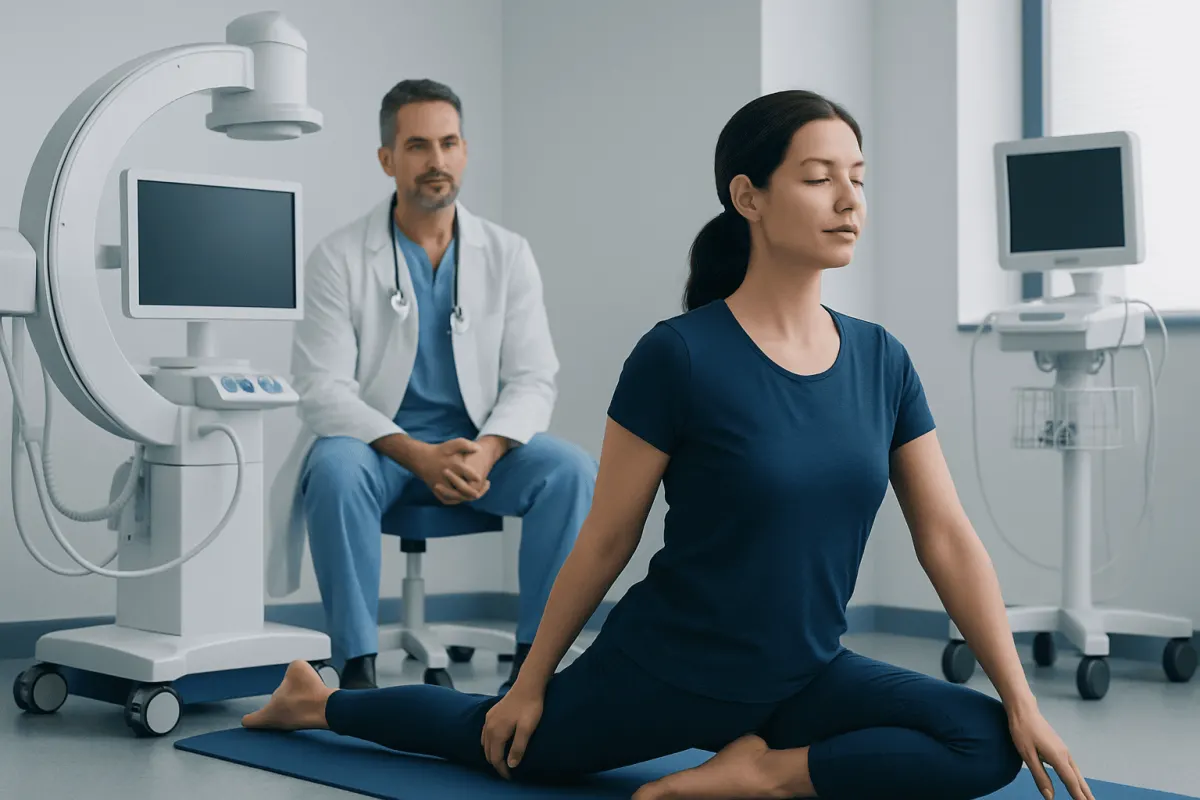
Sciatica yoga poses may help some people maintain mobility, reduce muscle tension, and build confidence with movement when practiced gently and within a comfortable range. The safest approach is individualized: poses should be stopped or modified if they increase leg pain, numbness, tingling, or weakness.
Overview: Can Yoga Help Sciatica?
Sciatica yoga poses can be helpful for some people when they are gentle, carefully modified, and do not worsen symptoms. They may improve comfortable movement, ease surrounding muscle tension, and support gradual return to daily activity. However, yoga is not a one-size-fits-all treatment: the best movements depend on what is irritating the nerve and how the body responds.
Sciatica is a pattern of symptoms rather than a diagnosis on its own. It typically involves pain, tingling, numbness, or weakness that begins in the lower back or buttock and travels down one leg. Common causes include a lumbar disc problem, age-related narrowing around the spinal nerves, or other conditions affecting the lower spine. More information about the symptom pattern is available in this overview of sciatica.
For many people, prolonged bed rest is not recommended. Remaining gently active, changing positions regularly, and using suitable movement can be more useful than avoiding all activity. Still, yoga should be viewed as one part of a broader care plan, especially when symptoms are persistent, severe, or associated with weakness.
How to Use Yoga Safely With Sciatic Symptoms
The goal of yoga during sciatica is not to achieve a deeper stretch. It is to find movements that feel controlled and tolerable while avoiding irritation of the nerve. A mild feeling of muscular stretching may be acceptable, but sharp back pain, electric sensations, tingling, numbness, or pain traveling farther down the leg are signs to stop or modify the pose.
Slow breathing and supported positions can make a meaningful difference. Props such as a chair, folded blanket, yoga blocks, or a bolster may reduce strain and help the person maintain a comfortable spine position. Short, frequent sessions are often easier to tolerate than a long class, particularly during a flare-up.
Symptoms may change from day to day. A movement that feels comfortable one day may not suit another day, so the person should let symptoms guide the practice rather than follow a fixed routine. A physiotherapist, rehabilitation specialist, or clinician familiar with spine conditions can help tailor movement choices and identify whether certain directions of movement are more suitable.
- Move slowly into and out of each position.
- Keep the range of motion small at first.
- Avoid holding the breath or pushing through pain.
- Use support under the knees, hips, hands, or head as needed.
- Stop if symptoms become more intense or extend farther into the leg.
Gentle Sciatica Yoga Poses to Consider
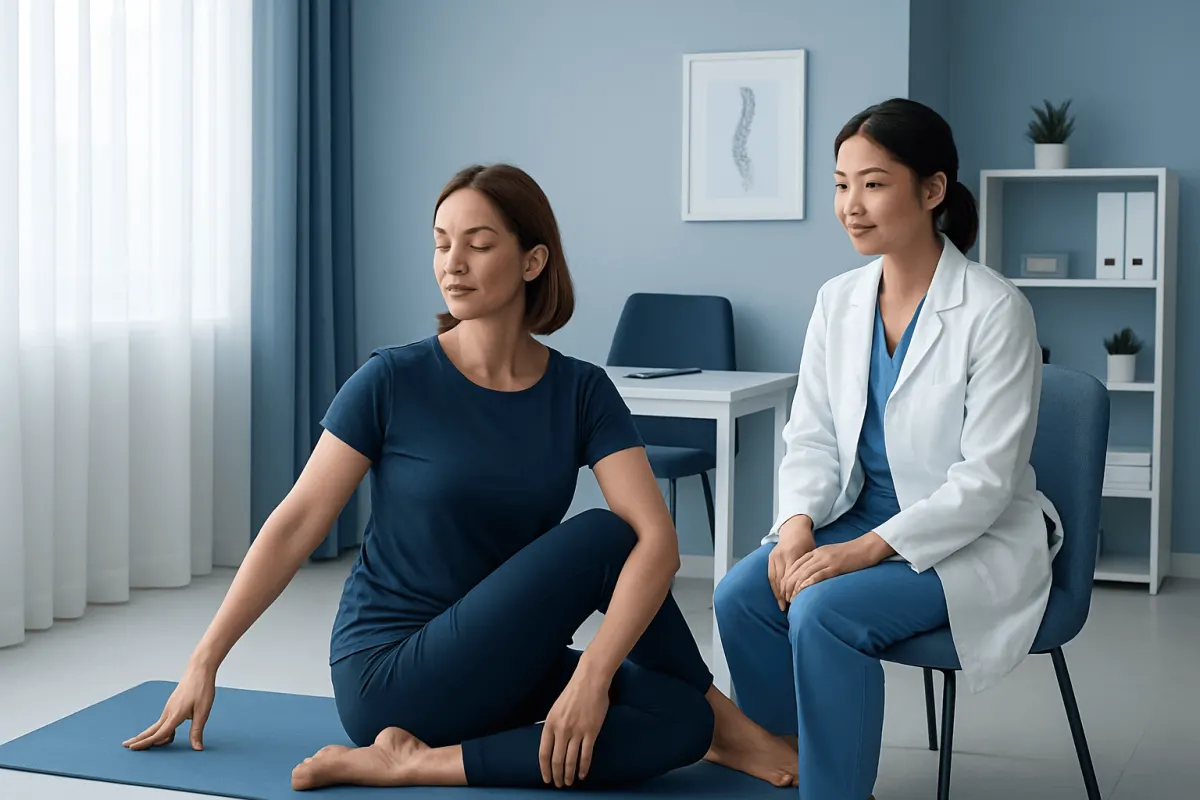
Constructive rest is often a useful starting point. The person lies on the back with knees bent, feet supported on the floor about hip-width apart, and arms relaxed. A pillow under the head or a bolster beneath the knees may increase comfort. This is not a stretch; it is a position for settling the body and noticing whether the back and leg symptoms reduce, remain stable, or worsen.
Pelvic tilts can be done from the same position. With a small, comfortable motion, the person gently flattens the lower back toward the floor and then returns to a neutral position. The movement should be smooth and pain-free. This can encourage awareness and light movement in the lower back without forcing a large range of motion.
Supported child’s pose may be comfortable for some people, particularly when the torso is supported on pillows or a bolster and the knees are comfortably apart. However, it involves hip and spinal flexion, which can aggravate symptoms in others. It should be avoided if bending forward increases leg pain, numbness, or tingling.
Chair-based cat-cow offers another gentle option. Sitting upright near the front of a stable chair, the person can slowly round the back slightly and then return to a tall, relaxed posture, keeping the movement small. This may be more accessible than hands-and-knees positions and allows easy adjustment. If either direction causes radiating pain, that part of the movement should be omitted.
Poses That May Help Some People but Need Careful Modification
Figure-four hip stretch is commonly suggested for buttock tightness, but it is not appropriate for everyone with sciatica. Lying on the back with knees bent, the person may rest one ankle lightly over the opposite thigh without pulling the legs toward the chest. If this position reproduces symptoms in the buttock or leg, the stretch should be stopped. The aim is a gentle hip sensation, not pressure or nerve pain.
Low lunge variations can gently lengthen the front of the hip and may be useful when done with the hands supported on blocks or a chair. The person should avoid sinking deeply into the pose or arching the lower back. A kneeling version should only be used if the knees are comfortable and the person can move into and out of the position safely.
Gentle hamstring movements are sometimes useful, but aggressive hamstring stretching can irritate the sciatic nerve. Instead of reaching toward the toes, a person may lie on the back and slowly straighten one knee only as far as comfortable, perhaps with a towel behind the thigh for support. The knee can remain bent; a straight leg is not the goal.
Deep seated forward folds, forceful twists, strong backbends, and advanced balance poses are usually best postponed during an active flare-up. These movements are not inherently harmful for every person, but they can place unwanted stress on sensitive tissues or make it harder to recognize early warning symptoms.
Why Symptoms Differ From Person to Person
Sciatic symptoms can arise from several different causes, so no single yoga sequence is suitable for everyone. A herniated or bulging disc may affect a nerve root differently from spinal stenosis, osteoarthritis, or a problem involving the hip or pelvic region. The location of pain alone does not reliably identify the cause.
Some people feel worse with bending forward, while others are more sensitive to standing upright or extending the spine. This is why a pose that relieves one person’s symptoms may aggravate another person’s. The most useful guide is the symptom response during the pose and later that day or the following morning.
Signs of improvement may include easier walking, less guarding, reduced pain intensity, or symptoms becoming less widespread. In contrast, pain moving farther down the leg, new tingling, increasing numbness, or reduced strength suggests that the current exercise choice needs review. A clinical assessment can help determine the cause and guide a rehabilitation plan; this may include physical therapy focused on movement, strength, posture, and function.
Building a Balanced Self-Care Plan
Yoga is most useful when combined with practical self-care rather than used as the only strategy. Regular light activity, such as short walks within a comfortable limit, can help reduce stiffness and maintain confidence with movement. It is often helpful to break up long periods of sitting, driving, or standing by changing position regularly.
Heat or cold packs may offer temporary comfort for some people, depending on their preference and the nature of their symptoms. Over-the-counter pain medicines may be appropriate for some adults, but medication choices should be discussed with a pharmacist or doctor, especially for people with kidney disease, stomach ulcers, heart conditions, pregnancy, or use of blood-thinning medicines.
Sleep positioning can also matter. Some people are more comfortable on their side with a pillow between the knees, while others prefer lying on their back with support beneath the knees. There is no universally correct position; comfort and symptom response are the priority. If pain persists, a clinician may recommend structured rehabilitation or other options, including spine surgery only when there is a clear medical reason and non-surgical care has not been sufficient.
When to Seek Medical Care
A person should arrange medical assessment if leg pain is severe, lasts beyond a few weeks, keeps returning, limits walking or sleep, or does not improve with gentle self-care. Assessment is also important for new or progressive numbness, tingling, or weakness, such as difficulty lifting the front of the foot, climbing stairs, or standing on the toes.
Urgent medical care is needed for loss of bladder or bowel control, difficulty starting urination, numbness in the groin or saddle area, or rapidly worsening weakness in one or both legs. These symptoms are uncommon but can indicate serious nerve compression and should not be managed with yoga or home treatment alone.
A doctor may use the history and physical examination to identify the likely source of symptoms. Imaging is not always necessary at the start, but it may be considered when symptoms are severe, persistent, or associated with concerning neurological findings. Acıbadem Health Point’s multidisciplinary specialists and JCI-accredited hospitals can evaluate and treat spine-related conditions for international patients when specialist care is needed.
Frequently asked questions
01Which yoga pose is best for sciatica?
There is no single best pose because sciatica has different causes and people respond differently to bending, extension, and hip movements. Supported rest positions, small pelvic tilts, and gentle chair-based movement are often reasonable starting points if they do not increase leg symptoms. A physiotherapist can help select movements based on the individual’s examination findings.
02Should yoga be avoided during a sciatica flare-up?
Complete avoidance of all movement is not usually necessary, but an active flare-up calls for a gentler approach. Restorative, supported positions and short walks may be better tolerated than demanding yoga classes. Any movement that causes sharp pain, tingling, numbness, or pain spreading down the leg should be stopped.
03Can stretching make sciatica worse?
Yes, forceful stretching can worsen symptoms for some people, particularly when the sciatic nerve is sensitive. Hamstring and forward-bending stretches may feel helpful to some people but may aggravate others. Stretching should be mild, controlled, and stopped if it increases radiating pain or neurological symptoms.
04How often can someone do yoga for sciatica?
A short daily practice may be appropriate if it remains comfortable and does not worsen symptoms later in the day or the next morning. Beginning with a few minutes of gentle movement is often more sensible than a long session. Frequency and intensity should be adjusted based on symptoms and professional advice.
05Is downward-facing dog safe for sciatica?
Downward-facing dog places the hips and hamstrings on stretch and requires weight through the arms and shoulders, so it may not be suitable during an active episode. Some people tolerate a modified version with hands on a wall or chair, while others find it aggravates leg pain. It should not be forced and is best discussed with a qualified clinician if symptoms are ongoing.
06When is sciatica an emergency?
Emergency assessment is needed for new bladder or bowel control problems, numbness around the genitals or buttocks, or rapidly progressing weakness in the legs. These symptoms can indicate significant nerve compression. Severe symptoms after major trauma, or pain accompanied by fever or unexplained illness, also require prompt medical evaluation.
This article is for general information only and is not a substitute for professional medical advice. Please consult a qualified doctor about your individual situation.
Joint and spine care in Turkey — expert assessment & treatment
JCI-accredited · board-certified surgeons · reply within 24h
Add us as a Preferred Source to see more of our trusted health content across Google Search, AI Overviews and Discover.
More from the Health Library
Why Am I Getting Headaches Everyday All of a Sudden? Causes, Explanations, and Next Steps

Ataxia Telangiectasia Affects Movement, Immunity, and DNA Repair